The Trust Stack: How Supplement Brands Build Consumer Confidence

November 4, 2026 |

Consumer trust grows through more than a single claim or first impression. It builds layer by layer as people discover a brand, understand its products, assess the information, and experience what the brand delivers.

At a Glance

  • Trust develops across the customer experience, from discovery through repeat purchase.
  • Clear product information helps consumers understand what a supplement is for and how it fits their needs.
  • Evidence and transparency give consumers a stronger basis for evaluating a product.
  • The product experience and consistent follow-through can reinforce confidence over time.
  • The Trust Stack gives brand owners and product designers a practical way to spot where the customer experience can be clearer and more dependable.
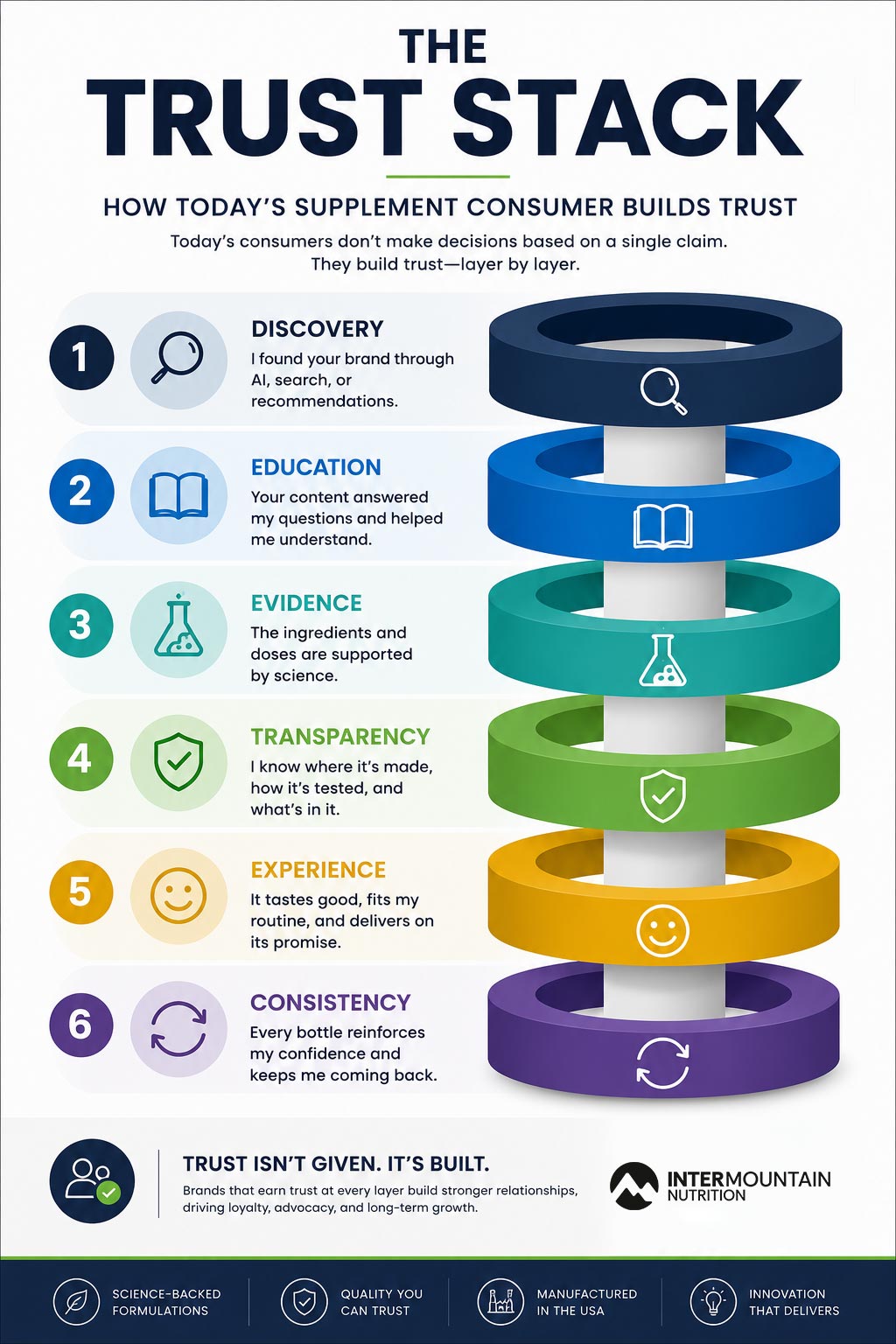
INFOGRAPHIC: The Trust Stack

Trust Is Built Layer by Layer

A consumer discovers a supplement, reads about its ingredients, checks the label, and decides whether it feels right for their needs. Later, the product’s taste, ease of use, and overall experience shape what happens next. Each step can add confidence.

Trust rarely comes from one message alone. It grows when a brand’s information, product, and follow-through work well together. For supplement brands, that creates an opportunity: every interaction can make the product easier to understand and the brand easier to believe in.

Trust also matters at the point of purchase. In NIQ’s 2025 Consumer Outlook survey, 95% of consumers said trusting the brand they were buying from was very or somewhat important. NIQ also found that product quality was the strongest influence on brand trust, with customer service and responsiveness ranking second.

For supplement brands, trust is not only a communications goal. It is shaped by the whole experience: what consumers find, what they learn, how the product is made and presented, and whether the experience meets reasonable expectations.

What Is The Trust Stack?

The Trust Stack is a framework for understanding how consumer confidence builds across a brand experience. Its six layers are discovery, education, evidence, transparency, experience, and consistency.

Consumers may encounter these layers in different ways. Someone might discover a product through a retailer, then look for reviews or ask a healthcare professional before visiting the brand’s website.

Another person might start with an ingredient question and find a brand while researching. Either way, each interaction gives the consumer another reason to feel confident — or another question to resolve.

The framework helps brand owners and product designers look beyond a single marketing message. It brings together the moments that shape confidence, from first awareness to repeated use.

Layer What it means to the consumer
Discovery “I found this brand or product.”
Education “I understand what it is for.”
Evidence “The product’s rationale has credible support.”
Transparency “I can find and understand relevant product information.”
Experience “The product fits my expectations and routine.”
Consistency “My experience continues to reinforce confidence.”

These layers are connected, but they don’t always happen in a fixed order. Consumers may return to product information after trying a supplement, for example, or seek outside opinions before they decide to buy.

The Six Layers That Build Consumer Confidence

Each layer contributes something different. Together, they help make a brand easier to discover, understand, evaluate, and return to.

1. Discovery: Help the right people find the product

Discovery is the first point of contact between a consumer and a brand.

Someone might encounter a supplement through a search result, retailer listing, recommendation, social post, educational article, or AI-generated answer. Each path creates an early impression, often before the consumer visits the brand’s website.

At this stage, clarity helps the right people decide whether to learn more. A product name, description, and benefit language should make its intended purpose understandable without overstating what it can do. If the message is vague or difficult to interpret, consumers may move on before they see the information that could help them evaluate the product.

Brands can support discovery by describing products consistently across the places consumers are likely to encounter them. A clear first impression makes it easier for people to take the next step.

2. Education: Make the product easier to understand

Once a consumer becomes interested, questions often follow: What is this product designed to support? How is it meant to be used? Why did the brand choose this format or combination of ingredients?

Clear education helps answer these questions in plain language. Product pages, packaging, FAQs, and educational content can each play a role. Together, they should help consumers understand the product’s purpose, directions, and key features without making them piece together its story from scattered sources.

Education also gives brands a chance to set appropriate expectations. A thoughtful explanation can clarify what the product is intended to do, how it fits into a routine, and where consumers can find more detail.

When information is organized and easy to follow, people can make decisions with greater confidence.

3. Evidence: Give consumers a sound basis for evaluation

After learning what a product is for, consumers may want to understand why the brand chose its ingredients and how the product’s story is supported.

Clear, accurate explanations can help them assess the product rationale.

For brands, this means aligning product descriptions and claims with the evidence available. It also means helping consumers understand the difference between evidence about an ingredient and evidence about a finished product. Those distinctions can be explained in accessible language without turning a product page into a technical report.

The purpose is not to overwhelm consumers with citations or scientific terms. It’s to give them a reliable basis for understanding why the product was developed and what its supporting information can and cannot show.

4. Transparency: Make relevant information easy to find

Consumers may look for details about ingredients, serving directions, testing, certifications, or manufacturing. When relevant information is clear and easy to locate, people can make more informed decisions.

Transparency includes both what a brand shares and how clearly it presents that information.

Technical terms may need explanation. Quality statements should be specific enough to be useful. Certifications should be described accurately, and consumers should be able to tell what a particular test or verification does and doesn’t establish.

Consistency matters across channels, too. Product pages, labels, retailer listings, and educational materials should present compatible information. When they do, consumers spend less time resolving discrepancies and more time understanding the product.

5. Experience: Let the product deliver on its promise

The product itself shapes how consumers feel about their choice. A formula may have a clear purpose and well-organized information, yet the daily experience still matters. Is it convenient to use? Does the serving fit the consumer’s routine? Is the flavor, texture, or format enjoyable?

These details can make a product easier or harder to use consistently. They also influence whether the product experience feels aligned with what the brand communicated. If the format is awkward or the flavor is unpleasant, consumers may struggle to maintain the routine, even when they understand the product’s purpose.

For product designers, these details are opportunities.

Thoughtful choices around format, serving size, preparation, and sensory qualities can help create a product people feel good about using.

6. Consistency: Reinforce confidence over time

Trust can grow when the experience continues to meet reasonable expectations.

Consumers notice whether product quality, instructions, packaging, and brand communication remain dependable from one interaction to the next.

Consistency extends beyond the product itself. A customer might contact support with a question, reorder months later, or see new information about the product. Each interaction can reinforce confidence when the brand responds clearly and follows through.

Consistency doesn’t mean nothing ever changes. Brands may update a formula, package, or product information as they learn more. Clear communication about meaningful changes can help preserve confidence and show that the brand is paying attention.

Consumer Reviews

Reviews can reinforce several layers of The Trust Stack. Consumers may encounter ratings during discovery, use customer feedback to understand practical details, and compare reviews with their own experience.

Reviews don’t replace scientific evidence or establish product efficacy. However, when brands manage them responsibly and respond to recurring feedback, they can offer another useful signal about the customer experience.

Trust Signals Consumers Value

A 2026 national survey conducted by Morning Consult on behalf of the Council for Responsible Nutrition (CRN) asked 3,005 U.S. adults about supplements, confidence, and decision-making. The findings point to the value consumers place on science and quality signals.

Consumer signal Survey finding
Scientific evidence is important when deciding whether a supplement is right for them 81%
Independent verification that a product meets quality standards would increase confidence 77%
Requiring supplement products to be listed with FDA would increase confidence 76%

The broader purchase context points in the same direction. Edelman’s 2025 global Brand Trust report found that 88% of respondents considered trust in a brand important or a deal breaker when choosing brands to buy or use. The same share said quality and value were important or deal breakers. This was a general brand survey across 15 markets, not a supplement-specific study.

The Layers Work Together

Each layer contributes to the overall experience, but consumers may move between them as they learn and make decisions. Someone might discover a product, read about its ingredients, check quality information, and then return to the product page after trying it.

That gives brands several opportunities to make the experience more reassuring. A clear message can invite exploration; useful information can answer questions; and a product that fits its intended use can give consumers a positive reason to continue.

Over time, those connected experiences can build stronger confidence.

Where Trust Can Break Down

The Trust Stack is useful because it shows how a consumer’s confidence can be affected at different points. A strong first impression may encourage someone to explore a product, while unclear information or an experience that doesn’t meet expectations can make them hesitate.

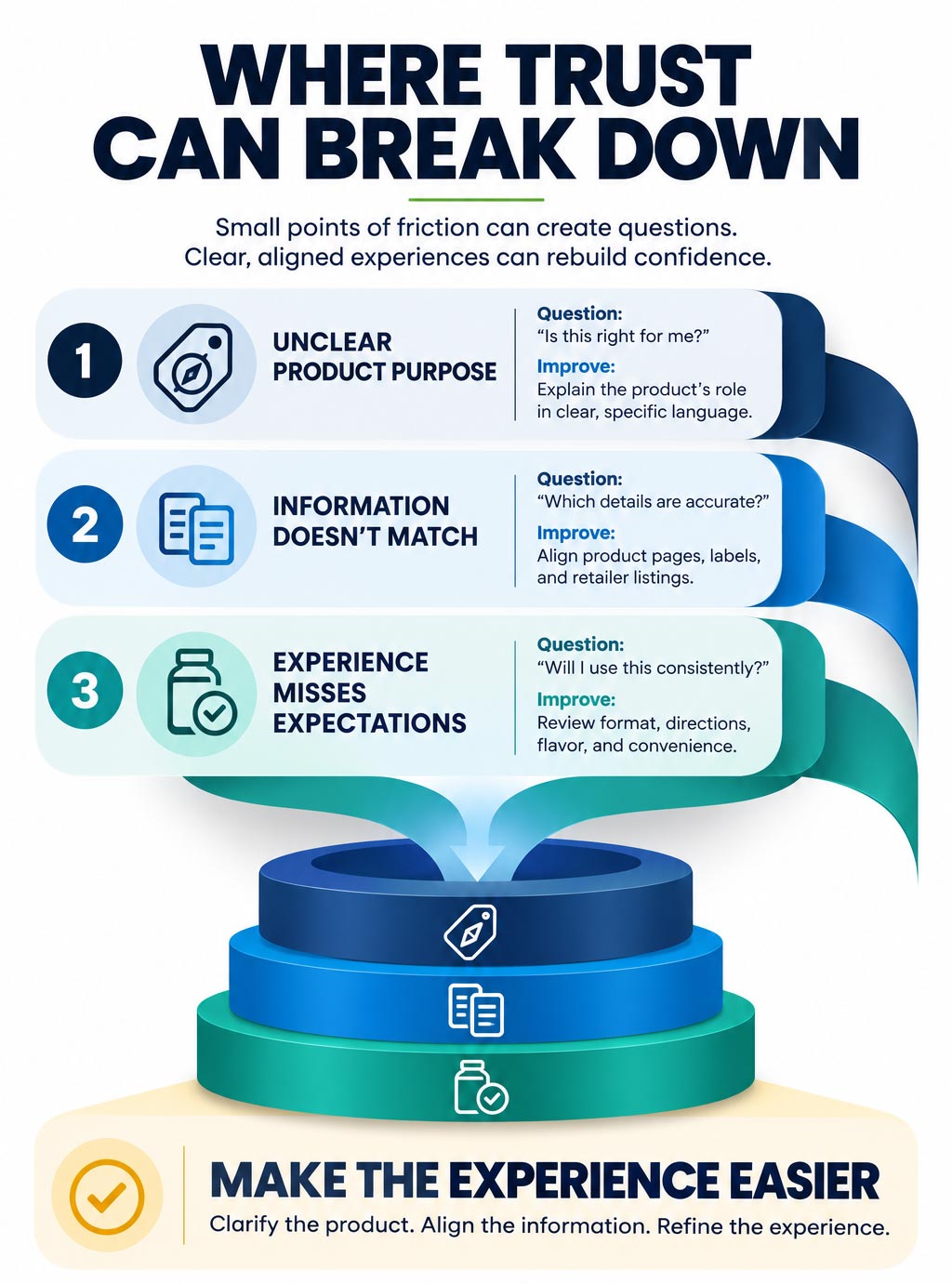
For example, a consumer might find a supplement through a retailer or search, then visit the brand’s website to learn more. If the product’s purpose is unclear, they may have trouble deciding whether it fits their needs.

If the information across the product page and retailer listing differs, they may wonder which version is accurate. And if the product is difficult to use as expected, the initial interest may not translate into continued use.

These moments don’t automatically mean a consumer will reject the brand. They do show where teams can make the experience easier and more reassuring.

A product description can be clarified. Information can be aligned across channels. Product directions or packaging can be reviewed. Small improvements at the right point can help the layers support one another.

The same principle applies when a brand has a strong product but hasn’t clearly explained it. Consumers may not recognize the value if they can’t understand the product’s role or find the information they need.

The opportunity is to connect what the brand has developed with what consumers need to know.

INFOGRAPHIC: Where Trust Can Break Down

Look for Friction, Not Just Missing Information

A Trust Gap isn’t always caused by a lack of content. Sometimes the information exists, but consumers have to work too hard to find or understand it. A long technical explanation may be accurate but difficult to scan. A product page may answer a question that the label or retailer listing leaves open.

Teams can look for these points of friction by reviewing the product journey from the consumer’s perspective. Where might someone pause? What could they misunderstand? Which questions require them to leave the brand’s channels and search elsewhere?

This review helps brands focus on practical improvements instead of adding more messaging everywhere.

Trust Signal vs. Trust Gap

NOTE: This table is a planning tool, not a survey result. Use it to review a product’s customer experience and identify where a clearer signal may help.

Trust layer Signal a brand can provide Possible trust gap
Discovery A clear, consistent description of the product’s purpose The product is hard to find or its role is unclear
Education Accessible explanations and useful answers Consumers must piece together information from multiple sources
Evidence Claims and explanations that match the available support The product story overreaches or leaves key questions unanswered
Transparency Product and quality information that is easy to assess Details are missing or inconsistent across channels
Experience Product use that aligns with reasonable expectations Taste, convenience, or usability creates friction
Consistency Dependable product and brand communication over time Repeat experiences differ from what the brand promised

A Practical Trust Stack Audit

Brand owners and product designers can use the six layers as a simple review tool. The goal is to identify where the experience already works well and where a clearer signal could help consumers move forward with confidence.

Trust layer Questions for the team
Discovery Can the intended audience find the product and quickly understand its purpose?
Education Can consumers find clear answers about what the product is for and how to use it?
Evidence Do the product’s explanations and claims match the support available?
Transparency Is relevant product and quality information easy to locate and understand?
Experience Does the product fit the expectations, format preferences, and routines it was designed for?
Consistency Do product quality and brand communication remain dependable across interactions and repeat purchases?

Review the Full Experience

This audit works best when teams review the full consumer experience, rather than evaluating each department in isolation.

Marketing may own product descriptions, while product development, quality, regulatory, customer service, and manufacturing contribute information or decisions that shape the same experience.

A useful next step is to choose one product and walk through the six layers as a consumer might encounter them. Compare the product page, label, retailer listing, FAQs, directions, and customer support information. Then note where the experience is clear, where information differs, and where a consumer may need extra effort to understand the product.

A team might begin by clarifying one product description, aligning a serving direction across channels, or making quality information easier to find. These focused improvements can strengthen the overall experience while giving the team a practical way to keep building on what works.

Trust Is a Shared Responsibility

Consumers experience one brand, even though many teams help shape that experience. Marketing explains the product. Product designers shape how it looks and feels to use. Quality and regulatory teams help ensure that information and processes meet appropriate requirements. Manufacturing partners help produce the product consistently at scale.

When these groups work from shared, accurate information, the consumer experience becomes easier to follow. Product descriptions can reflect the product’s actual purpose. Directions can match the finished format. Quality information can be communicated clearly. And the product consumers receive can align with the expectations the brand has set.

Bring Teams into Alignment Early

A shared view of the product can help teams make better decisions throughout development and launch. This can include agreement on:

  • The product’s intended role and audience
  • The key information consumers need to understand
  • The claims and explanations the brand can support
  • The product experience the team wants to deliver
  • The quality and manufacturing requirements that support consistent production

This alignment doesn’t require every team to manage every detail. Instead, it helps each group understand how its work contributes to consumer confidence. When teams coordinate early, they can identify questions sooner and reduce the chance that unclear or conflicting information reaches consumers.

Treat the Manufacturing Relationship as Part of the Experience

The manufacturing partner is one part of the system that supports a dependable product.

Early communication about the formula, specifications, testing needs, packaging, and production requirements can help teams plan for consistent execution.

For brand owners, these conversations can also clarify what the finished product will require as it moves from development to production. A strong partnership supports practical decisions, clear expectations, and reliable coordination — all of which help the brand deliver a consistent experience to consumers.

Build Confidence at Every Layer

The Trust Stack gives supplement brands a useful way to see the full consumer experience. Discovery invites consumers to learn more. Education helps them understand the product. Evidence and transparency support informed evaluation. Experience shapes how the product fits into daily life. Consistency gives confidence room to grow over time.

No single layer carries the entire responsibility for trust. Instead, confidence strengthens when the layers work together and the brand follows through on what it communicates.

For brand owners and product designers, that creates a positive opportunity: review the customer experience, recognize what’s already working, and make thoughtful improvements where consumers need more clarity or support.

Over time, those connected efforts can help create products people understand, use with confidence, and feel good about returning to.

Intermountain Nutrition partners with supplement brands to develop and manufacture products at scale. From formulation support through production, packaging, and quality oversight, our team helps brands plan for a dependable product experience. Explore our supplement manufacturing capabilities.

How This Article Connects to the Series

The Trust Stack brings the series’ ideas together while focusing on how consumer confidence builds across the brand experience:

Frequently Asked Questions

The Trust Stack is an Intermountain Nutrition framework for understanding how consumer confidence can build across a brand experience. It includes six connected layers: discovery, education, evidence, transparency, experience, and consistency.

Consumers may encounter these layers in different orders. A shopper might find a product through a retailer, then research its ingredients before visiting the brand’s website. Another may hear about a brand from a healthcare professional and look for details about its testing or manufacturing.

The framework helps brands review each point of contact and see where the experience is clear, where questions remain, and where greater consistency could help.

Trust can influence whether consumers consider, choose, and continue using a product. In NIQ’s 2025 Consumer Outlook survey, 95% of consumers said trusting the brand they were buying from was very or somewhat important. This is a broad consumer finding, not a measure of supplement buyers specifically. nielseniq.com

Trust also matters because consumers may encounter product information across many sources, such as brand websites, retailer listings, labels, reviews, and educational content. When those sources provide clear, compatible information, consumers have a more consistent basis for evaluating a product.

For supplement brands, trust is shaped not only by marketing but by the information, product, and follow-through consumers experience over time.

Brands can strengthen consumer confidence by making each layer of the experience easier to understand and rely on. That starts with a clear product purpose and continues with useful education, accurate explanations of the available evidence, and accessible information about the product and its quality.

The product experience matters as well. Format, serving size, directions, flavor, and convenience can affect how well a product fits a consumer’s routine. After launch, consistent product quality and clear communication can reinforce the confidence built earlier. These steps don’t guarantee a purchase or repeat use, but they can reduce confusion and give consumers a stronger basis for evaluating the product.

Product experience lets consumers compare what they expected with what they received. A product may have a clear purpose and helpful product information, yet consumers still have to be able to use it in a way that fits their needs and routine.

Convenience, serving size, format, preparation, flavor, texture, and clear directions can all shape that experience. If a product is difficult to use or doesn’t align with the expectations set by its communication, consumers may feel less confident about their choice. For product designers, these factors are opportunities to make the product more approachable and easier to use consistently.

Brands can review one product from the consumer’s perspective, starting with how people discover it and continuing through information gathering, purchase, use, and potential repeat purchase. Teams can ask whether the product’s purpose is easy to understand, whether key information is consistent across channels, whether claims match the available support, and whether the product experience aligns with what the brand communicates.

It can help to review the product page, label, retailer listing, FAQs, directions, customer service responses, and quality information together. Note where the experience is already clear and where consumers may need to search elsewhere or resolve conflicting details. Then choose a few practical improvements, such as clarifying a product description or aligning directions across channels.

The Trust Stack is an Intermountain Nutrition planning framework, not a validated consumer measurement scale. Use it to guide team discussion and identify areas to improve; don’t treat it as a score that predicts purchase or loyalty.

Related Postings

Golden pear-colored craving control gummy supplements featuring saffron and chromium
a trade show attendee discussing nutraceutical formulation at the Intermountain Nutrition exhibitor booth at SupplySide Global 2026
Thermogenic Supplements