The Science Behind Thermogenic Supplements: Mechanisms, Ingredients, and Consumer Interest

November 2, 2026 |

Thermogenic supplements are designed to support the body’s heat-producing processes. This guide explains what thermogenesis means, how it connects to energy use, and why consumers may consider products formulated for metabolic support.

At a Glance

  • Thermogenesis is the body’s process of producing heat. It occurs during normal metabolism, digestion, physical activity, and the body’s response to cold.
  • Thermogenic supplements are intended to influence energy-related processes. Depending on the formula, ingredients may affect alertness, energy expenditure, fat oxidation, or the perception of warmth.
  • “Thermogenic” and “fat-burning” are not interchangeable terms. Thermogenesis refers to heat production; fat burning refers to using fat as fuel.
  • Consumer interest often reflects broader goals. People may seek support for energy, workout routines, or weight-management efforts.
  • A supplement is an adjunct, not a substitute for foundational habits. Food intake, physical activity, sleep, and overall health remain central to weight management.

What Are Thermogenic Supplements?

Thermogenic supplements are products formulated with ingredients intended to support thermogenesis: the production of heat as the body uses energy. The body produces heat as it maintains core temperature and carries out everyday functions. Some body processes use energy without being thermogenesis themselves, so it helps to distinguish heat production from the broader picture of energy expenditure.

The word thermogenic describes a proposed function, not a single ingredient or standardized formula. Products may combine stimulants, botanical extracts, or other compounds. Some include caffeine; others are stimulant-free. That means two products labeled “thermogenic” can work through different pathways and offer different experiences.

Thermogenic supplements are commonly marketed for weight management, energy, or exercise support.

Thermogenesis Happens Naturally Every Day

Thermogenesis isn’t unique to supplements. Daily energy expenditure includes the energy the body uses at rest, to process food, and during physical activity.

Temperature regulation adds another dimension: the body can generate heat through shivering and through non-shivering processes involving tissues such as brown adipose tissue.

The body’s energy use is often described in three broad categories:

Component What it means Everyday examples
Resting energy expenditure Energy used to maintain essential functions at rest Breathing, circulation, and temperature regulation
Thermic effect of food Energy used to digest, absorb, and process food Processing a meal
Activity-related energy expenditure Energy used during movement Exercise, walking, and routine daily activity
Temperature regulation Processes that help maintain body temperature Can involve shivering and non-shivering heat production

Thermogenic ingredients are generally intended to influence one or more energy-related processes. However, the size and nature of that effect depend on the ingredient, amount, formulation, and individual. A product’s name alone doesn’t explain what it does.

How Thermogenesis Works in the Body

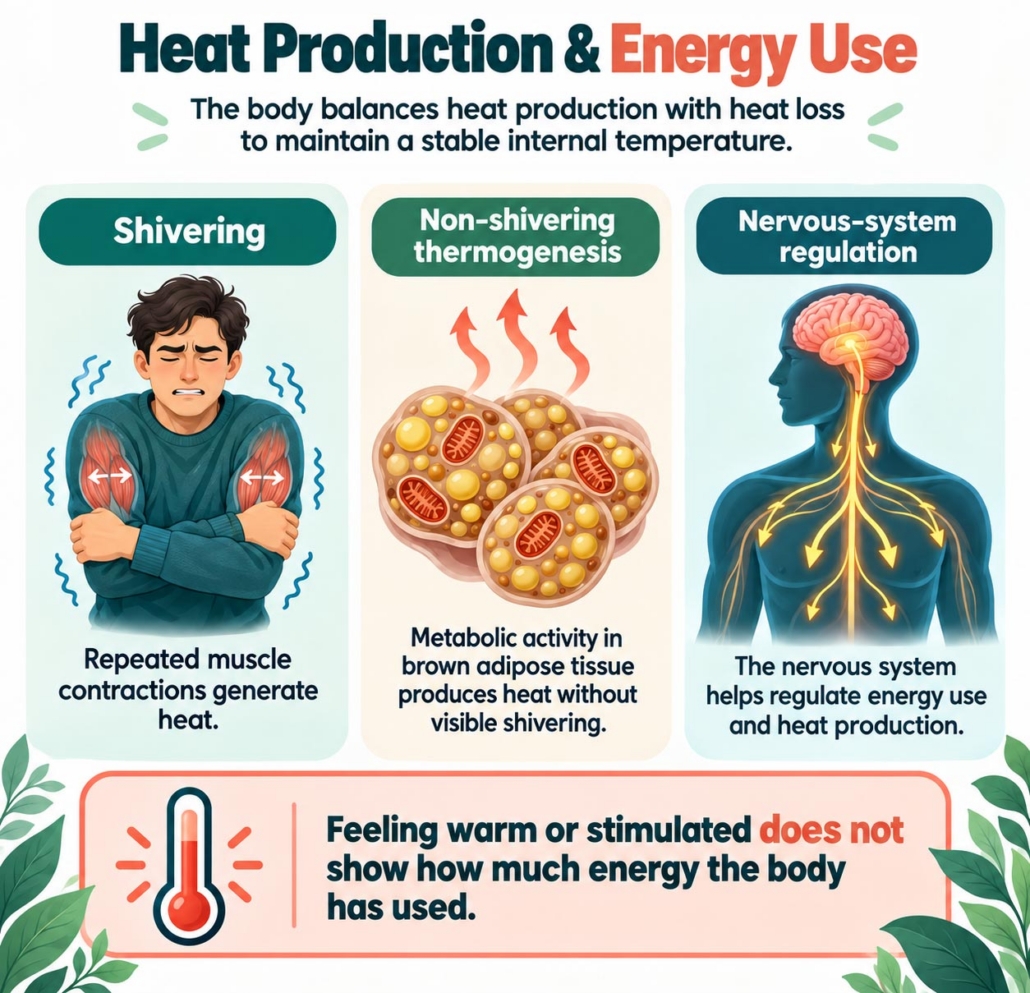
Thermogenesis is the production of heat through the body’s normal energy processes. Cells convert energy from food into usable forms, and some energy is released as heat. The body also adjusts heat production in response to conditions such as cold exposure and physical activity.

INFOGRAPHIC: Heat Production And Energy Use

Heat Production & Energy Use

The nervous system helps regulate the body’s response to temperature and other signals. For example, cold exposure can activate sympathetic nervous-system signals that influence brown adipose tissue and other heat-producing processes. Brown adipose tissue, often called brown fat, can generate heat by using stored fuel. In humans, muscle activity also contributes to heat production, especially during shivering.

The body continually balances heat production with heat loss to maintain a stable internal temperature. When the body needs to preserve or generate more heat, it can draw on different responses.

Shivering, for example, produces heat through repeated muscle contractions. Non-shivering thermogenesis produces heat without those visible contractions and is associated with specialized metabolic activity in tissues such as brown adipose tissue.

The nervous system also helps regulate energy use and heat production.

Some stimulant ingredients are used in supplements because they can affect alertness and nervous-system activity. That can influence how a person feels after taking a product, but a feeling of warmth or stimulation does not, by itself, show how much energy the body has used.

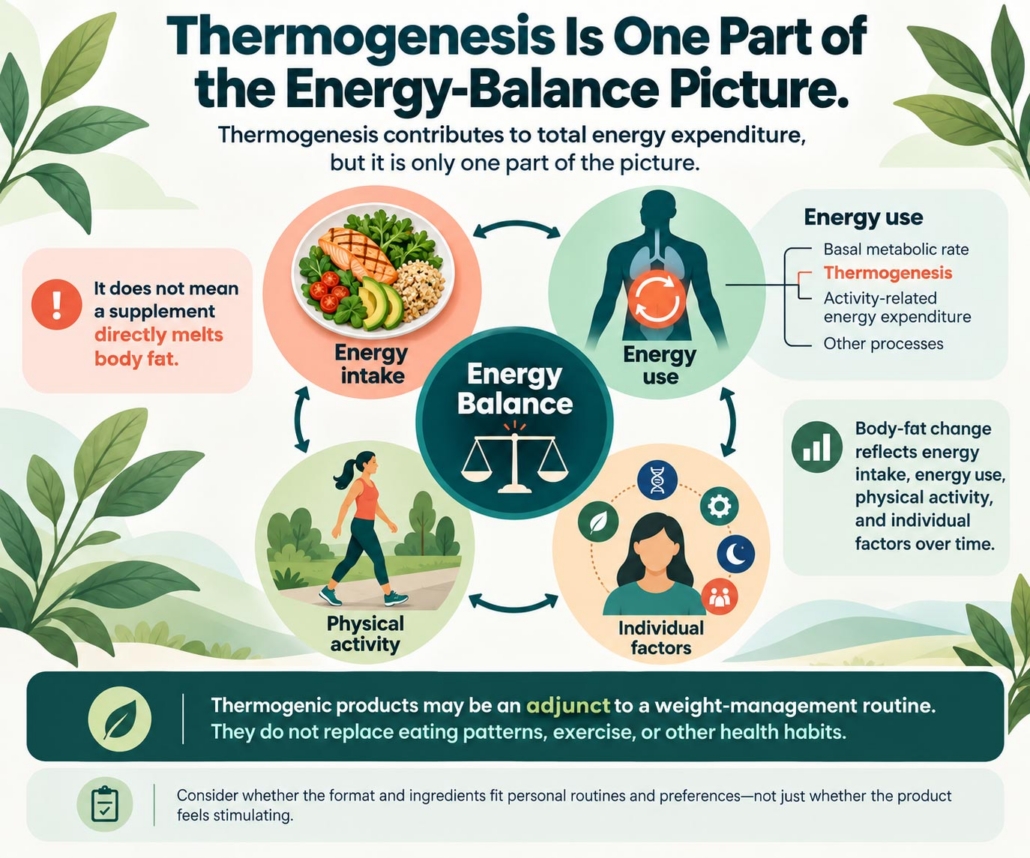
Thermogenesis Is One Part of The Energy-Balance Picture

Thermogenesis is part of total energy expenditure, but it is only one piece. It doesn’t mean that a supplement directly melts body fat. Body-fat change reflects a broader pattern involving energy intake, energy use, physical activity, and other individual factors.

That’s why it’s more accurate to describe thermogenic products as a possible adjunct to a weight-management routine. They don’t replace eating patterns, exercise, or other health habits.

For a consumer, the practical question is not simply whether a product feels stimulating, but whether its format and ingredient profile fit their routine and preferences.

INFOGRAPHIC: Thermogenesis - One Part Of Energy Balance

Thermogenic vs. Fat-Burning: What the Terms Actually Mean

The terms thermogenic and fat-burning often appear together on supplement labels, but they describe different ideas.

Term Meaning What it does not automatically mean
Thermogenic Relating to heat production in the body That body fat will decrease
Fat oxidation The use of fatty acids as a fuel source That total body-fat loss will occur
Fat-burning supplement A broad marketing category for products positioned for weight management That all formulas use the same mechanism or produce the same experience

Fat oxidation means the body is using fat for fuel at a given time. Changes in body fat, however, depend on the overall balance of energy intake and expenditure over time. So a formula may be described as thermogenic, but that term alone doesn’t establish that it will result in fat loss.

This distinction helps brands communicate more clearly. Explaining a product’s intended role, such as energy support or inclusion in a weight-management routine, gives consumers more useful context than relying on broad “fat-burning” language.

Why Consumers Consider Thermogenic Supplements

Consumers may consider thermogenic supplements for different reasons. Some are looking for a product that fits into a weight-management routine. Others want an energy boost before exercise or prefer a formula positioned around metabolism support.

These motivations can overlap, but they aren’t identical. Someone looking for a stimulant-free product may prioritize a different experience from someone who wants caffeine as part of a pre-workout routine.

Understanding those differences helps brands build clearer product concepts and set more realistic expectations.

Consumer motivation What the consumer may be looking for Product considerations
Weight-management support A supplement that complements nutrition and activity habits Explain the product’s intended role without implying that it replaces those habits
Energy and alertness A noticeable lift in energy or focus Consider stimulant source, serving size, timing, and the consumer’s caffeine intake from other sources
Workout routine A product that fits before or around exercise Consider format convenience, flavor, and whether the formula includes stimulants
Stimulant-free option A product without caffeine or similar stimulants Describe the formula accurately; “stimulant-free” does not mean risk-free or effective for every goal
Convenient daily use A simple product that fits an existing routine Match format and serving instructions to how consumers are likely to use it

A product should make its intended experience easy to understand. For example, an energy-focused thermogenic concept should make the stimulant content and suggested use clear.

A stimulant-free concept should explain what makes the formula different without suggesting that it produces the same sensation as a caffeinated product.

Ingredients Commonly Used in Thermogenic Formulas

Thermogenic products may contain one ingredient or combine several ingredients. The formula’s overall character depends on the ingredients, their amounts, and how they work together.

Caffeine is a stimulant that affects the central nervous system. Capsaicin, the compound responsible for chili peppers’ heat, interacts with TRPV1 sensory channels associated with heat and irritation. Green tea catechins are often discussed alongside caffeine in relation to sympathetic signaling. Grains of paradise contains pungent compounds such as 6-paradol and is used in products designed around brown-fat thermogenesis.

The table below describes common ingredient categories and their typical formulation roles.

Ingredient or category Common role in a formula Formulation considerations
Caffeine Often included for energy and alertness Account for caffeine from all sources in a consumer’s routine; disclose the amount per serving clearly
Green tea extract Used in products positioned for metabolic or weight-management support Specify the extract and its standardization; consider its caffeine contribution
Capsaicin or capsicum extracts Used in formulas designed around warming sensations or thermogenic positioning Consider pungency, tolerability, ingredient form, and sensory impact
Ginger A botanical used in some metabolic-support and warming concepts Consider flavor, extract characteristics, and its compatibility with the rest of the formula
Grains of Paradise Used in some products positioned for thermogenic support Confirm the ingredient identity and amount in the finished formula
Bitter orange Included in some weight-management and stimulant-style formulas Specify extract and synephrine content. Because synephrine has stimulant-like properties, don’t label the product “stimulant-free” simply because it contains no caffeine.
Green coffee bean extract Used in weight-management formulas, often for its chlorogenic-acid content State standardization and caffeine content. Decaffeinated forms are available, but verify caffeine status for a caffeine-free formula.
Forskolin Included in some formulas based on a proposed role in cellular signaling and fat breakdown Specify the extract and forskolin content. Human research is limited; avoid presenting it as an established thermogenic.
Piperine More often included to support ingredient bioavailability than as a primary thermogenic State the piperine amount and consider potential medication interactions, since concentrated piperine may alter how the body processes some compounds.

The ingredients below appear in some thermogenic or weight-management formulas. Their roles vary, and the presence of an ingredient does not guarantee a particular result.

For brand owners, clear ingredient identification, appropriate serving amounts, sensory performance, and transparent product education all matter.

Thermogenic Supplement Ingredient - Caffeine

Caffeine

Caffeine is a stimulant commonly included in thermogenic and pre-workout products. Consumers may choose caffeine-containing formulas for alertness and a more noticeable energy lift.

It can come from sources such as coffee beans, tea leaves, or purified caffeine, so the ingredient source alone does not tell consumers how much caffeine the finished product contains.

For formulation and labeling, the total caffeine per serving should be clear. Brands should also consider how the product fits into a consumer’s overall caffeine intake, including coffee, tea, energy drinks, and other supplements.

Some people are more sensitive to caffeine and may experience restlessness, sleep disruption, jitters, or a racing heartbeat. Product directions should make serving size and suggested timing easy to understand.

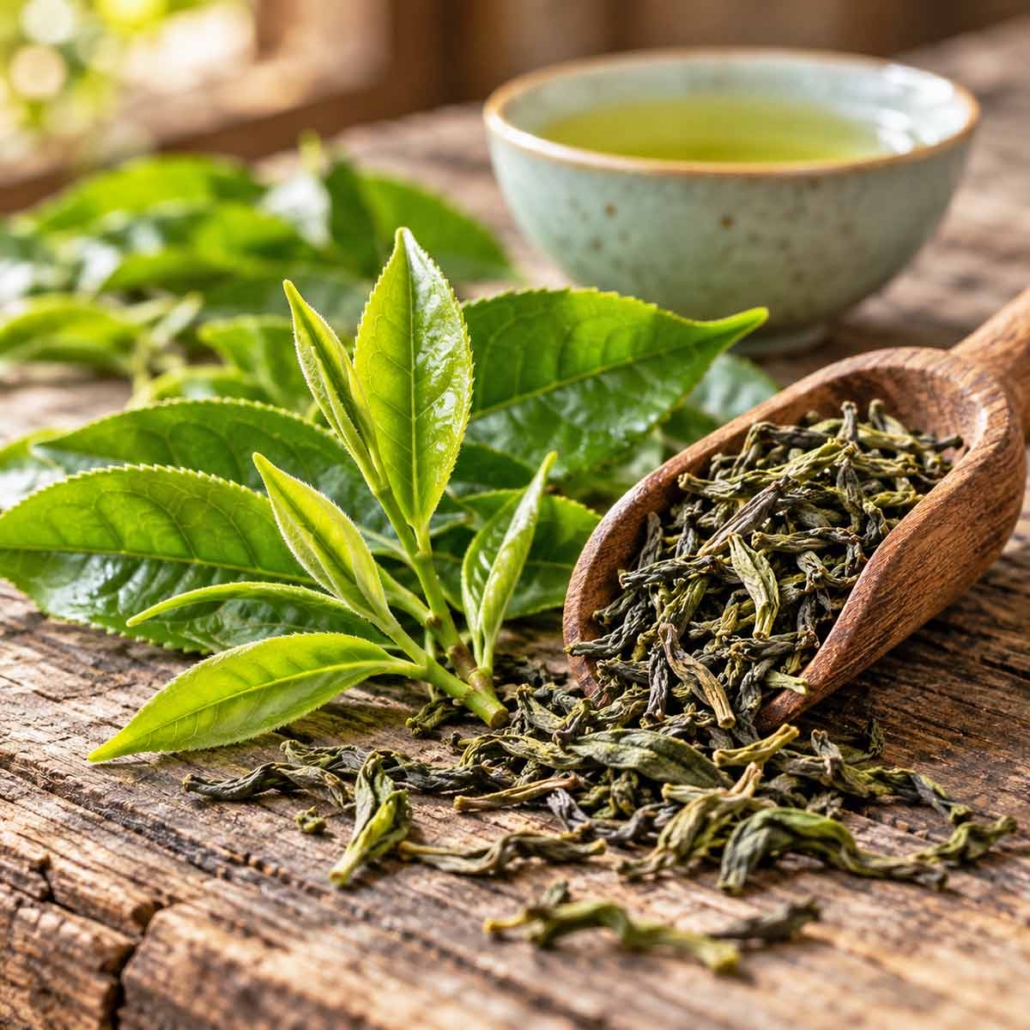
Thermogenic Ingredient - Green Tea Extract

Green Tea Extract

Green tea extract is a concentrated ingredient made from Camellia sinensis leaves. Depending on how it is produced and standardized, it may contain catechins such as epigallocatechin gallate (EGCG), caffeine, or both.

That variability makes the extract’s identity and specifications important: “green tea extract” by itself does not disclose its catechin or caffeine content.

In a thermogenic formula, green tea extract may support a metabolic or weight-management positioning. It can also contribute bitterness, astringency, or a tea-like flavor, especially in powders and beverages.

Formulators should review the extract’s standardization, caffeine contribution, serving size, and compatibility with the finished product. If the formula contains caffeine from multiple sources, the label should make the total amount per serving clear.

Thermogenic Ingredient - Capsaicin and Capsicum Extracts

Capsaicin & Capsicum Extracts

Capsaicin is the compound responsible for much of the heat associated with chili peppers. Capsicum ingredients are used in some thermogenic formulas because they can create a warming or spicy sensory experience and are commonly associated with thermogenic positioning.

Sensory performance is a key consideration. Capsicum can add heat that may be noticeable in powders, drink mixes, or chewable formats. That sensation may not suit every consumer, and higher pungency can make a product harder to take consistently.

Formulators should consider extract specifications, taste masking, serving size, and the intended audience. Clear product directions can also help consumers understand the flavor and warming sensation they may experience.

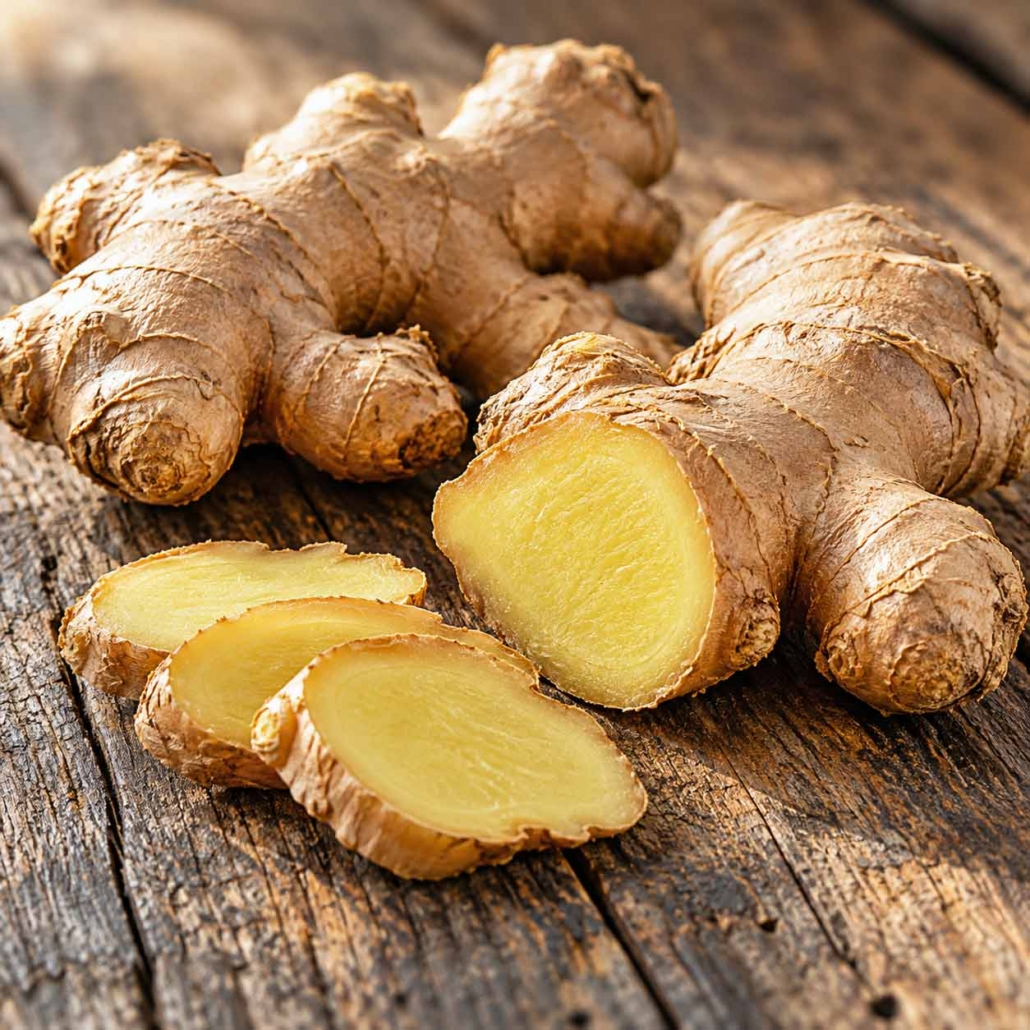
Thermogenic Ingredient - Ginger Extract

Ginger

Ginger comes from the rhizome of Zingiber officinale. It is used in foods and supplements, and its familiar warming flavor can fit naturally into thermogenic or metabolic-support concepts. Ginger is available in multiple forms, including powders and extracts. These forms differ in flavor intensity and composition, so brands should identify the ingredient form and relevant specifications.

In product development, ginger may provide a recognizable botanical story as well as a spicy, aromatic taste. That can work well in teas, drink mixes, and flavored powders, but it may need balancing with sweeteners, acids, or complementary flavors.

Formulators should assess the ginger ingredient’s potency, flavor contribution, and compatibility with other botanicals. Consumers may also have individual tolerability differences, so product education should avoid implying that a familiar food ingredient will be suitable for everyone.

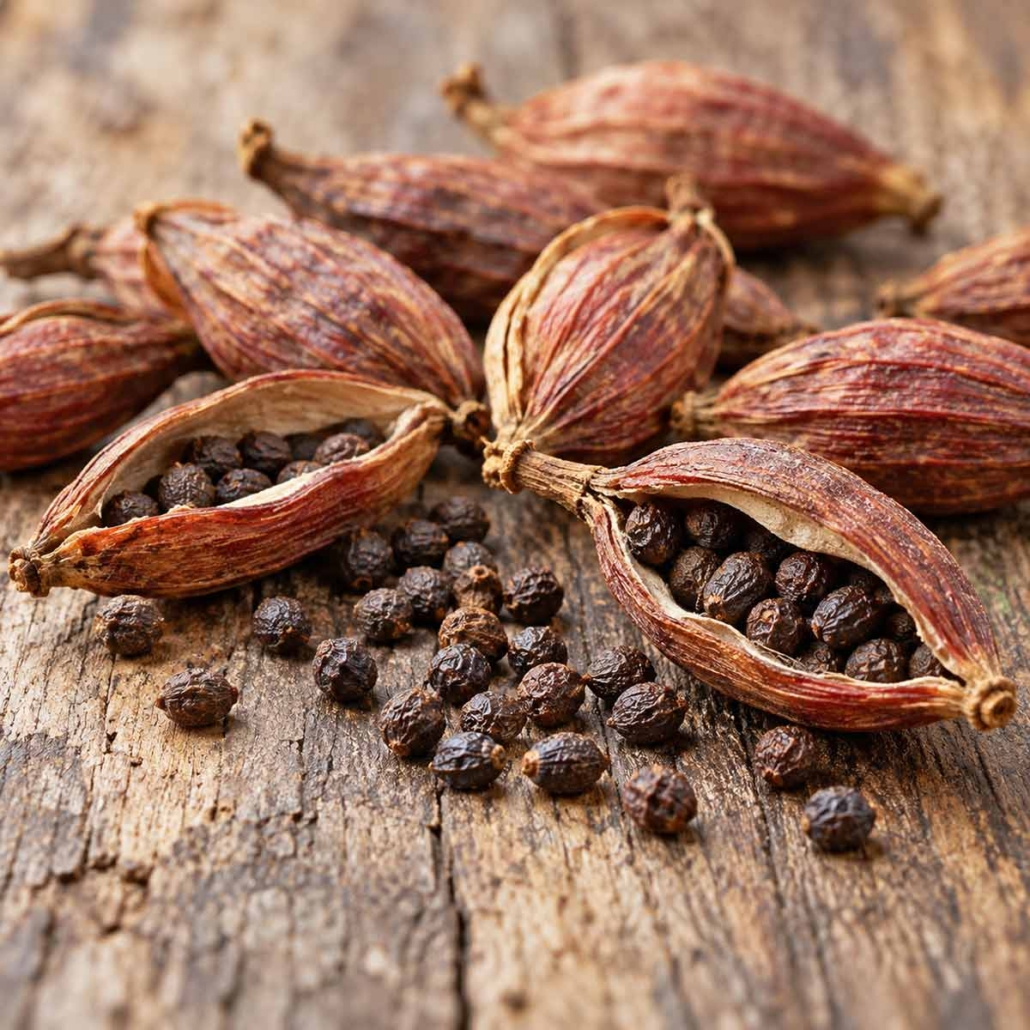
Thermogenic Ingredient - Grains of Paradise

Grains of Paradise

Grains of Paradise (Aframomum melegueta) is a spice in the ginger family. Its seeds have a peppery, warming flavor, and extracts are used in some products positioned for thermogenic or metabolic support. As with other botanicals, ingredient identity and extract specifications matter: the plant part, extraction method, and concentration can affect the finished ingredient’s composition.

For formulators, this ingredient may add a distinctive botanical component without relying on caffeine as the primary product story. However, it can influence flavor and may be unfamiliar to consumers.

Brands should use clear naming and product education, while avoiding promises that go beyond the formula’s intended role. In powders or beverages, sensory testing can help determine whether the peppery notes complement the flavor system or require masking.

Thermogenic Supplements 06

Piperine (Black Pepper Extract)

Piperine is the pungent compound found in black pepper (Piper nigrum). In supplements, it is often provided as a concentrated black pepper extract and included to support the absorption of other ingredients. Because piperine can affect enzymes and transporters involved in how the body processes compounds, it may change the bioavailability of some co-formulated ingredients — and potentially some medications.

For formulation, piperine may be considered for its potential role in ingredient bioavailability rather than as the formula’s primary thermogenic.

Concentrated piperine can interact with drug-metabolizing enzymes and transporters, potentially changing the exposure to certain medications. Consumers who take medication should consult a healthcare professional before using supplements containing concentrated piperine.

Thermogenic Ingredient - Forskolin

Forskolin

Forskolin is a compound extracted from the roots of Coleus forskohlii, a plant native to parts of South Asia. It appears in some weight-management supplements because researchers have proposed that it may affect cyclic adenosine monophosphate (cAMP), a cellular signaling molecule involved in processes such as fat breakdown. This proposed pathway is why forskolin is sometimes included in discussions of thermogenic or “fat-burning” ingredients.

However, forskolin should not be described as a proven thermogenic. The NIH Office of Dietary Supplements notes that human research on Coleus forskohlii is limited. Those studies did not establish that forskolin meaningfully increases thermogenesis in people.

For formulators, forskolin’s proposed mechanism and its consumer-facing role should be kept distinct. An ingredient’s effect on a cellular pathway does not, by itself, show that a finished supplement will increase daily energy expenditure or cause fat loss.

If a product includes forskolin, the ingredient identity, extract specifications, and amount of forskolin should be clear, and product education should avoid promising a specific thermogenic outcome.

Safety also deserves consideration. Reported effects include more frequent bowel movements and loose stools. Forskolin may affect blood pressure or interact with some medications; people taking blood-pressure medicines or anticoagulants should consult a healthcare professional before using it. The available research does not establish long-term safety.

Thermogenic Ingredient - Bitter Orange

Bitter Orange

Bitter orange, also called Seville or sour orange, is a citrus botanical (Citrus aurantium) whose fruit contains p-synephrine and other naturally occurring compounds. Bitter orange extract appears in some weight-management and sports-nutrition supplements, where it is used for metabolic or thermogenic positioning. The extract’s composition can vary, so the botanical name alone doesn’t tell consumers how much p-synephrine a product contains.

Synephrine is sometimes described as a stimulant-like ingredient because it may influence pathways involved in energy expenditure. However, p-synephrine is not the same compound as ephedrine, and the body effects of bitter orange are not fully understood.

Bitter orange also complicates the label term “stimulant-free.” A formula containing bitter orange or synephrine should not casually be described as stimulant-free simply because it contains no caffeine. Brands should state whether a product is caffeine-free and identify synephrine content where applicable, rather than using “stimulant-free” without defining it.

Safety deserves particular attention, especially in products that combine bitter orange with caffeine or other stimulants. Research on cardiovascular effects is inconclusive: some studies report increases in heart rate or blood pressure, while others do not.

Serious events have been reported among people taking bitter-orange products, but many involved multi-ingredient products, so bitter orange’s role could not be isolated. People taking medication, or who are pregnant or nursing, should consult a healthcare professional before use.

Thermogenic Ingredient - Green Coffee Bean Extract

Green Coffee Bean Extract

Green coffee bean extract comes from unroasted coffee seeds. Unlike roasted coffee beans, green coffee beans retain higher levels of chlorogenic acids, a group of naturally occurring compounds often highlighted in supplement formulations.

The extract may also contain caffeine, although decaffeinated versions are available. Therefore, “green coffee bean extract” alone doesn’t tell consumers how much caffeine or chlorogenic acids a product provides.

Chlorogenic acids have been studied for possible effects on glucose metabolism and fat accumulation. These proposed mechanisms are why green coffee bean extract is sometimes included in weight-management or thermogenic formulas. However, they shouldn’t be presented as proof that the ingredient increases thermogenesis in people.

For formulators, extract specifications are central. Brands should know whether the material is standardized for chlorogenic acids, how much caffeine it contains, and whether the finished product is intended to be caffeinated or decaffeinated. That information can help guide ingredient selection, serving instructions, and clear consumer-facing descriptions.

Green coffee bean extract appears to be generally tolerated in the limited research available, but its safety hasn’t been rigorously studied. Reported effects include headache and urinary tract infections, and naturally occurring caffeine can contribute to stimulant-related effects. Consumers should consider the total caffeine in the product and their intake from other sources.

Stimulant-Free Thermogenics: What Can They Promise?

“Stimulant-free” generally means the formula does not contain caffeine or other ingredients included primarily for a stimulant effect. Consumers may look for these products when they want to avoid caffeine, use a thermogenic product later in the day, or keep stimulant intake lower.

However, the label does not tell consumers exactly what experience to expect. A stimulant-free formula may be positioned for metabolic or weight-management support, but it won’t necessarily create the alertness or noticeable energy that some people associate with caffeinated products. Nor does stimulant-free mean side-effect-free: individual ingredients can still be unsuitable for some people.

For brands, the opportunity is to define the concept precisely:

  • Identify the intended use, such as a non-caffeinated option within a weight-management routine.
  • State clearly whether the formula contains caffeine or other stimulants.
  • Avoid implying that the product delivers the same effects as a stimulant-based formula.
  • Explain how the product fits alongside everyday habits, rather than presenting it as a stand-alone solution.

The clearest product education helps consumers distinguish between a formula’s ingredient profile, its intended positioning, and the experience they can reasonably expect.

Choosing a Thermogenic Supplement Format

An ingredient list doesn’t tell the whole story. A formula also needs to work as a finished product: the ingredients must fit the intended serving size, taste acceptable in the chosen format, and remain compatible with the manufacturing process.

For example, a powder offers room for flavor systems and flexible serving sizes, but bitter or pungent ingredients may require masking.

Capsules avoid some taste challenges, although the serving may require multiple capsules when the formula contains several ingredients.

Gummies can be convenient and approachable, but formulation space and ingredient stability may limit what the product can contain.

Format Potential advantages Formulation considerations
Capsules Portable, familiar, and can avoid strong ingredient flavors Serving size may require multiple capsules; powder flow, fill weight, and ingredient compatibility matter
Powders Flexible serving sizes and room for flavor systems Bitter, spicy, or botanical notes may need masking; mixability and serving convenience are important
Stick packs Portable, premeasured, and easy to take on the go Space is limited, so serving size and ingredient load must fit the pack
Gummies Convenient and approachable for some consumers Limited space for active ingredients; taste, texture, stability, and sweetener choices require careful formulation

When deciding between formats, brands should consider more than shelf appeal. The ingredient load, sensory profile, manufacturing process, packaging, and intended usage occasion all affect the finished product.

For example, a strongly flavored botanical may work more naturally in a flavored powder than in a gummy, while a capsule may suit a formula where taste masking is a priority.

Safety & Side Effects

INFOGRAPHIC: Thermogenic Supplement Safety And Side Effects

Thermogenic supplements can contain stimulants, botanicals, or combinations of ingredients that affect people differently. Stimulant-containing products may cause jitters, anxiety, headaches, digestive upset, or an increased heart rate in some users.

Effects may be more noticeable when consumers take more than the label directs or combine the product with other sources of caffeine or stimulants.

Higher stimulant exposure can also raise concerns about blood pressure and cardiovascular strain. A product’s risk profile depends on its ingredients, amounts, the person using it, and other products or medications they take. Consumers with high blood pressure or a heart condition should consult a healthcare professional before using stimulant-containing thermogenic products.

Thermogenic supplements are generally not appropriate for children. People who are pregnant or nursing should consult a healthcare professional before using weight-management supplements.

Product labels should provide clear serving directions, identify stimulant content, and include relevant precautions. Brands should also consider how their product education can help consumers understand cumulative stimulant intake across supplements, beverages, and foods.

Ready to Develop a Thermogenic Supplement?

Thermogenic supplements are best understood as products formulated around heat production and energy-related processes — not as products that independently cause fat loss. Consumers may consider them for energy, workout routines, or as one part of a broader weight-management approach.

For brands, a strong concept begins with a clear intended use and an ingredient profile that supports it. Then, the format, sensory experience, label information, and product education should reinforce the same message. Clear explanations of what a product is designed to do — and what consumers shouldn’t assume — help make the category easier to understand.

Intermountain Nutrition can help brands develop and scale powder, capsule, and gummy concepts, from formulation through finished-product manufacturing. Let’s build what’s next.

Frequently Asked Questions

A thermogenic supplement is formulated to support processes related to heat production and energy use. Depending on the formula, it may also be designed for energy or workout support. The term thermogenic does not mean that a product directly melts body fat.

The phrase fat-burning supplement is often used broadly in product marketing. Thermogenesis refers to heat production, while fat oxidation refers to using fat as fuel. Neither term alone tells a consumer whether body fat will decrease. Weight management involves broader factors, including eating patterns, activity, sleep, and individual health.

Thermogenic describes heat production in the body. Fat oxidation describes the use of fat as a fuel source. They’re related to energy metabolism, but they are not interchangeable terms and do not guarantee the same outcome.

Yes. Some products are formulated without caffeine or other ingredients primarily used for stimulant effects. However, stimulant-free formulas may not produce the noticeable alertness associated with caffeine, and “stimulant-free” does not mean risk-free or appropriate for everyone.

There is no single best format for every formula or consumer. Capsules can help avoid strong flavors, powders allow flavoring and flexible serving sizes, and gummies offer a chewable option. Ingredient amounts, sensory characteristics, manufacturing needs, and consumer preferences all influence format selection.

People who are sensitive to stimulants, have high blood pressure or a heart condition, or take medications should discuss use with a healthcare professional. Children should not use these products. People who are pregnant or nursing should also seek professional guidance before using supplements for weight management.

References

Carpentier, A. C., Blondin, D. P., Haman, F., & Richard, D. (2023). Brown adipose tissue: Activation and metabolism in humans. The Journal of Clinical Endocrinology & Metabolism, 108(4), 935–949.

Cannon, B., & Nedergaard, J. (2004). Brown adipose tissue: Function and physiological significance. Physiological Reviews, 84(1), 277–359.

National Center for Complementary and Integrative Health. (2023, November). Bitter orange: Usefulness and safety.

National Center for Complementary and Integrative Health. (2024, June). 6 things to know about dietary supplements marketed for weight loss.

National Institutes of Health, Office of Dietary Supplements. (n.d.). Dietary supplements for weight loss: Fact sheet for health professionals. Retrieved October 29, 2026.

National Research Council. (2023). Factors affecting energy expenditure and requirements. In Dietary reference intakes for energy. National Academies Press.

Ravussin, E., & Galgani, J. E. (2011). The thermic effect of food: A review. European Journal of Clinical Nutrition, 65(10), 1132–1139.

Schutz, Y., & Garrel, D. R. (2021). Non-exercise activity thermogenesis in human energy homeostasis. In Endotext. MDText.com, Inc.

Related Postings

Golden pear-colored craving control gummy supplements featuring saffron and chromium
a team of scientists and business professionals discussing a supplement product
a trade show attendee discussing nutraceutical formulation at the Intermountain Nutrition exhibitor booth at SupplySide Global 2026