Botanicals for Liver, Detox & Metabolic Supplements
Targeted plant-based ingredients for hormone, cycle, and life-stage support


Targeted plant-based ingredients for hormone, cycle, and life-stage support
These botanicals are commonly formulated to support multiple wellness pathways connected to metabolic health, antioxidant activity, cellular wellness, and healthy detoxification processes. Because these systems work together throughout the body, brands often combine several botanicals to create more comprehensive wellness formulations.
Milk thistle, turmeric, burdock root, and yellow dock are commonly used in formulations designed to support healthy liver function and overall wellness. In particular, milk thistle remains one of the most recognized botanicals in liver-support products because of its association with antioxidant activity and cellular protection.
Botanicals frequently appear in detoxification formulas designed to support the body’s natural cleansing processes and daily wellness routines. Additionally, many detox-focused formulations combine liver-support botanicals with digestive and antioxidant ingredients to create more comprehensive wellness systems.
Barberry, gymnema, cinnamon, banaba, white mulberry, and bitter melon are commonly used in formulations designed to support healthy glucose metabolism and metabolic balance. As a result, these ingredients are often positioned within blood sugar support, healthy aging, and lifestyle wellness products.
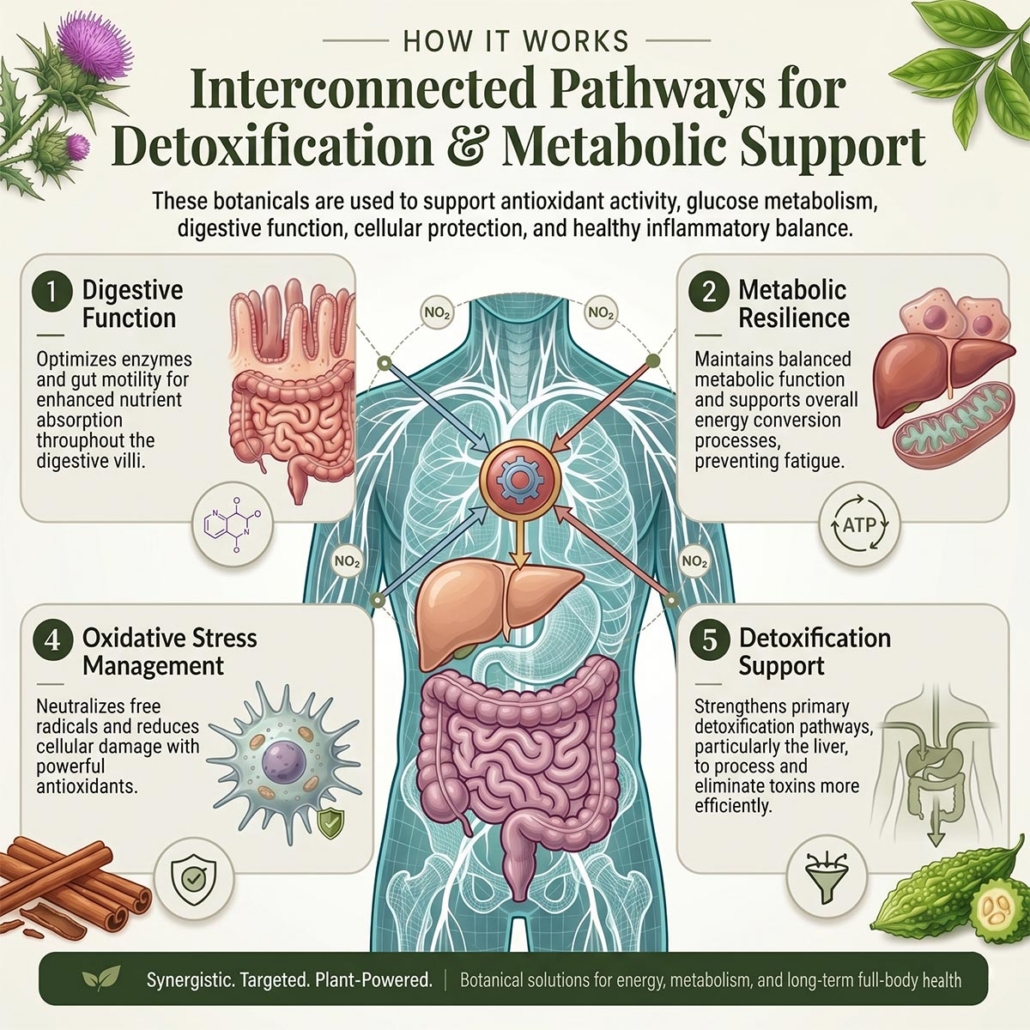
Many of these botanicals also contain naturally occurring polyphenols, flavonoids, catechins, or alkaloids that align with healthy aging, oxidative stress management, and daily wellness positioning. As a result, brands increasingly combine these ingredients into multifunctional formulations targeting metabolic resilience, detoxification support, energy balance, and proactive wellness routines.
Because these systems are highly interconnected, formulators often develop synergistic blends that combine liver support, digestive wellness, antioxidant activity, and metabolic health into a single consumer-friendly product platform.
Flavor development plays an important role in liver, detox, and metabolic wellness formulations, especially in powders, gummies, stick packs, and functional beverages. Many botanical ingredients naturally carry bitter, earthy, tannic, or astringent flavor notes that require careful sensory balancing.
Ingredients such as berberine-containing botanicals, turmeric, gymnema, green tea, and bitter melon can create strong flavor challenges when used at meaningful inclusion levels. Therefore, successful formulations often rely on strategic flavor masking systems, complementary botanical profiles, and acid balancing techniques to improve consumer acceptance.
Lagerstroemia speciosa
Pride of India | Queen’s Crape Myrtle | Jarul | Banaba Leaf | Crepe Myrtle | Queen’s Flower
Banaba is a tropical botanical traditionally used in metabolic wellness formulations because it naturally contains corosolic acid and polyphenolic compounds associated with healthy glucose metabolism and antioxidant activity.
Banaba grows primarily throughout Southeast Asia, including the Philippines, India, Malaysia, and parts of Indonesia. Farmers typically harvest the leaves during peak maturity to maximize active compound content, particularly corosolic acid.
After harvesting, processors carefully dry and extract the leaves using water or solvent extraction methods to create concentrated botanical ingredients standardized for metabolic wellness formulations.
Banaba is most commonly associated with metabolic wellness and healthy glucose support. In particular, formulators often use banaba extract in products designed to support healthy carbohydrate metabolism, metabolic balance, and overall wellness routines. Because consumers increasingly focus on proactive metabolic health, banaba continues to gain traction in modern supplement formulations.
One of banaba’s most recognized compounds is corosolic acid, which researchers have studied for its role in glucose metabolism and cellular nutrient utilization. Additionally, banaba naturally contains ellagitannins and antioxidant polyphenols that contribute to its positioning within healthy aging and oxidative stress management categories.
Brands frequently combine banaba with ingredients such as berberine, cinnamon, gymnema, chromium, alpha lipoic acid, and white mulberry to create more comprehensive metabolic support systems. As a result, banaba appears in a growing number of blood sugar support, healthy weight management, and lifestyle wellness products.
Beyond metabolic applications, banaba also aligns well with consumer demand for plant-based wellness solutions rooted in traditional herbal systems. Furthermore, its compatibility with capsules, powders, gummies, and stick packs gives formulators additional flexibility across delivery formats.
Because metabolic health intersects with energy balance, healthy aging, cardiovascular wellness, and daily performance, banaba often serves as part of a broader multifunctional wellness strategy rather than a single-purpose ingredient.
Banaba works particularly well in metabolic support blends that combine multiple glucose-support botanicals and minerals. Additionally, standardized extracts help support label consistency and premium positioning opportunities.
Because banaba has relatively mild sensory characteristics compared to some metabolic botanicals, formulators can more easily incorporate it into capsules, powders, and gummies.
Berberis vulgaris
Berberry | European Barberry | Common Barberry | Barberry Root | Berberine Bark | Sowberry
Barberry is a berberine-containing botanical commonly used in metabolic wellness formulations for healthy glucose metabolism, digestive support, and antioxidant defense.
Barberry grows as a thorny shrub across Europe, North Africa, Western Asia, and parts of the Middle East. For supplement use, manufacturers typically harvest the root bark, stem bark, or fruit, depending on the target application.
After harvesting, processors dry and extract the plant material to concentrate naturally occurring alkaloids, especially berberine, for metabolic health formulations.
Barberry is best known as a natural botanical source of berberine, a bright yellow alkaloid widely used in metabolic health supplements. In modern formulations, barberry often appears in products designed to support healthy glucose metabolism, lipid metabolism, digestive wellness, and overall metabolic balance. Because consumers increasingly connect blood sugar support with energy, weight management, and healthy aging, barberry offers strong positioning value for supplement brands.
Within the body, berberine-focused ingredients support metabolic wellness by interacting with pathways involved in glucose utilization, cellular energy balance, and carbohydrate metabolism. Additionally, barberry contains plant compounds that contribute to antioxidant defense, which makes it useful in formulas designed for long-term wellness and oxidative stress management.
Beyond metabolic support, barberry has a long history of use in traditional herbal systems for digestive and liver-adjacent wellness applications. As a result, formulators often include it in products that connect gut health, metabolic function, and daily detoxification support. This positioning works especially well in multifunctional formulas where consumers want broader wellness benefits from one product.
Barberry also pairs strategically with cinnamon, banaba, gymnema, bitter melon, white mulberry, chromium, alpha lipoic acid, and fiber ingredients. Together, these combinations can create a more complete metabolic support platform for brands targeting blood sugar support, healthy weight management, and proactive wellness routines.
Because berberine has strong consumer recognition, barberry can help brands tell a compelling botanical story while still aligning with science-forward metabolic health trends.
Barberry extract works well in capsules and powders, especially when brands want to highlight natural berberine content. However, berberine-containing extracts can taste intensely bitter, so gummies, stick packs, and flavored powders require careful taste masking.
For premium positioning, standardized berberine content can help improve label clarity, formulation consistency, and consumer confidence.
Momordica charantia
Bitter Gourd | Bitter Apple | Bitter Squash | Karela | Momordica, Balsam Pear
Bitter melon is a tropical botanical traditionally used in metabolic wellness formulations because it contains naturally occurring compounds associated with healthy glucose metabolism and digestive support.
Bitter melon grows throughout tropical and subtropical regions, including India, China, Southeast Asia, Africa, and the Caribbean. Farmers typically harvest the fruit while it remains green and nutrient-dense.
After harvesting, processors dry the fruit or prepare concentrated extracts standardized for key phytonutrients commonly used in metabolic wellness, digestive support, and botanical blood sugar formulations.
Bitter melon is widely recognized for its role in metabolic wellness and healthy glucose support formulations. Traditionally used throughout Ayurvedic and Asian herbal systems, bitter melon continues to gain popularity as consumers seek more plant-based approaches to metabolic health and proactive wellness.
Within the body, bitter melon contains naturally occurring compounds such as charantin, vicine, and polypeptide-p, which researchers have studied for their relationship to glucose metabolism and carbohydrate utilization.
Because of these characteristics, formulators commonly include bitter melon in products designed to support healthy blood sugar balance, metabolic efficiency, and daily wellness routines.
Additionally, bitter melon contains antioxidant compounds that contribute to its positioning within healthy aging and oxidative stress management categories. As metabolic health conversations increasingly connect with energy balance, cardiovascular wellness, and longevity support, bitter melon aligns well with broader multifunctional wellness strategies.
Beyond metabolic positioning, bitter melon also has a strong heritage story rooted in traditional wellness systems. Consequently, brands often use it to strengthen botanical credibility and appeal to consumers seeking holistic, plant-forward supplement solutions.
Because consumers increasingly prioritize preventive wellness and daily metabolic support, bitter melon continues to expand across capsules, powders, stick packs, gummies, and functional wellness blends.
Bitter melon delivers strong metabolic positioning value; however, it naturally carries an intensely bitter flavor profile. Therefore, flavored delivery systems often require advanced taste masking, sweetener balancing, or complementary spice and citrus flavor systems. Capsules remain one of the simplest formats for higher inclusion levels, although powdered wellness blends continue to gain traction in the category.

Arctium lappa
Great Burdock | Edible Burdock | Gobo | Beggar’s Buttons | Lappa Root | Thorny Burr
Burdock root is a traditional botanical commonly used in detoxification, digestive wellness, and antioxidant support formulations because it naturally contains polyphenols, inulin fiber, and plant-based antioxidant compounds.
Burdock grows throughout Europe and Asia and is now cultivated in North America as well. Farmers primarily harvest the long taproot during the plant’s first year of growth, when nutrient density remains highest. After harvesting, processors carefully wash, dry, and mill or extract the root for use in detoxification blends, digestive wellness products, and traditional botanical formulations.
Burdock root has a long history of use within traditional herbal wellness systems, particularly in formulations focused on detoxification, digestive balance, and overall wellness support. Because consumers increasingly seek holistic and plant-based wellness solutions, burdock root continues to gain attention in modern botanical supplement formulations.
Within the body, burdock root provides naturally occurring antioxidant compounds, polyphenols, and inulin fiber that contribute to its wellness positioning. In particular, formulators often use burdock root in products designed to support healthy detoxification pathways, digestive wellness, and antioxidant defense. Additionally, its traditional association with cleansing and whole-body wellness makes it especially appealing in daily detox and lifestyle support products.
Burdock root also aligns well with growing consumer interest in gut health and microbiome-supportive ingredients. Because it naturally contains inulin, a prebiotic fiber, brands frequently incorporate it into formulations that connect digestive wellness with metabolic health and long-term wellness strategies.
As detoxification products evolve beyond short-term cleanses into daily wellness routines, burdock root offers brands a recognizable botanical ingredient with strong traditional roots and broad multifunctional positioning opportunities.
Burdock root works well in capsules, powders, tinctures, and botanical wellness blends. However, because the ingredient naturally carries earthy and slightly bitter flavor notes, flavored applications often benefit from ginger, citrus, berry, or spice-forward masking systems. Additionally, burdock root pairs effectively with fiber systems and digestive-support botanicals in multifunctional wellness formulas.

Camellia sinensis
Green Tea Extract | Chinese Tea | Matcha | Sencha | EGCG Tea | Tea Leaf Extract
Green tea is a polyphenol-rich botanical widely used in metabolic wellness, antioxidant, energy, and healthy aging formulations because it naturally contains catechins, including EGCG, along with naturally occurring caffeine and phytonutrients.
Green tea comes from the leaves of Camellia sinensis, which growers cultivate primarily in China, Japan, India, Sri Lanka, and other parts of Asia. Unlike black tea, green tea undergoes minimal oxidation after harvest to preserve catechins and antioxidant compounds. After steaming or pan firing, processors dry, mill, or extract the leaves to create concentrated ingredients for wellness formulations.
Green tea remains one of the most recognizable and extensively used botanical ingredients in the global wellness market. Because it naturally contains catechins, polyphenols, and EGCG (epigallocatechin gallate), green tea frequently appears in formulations designed to support antioxidant defense, metabolic wellness, energy balance, and healthy aging.
Within the body, green tea supports metabolic-focused formulations through compounds associated with energy metabolism and oxidative stress management.
As a result, brands commonly position green tea in products targeting active lifestyles, daily wellness, weight management support, and proactive healthy aging routines.
Additionally, green tea naturally contains caffeine, although caffeine levels vary depending on the extract type and processing method. Therefore, formulators often use green tea in energy-support products where consumers want a more balanced botanical alternative to synthetic stimulants.
At the same time, decaffeinated green tea extracts allow brands to maintain antioxidant positioning without emphasizing stimulant effects.
Beyond functionality, green tea offers exceptional consumer recognition and premium positioning potential. Because consumers strongly associate green tea with longevity, wellness rituals, and clean-label health trends, it helps brands build products that feel both science-forward and approachable.
Green tea works exceptionally well in capsules, powders, stick packs, gummies, and functional beverage concepts. However, concentrated extracts can introduce bitterness, tannic notes, and astringency, especially in higher-EGCG formulations. Therefore, formulators often pair green tea with citrus, berry, ginger, mint, or tropical flavor systems to improve palatability and consumer experience.
Cinnamomum verum
Ceylon Cinnamon | True Cinnamon | Cinnamon Bark | Ceylon Cinnamon Bark | Sweet Cinnamon | Sri Lankan Cinnamon
Cinnamon is a fragrant botanical spice commonly used in metabolic wellness formulations for healthy glucose metabolism, antioxidant support, and consumer-friendly flavor positioning.
Cinnamon comes from the inner bark of Cinnamomum verum, a tropical evergreen tree primarily cultivated in Sri Lanka, India, Madagascar, and parts of Southeast Asia. Growers harvest young shoots, then carefully peel, dry, and curl the inner bark into quills. After drying, processors mill or extract the bark for use in capsules, powders, gummies, and functional wellness blends.
Cinnamon is one of the most familiar botanicals in metabolic wellness, which gives brands a strong advantage in consumer recognition and ingredient storytelling. In supplement formulations, cinnamon commonly supports healthy glucose metabolism, carbohydrate utilization, antioxidant defense, and daily metabolic balance.
In the body, cinnamon contains naturally occurring polyphenols and aromatic compounds that align with metabolic health and oxidative stress management.
Because of this, formulators often include cinnamon in blood sugar support blends, healthy aging products, and lifestyle wellness formulas. Additionally, cinnamon’s warm, recognizable flavor helps bridge the gap between functional benefit and enjoyable daily use.
Cinnamon can strengthen both the functional positioning and the sensory experience of capsules, powders, stick packs, gummies, and chewables.
For supplement brands, cinnamon offers a rare combination of botanical credibility, consumer familiarity, and formulation versatility.
Because consumers already associate cinnamon with wellness, warmth, and blood sugar support, it can make metabolic health products feel more approachable, memorable, and marketable.
Cinnamon works especially well in powders, gummies, and stick packs because its flavor complements chai, apple, vanilla, cocoa, ginger, and spice-forward profiles.
However, formulators should carefully select the cinnamon species and extract type, since Cinnamomum verum supports a more premium “true cinnamon” positioning.

Gymnema sylvestre
Gurmar | Sugar Destroyer | Australian Cowplant | Periploca of the Woods | Meshasringi | Miracle Fruit Plant
Gymnema is a traditional Ayurvedic botanical commonly used in metabolic wellness formulations because it contains gymnemic acids associated with healthy glucose metabolism and carbohydrate balance support.
Gymnema grows primarily in the tropical forests of India, Sri Lanka, Southeast Asia, and parts of Africa. Farmers harvest the leaves once the plant reaches maturity, then carefully dry and process them to preserve active compounds, especially gymnemic acids. After processing, manufacturers create powders or standardized extracts for use in metabolic wellness, glucose support, and botanical lifestyle formulations.
Gymnema has a long history of use within Ayurvedic wellness systems, particularly in formulations designed to support healthy glucose metabolism and carbohydrate balance. Today, it remains one of the most recognized botanical ingredients in metabolic wellness products because consumers increasingly seek plant-based support for proactive health management.
Within the body, gymnema contains naturally occurring gymnemic acids that researchers have studied for their relationship to glucose metabolism and carbohydrate utilization. Because of these properties, formulators commonly include gymnema in blood sugar support, metabolic wellness, and healthy aging formulations.
Gymnema also stands out because of its traditional association with sweetness perception and sugar-focused wellness strategies. As a result, brands frequently position it in products designed to support balanced wellness routines, healthy lifestyle habits, and long-term metabolic resilience.
Gymnema works well in capsules, tablets alternatives such as powders, stick packs, and metabolic wellness blends. However, concentrated extracts can introduce bitter and herbal flavor notes, especially in higher-potency formulations. Therefore, flavored applications often benefit from citrus, berry, spice, or botanical masking systems to improve palatability and overall sensory experience.
Pueraria lobata
Japanese Kudzu | Kudzu Root | Ge Gen | Chinese Kudzu | Kudzu Vine | East Asian Arrowroot
Kudzu is a traditional botanical rich in naturally occurring isoflavones that is commonly used in wellness formulations focused on metabolic balance, antioxidant support, and overall system resilience.
Kudzu grows throughout China, Japan, Korea, and other parts of East Asia, although it also grows extensively in the southeastern United States. Manufacturers primarily harvest the large starchy root, which contains the highest concentration of beneficial plant compounds. After harvesting, processors clean, dry, and mill or extract the root to create concentrated ingredients for botanical wellness and metabolic support formulations.
Kudzu has a long history of use within Traditional Chinese Medicine, where practitioners traditionally incorporated the root into wellness systems designed to support balance, vitality, and overall health.
Today, formulators increasingly use kudzu in modern botanical products because it contains naturally occurring isoflavones, including puerarin and daidzin, that align with antioxidant and metabolic wellness positioning.
Within the body, kudzu is commonly associated with antioxidant activity and cellular wellness support. Because oxidative stress management plays an important role in healthy aging and metabolic resilience, kudzu fits well into formulations designed for long-term proactive wellness routines.
Additionally, its traditional wellness heritage helps brands create stronger botanical storytelling opportunities for consumers seeking plant-forward health solutions.
Kudzu root works well in capsules, powders, and botanical wellness blends because it offers relatively manageable sensory characteristics compared to more intensely bitter metabolic botanicals.
However, earthy and starchy flavor notes may still require balancing in flavored applications. Additionally, standardized extracts can help support consistency, premium positioning, and stronger formulation storytelling.
Silybum marianum
St. Mary’s Thistle | Marian Thistle | Holy Thistle | Lady’s Thistle | Wild Artichoke | Silymarin Thistle
Milk thistle is a liver-support botanical commonly used in wellness formulations because it naturally contains silymarin compounds associated with antioxidant activity, cellular protection, and healthy liver function support.
Milk thistle grows throughout the Mediterranean region and is now cultivated across Europe, North America, South America, and parts of Asia. Manufacturers primarily harvest the seeds, which contain concentrated silymarin flavonoids. After harvesting, processors clean, dry, and extract the seeds to create standardized botanical ingredients widely used in liver wellness, detoxification, and antioxidant support formulations.
Milk thistle remains one of the most recognized botanical ingredients for liver wellness and detoxification support. Because consumers increasingly prioritize proactive wellness and daily detox support, milk thistle continues to serve as a foundational ingredient across modern botanical formulations.
Within the body, milk thistle contains a group of flavonoid compounds collectively known as silymarin. These compounds contribute to the ingredient’s strong association with antioxidant defense, cellular protection, and healthy liver function support. As a result, formulators frequently include milk thistle in products designed to support detoxification pathways, metabolic wellness, and long-term wellness routines.
Milk thistle works well in capsules, powders, stick packs, and botanical wellness blends. However, concentrated extracts can introduce earthy and slightly bitter sensory characteristics, especially in flavored delivery systems. Therefore, formulators often pair milk thistle with citrus, berry, ginger, or spice-forward flavor systems to improve palatability and overall consumer experience.

Curcuma longa
Indian Saffron | Curcumin Root | Turmeric Root | Golden Spice | Haldi | Curcuma Root
Turmeric is a polyphenol-rich botanical commonly used in metabolic wellness, antioxidant, and healthy aging formulations because it naturally contains curcuminoids associated with cellular protection and oxidative stress management.
Turmeric grows primarily throughout India, Southeast Asia, Sri Lanka, and parts of Central America. Farmers cultivate the plant for its underground rhizomes, which they harvest, boil, dry, and mill into powder or extract into concentrated curcuminoid ingredients. Manufacturers often standardize turmeric extracts for curcumin content to support consistency, formulation performance, and premium product positioning.
Turmeric remains one of the most recognized and widely used botanical ingredients in the global supplement industry. Because consumers strongly associate turmeric with wellness, longevity, and proactive health support, it continues to appear across metabolic wellness, healthy aging, beauty-from-within, and daily vitality formulations.
Within the body, turmeric contains naturally occurring curcuminoids, including curcumin, which contribute to its strong antioxidant positioning. As a result, formulators frequently include turmeric in products designed to support oxidative stress management, cellular wellness, and overall system resilience. Additionally, turmeric aligns well with wellness strategies focused on healthy aging and proactive lifestyle support.
Beyond functionality, turmeric offers exceptional storytelling and consumer familiarity. Its vibrant golden color, traditional Ayurvedic heritage, and association with holistic wellness help brands create products that feel both modern and rooted in botanical tradition.
Turmeric formulations often benefit from enhanced delivery strategies because curcuminoids naturally present bioavailability challenges. Therefore, formulators frequently pair turmeric with black pepper extract, phospholipid systems, or emulsification technologies to improve positioning and consumer appeal. Additionally, turmeric’s earthy and slightly bitter flavor profile requires careful balancing in gummies, powders, and beverage applications.

Morus alba
Mulberry Leaf | White Mulberry Leaf | Silkworm Mulberry | Chinese Mulberry | Mori Folium | Mulberry Extract
White mulberry is a botanical ingredient commonly used in metabolic wellness formulations because it naturally contains compounds associated with healthy carbohydrate metabolism, antioxidant activity, and glucose support.
White mulberry grows throughout China, Japan, Korea, India, and other parts of Asia, although cultivation now extends into Europe and North America as well. Manufacturers primarily harvest the leaves for supplement applications because they contain concentrated bioactive compounds. After harvesting, processors carefully dry and mill or extract the leaves to create powders and standardized botanical ingredients for metabolic wellness formulations.
White mulberry has a long history of use within traditional wellness systems, particularly throughout Asia. Today, it continues to gain popularity in modern supplement formulations because consumers increasingly seek plant-based ingredients that support metabolic balance and proactive wellness routines.
Within the body, white mulberry contains naturally occurring polyphenols, flavonoids, and compounds such as 1-deoxynojirimycin (DNJ), which researchers have studied for their relationship to carbohydrate metabolism and glucose support. Because of these characteristics, formulators commonly include white mulberry in products designed to support healthy glucose metabolism, metabolic wellness, and balanced lifestyle routines.
Additionally, white mulberry contributes antioxidant compounds that align well with healthy aging and oxidative stress management positioning. As a result, brands frequently use it in broader wellness systems that connect metabolic resilience with long-term vitality and cellular wellness support.
White mulberry works well in capsules, powders, gummies, and stick packs because it generally presents fewer bitterness challenges than many metabolic botanicals. However, earthy and leafy flavor notes may still require balancing in flavored applications. Additionally, standardized extracts can help improve consistency, premium positioning, and formulation storytelling opportunities.

Rumex crispus
Curly Dock | Curled Dock | Sour Dock | Narrow Dock | Yellow Dock Root | Garden Patience
Yellow dock is a traditional botanical commonly used in detoxification and digestive wellness formulations because it contains naturally occurring anthraquinones, tannins, and antioxidant plant compounds.
Yellow dock grows throughout Europe, Western Asia, North America, and other temperate regions. Manufacturers primarily use the root, which herbal suppliers typically harvest in autumn after the plant stores nutrients below ground.
After harvesting, processors clean, slice, dry, and mill or extract the root for use in detoxification, digestive wellness, and traditional botanical formulations.
Yellow dock has a long history of use in traditional herbal wellness systems, especially in formulas focused on cleansing, digestive regularity, and whole-body balance. Because consumers increasingly look for daily detoxification support rather than short-term cleanse products alone, yellow dock gives brands a recognizable botanical with strong traditional positioning.
Within the body, yellow dock contains naturally occurring anthraquinones, tannins, flavonoids, and antioxidant plant compounds. As a result, formulators often use it in products designed to support digestive wellness, natural elimination pathways, and detoxification-focused routines.
Additionally, yellow dock fits well in formulas that connect gut health, liver wellness, and antioxidant defense into one broader wellness platform.
Yellow dock works best in capsules, powders, and botanical detox blends where its traditional cleansing profile can support clear product positioning.
However, it can contribute earthy, bitter, and tannic notes in flavored formats, so formulators should use careful taste masking. Additionally, brands should evaluate dose, extract strength, and digestive tolerance when developing daily-use formulas.

| Botanical | Scientific Name | Primary Positioning | Best-Fit Benefits | Formulation Notes |
|---|---|---|---|---|
| Banaba | Lagerstroemia speciosa | Metabolic wellness and glucose support | Healthy glucose metabolism, metabolic balance, antioxidant support, healthy aging | Works well in capsules, powders, and gummies. Mild sensory profile compared to many metabolic botanicals. Standardized corosolic acid extracts support premium positioning. |
| Barberry (Berberine Source) | Berberis vulgaris | Blood sugar and metabolic support | Healthy glucose metabolism, digestive wellness, metabolic resilience, antioxidant defense | Berberine-rich extracts can taste intensely bitter. Capsules remain popular, while flavored formats require strong taste masking systems. |
| Bitter Melon | Momordica charantia | Botanical metabolic support | Glucose support, metabolic wellness, digestive balance, antioxidant activity | Naturally bitter profile requires flavor masking in powders and gummies. Often paired with spice or citrus systems. |
| Burdock Root | Arctium lappa | Detoxification and digestive wellness | Detox support, digestive wellness, antioxidant defense, liver wellness | Earthy flavor profile works best with ginger, berry, or citrus masking systems. Commonly used in detox blends and wellness powders. |
| Cinnamon | Cinnamomum verum | Metabolic and blood sugar support | Healthy glucose metabolism, antioxidant support, cardiometabolic wellness, metabolic balance | Excellent flavor compatibility for gummies, powders, and stick packs. Supports warm spice flavor systems and strong consumer familiarity. |
| Green Tea | Camellia sinensis | Antioxidant and metabolic wellness | Antioxidant defense, energy balance, healthy aging, metabolic support | Catechin-rich extracts can create bitterness and astringency. Works well with citrus, berry, mint, and tropical flavor systems. |
| Gymnema | Gymnema sylvestre | Blood sugar and carbohydrate balance | Healthy glucose metabolism, metabolic wellness, antioxidant support, healthy aging | Bitter and herbal flavor notes may require masking. Frequently combined with berberine and cinnamon in metabolic blends. |
| Kudzu | Pueraria lobata | Botanical wellness and antioxidant support | Antioxidant defense, metabolic wellness, healthy aging, cellular wellness | Relatively manageable flavor profile compared to other metabolic botanicals. Works well in capsules and powders. |
| Milk Thistle | Silybum marianum | Liver wellness and detoxification support | Liver wellness, antioxidant defense, detoxification support, cellular protection | Standardized silymarin extracts support premium positioning. Earthy flavor profile benefits from citrus or berry masking systems. |
| Turmeric | Curcuma longa | Antioxidant and healthy aging support | Oxidative stress management, cellular wellness, metabolic support, healthy aging | Curcuminoids often require enhanced delivery systems. Earthy flavor notes work well with ginger, citrus, and spice profiles. |
| White Mulberry | Morus alba | Metabolic and glucose support | Healthy glucose metabolism, antioxidant defense, metabolic wellness, healthy aging | More approachable sensory profile than many metabolic botanicals. Works well in capsules, gummies, and wellness powders. |
| Yellow Dock | Rumex crispus | Detoxification and digestive support | Digestive wellness, detoxification support, liver wellness, antioxidant defense | Earthy and tannic flavor profile may require balancing in flavored applications. Often formulated with burdock and milk thistle. |
As consumers become more proactive about metabolic wellness, supplement brands have more opportunities to develop multifunctional botanical products that support daily health goals. In particular, consumers increasingly look for products that combine blood sugar support, energy balance, antioxidant protection, and healthy aging into one convenient routine.
What are liver and metabolic support botanicals?
Liver and metabolic support botanicals are plant-based ingredients commonly used in wellness formulations designed to support healthy glucose metabolism, antioxidant defense, liver wellness, digestive balance, and overall metabolic function. Ingredients such as milk thistle, turmeric, berberine-containing botanicals, cinnamon, gymnema, and green tea are frequently incorporated into modern supplement products because consumers increasingly seek proactive wellness solutions rooted in both traditional herbal systems and science-forward formulation strategies.
Additionally, many of these botanicals naturally contain polyphenols, flavonoids, catechins, alkaloids, or antioxidant compounds that align with healthy aging and lifestyle wellness positioning. As a result, supplement brands often combine multiple botanicals into multifunctional formulations targeting metabolic resilience, detoxification support, energy balance, and daily wellness maintenance.
Why are botanical ingredients popular in metabolic wellness supplements?
Botanical ingredients continue to gain popularity because consumers increasingly prefer plant-based wellness products that support long-term health goals rather than short-term solutions alone. In particular, many consumers now connect metabolic wellness with energy balance, healthy aging, daily performance, and proactive lifestyle management.
Additionally, botanical ingredients help brands create stronger product storytelling and cleaner-label positioning. Ingredients such as turmeric, cinnamon, green tea, and milk thistle already have high consumer recognition, which can improve product familiarity and marketability. At the same time, newer metabolic-support botanicals such as banaba, gymnema, and white mulberry allow brands to develop more differentiated formulations within the growing metabolic wellness category.
Because these ingredients work well across capsules, powders, gummies, and stick packs, they also provide significant formulation flexibility for supplement innovation.
Which botanicals are commonly used for liver support formulations?
Milk thistle remains one of the most recognized botanical ingredients for liver wellness because it naturally contains silymarin compounds associated with antioxidant activity and cellular protection. Additionally, formulators frequently combine milk thistle with turmeric, burdock root, yellow dock, green tea, and other antioxidant-rich botanicals to create more comprehensive liver-support and detoxification blends.
Modern liver wellness products increasingly focus on daily wellness maintenance rather than aggressive “cleanse” positioning alone. Consequently, brands often formulate products that combine liver support with digestive wellness, antioxidant defense, and metabolic support into a broader lifestyle wellness platform.
Because consumers increasingly prioritize proactive wellness routines, liver-support botanicals continue to expand across powders, capsules, gummies, and functional wellness systems.
What formulation challenges do metabolic botanicals present?
Many metabolic-support botanicals naturally carry bitter, earthy, tannic, or astringent sensory characteristics that can create formulation challenges, especially in flavored applications. For example, berberine-containing extracts, bitter melon, gymnema, and green tea often require advanced taste masking strategies to improve palatability.
Therefore, formulators frequently use citrus, berry, spice, ginger, chai, or tropical flavor systems to balance bitterness and improve the overall sensory experience. Additionally, ingredient solubility, extract standardization, bioavailability, and dosage density can all influence formulation strategy depending on the delivery format.
Because consumers increasingly expect both efficacy and enjoyable flavor experiences, successful botanical products require careful attention to sensory optimization, ingredient compatibility, and long-term stability.
What delivery formats work best for botanical metabolic wellness products?
Botanical metabolic wellness ingredients work well across multiple delivery systems depending on the target consumer experience and positioning strategy. Capsules remain one of the most common formats because they simplify dosing and help avoid flavor challenges associated with bitter botanicals. However, powders, stick packs, gummies, and functional wellness blends continue to grow as consumers seek more convenient and enjoyable daily wellness routines.
Additionally, flavored delivery systems create opportunities for stronger product differentiation and repeat purchase behavior. For example, cinnamon, ginger, berry, citrus, and green tea flavor profiles pair particularly well with many metabolic wellness ingredients.
At Intermountain Nutrition, we help brands develop botanical formulations optimized for flavor, scalability, ingredient compatibility, and consumer appeal across a wide range of modern supplement formats.

