Sports, Energy & Performance Botanicals
Targeted plant-based ingredients for hormone, cycle, and life-stage support


Targeted plant-based ingredients for hormone, cycle, and life-stage support
Sports and performance botanicals support the body through multiple physiological pathways involved in energy production, circulation, endurance, focus, recovery, and metabolic activity.
Unlike single-mechanism stimulant systems, many botanical ingredients contain naturally occurring compounds that work synergistically to support broader performance outcomes.
Because many botanical ingredients contain naturally occurring phytochemicals, alkaloids, polyphenols, flavonoids, and adaptogenic compounds, they often provide broader multifunctional support compared to single-ingredient stimulant systems.
Some botanicals naturally contain caffeine and related alkaloids that help promote alertness, focus, and perceived energy. These ingredients are commonly used in pre-workout systems, endurance products, and active lifestyle formulations designed to support mental and physical performance.
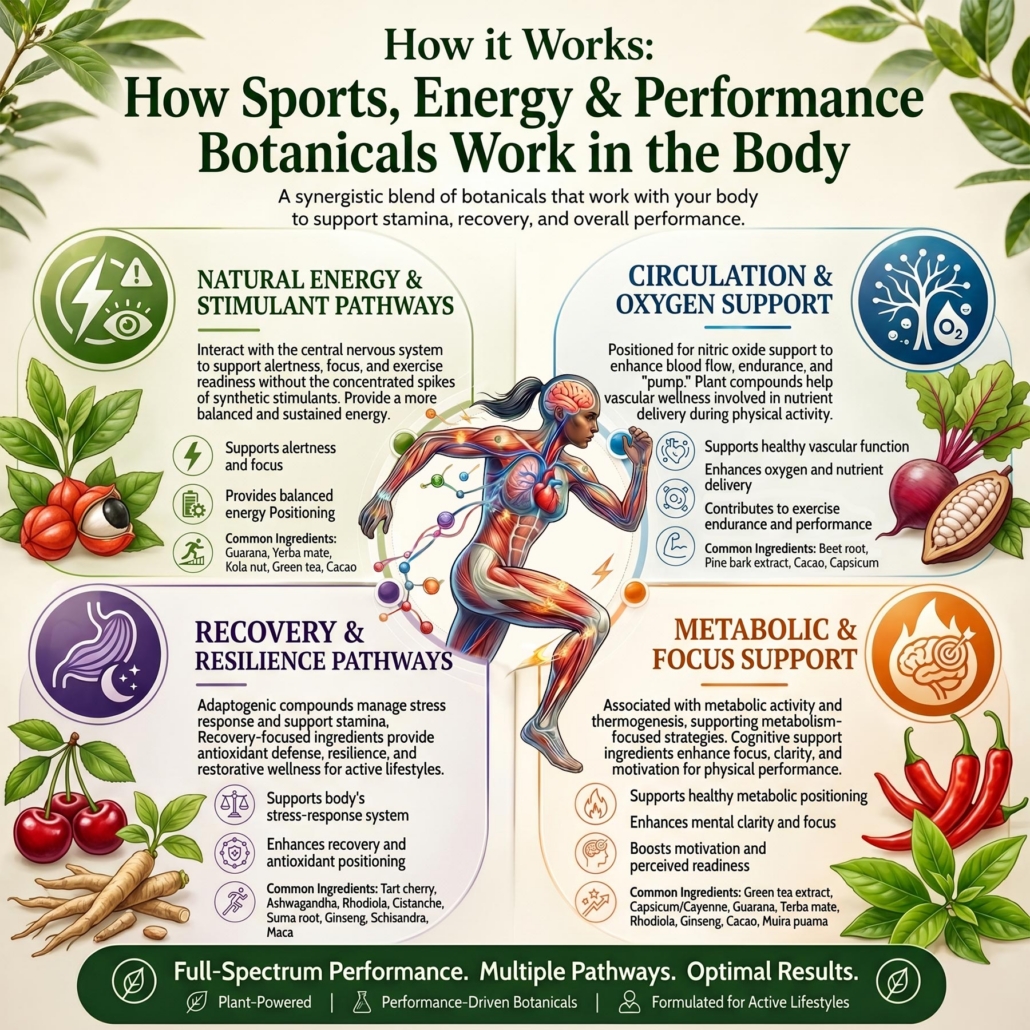
Because these botanicals provide multiple formulation pathways, they are commonly combined with:
As a result, sports and performance botanicals help brands create more sophisticated products that support energy, endurance, recovery, focus, hydration, and active lifestyle wellness within a single formulation system.
Beta vulgaris
Beetroot | red beet | garden beet | beet root powder | beet juice powder | beet extract | beetroot nitrate
Beet root comes from Beta vulgaris, a root vegetable grown in temperate regions around the world, including North America, Europe, and parts of Asia. The root is harvested at maturity, washed, sliced, dried, juiced, powdered, or concentrated into extracts.
Beet root is one of the most important botanical-style ingredients for stimulant-free sports performance. In the body, beet root’s naturally occurring nitrates can convert into nitric oxide through the nitrate–nitrite–nitric oxide pathway.
Nitric oxide plays a key role in vascular function, blood flow, oxygen delivery, and muscle efficiency during exercise. Because of this, beet root works well in pre-workout powders, endurance products, hydration systems, and “pump” formulations.
For active consumers, beet root helps brands position products around endurance, circulation, performance readiness, and exercise efficiency without relying on caffeine. This makes it especially useful for evening workouts, stimulant-sensitive consumers, and brands developing clean-label performance products.
Beet root also contains betalains and polyphenols, which support antioxidant positioning. Therefore, it can bridge performance and recovery in a single formulation story.
From a formulation perspective, beet root adds a deep red-purple color and an earthy flavor. It pairs well with citrus, berry, pomegranate, tart cherry, electrolytes, citrulline, pine bark extract, and amino acids.
Piper nigrum
Black pepper extract | peppercorn | piperine | black pepper fruit
Black pepper comes from the dried fruit of Piper nigrum, a flowering vine native to southern India and widely cultivated in tropical regions. Pepper berries are harvested at different maturity stages, then dried and processed into peppercorns, powders, or extracts. Supplement extracts are commonly standardized for piperine.
Black pepper is primarily used in sports and performance formulas for bioavailability positioning. Its active marker compound, piperine, is widely recognized in supplement formulation because it can support absorption-focused product strategies. For multi-ingredient sports formulas, this makes black pepper especially useful when brands want to highlight ingredient efficiency and advanced formulation design.
In the body, piperine may influence digestive and metabolic pathways involved in nutrient handling. Because of this, formulators often include black pepper extract at low levels alongside botanicals, amino acids, adaptogens, nootropics, and mineral systems. It works particularly well in capsules, but it can also appear in powders and stick packs when flavor contribution remains controlled.
Black pepper also contributes a warming, spicy sensory note. In some formulas, this can support a natural “performance” feel. However, in fruit-forward beverages or gummies, even low levels may create peppery notes, so sensory testing is important.
From a formulation standpoint, black pepper extract should be used intentionally. It is not usually the hero ingredient. Instead, it functions as a supporting ingredient that strengthens the formulation story around absorption, potency, and ingredient synergy.
Theobroma cacao
Cocoa | cacao bean | cocoa bean | cacao extract | cocoa powder | theobroma
Cacao comes from the seeds of Theobroma cacao, a tropical tree grown in humid regions near the equator. Major growing regions include West Africa, Central and South America, and Southeast Asia. Cacao pods are harvested when ripe, then the beans are fermented, dried, roasted, and processed into cacao powder, cocoa powder, extracts, or chocolate ingredients.
Cacao supports sports, energy, and performance products through a combination of theobromine, polyphenols, and sensory appeal. Theobromine is a naturally occurring methylxanthine, related to caffeine, but generally positioned as a smoother and milder stimulant.
Cacao flavanols and other polyphenols also support antioxidant and circulation-focused positioning. For brands, this creates a strong bridge between functional indulgence and performance nutrition.
Cacao works especially well in recovery powders, protein blends, mushroom beverages, nootropic drink mixes, and daily energy products because it adds both functional value and a familiar flavor profile.
In the body, cacao’s stimulant-like compounds support alertness and energy perception, while its polyphenols help position the ingredient around vascular wellness and recovery. Additionally, cacao can improve the consumer experience because chocolate-forward flavors often make botanical formulas feel more premium and enjoyable.

Capsicum annuum
Cayenne pepper | red pepper | chili pepper | capsicum fruit | cayenne extract | capsaicin
Capsicum and cayenne come from the fruit of Capsicum annuum, a pepper species grown widely in warm climates across North America, South America, Asia, Africa, and Europe. The ripe red fruits are harvested, dried, milled, and processed into powders or extracts. Capsaicin is the primary heat-associated compound used in supplement positioning.
Capsicum supports sports, energy, and performance formulas through thermogenic and metabolic positioning. Its key bioactive compound, capsaicin, interacts with heat-sensing pathways in the body, especially transient receptor potential channels involved in warmth and sensory stimulation. As a result, capsicum is commonly used in products positioned for metabolic activity, body composition, circulation, and pre-workout intensity.
In active lifestyle formulations, capsicum can help create a “warming” product experience. This sensory effect often reinforces consumer perception in thermogenic capsules, stimulant-free pre-workouts, metabolism-support blends, and sports nutrition stacks. Additionally, capsicum pairs well with green tea, guarana, yerba mate, caffeine, black pepper, ginger, and other metabolism-positioned ingredients.
Because capsicum can feel hot or irritating at higher levels, formulation teams need careful dose control. In powders or beverages, capsicum may create throat burn, lingering heat, or flavor imbalance. Therefore, capsules are often easier for high-impact applications. Encapsulated or standardized extracts may also help control sensory intensity.
Cistanche deserticola
Desert ginseng | Rou Cong Rong | cistanche extract | cistanche stem
Cistanche is a desert plant traditionally associated with arid regions of China and Central Asia. Cistanche deserticola is a holoparasitic plant that grows by attaching to host plants in desert ecosystems.
The fleshy stems are harvested, dried, sliced, and processed into powders or extracts. Key compounds include phenylethanoid glycosides, iridoids, lignans, and polysaccharides.
Cistanche fits the sports, energy, and performance category as an adaptogenic-style vitality botanical. Rather than acting as a stimulant, it supports performance positioning through resilience, stamina, and recovery-oriented wellness pathways. This makes it useful for brands developing caffeine-free or low-stimulant performance formulas.
Its key phytochemicals, especially phenylethanoid glycosides such as echinacoside and acteoside, help support antioxidant and vitality positioning. In active lifestyle products, cistanche works well when the formula focuses on endurance, daily performance, men’s wellness, or recovery support.
Because cistanche has an earthy and bitter sensory profile, it often performs best in capsules or in strongly flavored powder systems. It pairs well with cordyceps, rhodiola, ginseng, suma root, amino acids, and hydration blends. For premium positioning, brands should use standardized extracts and validate identity carefully because quality can vary widely across suppliers.
Paullinia cupana
Guaraná | Brazilian cocoa | guarana seed | guarana extract
Guarana is a climbing Amazonian plant native to Brazil and the broader Amazon Basin. The seeds are the primary commercial ingredient. They are harvested from mature fruit, dried, roasted or milled, and processed into powders or extracts standardized for caffeine. Guarana seeds are known for high caffeine content and polyphenols.
Guarana primarily supports energy and alertness through naturally occurring caffeine. In the body, caffeine helps reduce the perception of fatigue by interacting with adenosine receptors, which are involved in sleep pressure and tiredness signaling.
For sports and active lifestyle formulations, this makes guarana a strong fit for pre-workout products, energy powders, functional beverages, and focus blends.
In addition, guarana contains plant compounds such as tannins, catechins, and other phenolics. These compounds support antioxidant positioning and may help brands create a more botanical-forward energy story than caffeine alone.
Because guarana can vary significantly in caffeine concentration, formulation teams should standardize extracts carefully and account for total caffeine across the full formula.
From a consumer-positioning standpoint, guarana works well when brands want natural energy, sustained performance support, and clean-label stimulant appeal.
However, because it is a stimulant-containing botanical, products should include appropriate caffeine labeling and avoid overstimulation when paired with green tea, yerba mate, kola nut, or synthetic caffeine.
Cola acuminata / Cola nitida
Mexican Wild Yam | Colic Root | Rheumatism Root | China Root
Native to North America, especially woodland and thicket regions of the eastern and southeastern United States. The rhizome and root are harvested after the growing season, then dried and processed for powdered or extracted supplement forms.
Wild yam has a long history of use in traditional herbal medicine for menstrual comfort and hormone support, particularly in formulations aimed at easing discomfort associated with the menstrual cycle.
The root contains diosgenin, a plant-derived compound that has been used historically as a precursor in the synthesis of steroid hormones in pharmaceutical settings. However, it is important to note that the body does not directly convert diosgenin into hormones. Instead, wild yam is believed to support hormonal health through indirect mechanisms, including anti-inflammatory and smooth muscle-supporting effects.
These properties make wild yam relevant for formulations targeting menstrual discomfort, cramping, and general cycle support. It is often included in blends designed to promote comfort and balance rather than direct endocrine modulation.
Wild yam is also valued for its traditional positioning in women’s wellness and reproductive support, particularly in combination with other botanicals that address broader hormonal pathways. Its gentle profile and historical use contribute to its continued inclusion in modern formulations.
Ptychopetalum olacoides
Methi | Greek Hay | Bird’s Foot | Hulba
Native to the Mediterranean, Southern Europe, and Western Asia, and widely cultivated in India. The seeds are harvested from mature pods, dried, cleaned, and ground or extracted for use in lactation, metabolic, and women’s vitality formulas.
Fenugreek is a multifunctional botanical widely used in women’s health formulations, particularly for lactation support, metabolic health, and hormone balance. The seeds contain bioactive compounds such as saponins, fiber, and phytoestrogen-like constituents that contribute to its diverse physiological effects.
One of its most recognized uses is in postpartum and lactation support, where fenugreek is traditionally used to help promote milk production. While the exact mechanism is not fully understood, it is believed to involve hormonal signaling pathways related to prolactin activity.
In addition, fenugreek plays a role in glucose metabolism and insulin sensitivity, which is increasingly relevant in women’s health, particularly in conditions associated with metabolic imbalance. Supporting metabolic function can have downstream effects on hormonal health, as insulin and reproductive hormones are closely linked.
Fenugreek is also included in formulations targeting libido and overall vitality, due to its potential influence on endocrine and metabolic pathways. Its versatility makes it a valuable ingredient across multiple product categories.
Pinus pinaster
Red Raspberry Leaf | European Raspberry Leaf
Native to Europe and Northern Asia and widely cultivated in North America. The leaves are harvested before or during flowering, then dried and cut for teas, powders, capsules, or botanical extracts.
Raspberry leaf is a traditional botanical used to support uterine health and menstrual cycle regulation, particularly in women’s reproductive wellness. It has been widely used in herbal practices for pregnancy preparation and general cycle support.
The leaf contains tannins, flavonoids, and minerals that contribute to its toning effect on uterine smooth muscle. This action is often associated with promoting uterine strength and function, which is why raspberry leaf is commonly included in prenatal and reproductive health formulations.
In addition, raspberry leaf is used to support menstrual comfort, particularly by helping regulate contractions and reduce discomfort during the menstrual cycle. Its mild astringent properties also contribute to its traditional use in supporting overall reproductive tissue health.
Modern formulations position raspberry leaf as a foundational ingredient in cycle support and pregnancy-focused products, often combined with minerals and other botanicals for comprehensive support.

Pfaffia paniculata
Brazilian ginseng | para toda | Pfaffia | suma | suma extract | para rubber root
Suma root comes from Pfaffia paniculata, a plant native to South America, especially Amazonian and tropical regions of Brazil, Peru, Ecuador, Paraguay, Panama, and Venezuela. It is harvested, dried, milled, and processed into powders or extracts. Key constituents include saponins, pfaffosides, and ecdysteroid compounds such as 20-hydroxyecdysone.
Suma root fits sports, energy, and performance formulas as a vitality and adaptogenic-style botanical. It does not function like a stimulant. Instead, it supports broader active lifestyle positioning around resilience, stamina, and daily performance.
Suma contains plant compounds such as saponins, pfaffosides, and ecdysteroid markers. These constituents support its traditional reputation as a tonic herb and give formulators a clear botanical identity to build around.
In the body, suma is generally positioned around helping consumers maintain energy, performance readiness, and resilience during physically demanding routines.
From a formulation perspective, suma root has an earthy, root-like flavor. It works best in capsules, chocolate-based powders, adaptogenic blends, and stronger flavor systems.
Tribulus terrestris
Puncture vine | gokshura | caltrop | devil’s thorn | tribulus extract
Tribulus is a low-growing plant found across warm and temperate regions, including parts of Europe, India, Africa, Australia, and Asia. The aerial parts, fruit, and sometimes roots are harvested, dried, and extracted. Commercial extracts are often standardized for steroidal saponins, including protodioscin.
Tribulus is commonly used in sports nutrition for performance, vitality, and active lifestyle positioning. Although consumer awareness is especially strong in men’s wellness and strength categories, the ingredient is best framed carefully around support for vitality, training consistency, and active performance rather than disease-related or hormone-treatment claims.
Tribulus contains steroidal saponins, flavonoids, tannins, alkaloids, and other plant compounds. These constituents contribute to its long-standing use in traditional systems and dietary supplement products. In performance formulations, tribulus often appears in capsules, powder blends, and vitality stacks.
Tribulus pairs well with maca, ginseng, cistanche, suma root, zinc, magnesium, amino acids, and recovery-focused botanicals.
Ilex paraguariensis
Mate | maté | chimarrão | tereré | Paraguayan tea | mate tea
Yerba mate is native to South America and is widely associated with Argentina, Paraguay, Brazil, and Uruguay. The leaves and young stems are harvested, dried, aged or roasted depending on the tradition, and processed into teas, powders, or extracts. Yerba mate contains methylxanthines, polyphenols, saponins, and flavonoids.
Yerba mate supports energy, focus, and metabolic activity through naturally occurring caffeine, theobromine, and theophylline. These methylxanthines help promote alertness and perceived energy, making yerba mate valuable in sports nutrition, functional beverages, and daily energy products. Compared with more aggressive stimulant systems, yerba mate often supports a smoother, more lifestyle-oriented energy position.
Yerba mate also contains chlorogenic acids, flavonoids, and saponins. These compounds help support antioxidant and metabolic wellness positioning, which makes yerba mate especially useful in products that bridge sports performance, weight management, and everyday active wellness. In addition, its traditional beverage heritage gives brands a strong botanical story.
From a formulation perspective, yerba mate has an earthy, grassy, and slightly bitter flavor.
| Botanical | Scientific Name | Primary Positioning | Best-Fit Benefits | Formulation Notes |
|---|---|---|---|---|
| Guarana | Paullinia cupana | Natural energy | Energy, alertness, focus, endurance | Standardize caffeine; manage bitterness. |
| Yerba Mate | Ilex paraguariensis | Clean-label energy | Focus, metabolic support, sustained energy | Earthy profile; pairs well with citrus/berry |
| Kola Nut | Cola acuminata / Cola nitida | Botanical stimulant | Energy, stamina, heritage positioning | Bitter/astringent; needs flavor balancing. |
| Cistanche | Cistanche deserticola | Adaptogenic-style performance | Stamina, resilience, vitality, recovery | Earthy/bitter; best in blends. |
| Tribulus | Tribulus terrestris | Performance vitality | Active lifestyle, strength positioning, men’s wellness | Verify extract standardization and sourcing. |
| Pine Bark Extract | Pinus pinaster | Circulation support | Nitric oxide support, endurance, recovery | Works well with citrulline, beet root, electrolytes. |
| Cacao | Theobroma cacao | Mood-supportive energy | Theobromine energy, focus, antioxidant positioning | Strong sensory appeal; ideal for chocolate profiles. |
| Capsicum / Cayenne | Capsicum annuum | Thermogenic support | Metabolic activity, circulation, heat | Dose carefully; sensory heat can be intense. |
| Black Pepper | Piper nigrum | Bioavailability support | Absorption positioning, formulation efficiency | Low-dose use; confirm extract quality. |
| Suma Root | Pfaffia paniculata | Vitality and resilience | Adaptogenic-style support, stamina, recovery | Earthy flavor; works best in botanical blends. |
| Muira Puama | Ptychopetalum olacoides | Botanical vitality | Energy, active lifestyle, premium herbal positioning | Supplier validation is important. |
| Beet Root | Beta vulgaris | Nitric oxide support | Circulation, pump, endurance, stimulant-free performance | Color impact; earthy taste needs masking. |
Are botanical stimulants replacing synthetic caffeine in sports nutrition?
Many brands now combine or partially replace synthetic caffeine with botanical caffeine sources like guarana, yerba mate, and kola nut. Consumers increasingly prefer naturally sourced energy ingredients because they align with clean-label trends and broader wellness positioning. Additionally, botanical caffeine systems often provide more sophisticated branding opportunities within premium sports nutrition categories.
What botanicals are commonly used in pre-workout products?
Common pre-workout botanicals include guarana, yerba mate, pine bark extract, capsicum, cacao, tribulus, and black pepper extract. These ingredients are often paired with amino acids, nitric oxide ingredients, adaptogens, electrolytes, and nootropics to create multifunctional performance systems.
Can sports botanicals work in gummies?
Yes. Many botanical ingredients can be formulated into gummy systems, although flavor masking, active loading limits, moisture sensitivity, and ingredient stability must be carefully managed. Some extracts may also require encapsulation or dose optimization for sensory performance.
Why are adaptogenic-style ingredients becoming popular in sports nutrition?
Consumers increasingly want products that support energy, recovery, resilience, focus, and overall wellness simultaneously. As a result, adaptogenic-style ingredients such as cistanche and suma root are becoming more common in holistic sports nutrition and active lifestyle formulations.
What should brands consider when formulating with botanical extracts?
Brands should evaluate extract standardization, active compound consistency, sourcing quality, sensory impact, stability, dose optimization, and regulatory positioning. Additionally, formulation teams should ensure compatibility between botanical systems and other functional ingredients like amino acids, electrolytes, and mushroom blends.

