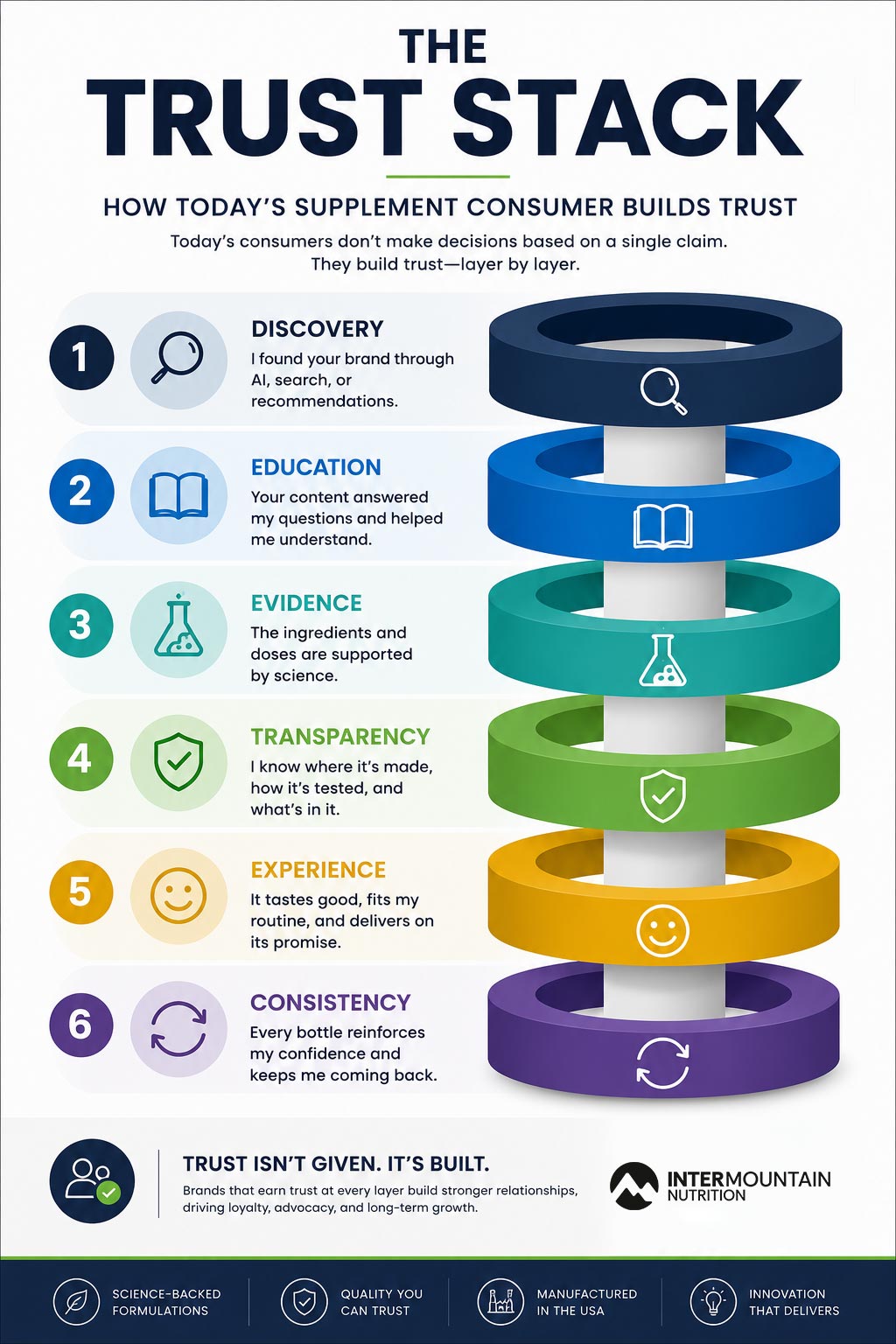
The Trust Stack is useful because it shows how a consumer’s confidence can be affected at different points. A strong first impression may encourage someone to explore a product, while unclear information or an experience that doesn’t meet expectations can make them hesitate.
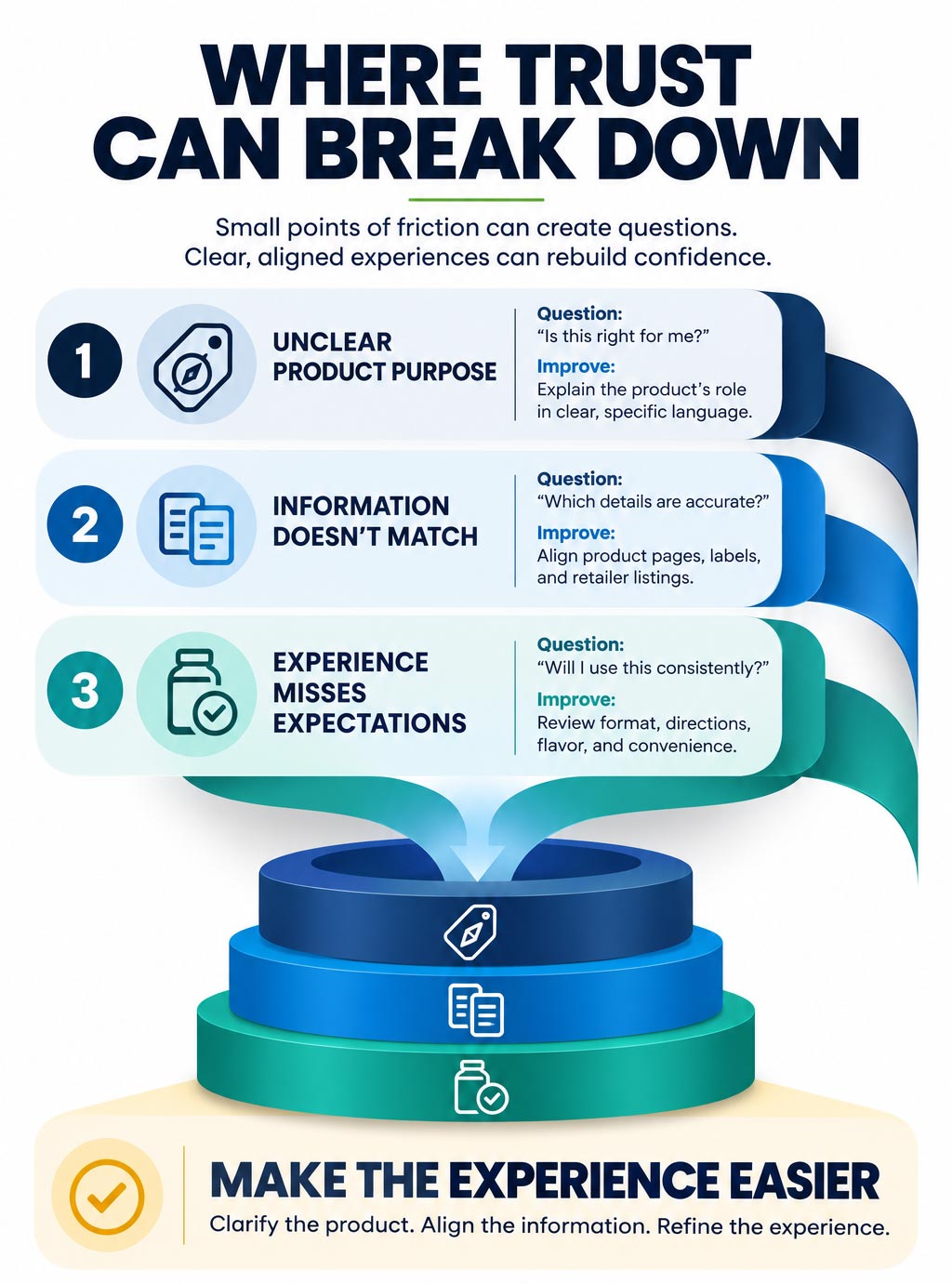
For example, a consumer might find a supplement through a retailer or search, then visit the brand’s website to learn more. If the product’s purpose is unclear, they may have trouble deciding whether it fits their needs.
If the information across the product page and retailer listing differs, they may wonder which version is accurate. And if the product is difficult to use as expected, the initial interest may not translate into continued use.
These moments don’t automatically mean a consumer will reject the brand. They do show where teams can make the experience easier and more reassuring.
A product description can be clarified. Information can be aligned across channels. Product directions or packaging can be reviewed. Small improvements at the right point can help the layers support one another.
The same principle applies when a brand has a strong product but hasn’t clearly explained it. Consumers may not recognize the value if they can’t understand the product’s role or find the information they need.
The opportunity is to connect what the brand has developed with what consumers need to know.