Echinacea for Immune Support Supplements: What Brands Should Know Before Formulating

September 28, 2026 |

Because Echinacea extracts can differ substantially by species, plant part, composition, and evidence base, choosing the right ingredient is essential for developing a consistent and scientifically defensible immune support supplement.

At a Glance

  • Best-known use: Echinacea is an established botanical associated with immune and seasonal wellness.
  • Common species: Echinacea purpurea, Echinacea angustifolia, and Echinacea pallida are frequently used in dietary supplements, but they are not interchangeable.
  • Key formulation issue: Species, plant part, extraction, phytochemical composition, dose, and ingredient specifications should be evaluated together.
  • Key compounds: Echinacea contains multiple groups of phytochemicals, including alkylamides, caffeic acid derivatives, polysaccharides, and glycoproteins.
  • Brand opportunity: Echinacea offers familiarity rather than novelty, making ingredient quality, formulation strategy, delivery format, and positioning important sources of differentiation.
  • The central formulation principle: Echinacea should be treated as a specified botanical ingredient, not an interchangeable commodity.

What Is Echinacea & Why Is It Used in Immune Support Supplements?

Echinacea is a genus of perennial flowering plants in the Asteraceae family. Although the plants are now cultivated more broadly, Echinacea species are native to North America, particularly areas east of the Rocky Mountains in the United States.

The botanical has a long history of traditional use in North America and is now widely associated with immune and respiratory wellness. That history has helped make Echinacea one of the more recognizable botanical ingredients in the modern immune-support category.

Echinacea Species Are Used in Dietary Supplements?

The Echinacea genus includes multiple species, but three are most frequently used in dietary supplements:

  • Echinacea purpurea
  • Echinacea angustifolia
  • Echinacea pallida

NIH’s Office of Dietary Supplements identifies these as the species most frequently found in dietary supplements and notes that U.S. products may contain extracts from multiple species and plant parts.

This distinction matters because the species have different phytochemical profiles. Research comparing medicinal Echinacea species has identified meaningful differences in their characteristic constituents.

Therefore, a supplier specification that identifies only “Echinacea extract” does not provide enough information for rigorous product development.

At minimum, brands should know the botanical species being supplied.

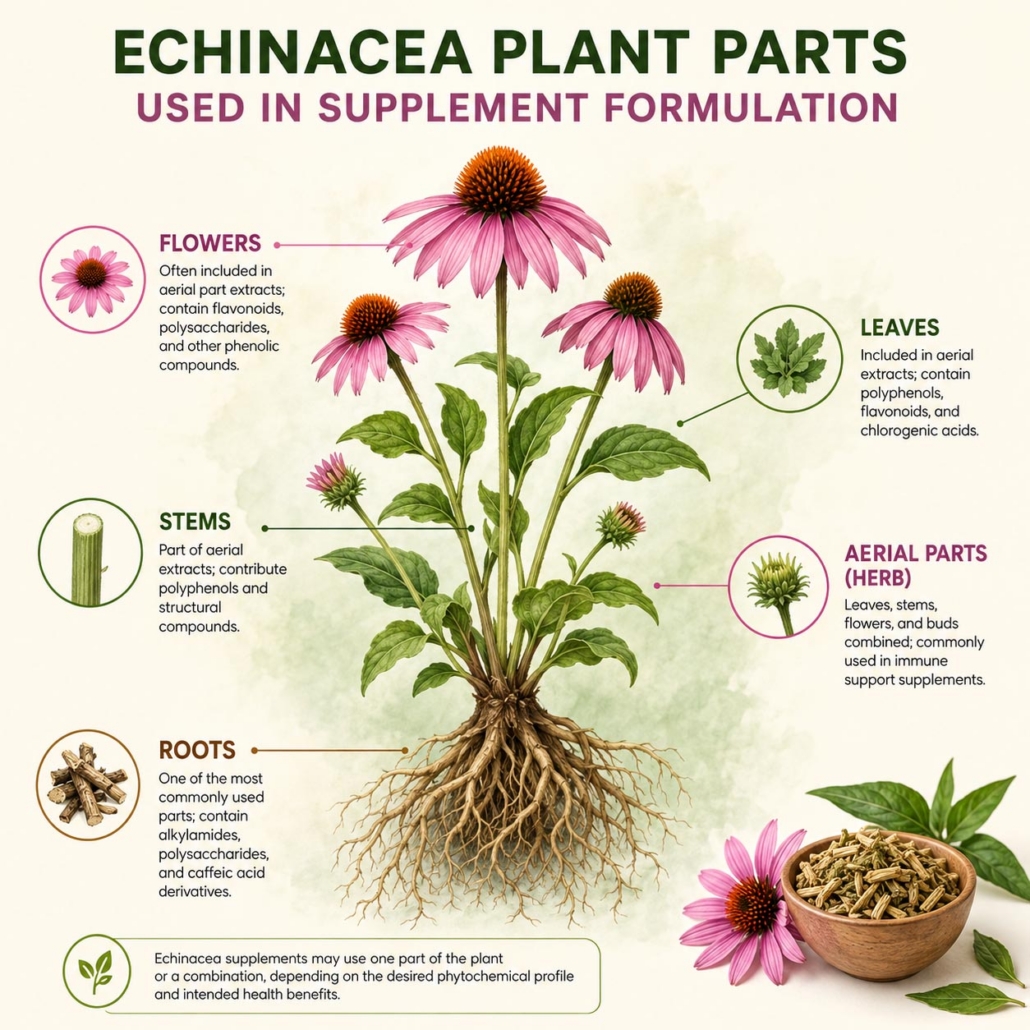
Parts of The Echinacea Plant Used for Supplement Formulation

Echinacea supplements may use:

  • Roots
  • Aerial portions, including stems, leaves, and flowers
  • Combinations of root and aerial material

Plant part is more than a sourcing detail. Different parts of the plant can contain different concentrations and patterns of phytochemicals.

For example, research examining E. purpurea has demonstrated variation in alkamides and cichoric acid between roots and aboveground portions of the plant.

This means two ingredients sourced from the same Echinacea species may still be chemically different if they use different plant parts.

Formulation takeaway: The botanical name should be the beginning of the ingredient specification — not the end of it. Brands should identify the species, plant part, and preparation before evaluating whether an Echinacea ingredient fits the formula.

INFOGRAPHIC: Echinacea Plant Parts

Compounds Found in Echinacea

Echinacea is not defined by a single active compound.

NIH describes Echinacea as containing multiple groups of constituents, including volatile terpenes, polysaccharides, polyacetylenes, alkamides, phenolic compounds, caffeic acid esters, and glycoproteins. Its purported active constituents have not been definitively established, and composition varies among species.

For supplement developers, four groups are particularly useful for understanding why Echinacea preparations can differ.

Alkylamides

Alkylamides — also commonly called alkamides in Echinacea research — are relatively nonpolar compounds frequently analyzed in medicinal Echinacea preparations. They are among the constituent groups investigated in relation to the botanical’s biological activity.

Depending on the ingredient, alkylamide concentration may be used as part of a phytochemical specification.

However, a higher alkylamide concentration should not automatically be interpreted as meaning that an ingredient is universally stronger or more effective. It is better viewed as one characteristic that helps define a particular preparation.

Caffeic Acid Derivatives

Echinacea also contains several caffeic acid derivatives. Their distribution varies by species and plant part.

Cichoric acid is particularly associated with E. purpurea, while echinacoside is an important phenolic marker found in roots of E. angustifolia and E. pallida. Analytical research has demonstrated substantial differences in these compounds among medicinal Echinacea species.

These constituents can be useful for botanical characterization and quality specifications.

Again, the distinction is important: a chemical marker helps define and control an ingredient; it does not by itself establish the efficacy of the finished supplement.

Polysaccharides & Glycoproteins

Polysaccharides and glycoproteins are complex carbohydrate-rich compounds that may interact with immune cells and influence immune-signaling pathways. Their composition and activity can vary by echinacea species, plant part, extraction method, and finished extract.

These compounds form another part of the botanical’s complex phytochemical profile. Echinacea preparations can also contain higher-molecular-weight of these compounds.

Their presence reinforces why Echinacea cannot be reduced to a single marker compound.

Why Echinacea Chemistry Matters for Formulators

The practical implication is not that brands need to maximize every constituent.

It is that two ingredients labeled “Echinacea extract” can have meaningfully different chemical profiles.

Species, plant part, cultivation conditions, harvest, extraction, processing, and storage can all contribute to the composition of a botanical preparation. Research has documented phytochemical variation both among Echinacea species and among plant organs.

For product developers, phytochemical specifications can therefore serve two useful purposes:

  • Differentiate one botanical preparation from another.
  • Establish measurable quality and consistency parameters for the ingredient.

The goal is not to find the Echinacea extract with the largest number on a specification sheet. It is to select a well-characterized ingredient appropriate for the intended formula.

All Echinacea Extracts Are Not The Same

This is one of the most important concepts for brands developing an Echinacea supplement.

Even when two ingredients carry the same common name, they can differ in botanical source, plant part, extraction, concentration, phytochemical profile, sensory properties, and quality specifications.

NCCIH specifically notes that Echinacea products vary widely and may contain different species, different plant parts, and preparations manufactured in different ways.

Species & Plant Parts Can Vary

This is one of the most important concepts for brands developing an Echinacea supplement.

Even when two ingredients carry the same common name, they can differ in botanical source, plant part, extraction, concentration, phytochemical profile, sensory properties, and quality specifications.

NCCIH specifically notes that Echinacea products vary widely and may contain different species, different plant parts, and preparations manufactured in different ways.

Extraction Changes What Ends Up in The Ingredient

Echinacea contains compounds with different chemical properties.

Analytical reviews describe its composition as including polar caffeic acid derivatives, nonpolar alkylamides and other secondary metabolites, and higher-molecular-weight polysaccharides and glycoproteins.

Because these compounds behave differently during extraction, the extraction system can influence the resulting phytochemical profile.

That makes questions such as these important during supplier qualification:

  • What solvent or extraction system was used?
  • Which plant part was extracted?
  • Is the extract concentrated?
  • What is the extract ratio, if applicable?
  • Which phytochemical markers are measured?
  • What analytical methods are used?
  • What ranges are specified for those markers?

An extract ratio such as 4:1 or 10:1 may provide useful manufacturing information, but it does not by itself establish phytochemical equivalence, quality, or potency.

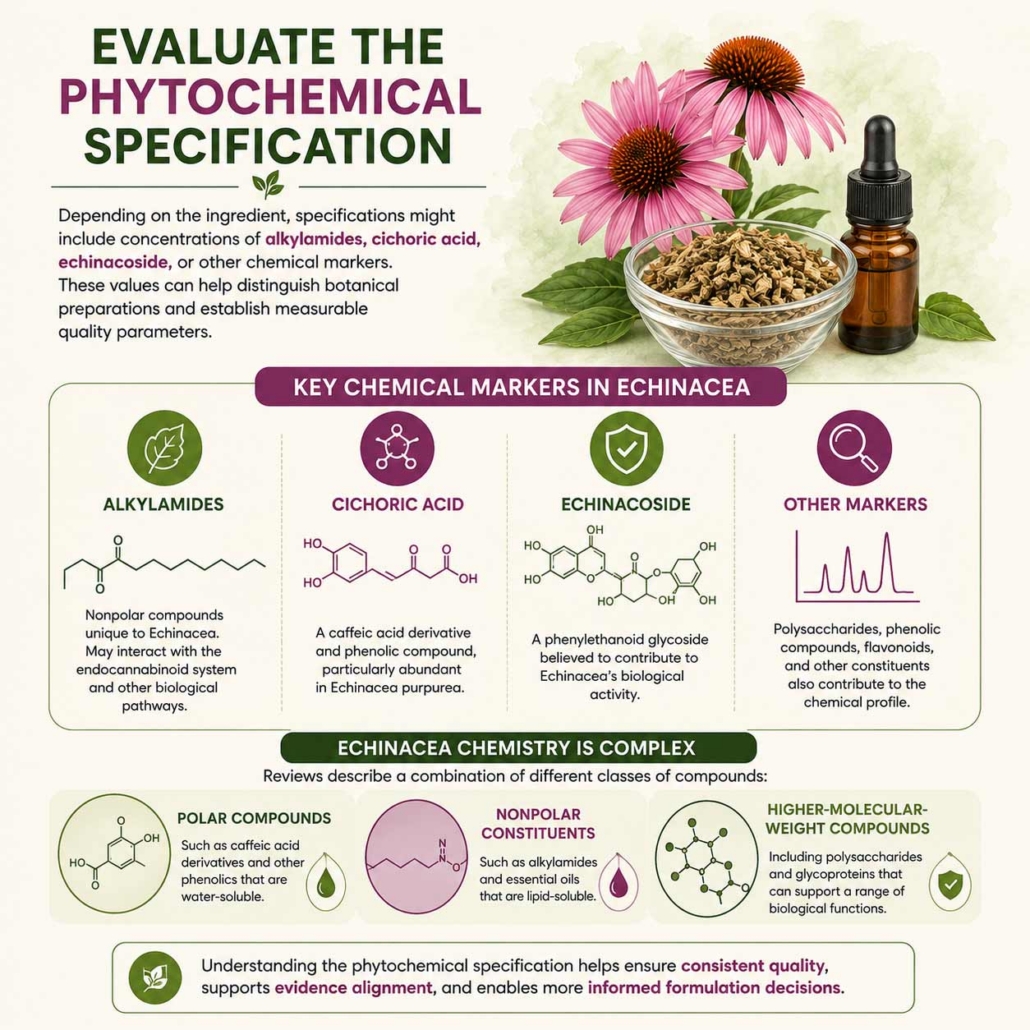
Evaluate the Phytochemical Specification

Depending on the ingredient, specifications might include concentrations of alkylamides, cichoric acid, echinacoside, or other chemical markers.

These measurements can help distinguish botanical preparations and establish parameters that can be evaluated from lot to lot.

For brands, the key question is not simply:

“Is this Echinacea standardized?”

A more useful set of questions is:

“Standardized to what, why was that marker selected, how is it measured, and what does that specification tell us about the ingredient?”

Standardization is valuable when it provides meaningful compositional control. It should not be treated as a substitute for understanding the botanical preparation as a whole.

INFOGRAPHIC: Evaluate The Phytochemical Specification

How Should Brands Choose an Echinacea Ingredient?

Once the species, plant part, and extract differences are understood, ingredient selection becomes a practical sourcing decision.

For botanical ingredients, NIH emphasizes the importance of establishing identity, composition, purity, strength, and stability. It also notes that botanical preparations can vary because of growing conditions, harvest, and processing practices.

For supplement brands, the goal is not to find the Echinacea ingredient with the longest specification sheet. It is to identify a well-characterized, commercially viable ingredient that fits the intended formula.

1. Confirm the species and plant part

Start with botanical identity.

The specification should clearly identify the Echinacea species and the plant part used. For extracts, brands should also understand whether the starting material consists of root, aerial portions, or a combination.

This information creates the foundation for every decision that follows.

2. Understand how the extract is produced

Extraction influences what ends up in the finished ingredient.

Ask the supplier about:

  • Extraction solvent or system
  • Botanical-to-extract ratio, when applicable
  • Native versus finished extract concentration
  • Carrier or processing aids
  • Residual-solvent specifications, when relevant
  • Drying and processing methods

An extract ratio can help describe how an ingredient was produced, but it should not be used alone to compare the strength or quality of different Echinacea preparations. NIH similarly explains that botanical extracts may be prepared using different liquids and that botanical-to-extract ratios describe concentration rather than establishing biological equivalence.

3. Evaluate the phytochemical specification

Determine which constituents are measured and why.

Depending on the preparation, an Echinacea specification may include alkylamides, cichoric acid, echinacoside, other phenolic compounds, or a broader chemical fingerprint.

These measurements can help characterize the ingredient and establish lot-to-lot consistency. NIH notes, however, that standardization does not necessarily indicate overall product quality and that the constituents responsible for the effects of many botanicals remain uncertain.

A useful supplier conversation therefore goes beyond asking whether an ingredient is standardized.

Ask:

What is measured? How is it measured? What range is controlled? Why was that specification selected?

4. Evaluate the intended dose

The amount of Echinacea required per serving depends on the specific ingredient rather than the common botanical name.

A concentrated extract, powdered botanical material, and differently standardized extracts cannot be compared solely by their milligram weights.

Brands should evaluate the supplier’s recommended use level, extract concentration, phytochemical specification, intended product positioning, and available supporting information before establishing the target dose.

The dose must also be commercially realistic. A technically appropriate ingredient becomes less attractive if its required serving overwhelms capsule capacity, creates excessive sensory challenges, or pushes the finished product beyond its target COGS.

5. Consider supply continuity and commercial scale

A premium ingredient still needs to work as a commercial raw material.

Brands planning for scale should consider:

  • Supplier capacity
  • Lead times
  • Geographic sourcing
  • Harvest variability
  • Minimum order quantities
  • Lot-to-lot consistency
  • Price volatility
  • Availability of alternate qualified sources

These questions become particularly important for botanical products because agricultural inputs can vary between growing seasons and supply regions.

6. Balance quality, performance, and cost

The most expensive Echinacea ingredient is not automatically the best choice, just as the least expensive ingredient may create hidden costs through additional testing, sensory development, high use levels, or sourcing risk.

The better question is:

Which ingredient provides the right combination of identity, specification, quality, dose, manufacturing performance, supply reliability, and cost for this particular product?

That is the ingredient worth taking into formulation.

How Can Brands Mask the Bitter Taste of Echinacea?

Flavor deserves its own development strategy when Echinacea is used in a format that exposes the ingredient to the palate.

Echinacea preparations can have earthy, herbal, bitter, astringent, and sometimes tingling or numbing sensory characteristics, depending on the species, plant part, and extract. Alkylamide-containing preparations can contribute particularly distinctive oral sensations.

That makes taste masking one of the most important formulation considerations for gummies, drink powders, and stick packs.

Use Flavor Profiles that Can Stand Up to Botanical Bitterness

Very delicate flavors can struggle against an earthy or bitter botanical base.

More assertive profiles can often provide a stronger starting point. Depending on the complete formula, useful directions to evaluate include:

  • Mixed berry
  • Raspberry
  • Strawberry
  • Dark cherry
  • Elderberry
  • Orange
  • Lemon
  • Grapefruit
  • Ginger-citrus
  • Peppermint
  • Berry-vanilla combinations

Berry and dark-fruit profiles can complement the botanical character while providing enough flavor intensity to compete with bitterness. Citrus can add brightness and acidity. Ginger or peppermint may work when a more herbal or seasonal sensory profile fits the product concept.

Vanilla can be useful as a rounding note in certain flavor systems rather than necessarily serving as the dominant flavor.

Sweetness Alone May Not Solve Bitterness

Adding more sweetener is not always the best response to a bitter botanical.

An effective flavor system may require a combination of:

Sweetness + acidity + flavor intensity + aromatic character + bitterness modulation.

The balance depends on the extract and delivery format.

Excessive sweetness can also create an undesirable lingering profile without fully covering the underlying botanical notes. The objective is not simply to make the product sweeter; it is to create a cohesive flavor experience in which the Echinacea character no longer dominates.

Acid Can Help Shape the Flavor Profile

In beverage powders and gummies, acids such as citric or malic acid can help create brightness and strengthen fruit flavor perception.

Acid selection should still be made in the context of the complete formula because pH can influence ingredient stability, flavor perception, and finished-product performance.

A tart berry or citrus profile may therefore be particularly useful when the formula can support it technically.

Consider the Tingling Sensation as Well as Bitterness

Some Echinacea preparations can produce a distinctive tingling or numbing oral sensation associated with alkylamides.

This creates a different sensory challenge from bitterness.

In some product concepts, a mild botanical sensation may reinforce an herbal positioning. In others, it may be perceived as an off-note.

Flavor development should therefore evaluate aftertaste and mouthfeel, not simply the first sip or bite.

Capsules Can Bypass the Sensory Problem

If Echinacea is the primary active and a consumer-facing flavor experience is not central to the concept, capsules can eliminate much of the need for taste masking.

That can reduce flavor-development complexity while giving formulators more flexibility around extract selection.

However, if a gummy, powder, or stick pack better fits the target consumer, Echinacea’s bitterness should be treated as a core product-development constraint from the beginning, not a flavor adjustment made after the formula is complete.

Formulation takeaway: Taste the selected Echinacea extract at its intended use level before finalizing the flavor system. Strong berry, citrus, ginger, mint, and layered fruit profiles can provide useful starting points, but successful masking usually requires balancing sweetness, acidity, aroma, bitterness, and mouthfeel together.

What Are the Potential Drawbacks of Echinacea in Immune Support Supplements?

Echinacea’s familiarity is an advantage, but brands should also understand its limitations.

The most important considerations involve ingredient variability, sensory performance, safety, intended duration of use, and potential interactions.

Botanical Variability Increases Sourcing Complexity

As discussed earlier, Echinacea products can differ substantially by species, plant part, extraction, and composition.

This makes supplier qualification and specification development more important than they might appear for such a familiar ingredient.

A poorly defined raw material can create uncertainty around consistency, testing, sensory performance, and finished-product positioning.

Sensory Properties Can Limit Exposed Formats

Bitterness and other botanical notes can complicate gummies and drink powders.

Depending on the extract, tingling or numbing sensations may create an additional sensory hurdle.

These issues are manageable, but they can increase flavor-development time and cost. A brand choosing an exposed format should therefore budget for sensory work rather than assuming Echinacea can simply be added to an existing flavor system.

Allergic Reactions Are Possible

Echinacea belongs to the Asteraceae family, which also includes plants such as daisies and ragweed.

NCCIH reports that some people experience allergic reactions to Echinacea and that these reactions can occasionally be severe. Digestive symptoms, including abdominal pain and nausea, are among the more commonly reported side effects.

This is particularly relevant when determining target consumers, warnings, and labeling.

Medication Interactions Require Consideration

NCCIH reports conflicting evidence regarding interactions between Echinacea and some drugs metabolized by the liver. It also notes theoretical reasons for possible interactions with immunosuppressants or caffeine.

Brands developing products for populations likely to use multiple medications should account for this during safety and regulatory review.

Long-Term Use is Less Well Characterized

NCCIH describes certain E. purpurea extracts and some mixtures of E. purpurea and E. angustifolia as likely safe for most adults for short periods of time. Information about longer-term use is less established.

That distinction matters when deciding between a seasonal-use product and a year-round daily immunity formula.

A daily product is not automatically inappropriate, but the intended duration of use should be evaluated against the safety information available for the selected preparation.

Special Populations Require Additional Caution

NCCIH advises consumers to consult health care providers regarding Echinacea use during pregnancy and notes limited information concerning breastfeeding. It also advises consultation before giving Echinacea products to children because allergic reactions are a concern.

Brands targeting these populations should undertake additional safety and regulatory review rather than assuming a general adult-use formulation can be transferred directly.

Weigh the Advantages Against the Development Requirements

Advantages Considerations
Established consumer familiarity Mature ingredient requires differentiation
Strong association with immune and seasonal wellness Can be perceived primarily as a seasonal ingredient
Multiple species and extract options Ingredient variability increases sourcing complexity
Works well in capsules Exposed formats require taste masking
Can anchor botanical or combination formulas Additional ingredients can increase complexity and COGS
Defined extracts can support a stronger quality story Standardization does not automatically establish superiority
Long history of supplement use Long-term use is less well characterized than short-term use

For most brands, these considerations do not rule out Echinacea. They simply reinforce the need to formulate deliberately.

The strongest Echinacea products begin with a defined reason for using the ingredient and then align the extract, dose, format, sensory strategy, quality specifications, intended duration of use, and product positioning around that decision.

What Ingredients Pair Well with Echinacea?

Echinacea does not need to stand alone. In a multi-ingredient immune support formula, complementary ingredients can broaden the product story, support different aspects of immune function, or help distinguish the formula from a conventional single-botanical product.

The best pairing depends on the intended product. Rather than adding multiple familiar immune ingredients simply for label recognition, formulators should give each ingredient a specific role in the formula.

Echinacea Plus Elderberry For Immune Support Supplement Formulation

Elderberry: Seasonal Botanical Positioning

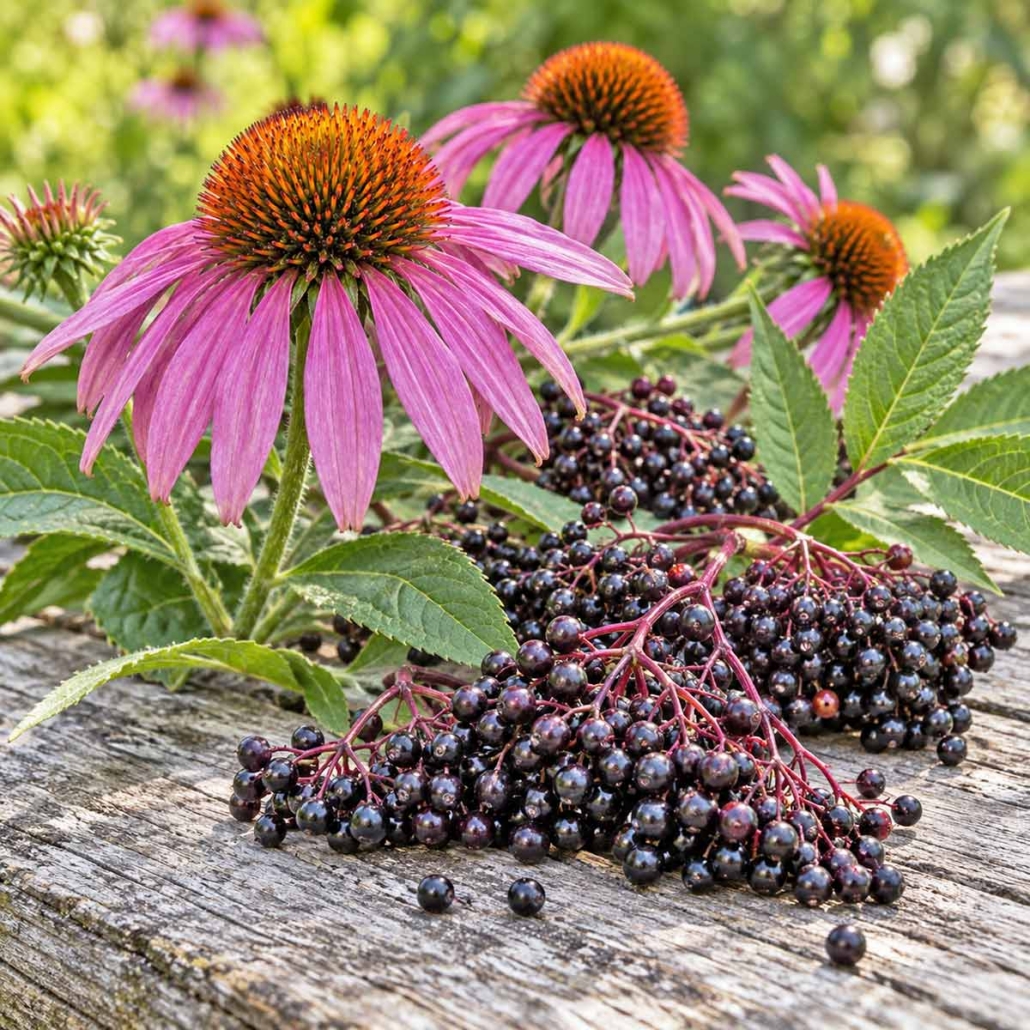
Elderberry and Echinacea create an intuitive botanical pairing for seasonal wellness.

Elderberry also offers a strong consumer-facing flavor and color association. A dark berry profile can fit naturally with elderberry, raspberry, blackberry, cherry, or mixed-berry flavors, making the pairing particularly attractive for gummies and drink powders.

Formulators should still select each botanical independently rather than assuming that combining two familiar ingredients automatically creates a stronger product.

Best fit: Seasonal wellness, botanical immunity, gummies, powders, and stick packs.

Echinacea Plus Beta-Glucan For Immune Support Supplement Formulation

Beta-Glucans: A More Differentiated Immune Strategy

Beta-glucans can move an Echinacea formula beyond the conventional vitamin-plus-herb approach.

Depending on the source and specification, beta-glucans can support a more contemporary immune-resilience story while Echinacea supplies consumer familiarity and recognizable botanical positioning.

Because beta-glucans vary considerably by source and structure, formulators should specify the ingredient carefully rather than treating “beta-glucan” as a single interchangeable category.

Best fit: Daily immune resilience, premium immune formulas, active-lifestyle wellness, and differentiated combination products.

Echinacea Plus Ginger For Immune Support Supplement Formulation

Ginger: Botanical Support with a Sensory Advantage

Ginger can be particularly interesting in an Echinacea powder or stick pack because it contributes to both the product concept and flavor architecture.

Its pungent, warming sensory profile can work with Echinacea’s herbal character rather than trying to conceal it completely. Ginger also pairs naturally with lemon, orange, honey-style, and berry-citrus flavor systems.

That makes it useful when the desired product experience is deliberately botanical rather than candy-like.

Best fit: Seasonal wellness beverages, powders, stick packs, and herbal-forward formulas.

Vitamin C: Foundational Immune Support

Vitamin C is one of the most recognizable nutrients associated with immune health. It contributes to normal immune function and provides antioxidant activity, making it a logical nutritional foundation for an Echinacea-centered formula.

From a product-development perspective, vitamin C can also complement citrus and berry flavor systems in powders, stick packs, and gummies. However, its acidity, dose, source, and stability still need to be considered within the complete formulation.

Best fit: Broad immune support, seasonal wellness, gummies, powders, and stick packs.

Vitamin D: Daily Immune Maintenance

Vitamin D provides a different formulation role. Rather than reinforcing Echinacea’s traditional seasonal association, it can help connect the product with everyday immune function.

That can be useful when a brand wants to move beyond a product consumers reach for only during cold-and-flu season.

Because vitamin D is effective at relatively low inclusion levels, it also adds little active mass compared with many botanical ingredients.

Best fit: Daily immune support and year-round wellness formulas.

Zinc: Recognizable Immune Nutrition

Zinc is another established nutrient involved in normal immune function and gives formulators a highly recognizable nutritional complement to Echinacea.

The combination can create a straightforward product architecture:

Echinacea provides the botanical component, while zinc provides essential-nutrient immune support.

However, zinc source and dose deserve attention in exposed formats because some forms can contribute metallic, bitter, or astringent sensory notes. That can compound Echinacea’s existing flavor challenges.

Best fit: Seasonal immune support, capsule formulas, and carefully flavored gummies or powders.

Which Echinacea Pairing Makes the Most Sense?

Ingredient Primary Role Strongest Product Direction Formulation Consideration
Vitamin C Foundational immune + antioxidant support Broad immune wellness Dose, acidity, stability
Vitamin D Daily immune function Year-round immune support Low inclusion level simplifies formulation
Zinc Essential-nutrient immune support Seasonal or daily immunity Metallic/bitter taste in exposed formats
Elderberry Complementary botanical Seasonal botanical wellness Strong fit with berry flavor systems
Beta-glucans Differentiated immune support Daily immune resilience Source and specification matter
Ginger Botanical + sensory complement Seasonal beverage concepts Pungency can work with herbal flavor profile

Build the Formula Around A Product Strategy

There is no reason an immune formula needs Echinacea, vitamin C, vitamin D, zinc, elderberry, beta-glucans, and several additional botanicals simply because they all fit the category.

In many cases, a smaller number of deliberately selected ingredients creates a stronger product.

For example:

  • Seasonal Botanical: Echinacea + elderberry + vitamin C
  • Daily Immune Resilience: Echinacea + beta-glucans + vitamin D
  • Essential + Botanical: Echinacea + vitamin C + zinc
  • Herbal Drink Mix: Echinacea + ginger + vitamin C with lemon-berry flavoring
  • Premium Seasonal Gummy: Echinacea + elderberry + vitamin D with mixed-berry flavoring

These aren’t intended as finished formulas or universal recommendations. They illustrate how the same Echinacea ingredient can play a different role depending on the consumer need state, delivery format, supporting ingredients, and product positioning.

Formulation Takeaway: Start with the product promise, then choose complementary ingredients that give Echinacea a clear role. A focused formula with three purposeful ingredients can tell a stronger story than an overloaded immune blend with eight familiar ones.

Where Does Echinacea Fit in the Immune Support Supplement Market?

Echinacea is not an emerging botanical. Its commercial advantage comes from something different: established recognition and a longstanding association with immune and seasonal wellness.

That familiarity can lower the amount of consumer education required to explain the ingredient. However, it also means brands need more than “contains Echinacea” to create meaningful differentiation.

Echinacea Remains Established in U.S. Supplement Retail

Echinacea is a mature botanical with continued retail relevance and strong category recognition.

According to SPINS data, Echinacea supplement sales in 2024 reached approximately $25.8 million in the mainstream multi-outlet channel and $9.3 million in the natural and specialty gourmet channel. Mainstream sales declined 13.6% from 2023, while natural-channel sales increased 4.1%.

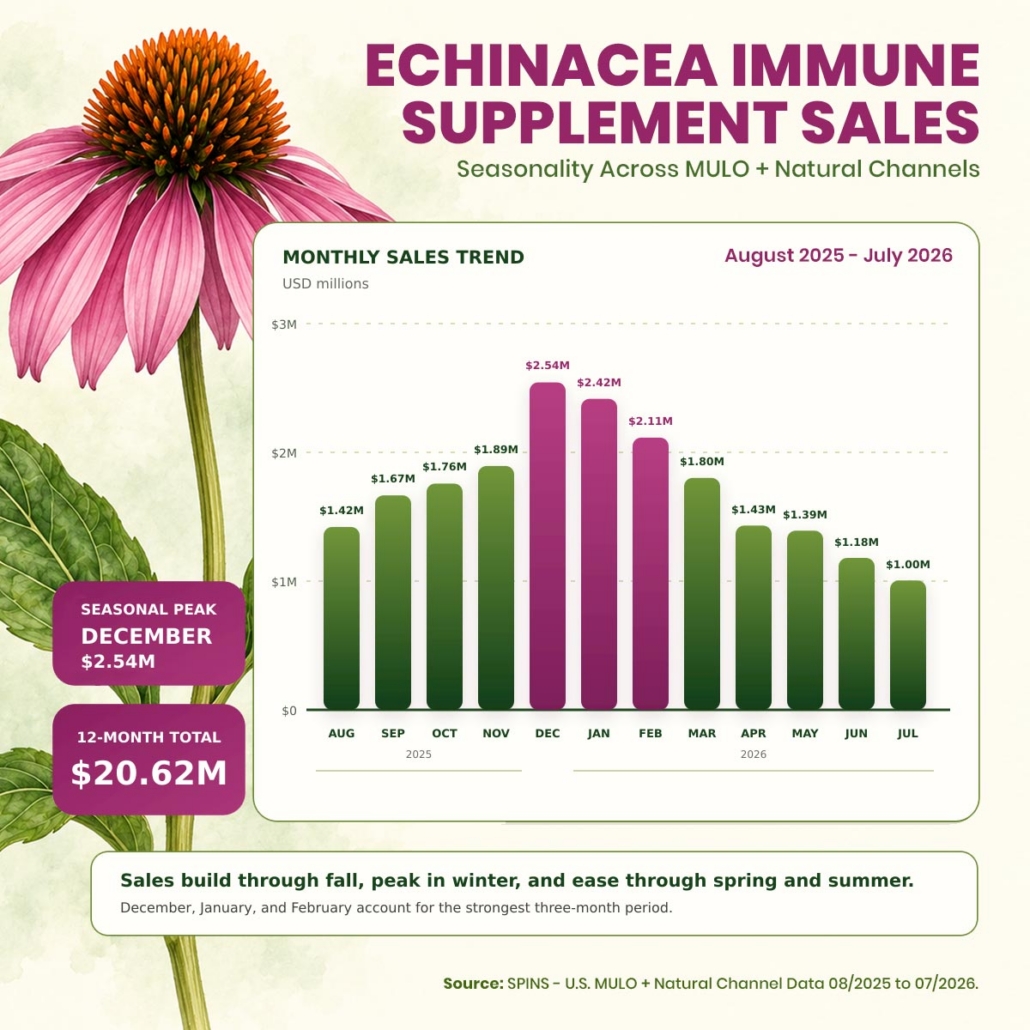
Sales of immunity supplements containing echinacea also fluctuate with the seasons. In the U.S., December, January, and February are peak months for echinacea with sales slowing in the summer months.

INFOGRAPHIC: Eschinacea Seasonal Sales Trends
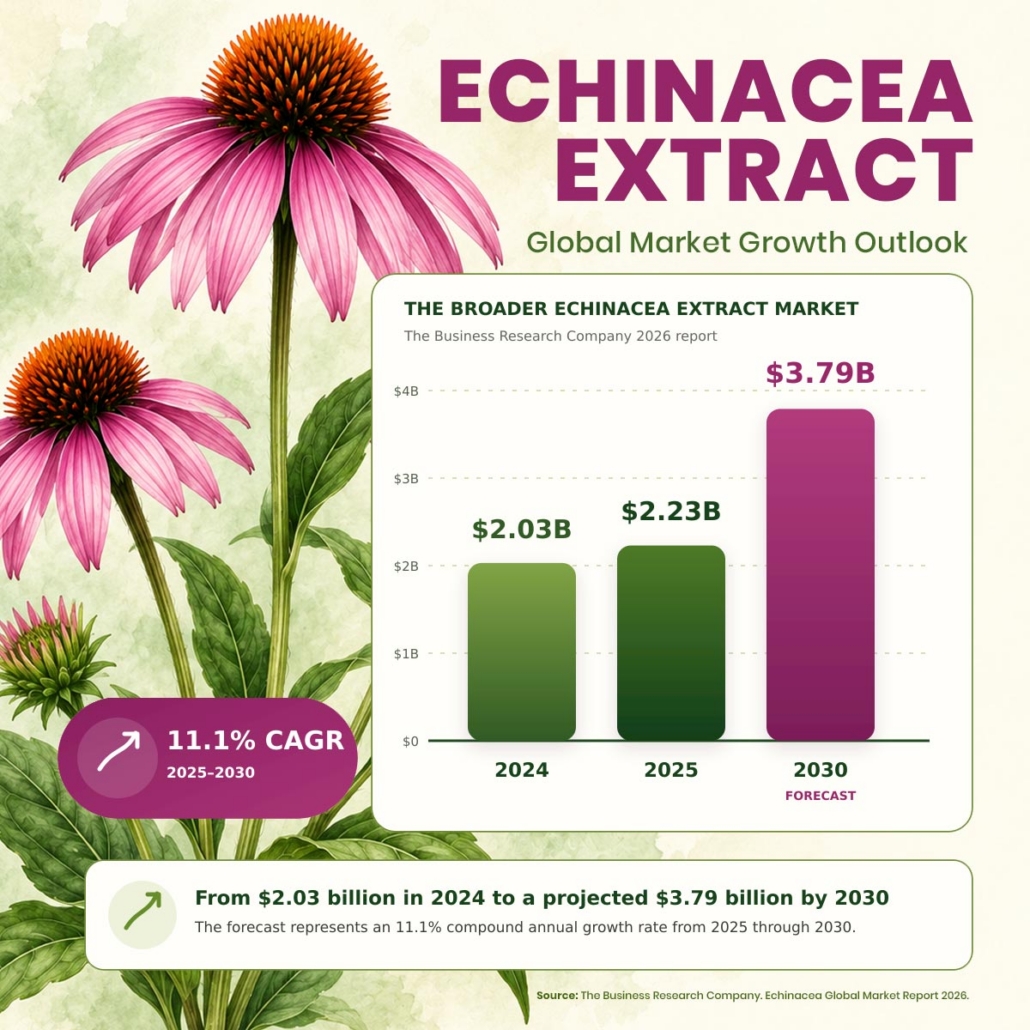
INFOGRAPHIC: Global Echinacea Market Outlook

The Broader Echinacea Extract Market Is Projected to Grow

The Business Research Company’s 2026 report estimates that the global Echinacea extract market grew from $2.03 billion in 2024 to $2.23 billion in 2025 and forecasts approximately $3.79 billion by 2030, representing an 11.1% compound annual growth rate from 2025 through 2030.

However, these figures should be interpreted carefully. The report covers the broader global Echinacea extract market and applications beyond U.S. dietary supplements. Therefore, it should be viewed as a directional indicator of broader commercial activity, not as a forecast of U.S. Echinacea supplement sales.

How Brands Can Position an Echinacea Supplement

Echinacea’s established association with immune wellness gives brands a recognizable starting point. The challenge is deciding what role the ingredient should play in the finished product.

The strongest positioning usually starts with a defined consumer need rather than a collection of immune ingredients.

Seasonal Wellness Is the Most Intuitive Position

Seasonal immune support remains the clearest fit for Echinacea.

The botanical can anchor products designed for consumers who become more attentive to immune wellness during seasonal changes, travel, periods of increased exposure, or other times when immune support becomes more top-of-mind.

This positioning also works naturally with familiar ingredients such as elderberry, vitamin C, zinc, and ginger.

Daily Immune Support Requires a Broader Formula Story

Echinacea can also appear in daily immune-support products, but the rationale should extend beyond simply turning a seasonal botanical into a year-round supplement.

Pairing Echinacea with ingredients associated with everyday immune function — such as vitamin D or selected beta-glucans — can create a broader product architecture.

However, the intended duration of use should be considered alongside the available safety information for the selected Echinacea preparation.

Botanical Positioning Can Strengthen the Product Identity

For consumers seeking plant-based wellness products, Echinacea can serve as the recognizable botanical centerpiece of the formula.

Species identification, plant part, sourcing, extraction, and ingredient characterization can then become part of the quality story.

This creates a more credible product narrative than simply placing multiple botanicals on the label without explaining why they were selected.

Format Can Become Part of the Differentiation

A capsule offers straightforward botanical delivery, but alternative formats can change how consumers experience Echinacea.

Potential concepts include:

Product Concept Role of Echinacea Differentiation Opportunity
Seasonal immune capsules Primary botanical Defined extract + complementary nutrients
Mixed-berry immune gummy Botanical component Convenience + flavor experience
Berry-citrus drink mix Botanical anchor Functional beverage experience
Ginger-citrus stick pack Seasonal botanical Portable format + herbal flavor profile
Daily immune formula Familiar botanical component Pair with differentiated daily-support ingredients

The best concept depends on the target consumer, dose, sensory requirements, COGS, and desired product experience.

Positioning Takeaway: Echinacea’s value is familiarity. Use formulation, ingredient specificity, complementary actives, and delivery format to turn that familiarity into differentiation.

Is Echinacea Right for Your Immune Support Formula?

Echinacea can be a strong choice when consumer familiarity, botanical positioning, and seasonal immune wellness support the intended product concept.

It is not automatically the right ingredient for every immune formula.

The ingredient should earn its place in the formulation.

Product Goal Echinacea Fit Why
Seasonal immune wellness Strong Familiar association with seasonal immune products
Botanical immune formula Strong Recognizable plant-based ingredient
Defined botanical extract story Strong Species, plant part, and specification can support differentiation
Multi-ingredient immune formula Strong Can act as a recognizable botanical anchor
Capsule product Strong Minimizes sensory challenges
Gummy Moderate Feasible, but bitterness and active loading require development
Powder or stick pack Moderate Offers differentiation but requires sensory development
Year-round daily immunity Conditional Intended duration of use and broader formula rationale should be considered
Novel ingredient story Weak Echinacea’s strength is familiarity rather than novelty

When Another Ingredient May Be Better

A different immune-support ingredient may make more sense when:

  • The product requires a distinctly novel ingredient story.
  • Echinacea’s seasonal association conflicts with the desired positioning.
  • The intended dose does not fit the preferred format.
  • Sensory requirements create unnecessary development complexity.
  • The selected extract makes target COGS difficult to achieve.
  • Testing or sourcing requirements exceed the project’s commercial targets.
  • Another ingredient provides a clearer point of differentiation.

Removing an ingredient can sometimes strengthen a formula.

Rather than asking, “What other immune ingredients can we add?”, product developers should ask:

“What role does Echinacea perform that the rest of this formula does not?”

If there is no clear answer, the ingredient may not be necessary.

Developing Echinacea Immune Support Supplements with Intermountain Nutrition

A successful Echinacea product starts with the product objective — not with a generic list of immune ingredients.

Before formulation begins, brands should define the consumer, intended use, delivery format, target COGS, desired positioning, and role Echinacea will play in the formula.

From there, development can address the technical details that determine whether the concept works at commercial scale.

Build Quality into Development

Botanical products require clear raw-material specifications and appropriate quality controls.

Species, plant part, extraction, phytochemical characteristics, identity, contaminants, and finished-product requirements should be considered during development — not after the formula has been finalized.

Intermountain Nutrition combines formulation and manufacturing capabilities with on-site third-party testing to help brands develop products with quality and commercial scalability in mind.

Turn a Familiar Botanical into a Better Product

Echinacea does not need another generic immune-support formula.

The opportunity is to combine a well-defined botanical ingredient with the right dose, complementary actives, delivery format, flavor system, quality requirements, and consumer positioning.

Ready to develop an Echinacea immune support supplement? Contact Intermountain Nutrition to discuss formulation, format, testing, and scalable manufacturing options.

Frequently Asked Questions

Echinacea is a genus of flowering plants native to North America. Several species have a long history of traditional use and are now widely used in dietary supplements, particularly products positioned for immune and seasonal wellness.

The three most frequently used species are Echinacea purpurea, Echinacea angustifolia, and Echinacea pallida. Supplements may use roots, aerial portions, or combinations of plant parts. These preparations should not be assumed to be chemically interchangeable.

There is no single Echinacea species or extract that is best for every product.

Brands should evaluate the species, plant part, extraction method, phytochemical specification, intended dose, quality documentation, delivery format, supply reliability, and cost together. The best ingredient is the one that fits the requirements of the specific finished product.

A standardized extract is manufactured to meet a defined level or range for one or more measured constituents. Depending on the Echinacea preparation, these might include alkylamides, cichoric acid, echinacoside, or other markers.

Standardization can improve compositional consistency, but it does not automatically mean that one extract is more effective or higher quality than another.

There is no universal milligram amount appropriate for every Echinacea supplement because preparations differ.

The target amount should be established using the specific species, plant part, preparation, extract concentration, characterization, intended use, and supplier information rather than selecting a generic Echinacea dose.

Yes. Echinacea can be incorporated into gummies, but bitterness, herbal notes, active loading, processing conditions, and stability need to be addressed during development.

A strong berry or citrus-forward flavor system can provide a useful starting point for sensory development.

Yes. Powders and stick packs can accommodate Echinacea and provide opportunities for differentiated seasonal-wellness beverages.

However, because the ingredient is exposed directly to the palate, flavor masking is important. Dispersibility, powder flow, serving size, moisture control, and compatibility with other ingredients also need to be evaluated.

Echinacea is commonly considered alongside ingredients such as vitamin C, vitamin D, zinc, elderberry, beta-glucans, ginger, and other botanical ingredients in immune-support formulations.

The best combination depends on the intended product. Rather than adding every recognizable immune ingredient, formulators should select complementary actives that give the formula a clear nutritional, botanical, sensory, or positioning advantage.

NCCIH reports that some Echinacea preparations are likely safe for most adults for short periods, while less is known about long-term use. Allergic reactions and gastrointestinal effects can occur, and medication interactions should also be considered.

Brands developing year-round products should evaluate the intended duration of use and safety information for the specific Echinacea preparation.

At minimum, evaluate:

Species + plant part + extraction + phytochemical specification + identity + purity + contaminants + analytical methods + consistency + supply reliability + cost.

The supplier should be able to clearly explain what the ingredient is, how it was produced, which characteristics define it, and how those characteristics are controlled from lot to lot.

Echinacea belongs to the Asteraceae family, which also includes ragweed and other plants capable of causing allergic reactions.

People with known allergies to plants in this family may warrant additional caution. Brands should work with qualified regulatory professionals when determining appropriate product warnings and labeling.

References

Echinacea Science & Botanical Characterization

Barnes, J., Anderson, L. A., Gibbons, S., & Phillipson, J. D. (2005). Echinacea species (Echinacea angustifolia (DC.) Hell., Echinacea pallida (Nutt.) Nutt., Echinacea purpurea (L.) Moench): A review of their chemistry, pharmacology and clinical properties. Journal of Pharmacy and Pharmacology, 57(8), 929–954.

Bergeron, C., Livesey, J. F., Awang, D. V. C., Arnason, J. T., Rana, J., Baum, B. R., & Letchamo, W. (2000). A quantitative HPLC method for the quality assurance of Echinacea products on the North American market. Phytochemical Analysis, 11(4), 207–215.

Manayi, A., Vazirian, M., & Saeidnia, S. (2015). Echinacea purpurea: Pharmacology, phytochemistry and analysis methods. Pharmacognosy Reviews, 9(17), 63–72.

Qu, L., Chen, Y., Wang, X., Scalzo, R., & Davis, J. M. (2005). Patterns of variation in alkamides and cichoric acid in roots and aboveground parts of Echinacea purpurea (L.) Moench. HortScience, 40(5), 1239–1242.

National Institutes of Health, Office of Dietary Supplements. (n.d.). Dietary supplements for immune function and infectious diseases: Health professional fact sheet.

Safety, Use & Further Reading

National Center for Complementary and Integrative Health. (2024, November). Echinacea: Usefulness and safety. National Institutes of Health.

National Center for Complementary and Integrative Health. (n.d.). Colds, flu, and complementary health approaches: Usefulness and safety. National Institutes of Health.

National Institute of Diabetes and Digestive and Kidney Diseases. (2019, April 10). Echinacea. In LiverTox: Clinical and research information on drug-induced liver injury. National Institutes of Health.

Clinical Evidence for Further Reading

Karsch-Völk, M., Barrett, B., Kiefer, D., Bauer, R., Ardjomand-Woelkart, K., & Linde, K. (2014). Echinacea for preventing and treating the common cold. Cochrane Database of Systematic Reviews, 2014(2), CD000530.

National Center for Complementary and Integrative Health. (n.d.). The common cold and complementary health approaches: What the science says. National Institutes of Health.

Market & Industry Research

Smith, T., Lang, C., & Craft, E. (2025). US sales of herbal supplements increase 5.4% in 2024. HerbalGram, 144, 46–69. American Botanical Council.

The Business Research Company. (2026). Echinacea extract global market report 2026.

Related Postings

NAD+ For Healthy Aging Supplements
older couple walking in the park during autumn
three friends discussing and researching supplements for health and wellness