Cognitive Longevity Across the Lifespan: Formulating for Changing Brain-Health Needs

October 9, 2026 |

Brain health changes across adulthood as neural connections, blood flow, and cognitive abilities evolve, creating a need for more targeted, evidence-informed approaches to cognitive longevity.

At a Glance

  • The brain changes with age at the level of neural connections, communication, and processing efficiency. Those changes can affect some cognitive functions more than others.
  • Cognitive aging varies widely. Health, lifestyle, and individual biology all shape the effects on everyday function and independence.
  • Brain health is connected to whole-body health, including vascular and metabolic function, sleep, physical activity, and emotional well-being.
  • For supplement brands, the opportunity is to match ingredient roles to a defined cognitive function and consumer need, while keeping mechanisms and proven human outcomes distinct.

Brain Health Is a Lifespan Concern

Living longer has brought a sharper focus on healthspan: the years people can remain active, independent, and engaged. Cognitive health is central to that goal because memory, attention, learning, and decision-making help people manage daily life and participate in the habits that support overall health. That makes cognitive longevity relevant across adulthood, not only in later life.

For supplement brands, this creates a more useful question than “Which ingredients are good for the brain?” The answer depends on what aspect of cognitive function a product is designed to support, who it is for, and what human evidence supports that role. A formula for everyday focus has a different purpose from a product addressing a nutritional gap in older adults.

This article looks first at what changes in the brain with age, then connects those changes to the habits and ingredient categories that may support healthy cognitive aging. The goal is a practical guide for product development.

What Changes in the Brain as People Age?

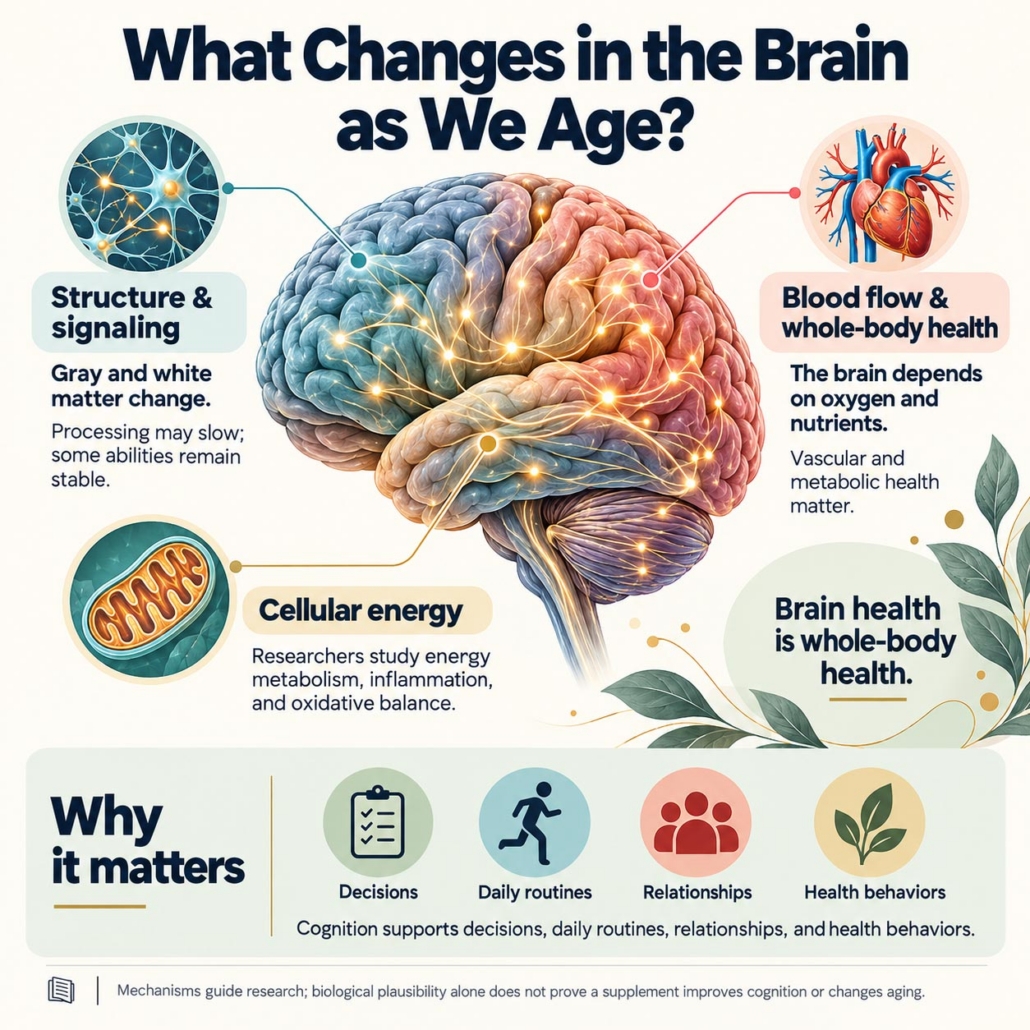
Aging can affect the brain’s structure and the efficiency of communication among its regions. Research on normal cognitive aging describes changes in gray and white matter, including fewer or less complex connections between some neurons.

These changes may contribute to slower processing and make it harder to manage unfamiliar information, divide attention, or retrieve certain memories quickly. At the same time, many people retain well-practiced knowledge and vocabulary, and some abilities remain stable.

INFOGRAPHIC: What Changes in the Brain as We Age?

Vascular Health & The Aging Brain

The brain also depends on healthy blood vessels and steady delivery of oxygen and nutrients. Blood pressure, diabetes, smoking, and other cardiovascular or metabolic risks can affect brain health over time.

This is one reason cognitive longevity cannot be reduced to a single “brain nutrient”: the brain ages within a body, and its function is connected to vascular health, sleep, movement, nutrition, and other systems.

Cellular Energy & Other Aging Processes

At the cellular level, the brain has high energy demands. Researchers are studying how changes in energy metabolism, inflammation, oxidative balance, and neuronal signaling relate to cognitive aging.

These mechanisms can help explain why ingredients such as omega-3 fatty acids, micronutrients, and certain botanicals draw research interest.

Why Cognitive Function Matters for Longevity

These changes matter because cognitive function supports more than memory test performance. It helps people plan, make decisions, maintain routines, and stay engaged with work, relationships, and health-promoting behaviors.

A recent Cureus editorial proposes a “brain-first” framework that treats neural function as a constraint on healthspan. It’s a useful way to frame the importance of cognitive function, but it remains an editorial thesis rather than established scientific consensus.

Cognitive Aging Is Not One Trajectory

Cognitive aging does not affect every person — or every ability — in the same way. Processing speed, complex attention, and some forms of memory may become less efficient over time. Vocabulary, familiar skills, and accumulated knowledge can remain resilient. Even among people of the same age, the pace and pattern of change can differ substantially.

This distinction matters for product development. “Brain health” can refer to memory, focus, mental processing, or everyday cognitive wellness, and those are not interchangeable outcomes. A formulator who defines the intended function and consumer first can make more meaningful ingredient choices than one who begins with a broad list of popular nootropics.

It is also important to distinguish normal age-related changes from persistent or worsening problems that affect daily activities.

Significant memory or thinking concerns call for evaluation by a healthcare professional; a supplement should not be presented as a substitute for diagnosis or care. For brands, that distinction supports more responsible consumer education and clearer boundaries around product positioning.

The Habits That Support Cognitive Longevity and Where Supplements May Fit

Supplements make the most sense in a cognitive-longevity conversation when they support a defined nutritional or physiological need within a broader healthy routine. They cannot replace exercise, sleep, a nutritious diet, or social connection.

The distinction matters for brands: an ingredient may support muscle, nutrient status, or relaxation without evidence that it directly improves cognition.

Health Habits for Cognitive Longevity

These habits contribute to brain health through different, overlapping pathways. Supplements may help address specific nutritional or practical needs, but they work best as support for healthy routines — not as replacements for them.

Health habit How it may support brain health Where supplements may complement the habit
Regular physical activity Supports cardiovascular and overall health, sleep, mood, and some aspects of cognitive function, including planning and shifting between tasks. Group exercise can also add social connection. Nutrients that support normal energy metabolism or muscle function may fit products designed to accompany active lifestyles.
Nutrient-rich eating Provides nutrients needed for normal brain and body function. Healthy dietary patterns have been studied for their potential relationship to cognitive health, though results vary by study and outcome. A multivitamin or targeted nutrient may help fill a gap when intake or status is inadequate.
Consistent, restorative sleep Supports mental and physical health, quality of life, and daily functioning. Sleep can also affect attention and memory. Ingredients intended to support relaxation or sleep may complement a sleep routine when appropriately supported.
Cognitive challenge and learning Novel, mentally demanding activities may support cognitive engagement; research continues to test which activities and programs produce lasting benefits. Products may be positioned around a specific, substantiated function such as attention, while the person engages in learning or other mentally stimulating activities.
Social connection Social engagement is associated with better cognitive health in some studies, while isolation and loneliness can affect cognitive and emotional well-being. Supplements may support general wellness, but they do not replace social contact or address isolation itself.
Management of health conditions and risk factors Blood pressure, diabetes, hearing, medications, and other health factors can influence well-being and may be relevant to cognitive health. Targeted nutrients may be relevant when a need or deficiency is identified.

Physical Activity, Fitness & Muscle Preservation

Regular physical activity supports cardiovascular health, mobility, and emotional well-being. The National Institute on Aging notes that exercise may also help maintain aspects of cognitive function, including planning, task switching, and filtering out distractions. However, exercise research varies in program design and cognitive measures, so claims should reflect the specific evidence rather than promise a uniform brain benefit.

Muscle health may also matter. In a population-based study of 674 dementia-free adults around age 70, greater muscle mass was associated with a lower predicted brain age, while higher visceral fat was associated with thinner cortex. A separate imaging study reported that more muscle and a lower visceral-fat-to-muscle ratio tracked with younger-appearing brains. These findings show associations; they do not prove that building muscle or reducing visceral fat slows brain aging.

Protein and creatine may be relevant when a product is designed to support adequate nutrition or muscle adaptation alongside resistance exercise. Creatine has evidence for supporting muscle outcomes when paired with resistance training in older adults, while evidence for cognitive benefits in this age group remains limited. Brands should not translate a muscle-support rationale into a cognitive claim.

Dietary Quality & Nutrient Adequacy

A food-first dietary pattern rich in vegetables, berries, whole grains, nuts, and fish can provide a broad range of nutrients and bioactive compounds. The MIND diet, which combines elements of Mediterranean and DASH eating patterns, has been associated with cognitive outcomes in observational research.

In a three-year randomized trial, however, cognitive and brain-imaging changes did not differ significantly between participants assigned to the MIND diet and those receiving a control diet with mild calorie restriction and support. That contrast is a useful reminder to distinguish associations from intervention results.

Supplements may complement dietary habits when intake is limited or a nutrient gap is present. Multivitamins and targeted nutrients can support nutritional adequacy, but a nutrient’s role in normal brain function does not mean that taking more will improve cognition in people who already have adequate status. This distinction matters for products aimed at older adults with varied diets, health conditions, and medication use.

Mental Health, Social Connection & Emotional Well-Being

Learning, conversation, and social connection help people stay engaged with the world around them. Research into cognitive training and social activity is ongoing, and structured programs are not necessarily equivalent to generic brain-training apps or everyday activities. Stress and mood also matter: they can influence sleep, attention, motivation, and the ability to maintain healthy routines.

Sleep & Circadian Health

Sleep supports attention, mood, and memory. Sleep patterns can change with age, and health conditions or medications may also disrupt sleep. NIA highlights good sleep as part of physical and mental health. Research also links poor sleep with brain-health concerns, although observational findings do not establish that a sleep intervention prevents cognitive decline.

A sleep or relaxation supplement may fit a broader wellness routine when its ingredients and claims are appropriate. Brands should avoid implying that supporting sleep is equivalent to clearing Alzheimer’s-related proteins or preventing disease. Distinguish a product’s intended sleep or relaxation support from any direct cognitive outcome, which requires its own evidence.

Supplements may be designed for related wellness goals, such as relaxation or everyday attention, but those roles should stay distinct from claims about preventing cognitive decline. A product that helps someone feel calmer or more alert has not necessarily been shown to preserve memory over decades.

Clear product education can place supplements alongside learning, relationships, movement, nutrition, and restorative sleep.

Ingredient Guide: What Different Ingredient Groups May Support

Cognitive aging reflects many connected processes, from nutrient status and neural signaling to cellular energy and vascular health. Ingredients are therefore best considered by the function they may support and the product need they may serve. The guide below connects each group’s proposed role with practical formulation opportunities across the lifespan.

Foundational Vitamins & Minerals

B vitamins support normal nervous-system function and help the body metabolize homocysteine. Vitamin B12 is especially relevant in later life because some older adults absorb less of the B12 naturally present in food. This makes B12 a practical choice for products intended to help address nutrient adequacy, particularly for older adults, people eating limited animal foods, or consumers with known gaps.

A multivitamin/mineral formula can offer broader nutritional coverage when a product is designed for older adults or consumers whose diets may not consistently meet nutrient needs. In a cognitive-aging concept, it can serve as a nutritional foundation rather than a single-purpose “brain” ingredient. The formula should still account for total daily intake and nutrients consumers may receive from other products.

Omega-3 Fatty Acids (DHA & EPA)

DHA is a structural component of cell membranes in the brain. DHA and EPA also contribute to lipid signaling, making omega-3s relevant to neural structure and normal function. This provides a rationale for omega-3s in broader healthy-aging formulas, especially when consumers have low fish intake.

For product development, omega-3s may complement a nutrition-focused or active-aging platform. Clear EPA and DHA amounts, oxidation protection, and attention to taste, odor, and dosage form help turn that ingredient rationale into a practical consumer product.

Botanicals & Polyphenols

Ingredients such as Bacopa monnieri, ginkgo, and ginseng are studied for different proposed effects on neurotransmission, attention, stress response, cerebral blood flow, or antioxidant pathways. However, botanicals are not interchangeable: Bacopa monnieri, ginkgo, and ginseng have different constituents and are studied for different pathways related to memory, attention, stress response, circulation, or antioxidant activity. Their potential roles may be most useful when a product has a clearly defined cognitive need.

Bacopa is commonly studied for memory and attention, often using standardized extracts over several weeks. Ginkgo is explored for circulation and attention-related pathways, while ginseng is studied for attention, mental performance, and the body’s response to stress.

These distinct research areas can inform product concepts — for example, a memory-focused formula featuring Bacopa, or an attention and mental-performance concept built around a specific ginseng or ginkgo extract. In each case, the extract, target audience, and intended use should shape the product story.

Mitochondrial & Cellular-Energy Ingredients

The brain has high energy demands, so ingredients involved in cellular energy pathways are of interest in cognitive-aging research. Creatine helps buffer cellular energy. Its more established product application is muscle strength and lean-mass support, particularly when paired with resistance training in older adults.

Its cognitive role is an additional area of investigation, making it a possible fit for active-aging concepts that support both physical function and overall wellness.

Other ingredients studied for mitochondrial function or cellular energy may also contribute to a healthy-aging product story. For cognition-focused positioning, the formula should connect the mechanism to human outcomes relevant to its intended audience.

Examples include CoQ10, which supports mitochondrial electron transport and cellular energy production; alpha-lipoic acid, which participates in mitochondrial energy metabolism and antioxidant processes; and acetyl-L-carnitine, which helps transport fatty acids into mitochondria for energy use.

Choline-Related Ingredients & Citicoline

Citicoline provides choline and cytidine, which contribute to pathways involved in phospholipid production and neuronal membrane function. Because these pathways are relevant to nerve-cell structure and signaling, citicoline may fit a memory- or attention-focused product concept, particularly for midlife and older consumers.

For formulators, citicoline offers a specific ingredient story grounded in neuronal membrane biology. Pairing that story with a clearly defined audience and realistic intended role can make the concept more relevant than a general “brain support” blend.

Probiotics, Prebiotics & Fiber

The gut and brain communicate through pathways that include microbial metabolites and immune signaling. Probiotics, prebiotics, and fiber may support this broader gut–brain connection, making them an emerging option for products that link digestive wellness with healthy aging.

These ingredients can also fit naturally into a microbiome or digestive-health platform. Probiotic formulations call for strain-level identification and viable counts through shelf life; prebiotic and fiber products benefit from attention to dose, tolerance, and gradual use. These practical choices help support a clear product purpose while research into specific cognitive applications continues.

Ingredient Comparison for Cognitive-Longevity Formulation

Ingredient group Potential role in brain health Cognitive-aging focus Possible product context
Multivitamins and minerals Provide a broad range of essential nutrients that support normal function Foundational nutrition; selected cognitive measures in older adults Later-life nutrition or broad daily wellness
B vitamins: B12, folate, B6 Support normal nervous-system function and homocysteine metabolism Nutritional adequacy, especially when intake or absorption may be low Targeted nutrient support; B12 may be particularly relevant for some older adults
Omega-3s: DHA and EPA Contribute to neuronal membrane structure and lipid signaling Neural structure and function; possible executive-function support remains under study Broad nutrition or healthy-aging products, particularly when dietary intake is low
Botanicals, including Bacopa and ginkgo Studied for possible effects on neurotransmission, attention, stress response, or blood flow Ingredient-specific memory, attention, or stress-related outcomes Targeted cognitive-wellness concepts using a defined extract
Citicoline Supplies choline and cytidine involved in phospholipid-related pathways Memory, particularly episodic memory Targeted memory-support concepts for midlife or older adults
Creatine Supports cellular energy buffering; paired with resistance training, may support muscle outcomes Muscle preservation as part of whole-body healthy aging Active-aging or muscle-support products
Probiotics, prebiotics, and fiber May influence microbial metabolites and gut–brain signaling Emerging research on microbiome and cognitive function Microbiome or digestive-health products; cognitive positioning requires caution

How Needs & Product Opportunities May Shift Across the Lifespan

Cognitive-health priorities can shift over time, but they do not follow a fixed age-based schedule. Genetics, health conditions, diet, sleep, activity, stress, and social circumstances all shape a person’s experience. For formulators, life stages can offer useful audience insights, but they should not become assumptions about what every person needs.

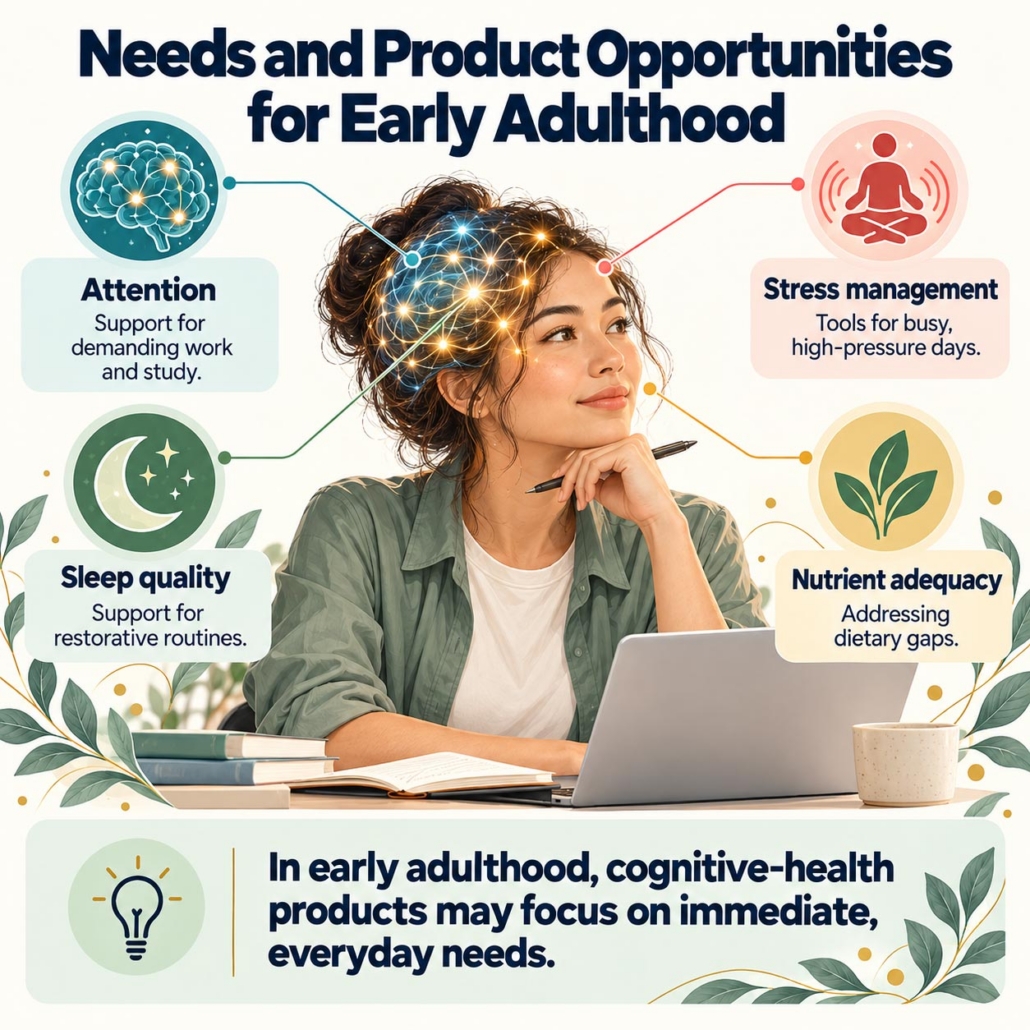
INFOGRAPHIC: Needs and Product Opportunities for Early Adulthood

Early Adulthood

In early adulthood, cognitive-health products may focus on immediate needs: attention during demanding work or study, stress management, sleep quality, and nutrient adequacy. These are meaningful consumer concerns, but they should not be framed as signs that young adults need “anti-aging” supplements.

Product concepts might explore ingredients studied for attention or relaxation, such as citicoline or selected botanicals, while making clear that the human evidence is still developing and depends on the specific ingredient and dose.

Products could also address dietary gaps — for example, vitamin B12 for people following vegan or vegetarian diets, or omega-3s for those who rarely eat seafood.

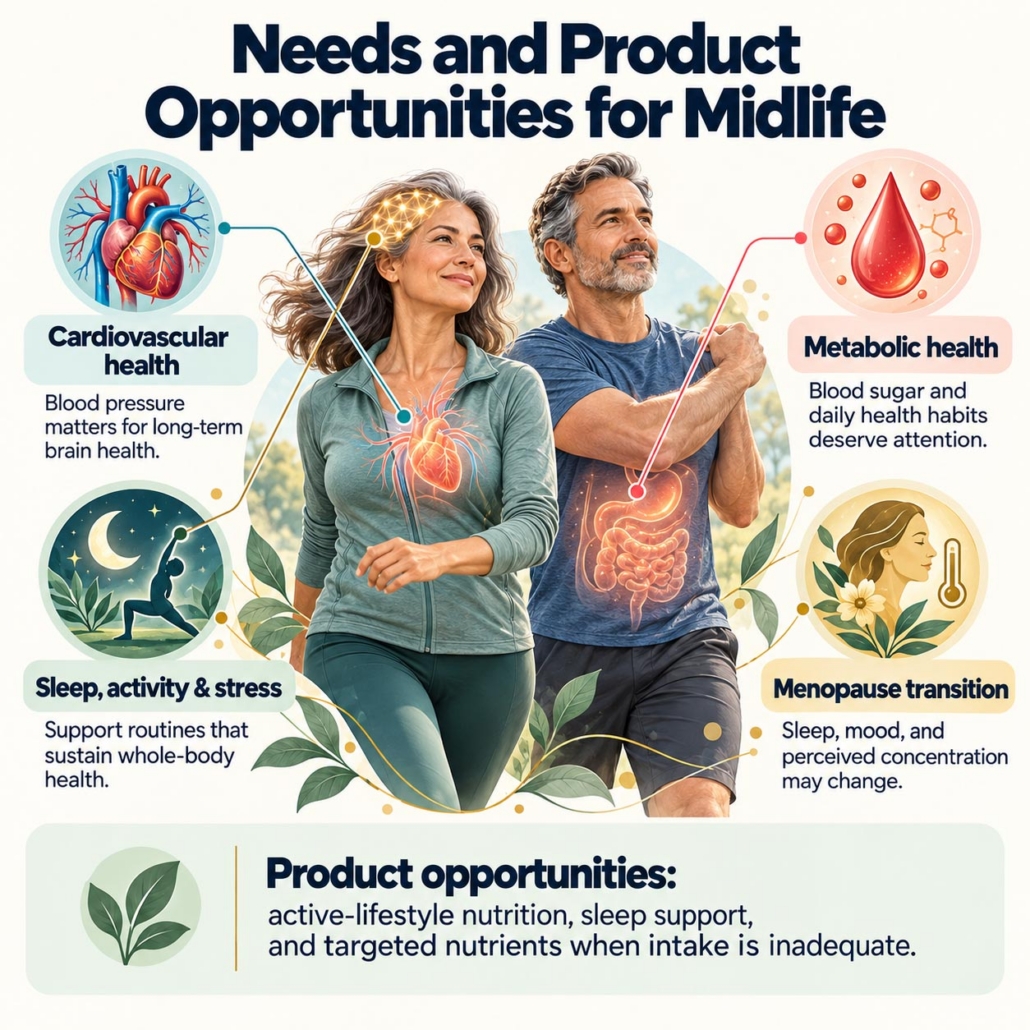
INFOGRAPHIC: Needs And Product Opportunities For Midlife

Midlife

Midlife can be a useful point for proactive brain-health positioning because cardiovascular and metabolic health become increasingly relevant to later cognitive outcomes.

Blood pressure, blood sugar, sleep, physical activity, and stress all deserve attention. Research links midlife high blood pressure with cognitive decline later in life, although supplements do not replace clinical care or risk-factor management.

Product opportunities could align with routines that support broader health: nutrition for active lifestyles, sleep support, or targeted nutrients when intake is inadequate. For women, the menopause transition may also bring changes in sleep, mood, and perceived concentration.

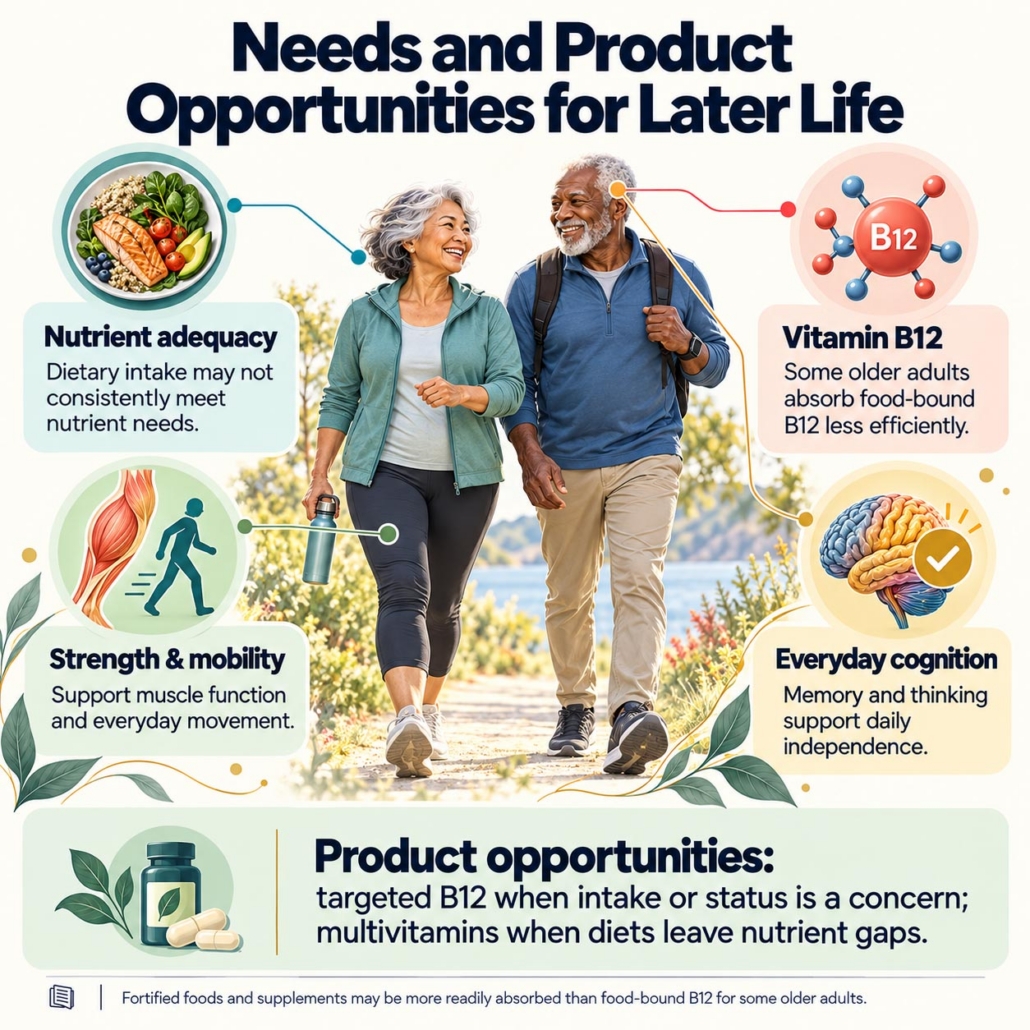
INFOGRAPHIC: Needs and Product Opportunities for Later Life

Later Life

In later life, practical needs may include maintaining nutrient adequacy, muscle function, mobility, and everyday cognitive function.

Vitamin B12 deserves particular consideration: some older adults absorb less B12 naturally present in food, while fortified foods and supplements may be more readily absorbed.

That makes B12 a relevant nutrient for targeted products, especially when low intake or status is a concern; it does not mean B12 supplementation improves cognition in everyone.

Market Context: Cognitive Health Within Longevity

Longevity is becoming a broader consumer conversation about maintaining quality of life, independence, and mental engagement over time. Cognitive health fits naturally into that conversation — and a focused market forecast suggests growing commercial interest.

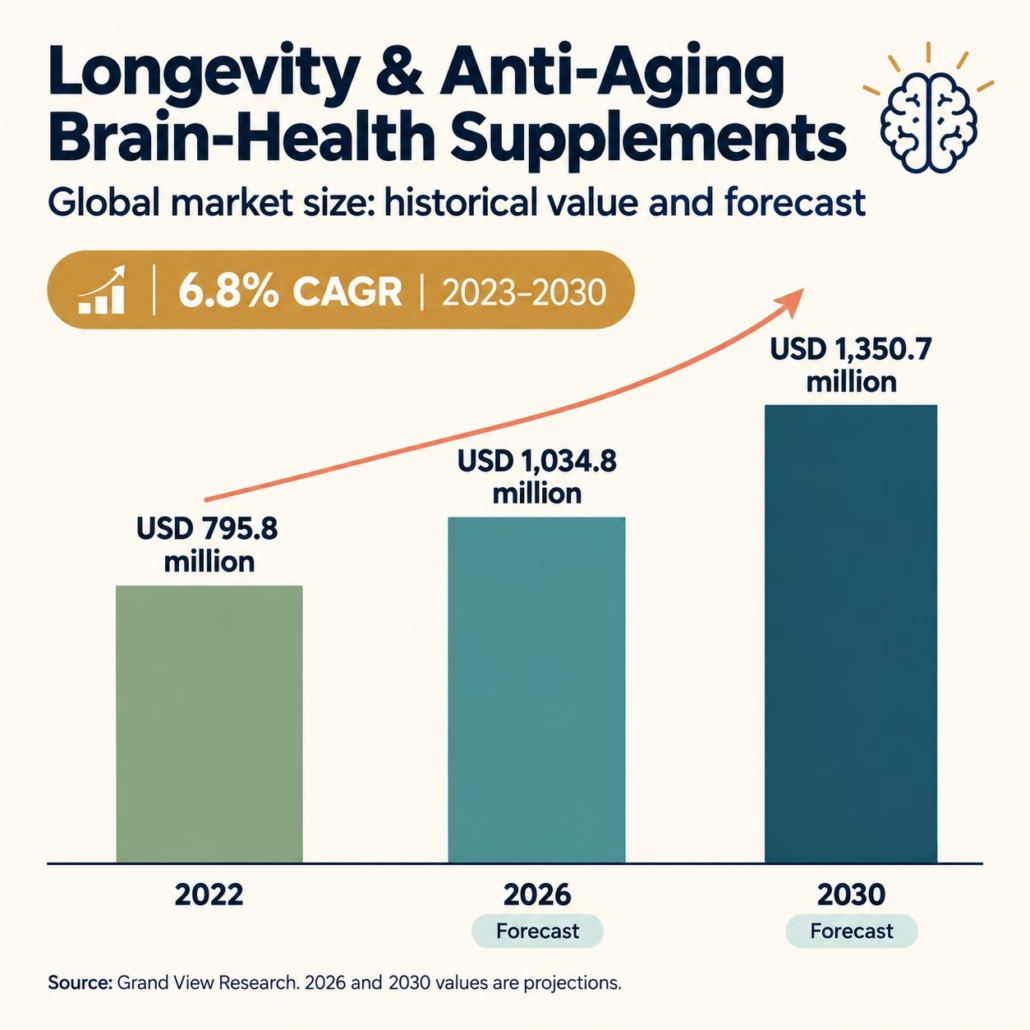
Grand View Research projects the global longevity and anti-aging brain-health supplements market will reach $1.35 billion by 2030, representing a forecast 6.8% compound annual growth rate from 2023 to 2030. North America held the largest regional share in 2022, at 42.1%.

The forecast points to an expanding space for products that connect brain health with the larger healthy-aging journey.

Brands can explore concepts organized around specific consumer needs — such as memory, attention, sleep, nutrient adequacy, or active aging — and build product lines that serve different needs over time.

For brands, the growth outlook creates room to define a clear place in the longevity category.

A focused audience, recognizable product role, and format suited to consumer routines can help make that positioning tangible as interest in cognitive health expands.

Market figures are Grand View Research estimates and forecasts; the report’s market scope and segmentation determine which products are included.

INFOGRAPHIC: Longevity and Anti-Aging Brain Health Supplement Market Growth

Support the Habits & Functions That Matter

The brain changes with age, but cognitive aging is not a single, predictable decline. People follow different trajectories, shaped by biology and by the health of systems throughout the body. Cardiovascular function, nutrient status, muscle and mobility, sleep, stress, and social connection all help shape the context in which the brain ages.

That complexity calls for a more thoughtful role for supplements. A formula can help address a defined nutrient gap or complement habits that support healthy aging, such as regular movement and restorative sleep.

But no ingredient can stand in for those habits — or credibly promise to prevent or reverse cognitive decline. Clear, measured positioning gives consumers a more useful picture of what a product is designed to do.

For brands, this creates an opportunity to move beyond broad “brain boost” claims. Start with a meaningful consumer need: maintaining attention during demanding days, supporting nutrient adequacy later in life, or complementing an active-aging routine.

Then connect the formula to the relevant cognitive function, lifespan context, and ingredient-specific human evidence. When the intended role is clear, the product becomes easier to formulate, explain, and trust.

Intermountain Nutrition helps brands turn that focus into products built for real-world production — from ingredient selection and formulation through scale-up and quality.

Talk with our team about developing your next cognitive-health product.

Frequently Asked Questions

Cognitive longevity means supporting the brain’s ability to think, learn, remember, and adapt throughout life. It recognizes that brain health is shaped by more than age alone: cardiovascular health, nutrition, sleep, activity, social connection, health conditions, and individual biology all contribute.

The term does not mean that everyone can avoid age-related changes or that supplements can stop them. Rather, it shifts the conversation toward the habits and health factors that may help people maintain cognitive function and quality of life as they age.

The brain changes throughout life. With age, some people may take longer to learn new information, recall a word, or switch between tasks. Other abilities, including knowledge gained through experience, may remain stable or improve. These changes vary considerably from person to person.

Significant or worsening memory and thinking problems are not simply an inevitable part of aging. They can have many causes, including medical conditions, medications, mood disorders, or neurological disease. Persistent concerns should be discussed with a health professional.

Regular physical activity, nutritious eating, restorative sleep, mental challenge, social connection, and attention to cardiovascular health are all relevant to healthy aging. These habits affect overlapping systems, so there is no single routine that guarantees a particular cognitive outcome.

For product developers, the useful question is where a supplement could complement a habit or address a specific nutritional need. For example, a product might support nutrient adequacy or fit into an active lifestyle. It should not be positioned as a substitute for exercise, a balanced diet, sleep, or appropriate medical care.

No supplement has been established as a universal way to preserve cognition or prevent dementia. Ingredients are studied for different reasons: B vitamins have essential roles in nervous-system function; DHA is a component of brain-cell membranes; and ingredients such as citicoline, botanicals, creatine, and microbiome-focused compounds are studied for potential roles in specific pathways or functions.

The evidence differs by ingredient, form, dose, population, and outcome. For example, correcting a nutrient deficiency is not the same as improving cognition in people who already have adequate nutrient status. Brands should describe each ingredient’s role precisely and avoid extending results beyond the population or outcome studied.

Life stages can help brands understand changing priorities, but age alone does not establish a consumer’s needs. Early adults may seek support for focus, stress, or nutrient adequacy; midlife consumers may be interested in sleep and overall health habits; and older adults may pay closer attention to nutrient intake, mobility, or ease of use.

These are potential audience considerations, not universal needs. A product should be built around a defined use case and evidence relevant to the intended population, rather than assuming that everyone in an age group needs the same ingredients.

Start with the intended consumer and the function the product is designed to support. Then evaluate the ingredient form, studied dose, population, study duration, and measured outcome. Also consider whether the dose fits the chosen format, whether ingredients remain stable, and whether the serving is practical for daily use.

For combination formulas, each ingredient should have a clear purpose. A plausible mechanism or a study on one ingredient does not, by itself, demonstrate that the finished product delivers a cognitive benefit.

Be specific about the product’s intended role and connect claims to evidence for the actual ingredient, dose, and population. Distinguish established nutrient functions from emerging research, and avoid suggesting that a mechanism proves a clinical outcome.

In the United States, dietary-supplement structure/function claims must be substantiated and meet applicable FDA requirements; advertising claims must also be supported by appropriate evidence. A disclaimer does not make an otherwise unsupported or misleading claim acceptable.

References

Brain Aging, Lifespan & Healthy Habits

Harada, C. N., Natelson Love, M. C., & Triebel, K. L. (2013). Normal cognitive aging. Clinics in Geriatric Medicine, 29(4), 737–752.

Gonzales, M. M., Garbarino, V. R., Pollet, E., et al. (2022). Biological aging processes underlying cognitive decline and neurodegenerative disease. Journal of Clinical Investigation, 132(10), e158453.

National Institute on Aging. (n.d.). Cognitive health and older adults.

National Institute on Aging. (n.d.). Health benefits of exercise and physical activity.

National Institute on Aging. (n.d.). Sleep and older adults.

Farina, F., Bridgeman, K., Gregory, S., et al. (2024). Next generation brain health: Transforming global research and public health to promote prevention of dementia and reduce its risk in young adult populations. The Lancet Healthy Longevity, 5(12), 100665.

Levy, B. R., & Slade, M. D. (2026). Aging redefined: Cognitive and physical improvement with positive age beliefs. Geriatrics, 11(2), 28.

Lakhan, S. E. (2026). The brain is the rate-limiting organ of longevity: A brain-first systems framework for aging. Cureus, 18(1), e101106. This is an editorial framework, rather than established scientific consensus.

Ingredient Mechanisms & Human Research

National Institutes of Health, Office of Dietary Supplements. (n.d.). Vitamin B12: Fact sheet for health professionals.

National Institutes of Health, Office of Dietary Supplements. (n.d.). Choline: Fact sheet for health professionals.

National Institutes of Health, Office of Dietary Supplements. (n.d.). Omega-3 fatty acids: Fact sheet for health professionals.

Fekete, M., et al. (2023). Improving cognitive function with nutritional supplements in aging: A comprehensive narrative review of clinical studies. Nutrients, 15(24), 5116.

Vyas, C. M., et al. (2024). Effect of multivitamin-mineral supplementation versus placebo on cognitive function: Results from the COSMOS clinic subcohort and meta-analysis of three cognitive studies. The American Journal of Clinical Nutrition, 119(3), 692–701.

Yeung, L. K., et al. (2023). Multivitamin supplementation improves memory in older adults: A randomized clinical trial. The American Journal of Clinical Nutrition, 118(2), 273–282.

Zhang, Y., et al. (2024). The influence of n-3 polyunsaturated fatty acids on cognitive function in individuals without dementia: A systematic review and dose-response meta-analysis. BMC Medicine, 22, 114.

Calabrese, C., et al. (2008). Effects of a standardized Bacopa monnieri extract on cognitive performance in the elderly: A randomized, double-blind, placebo-controlled trial. Journal of Alternative and Complementary Medicine, 14(6), 707–713.

A systematic review of the safety and efficacy of herbal and nutritional medicines on cognitive function in older adults. (2023).

Wieland, L. S., et al. (2026). Ginkgo biloba for cognitive impairment and dementia. Cochrane Database of Systematic Reviews, Issue 2, CD013661.

Nakazaki, E., et al. (2021). Citicoline and memory function in healthy older adults: A randomized, double-blind, placebo-controlled clinical trial. The Journal of Nutrition, 151(8), 2153–2160.

European Food Safety Authority. (2024). Citicoline and support of the memory function: Evaluation of a health claim. EFSA Journal, 22(7), e8861.

Nash, C. S., et al. (2025). Creatine and cognition in aging: A systematic review of evidence in older adults. Nutrition Reviews.

The interplay between gut microbiota and cognitive functioning in the healthy aging population: A systematic review. (2024). Nutrients, 16(6), 852.

Birns, B., Murshed, S., & Ni Lochlainn, M. (2026). Gut microbiome modulation and cognitive function in older adults: A systematic review and meta-analysis. Age and Ageing, 55(9), afag287.

Market Context

Grand View Research. (2023; page updated 2026). Longevity and anti-aging brain health supplements market, 2023–2030.

Additional Context & Emerging Trends

Celeste, A. (n.d.). The 100-Year Brain: Can We Stay Sharp for a Century?

Radiological Society of North America. (2025). Higher muscle volume is inversely related to brain age while increased visceral-to-muscle fat ratio is positively related to brain age.

Related Postings

three friends discussing and researching supplements for health and wellness
Blue Spirulina for Antioxidant Supplements
STOCK FORMULA: Antioxidant Gummies for Healthy Aging Support