Bovine Colostrum for Immune Support Supplements: Evidence and Formulation Considerations

September 24, 2026 |

Bovine colostrum offers a distinctive combination of immunoglobulins and other bioactive compounds, but product success depends on evidence alignment, responsible sourcing, careful processing, and disciplined formulation.

At a Glance

  • Bovine colostrum is the nutrient-rich first milk produced after calving.
  • IgG is its predominant immunoglobulin and a common quality marker.
  • Colostrum may support immune resilience through activity in the gastrointestinal tract and at mucosal surfaces.
  • Human findings remain mixed and vary by ingredient, dose, population, and outcome.
  • Pasteurization must balance microbial safety with bioactive-protein preservation.
  • Brands should evaluate the complete ingredient—not IgG concentration alone.
  • Responsible sourcing should prioritize calf nutrition, animal welfare, traceability, and transparent collection practices.

Colostrum for Immune Support Supplement Formulation

Immune-support supplements have traditionally centered on vitamins, minerals, botanicals, and probiotics. Bovine colostrum gives brands another option: a dairy-derived ingredient that combines immunoglobulins, lactoferrin, oligosaccharides, peptides, and other naturally occurring compounds.

Colostrum is particularly relevant to products connecting immunity with gut integrity, mucosal defense, active living, or healthy aging. However, it is not a simple “immune booster.” Its potential value lies in supporting selected immune and barrier-related functions.

For supplement brands, the opportunity is promising—but highly ingredient dependent. Source quality, processing, bioactive concentration, sensory performance, and ethical practices can differ substantially among suppliers.

What Is Bovine Colostrum?

Bovine colostrum is the first milk a cow produces after giving birth. It helps nourish the newborn calf and provides concentrated proteins, immunoglobulins, growth factors, fats, vitamins, minerals, and other protective compounds.

Its composition differs from mature milk. Colostrum generally contains more protein and immunoglobulins, while its appearance, viscosity, fat, lactose, and bioactive profile can vary.

Collection Timing Matters

Colostrum changes quickly after calving. Immunoglobulin concentrations are generally highest in the earliest milkings and decline as the cow transitions toward mature milk.

As a result, “bovine colostrum” does not describe one uniform ingredient. Collection timing, animal health, breed, feeding practices, storage, pooling, filtration, heat treatment, and drying can all influence the finished powder.

Brands should therefore evaluate a supplier’s specifications and process while not relying on the ingredient name alone.

How Colostrum May Support Immune Function

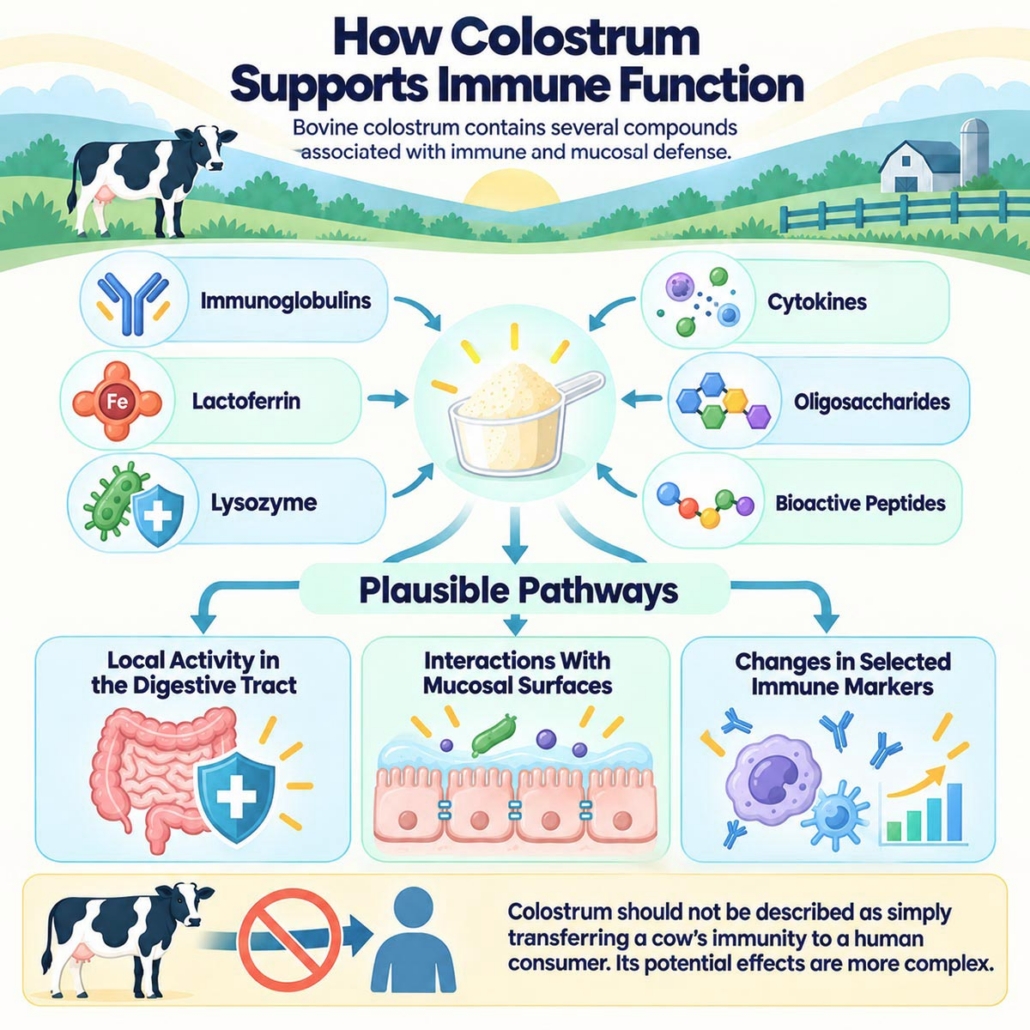
INFOGRAPHICS: How Colostrum Supports Immune Function

Bovine colostrum contains several compounds associated with immune and mucosal defense. These include immunoglobulins, lactoferrin, lysozyme, cytokines, oligosaccharides, and bioactive peptides.

Together, they provide plausible pathways through which colostrum may interact with the gastrointestinal environment and selected immune responses.

Local Activity May Be More Relevant Than Systemic Absorption

Colostrum should not be described as simply transferring a cow’s immunity to a human consumer. Its potential effects are more complex.

Large proteins such as immunoglobulins may be partially broken down during digestion. However, some may retain binding activity within the gastrointestinal lumen. Other colostrum components may interact with the intestinal lining, microorganisms, or immune cells associated with mucosal tissues.

This makes localized gut and mucosal activity a more defensible explanation than suggesting that intact bovine antibodies enter circulation and become part of the consumer’s immune system.

Immune Modulation Is More Accurate Than Immune Stimulation

Healthy immunity depends on appropriate coordination—not constant activation. Therefore, brands should avoid portraying colostrum as an ingredient that simply “boosts” immune activity.

A more responsible position focuses on immune resilience, mucosal defense, intestinal integrity, and a balanced response to everyday challenges.

Supporting Mucosal Immune Defenses

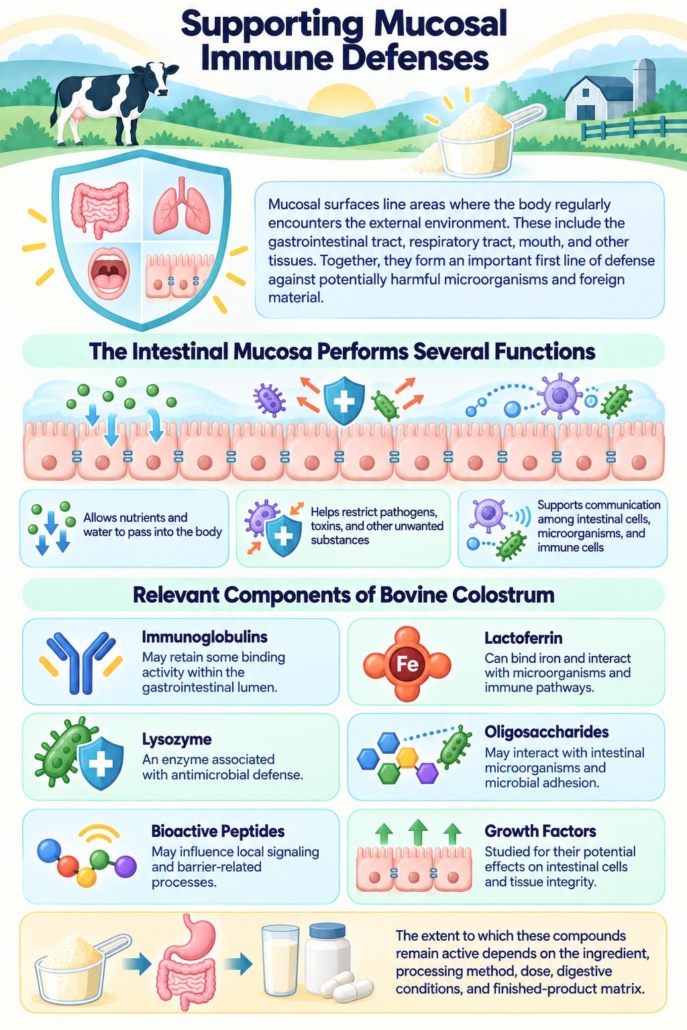
Mucosal surfaces line areas where the body encounters food, microorganisms, environmental particles, and other foreign material. These surfaces include the gastrointestinal tract, respiratory tract, and mouth.

Together, they provide an important first line of defense.

The Intestinal Mucosa Has Several Jobs

The intestinal lining must allow nutrients and water to pass into the body while helping restrict pathogens, toxins, and other unwanted substances. It also supports communication among intestinal cells, resident microorganisms, and immune cells.

Several colostrum components may be relevant to this environment:

  • Immunoglobulins may retain some binding activity within the gastrointestinal lumen.
  • Lactoferrin can bind iron and interact with microorganisms and immune pathways.
  • Lysozyme is an enzyme associated with antimicrobial defense.
  • Oligosaccharides may interact with intestinal microorganisms and microbial adhesion.
  • Bioactive peptides may influence local signaling and barrier-related processes.
  • Growth factors have been studied for potential effects on intestinal cells and tissue integrity.

The extent to which these compounds remain active depends on the ingredient, processing method, dose, digestive conditions, and finished-product matrix.

INFOGRAPHIC: Supporting Mucosal Immune Defenses

Human Evidence Is Still Developing

Studies have examined salivary IgA, salivary lysozyme, lactoferrin, upper respiratory symptoms, and intestinal integrity. However, results vary across studies, products, doses, and populations.

Mucosal immune support is therefore a promising positioning area, but brands should not present it as conclusively established across all colostrum ingredients.

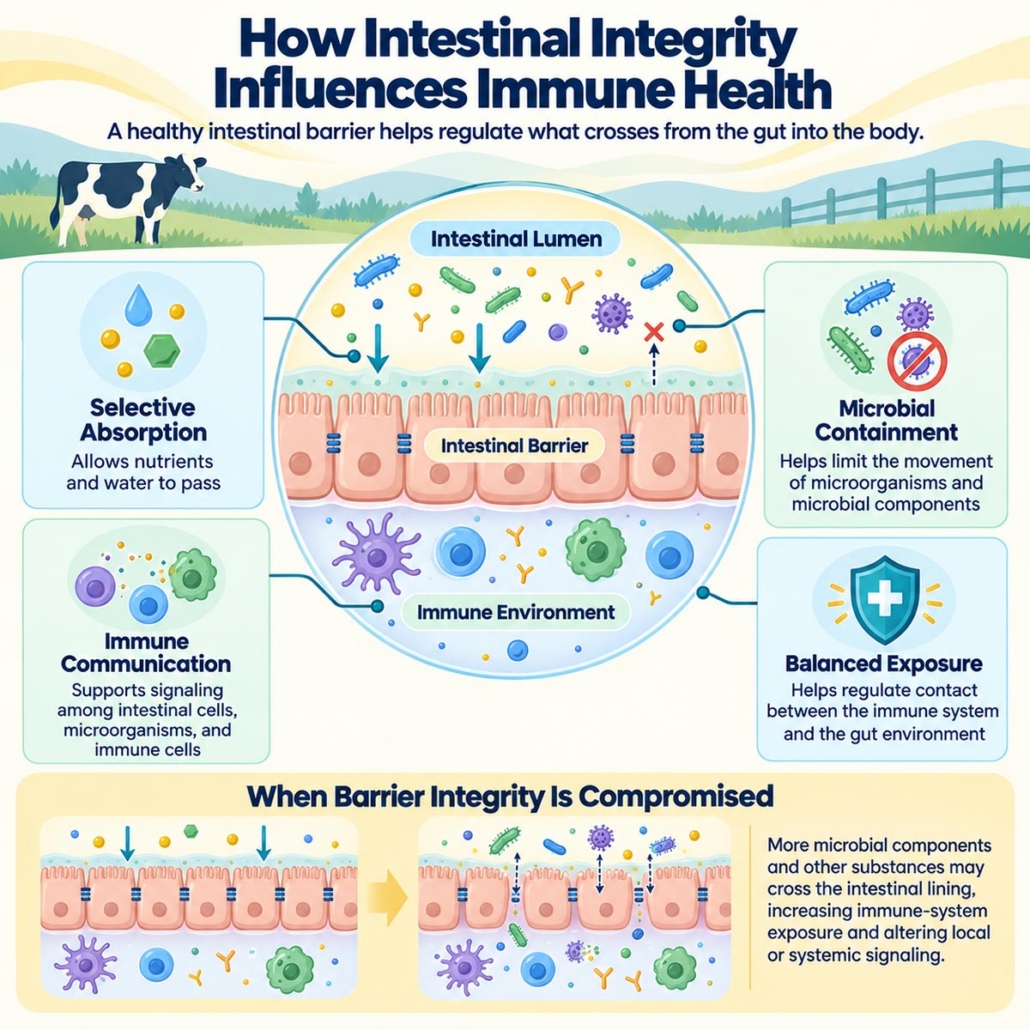
INFOGRAPHIC: How Intestinal Integrity Influences Immune Health

Why Intestinal Integrity Matters

When barrier integrity becomes compromised, microbial components and other substances may cross the intestinal lining more readily. This can increase immune-system exposure and alter local or systemic signaling.

Researchers have investigated bovine colostrum for its potential to support intestinal integrity during physical stress and in selected gastrointestinal conditions. This gives colostrum a logical place in gut–immune formulations.

Instead of presenting digestive and immune support as unrelated benefits, brands can explain how the intestinal environment contributes to normal immune surveillance and resilience.

Intestinal Permeability

One frequently cited study found that bovine colostrum reduced an exercise-associated increase in intestinal permeability among athletes. This supports interest in colostrum for active-lifestyle gut and immune products, although the result should not be generalized to all consumers or gastrointestinal conditions.

What Human Research Suggests

Human studies have explored bovine colostrum in athletes, physically active adults, older adults, children, and selected clinical populations. Outcomes have included immune markers, respiratory symptoms, gastrointestinal comfort, intestinal permeability, body composition, and exercise recovery.

Supporting Immune Resilience During Physical Stress

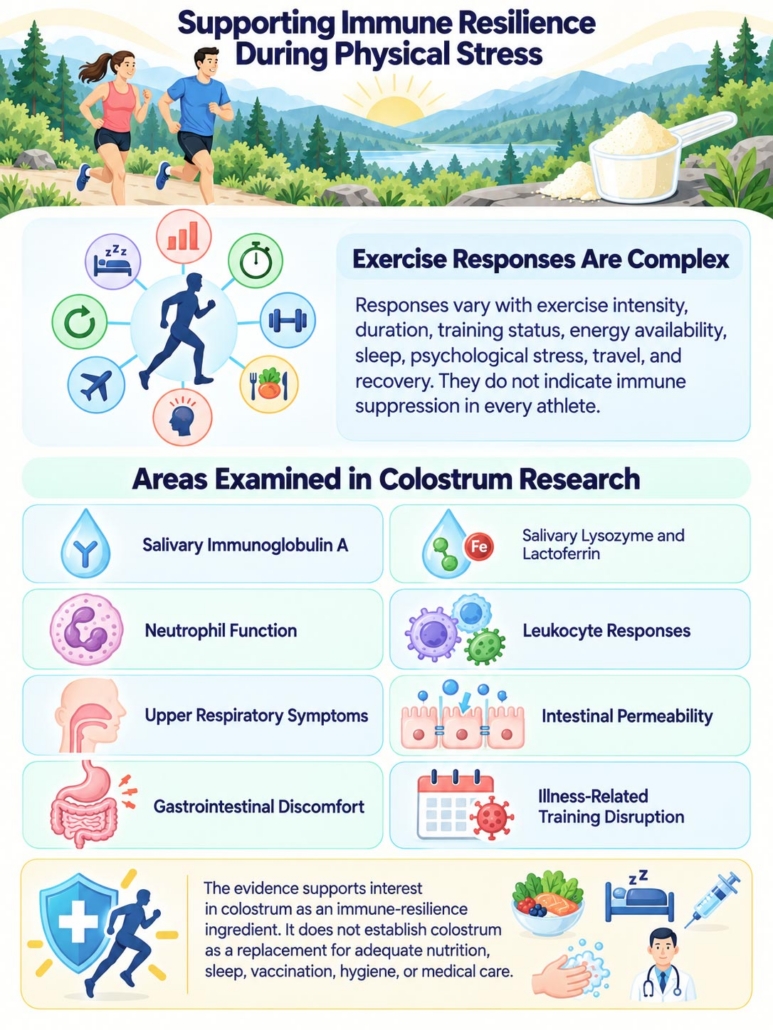
Exercise supports long-term health, including immune health. However, prolonged or strenuous activity can temporarily affect immune-cell activity, mucosal markers, inflammatory signaling, and gastrointestinal function.

These responses do not indicate immune suppression in every athlete. They reflect a complex interaction involving training intensity, duration, energy availability, sleep, psychological stress, travel, and recovery.

Why Researchers Study Colostrum in Active Populations

Colostrum research in physically active populations has examined:

  • Salivary immunoglobulin A
  • Salivary lysozyme and lactoferrin
  • Neutrophil function
  • Leukocyte responses
  • Upper respiratory symptoms
  • Intestinal permeability
  • Gastrointestinal discomfort
  • Illness-related training disruption

The findings support continued interest in colostrum as an immune-resilience ingredient. However, colostrum does not replace adequate nutrition, sleep, vaccination, hygiene, recovery practices, or medical care.

INFOGRAPHIC: Supporting Immune Resilience During Physical Stress
INFOGRAPHIC: Other Possible Benefits Of Colostrum

Other Possible Benefits of Colostrum

Beyond immunity, gut integrity, and sports nutrition, researchers have explored bovine colostrum in relation to:

  • Gastrointestinal disorders
  • Infectious diarrhea
  • Recovery and tissue support
  • Body composition
  • Healthy aging
  • Oral health
  • Skin health
  • Pediatric and clinical nutrition

These applications should remain secondary in an immunity-focused product unless the formula and supporting evidence justify a broader position. Many findings come from specialized populations or clinical settings and may not translate directly to general wellness supplements.

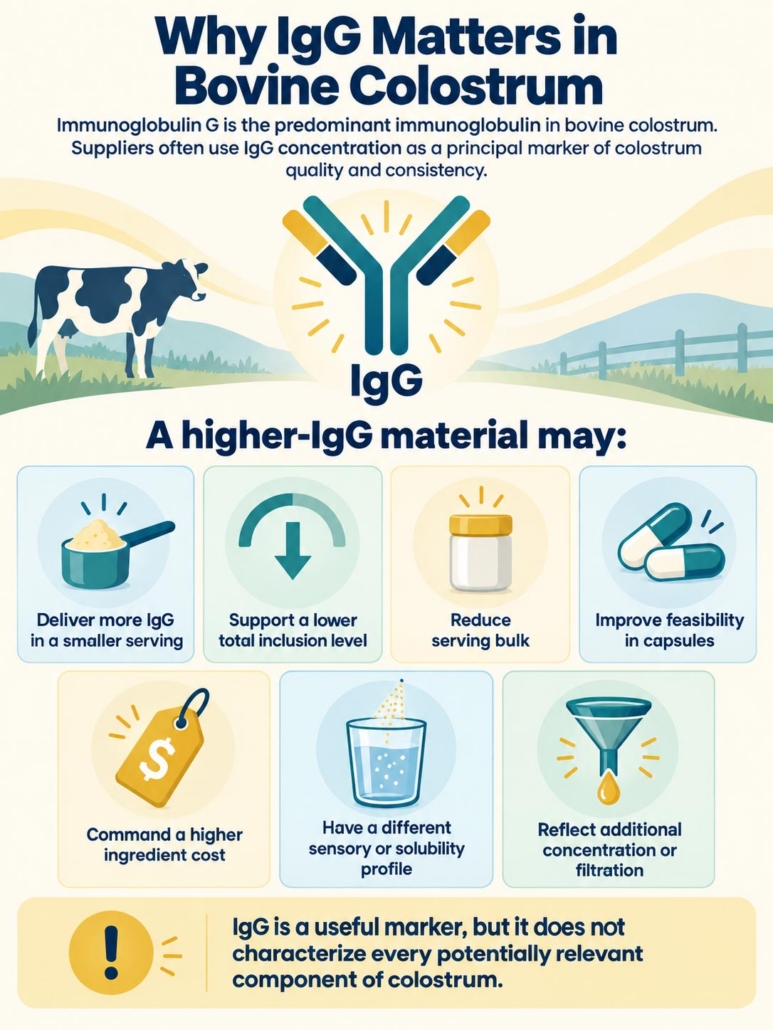
Why IgG Matters in Bovine Colostrum

Immunoglobulin G is the predominant immunoglobulin in bovine colostrum. Suppliers commonly use IgG concentration as a principal marker of quality and batch consistency.

A higher-IgG ingredient may:

  • Deliver more IgG in a smaller serving
  • Support a lower total inclusion level
  • Reduce serving bulk
  • Improve capsule feasibility
  • Command a higher ingredient cost
  • Produce a different sensory or solubility profile
  • Reflect additional concentration or filtration

However, an IgG percentage is meaningful only when the test method, sampling plan, and specification are clear. Formulators should confirm whether the value applies to the finished powder and whether it is reported on an as-is or dry-weight basis.

It’s also important to remember that a higher IgG concentration may offer meaningful formulation advantages, but it is not a complete measure of quality.

INFOGRAPHIC: Why IgG Matters In Bovine Colostrum

Beyond IgG: Understanding the Colostrum Matrix

IgG is important, but it does not characterize the entire ingredient. Colostrum also contains smaller quantities of IgA and IgM, which contribute to its broader immunoglobulin profile.

Additional Bioactive Components

Lactoferrin, oligosaccharides, lysozyme, cytokines, and bioactive peptides may provide complementary functions relevant to immune and gut health. However, suppliers do not always quantify or standardize these components.

Composition Affects Formulation

Colostrum also contains protein, casein, fat, lactose, minerals, and moisture. These constituents can affect:

  • Allergen considerations
  • Flavor and aroma
  • Solubility and suspension
  • Powder flow
  • Serving size
  • Oxidative stability
  • Moisture sensitivity
  • Shelf life

Filtration, defatting, pasteurization, concentration, and drying can alter this profile.

Evaluate the Complete Ingredient

A higher IgG concentration may offer meaningful formulation advantages, but it is not a complete measure of quality.

Brands should evaluate the finished powder’s composition, processing history, microbiological safety, stability, sensory characteristics, and manufacturing performance. When suppliers promote additional bioactives, request quantified specifications and validated test methods.

What Is Pasteurization and Why Does It Matter for Colostrum Supplements?

Pasteurization uses a controlled combination of heat and time to reduce disease-causing microorganisms. It is not sterilization, so hygienic handling and finished-product testing remain essential.

Fresh colostrum can acquire microbial contamination from the animal, farm environment, collection equipment, storage, or transportation. A validated pasteurization or equivalent microbial-reduction step is therefore an important safety control.

Colostrum Requires a Careful Processing Balance

Colostrum contains high concentrations of protein and immunoglobulins. Excessive heat may denature these proteins, reduce measurable bioactivity, or create processing problems such as aggregation and increased viscosity.

Research has examined lower-temperature, longer-time treatments as a way to improve microbial quality while preserving more immunoglobulin activity. However, no single protocol works for every raw material or processing system.

Drying Is a Separate Consideration

Following liquid processing, manufacturers generally concentrate and dry colostrum. Spray-drying and freeze-drying can each affect proteins, flavor, solubility, and cost.

Drying should not automatically be treated as a validated pasteurization step. Brands should understand where microbial reduction occurs and how the supplier verifies its effectiveness.

Terms such as “cold processed,” “low temperature,” or “minimally processed” do not provide enough information on their own. Formulators need validated process details and finished-powder specifications.

Choosing the Right Supplement Format

Colostrum is most practical in powders and capsules. Format selection should reflect dose, sensory expectations, cost, and consumer routine.

Powders

Tubs, pouches, and stick packs can accommodate meaningful quantities of colostrum. They also allow brands to build daily beverages around creamy or comforting flavor profiles.

Potential flavor directions include:

  • Vanilla cream
  • Chocolate or cocoa
  • Chai
  • Cinnamon
  • Honey
  • Golden milk
  • Matcha latte
  • Strawberry
  • Blueberry
  • Peach

Powders require careful work on dispersibility, foam, sedimentation, aroma, sweetness, and moisture protection.

Capsules

Capsules avoid most taste and aroma challenges. However, colostrum’s bulk can require multiple capsules unless the formula uses a concentrated ingredient or a relatively modest serving.

Capsules may work best for focused immune-support formulas that combine colostrum with lower-dose complementary ingredients.

Gummies

Gummies generally offer limited capacity for meaningful amounts of colostrum. Heat, water activity, dairy flavors, and matrix compatibility add further challenges.

Unless the desired dose is low and technically justified, powders or capsules are usually more practical.

Consumer Segments that Offer the Strongest Opportunity

Active Adults & Performance-Oriented Consumers

This segment has one of the clearest links to the current research. Athletes and active adults may understand products positioned around immune resilience, gastrointestinal integrity, travel, and training continuity.

However, the brand must decide whether it serves recreationally active consumers or drug-tested athletes. Products intended for tested athletes may require additional finished-product certification and anti-doping risk management.

Premium Gut-Health Consumers

Consumers who already understand probiotics, postbiotics, prebiotic fibers, and intestinal-barrier concepts may respond to a differentiated gut–immune story.

The formula should still define colostrum’s role. It should not imply that colostrum is a probiotic or that it treats gastrointestinal disorders.

Seasonal Immune-Support Consumers

Colostrum can give a seasonal product a more distinctive identity than a familiar vitamin C and zinc formula. Yet its strongest rationale may come from consistent use rather than occasional consumption after symptoms begin.

Brands should therefore consider whether the consumer will understand colostrum as a daily immune-support ingredient rather than a fast-acting cold remedy.

Healthy-Aging Consumers

Healthy-aging consumers may value immune resilience, protein quality, recovery, and gastrointestinal health. However, direct evidence for colostrum as a longevity ingredient remains limited.

The product should focus on maintaining normal immune function rather than promising immune rejuvenation or reversal of age-related decline.

How Colostrum Compares with Other Immune Ingredients?

Ingredient category Strategic strength Primary limitation
Bovine colostrum Differentiated mucosal and gut–immune story Dairy allergen, dose, cost, and sourcing complexity
Vitamin C Familiar, affordable, and easy to communicate Difficult to differentiate
Vitamin D Strong foundational immune relevance Low use level and mature category
Zinc Recognized immune nutrient Metallic flavor and tolerability at higher doses
Yeast beta-glucans Defined innate-immune positioning Evidence depends on source and structure
Elderberry Strong seasonal recognition and flavor compatibility Variable extracts and disease-claim risk
Probiotics Established gut–immune connection Strain specificity and shelf-life complexity
Postbiotics Stability and emerging innovation Consumer understanding is still developing
Lactoferrin More targeted immune and mucosal story Cost and narrower sourcing
Medicinal mushrooms Broad immune and adaptogenic interest Species, extract, and beta-glucan standardization vary

Colostrum does not need to outperform every alternative. Its advantage lies in creating a product story that familiar nutrients cannot provide.

Flavoring Considerations for Colostrum Supplements

Colostrum’s natural dairy character can fit more readily into creamy or indulgent profiles than sharp, clear-fruit beverages.

Potential directions include:

  • Vanilla
  • Vanilla chai
  • Honey vanilla
  • Cinnamon cream
  • Chocolate
  • Chocolate malt
  • Strawberries and cream
  • Blueberries and cream
  • Peaches and cream
  • Golden milk
  • Matcha latte
  • Unflavored or lightly sweetened dairy-style powder

Fruit flavors may still work, but they require careful acid, protein, and sensory management. A concept that tries to disguise colostrum as a clear citrus hydration drink may face more technical difficulty than a formula designed around its natural character.

Ingredients that Pair Well with Colostrum

Colostrum can function as the hero ingredient in an immune-support formula or as part of a broader gut–immune or active-resilience system. The best companion ingredients reinforce one clear product promise without overwhelming the serving, sensory profile, assay plan, or target COGS.

More ingredients do not automatically create a stronger product. Each addition should provide a distinct role that colostrum does not already serve.

Foundational Immune Support

Traditional vitamins and minerals can give the product a familiar nutritional foundation.

Potential companions include:

  • Vitamin C: Supports normal immune function and antioxidant defenses.
  • Vitamin D: Supports immune-cell function and broader immune regulation.
  • Zinc: Supports normal immune function and cellular processes involved in defense.
  • Selenium: Contributes to antioxidant defenses and normal immune function.

These ingredients can make the formula easier for consumers to understand. However, they also introduce practical considerations.

Zinc may create metallic or astringent flavor notes. Some mineral forms may affect protein behavior or sedimentation. Vitamin D requires careful delivery and homogeneity because of its low use level. Selenium adds another assay and may not be necessary in every formula.

A focused colostrum formula could use only one or two foundational nutrients rather than recreating a conventional multinutrient immune product.

Seasonal Immune Support

Colostrum may also be combined with familiar seasonal ingredients such as:

  • Elderberry
  • Echinacea
  • Andrographis
  • Yeast beta-glucans
  • Vitamin C
  • Vitamin D
  • Zinc

Botanicals can increase consumer recognition, but they also add flavor, color, assay, sourcing, and claims considerations. Elderberry can contribute a strong purple color and tart flavor, while echinacea and andrographis may introduce bitterness.

If colostrum is intended to differentiate the product, a long botanical blend may make the concept feel less focused. Brands should decide whether the hero story is dairy-derived mucosal immunity or a broad seasonal herbal formula.

Gut–Immune Support

Ingredients supporting the intestinal environment can reinforce colostrum’s mucosal-health positioning.

Potential companions include:

  • Beta-glucans
  • Selected probiotics
  • Postbiotics
  • Prebiotic fibers
  • L-glutamine
  • Zinc
  • Aloe vera
  • Selected soothing botanicals

The combination should have a clear rationale. For example, a colostrum and probiotic powder could connect mucosal support with microbial balance. However, probiotic stability, water activity, packaging, and shelf-life requirements would require additional validation.

Prebiotic fibers can improve the gut-health story but may cause gas or bloating at meaningful doses. They may also increase the total serving substantially. A token amount of fiber should not be presented as a meaningful prebiotic dose.

Beta-glucans may complement colostrum through a different immune-support pathway. Still, the source, molecular characteristics, dose, and evidence should be defined. “Beta-glucan” is not a single standardized ingredient category.

Active Immune Resilience

For products targeting athletes or highly active consumers, companion ingredients can address immune function, hydration, recovery, and training demands.

Potential companions include:

  • Vitamin D
  • Zinc
  • Beta-glucans
  • Vitamin C
  • Electrolytes
  • Magnesium
  • Tart cherry
  • Glutamine
  • Protein or essential amino acids

This type of formula requires a clear priority. If the product becomes a comprehensive recovery powder, colostrum may lose its role as the central immune ingredient. Conversely, if the formula focuses only on immunity, a large electrolyte or protein system may add unnecessary complexity.

A well-defined active-immunity product might combine colostrum with vitamin D, zinc, and a characterized beta-glucan. A gut-resilience product might pair colostrum with glutamine and a selected postbiotic. Each concept tells a different story and requires different evidence.

Lactoferrin Targeted Support

Adding isolated lactoferrin could create a more defined lactoferrin dose than relying on its natural presence in colostrum. This may support a more targeted immune or mucosal concept.

However, the brand should consider whether isolated lactoferrin:

  • Adds meaningful differentiation
  • Has independent supporting evidence
  • Fits the target COGS
  • Requires a separate assay
  • Creates redundancy with the colostrum story
  • Changes allergen or labeling considerations
  • Can be sourced consistently

If lactoferrin is the primary evidence-backed ingredient, the brand may need to decide whether colostrum is still necessary or whether it complicates an otherwise focused product.

Probiotics for Intestinal Immunity

Colostrum and probiotics are conceptually compatible because both can be positioned around the intestinal environment. Technical compatibility requires more scrutiny.

Formulators should evaluate:

  • Probiotic strain identity
  • Target CFU through shelf life
  • Moisture exposure
  • Storage temperature
  • Packaging
  • Oxygen sensitivity
  • Colostrum water activity
  • Consumer preparation
  • Whether the product will be mixed into warm liquids
  • Whether flavor acids affect probiotic survival

A shelf-stable postbiotic may offer a simpler development path when the product does not require live microorganisms.

Avoid Unnecessary Complexity

For many brands, the strongest colostrum product may be relatively simple. A well-characterized colostrum ingredient, one or two complementary immune nutrients, and a format capable of delivering a meaningful serving can create a clearer and more defensible product than an extensive blend.

Formulation Considerations

Colostrum is not necessarily difficult to formulate, but the ingredient’s variability requires early technical review.

Formulators should consider:

  • Target serving: Define the amount of colostrum and delivered IgG.
  • Ingredient concentration: Compare total powder requirements across IgG specifications.
  • Format capacity: Confirm whether the dose fits the desired capsule, stick pack, pouch, or tub.
  • Dispersibility: Test clumping, floating, sedimentation, and foam.
  • Flavor: Evaluate dairy, savory, sulfurous, or barn-like notes in the actual formula.
  • Lactose: Verify content when targeting lactose-sensitive consumers or considering lactose-related claims.
  • Allergens: Colostrum is milk-derived and requires appropriate allergen controls and labeling.
  • Moisture: Establish moisture and water-activity targets for powder performance and shelf stability.
  • Stability: Confirm IgG and other claimed components through the intended shelf life.
  • Compatibility: Evaluate interactions with flavors, acids, minerals, botanicals, probiotics, and other proteins.

Brands should test the complete formula rather than assuming that a supplier sample will behave the same after blending, flavoring, packaging, and storage.

Safety, Suitability & Claims

Bovine colostrum is a milk-derived ingredient. Consumers with a milk-protein allergy should avoid it unless advised otherwise by an appropriate healthcare professional.

Depending on the ingredient, colostrum may also contain lactose. Low-lactose and lactose-free claims require appropriate analytical support.

Pregnant or breastfeeding consumers, children, immunocompromised individuals, and people managing medical conditions should consult a qualified healthcare professional before use.

Which claims may offer the best fit?

The following table provides an initial claims-calibration framework. Final language should receive regulatory and legal review based on the finished product.

Potential positioning Evidence and regulatory assessment
Supports normal immune function Broad structure/function territory that may be appropriate with product-specific substantiation
Supports immune health Common positioning that still requires evidence relevant to the ingredient and serving
Supports the body’s natural defenses Potentially appropriate, but context must not imply disease prevention
Supports mucosal immune function Scientifically relevant and differentiated; requires evidence connected to mucosal outcomes
Supports immune resilience during strenuous exercise Promising for active consumers; should be tied to research in comparable populations
Helps maintain salivary immune defenses during training More specific and therefore requires close alignment with the evidence
Supports a healthy intestinal barrier Relevant secondary positioning; should not imply treatment of abnormal permeability or disease
Supports gut–immune health Consumer-friendly umbrella territory, but the formula should support both sides of the claim
Supports gastrointestinal integrity during physical stress Potentially relevant to active nutrition; population and conditions should match the evidence
Supports seasonal wellness Broad positioning that should not imply cold or influenza prevention
Boosts immunity Vague and scientifically imprecise; may imply stronger protection than the evidence demonstrates
Prevents colds Disease-prevention claim and not established by current evidence
Reduces respiratory infections Not established for standard commercial colostrum; likely disease claim
Fights viruses and bacteria in the body Likely misleading and disease-oriented
Provides antibodies that become part of your immune system Scientifically misleading in the context of oral adult supplementation
Heals leaky gut Overstated, medically loaded, and difficult to substantiate
Repairs intestinal damage May imply treatment of an abnormal or disease-related condition
Builds muscle through IGF-1 Not established and may raise safety and sports-integrity concerns
Reverses immune aging Not established
Protects against seasonal illness Likely understood as disease prevention
Works like an oral vaccine Inaccurate and impermissible

Keep Claims Proportionate to the Evidence

Appropriate structure–function positioning may include supporting:

  • Immune health
  • Immune resilience
  • Mucosal defenses
  • Intestinal integrity
  • Gut–immune health
  • Recovery during periods of physical stress

Disease-treatment or prevention claims are not appropriate for dietary supplements. Claims should reflect the actual ingredient, dose, formulation, intended population, and totality of evidence.

Why Context May Change a Claim

The same phrase can create different consumer impressions depending on where and how it appears.

For example, “supports immune resilience” may function as a general structure/function statement in one context. However, placing it beside images of influenza viruses, statements about avoiding infection, and a testimonial about no longer getting sick could create an implied disease-prevention claim.

Brands should review the full consumer experience, including:

  • Product name
  • Front-of-pack statements
  • Supplement Facts
  • Website copy
  • Blog content
  • Product images
  • Icons
  • Charts
  • Social posts
  • Influencer scripts
  • Testimonials
  • Reviews highlighted by the brand
  • Retailer listings
  • Email campaigns
  • Search advertisements
  • Frequently asked questions

Scientific references do not automatically protect a misleading marketing message. A technically accurate statement may still contribute to an unsupported implied claim when placed in a broader promotional context.

Responsible & Ethical Sourcing

Bovine colostrum can be sourced responsibly when the newborn calf’s needs remain the first priority. Only material remaining after the calf receives an adequate amount of high-quality colostrum should enter the human supplement supply chain.

Why is colostrum essential to the calf?

Calves receive little maternal antibody protection across the placenta. They rely on colostrum after birth for passive transfer of immunoglobulins.

The calf’s ability to absorb intact immunoglobulins declines rapidly after birth. Therefore, both timing and colostrum quality matter. Delayed feeding, inadequate volume, poor IgG concentration, or bacterial contamination can increase the risk of failed passive transfer and poor health outcomes.

Veterinary guidance emphasizes providing newborn calves with an adequate amount of clean, high-quality colostrum promptly after birth. (Merck Veterinary Manual, Penn State Extension)

This biological reality creates the central ethical standard:

Commercial value should never take priority over the calf’s need for timely, adequate, high-quality colostrum.

Do cows always produce surplus colostrum?

No. Some cows produce more high-quality colostrum than their calf requires, while others do not.

The amount and quality can vary with:

  • Breed and parity
  • Cow and udder health
  • Nutrition
  • Season and timing of collection
  • Calf size and health

Therefore, the statement that cows naturally produce more colostrum than calves need is too broad. Surplus should be determined at the farm level after the calf’s requirements and the material’s quality have been assessed.

A more accurate description is:

Bovine colostrum supplements may use genuine surplus remaining after the calf receives an adequate amount of high-quality colostrum.

Because both production and calf requirements vary, responsible sourcing requires documented feeding and collection protocols.

Questions Brands Should Ask

Responsible sourcing programs should address:

  • Whether calves receive colostrum before material enters the commercial supply
  • How farms determine that adequate colostrum is available
  • Whether collection uses only verified excess material
  • How calf intake and health are documented
  • Whether animal-welfare expectations are audited
  • How animals receive veterinary care
  • How farm and batch traceability are maintained
  • Whether the supplier can substantiate sustainability or upcycling claims

“Calf-first” and “surplus colostrum” can be meaningful principles, but brands should request documentation rather than accepting the phrases as proof.

Transparent sourcing can reduce reputational risk and create a more credible product story. However, animal welfare should remain a verified operating standard — not simply a marketing theme.

Is Colostrum Right for Your Product Portfolio?

Colostrum is worth considering when a brand wants to connect immune health with gut integrity, mucosal defense, active living, or healthy aging.

It is a stronger fit when the brand can support:

  • A meaningful daily serving
  • A defined IgG specification
  • Verified microbial safety
  • Responsible calf-first sourcing
  • Milk-allergen labeling
  • Evidence-aligned claims
  • Suitable sensory and stability performance
  • A format that accommodates the required dose

Colostrum is a weaker fit for vegan portfolios, milk-allergy audiences, highly space-constrained formats, low-cost formulas, or products that cannot explain the animal-derived source transparently.

The best product story is not that colostrum delivers instant or borrowed immunity. It is that a carefully sourced and processed ingredient may support mucosal defenses, intestinal integrity, and immune resilience through several complementary pathways.

Building a Credible Colostrum Supplement

Bovine colostrum gives supplement brands a differentiated way to connect immunity, gut health, and active-lifestyle resilience. However, the category demands more than a prominent IgG percentage.

Successful development starts with a clearly defined consumer and product purpose. From there, brands should evaluate the complete ingredient, confirm responsible sourcing, understand pasteurization and drying, select an appropriate format, and build claims around the actual evidence.

Intermountain Nutrition can help brands assess format feasibility, ingredient compatibility, flavor requirements, manufacturing performance, packaging, and scalable production. With coordinated R&D, quality, regulatory, and manufacturing support, a promising colostrum concept can become a credible product designed for commercial growth.

Frequently Asked Questions

Bovine colostrum is the nutrient-rich first milk produced by cows after calving. It contains immunoglobulins, proteins, lactoferrin, oligosaccharides, peptides, growth factors, fats, vitamins, and minerals.

Research suggests that colostrum may influence selected immune markers, mucosal defenses, and intestinal-barrier functions. However, results vary, and “immune support” or “immune resilience” is more accurate than promising a general immune boost.

No. Bovine immunoglobulins do not simply become part of the human immune system. Potential effects may involve binding activity in the gastrointestinal tract, mucosal interactions, and changes in selected immune markers.

IgG stands for immunoglobulin G, the predominant immunoglobulin in bovine colostrum. Suppliers use its concentration as a marker of ingredient potency and consistency, but IgG does not describe the entire colostrum matrix.

Not necessarily. Higher IgG may reduce serving bulk and improve capsule feasibility, but quality also depends on sourcing, processing, microbial safety, stability, sensory performance, and the broader composition.

Pasteurization reduces potentially harmful microorganisms. The process must use validated time and temperature controls while limiting unnecessary damage to heat-sensitive proteins.

Heat can affect immunoglobulins and other proteins, but the degree depends on the process. A well-controlled system aims to achieve microbial safety while retaining meaningful bioactive content in the finished powder.

Powders are generally the most flexible because they accommodate larger servings. Capsules can work with concentrated ingredients or smaller doses. Gummies are usually more constrained by capacity, heat, moisture, flavor, and matrix compatibility.

Bovine colostrum contains milk proteins and may trigger reactions in people with a milk allergy. Pasteurization does not remove this allergen risk.

People with a known cow’s-milk protein allergy should generally avoid conventional bovine colostrum unless directed otherwise by a qualified healthcare professional.

Milk allergy differs from lactose intolerance. A low-lactose product may still contain allergenic milk proteins.

Not automatically. Lactose content varies with the source and filtration process. Brands need analytical evidence before making a lactose-free claim.

Yes, but responsible sourcing requires evidence that calves receive adequate colostrum first. Brands should verify calf-feeding policies, animal-welfare practices, collection records, and supply-chain traceability.

No. Bovine colostrum comes from cows and is not compatible with vegan product positioning.

Brands with plant-based, dairy-free, or allergen-friendly platforms should consider other immune ingredients that align more closely with their portfolio commitments.

Genuine surplus may support an upcycling or circular-sourcing story when the material would otherwise be discarded or underused.

Still, not all colostrum should be described as waste. It may be needed for the cow’s calf, other calves, farm reserves, or animal-nutrition uses. Sustainability claims should reflect the specific supply chain and supporting documentation.

Potential companions include vitamin C, vitamin D, zinc, beta-glucans, selected probiotics, postbiotics, prebiotic fibers, and other ingredients relevant to the formula’s primary objective.

The best combination depends on whether the product focuses on foundational immunity, gut–immune health, seasonal wellness, or active immune resilience. Each ingredient should provide a meaningful and distinct role.

Bovine colostrum is not a probiotic because it does not consist of live microorganisms.

It also should not automatically be described as a conventional prebiotic. Colostrum contains oligosaccharides and other compounds that may interact with intestinal microorganisms, but a prebiotic claim requires evidence that the ingredient is selectively used by host microorganisms and provides a health benefit.

References

Colostrum Composition, Bioactives, and Human Health

Arslan, A., Kaplan, M., Duman, H., Bayraktar, A., Ertürk, M., Henrick, B. M., Frese, S. A., & Karav, S. (2021). Bovine colostrum and its potential for human health and nutrition. Frontiers in Nutrition, 8, 651721.

Ghosh, S., & Iacucci, M. (2021). Diverse immune effects of bovine colostrum and benefits in human health and disease. Nutrients, 13(11), 3798.

Playford, R. J., & Weiser, M. J. (2021). Bovine colostrum: Its constituents and uses. Nutrients, 13(1), 265.

Immune Health, Respiratory Symptoms, and Exercise

Crooks, C. V., Wall, C. R., Cross, M. L., & Rutherfurd-Markwick, K. J. (2006). The effect of bovine colostrum supplementation on salivary IgA in distance runners. International Journal of Sport Nutrition and Exercise Metabolism, 16(1), 47–64.

Davison, G. (2021). The use of bovine colostrum in sport and exercise. Nutrients, 13(6), 1789.

Jones, A. W., March, D. S., Curtis, F., & Bridle, C. (2016). Bovine colostrum supplementation and upper respiratory symptoms during exercise training: A systematic review and meta-analysis of randomised controlled trials. BMC Sports Science, Medicine and Rehabilitation, 8, 21.

Jones, A. W., Thatcher, R., & Davison, G. (2026). Effects of acute bovine colostrum supplementation on immune responses to prolonged cycling: A randomised crossover trial. European Journal of Nutrition, 65, Article 153.

Shing, C. M., Peake, J. M., Suzuki, K., Jenkins, D. G., & Coombes, J. S. (2007). Effects of bovine colostrum supplementation on immune variables in highly trained cyclists. Journal of Applied Physiology, 102(3), 1113–1122.

Gut Integrity and Gastrointestinal Evidence

Hajihashemi, P., Haghighatdoost, F., Kassaian, N., Rahim Khorasani, M., Hoveida, L., Nili, H., Tamizifar, B., & Adibi, P. (2024). Bovine colostrum in increased intestinal permeability in healthy athletes and patients: A meta-analysis of randomized clinical trials. Digestive Diseases and Sciences, 69, 1345–1360.

Hajihashemi, P., Haghighatdoost, F., Kassaian, N., Rahim Khorasani, M., Hoveida, L., Nili, H., Tamizifar, B., & Adibi, P. (2024). Therapeutics effects of bovine colostrum applications on gastrointestinal diseases: A systematic review. Systematic Reviews, 13, 76.

Marchbank, T., Davison, G., Oakes, J. R., Ghatei, M. A., Patterson, M., Moyer, M. P., & Playford, R. J. (2011). The nutriceutical bovine colostrum truncates the increase in gut permeability caused by heavy exercise in athletes. American Journal of Physiology-Gastrointestinal and Liver Physiology, 300(3), G477–G484.

Playford, R. J., Floyd, D. N., Macdonald, C. E., Calnan, D. P., Adenekan, R. O., Johnson, W., Goodlad, R. A., & Marchbank, T. (1999). Bovine colostrum is a health food supplement which prevents NSAID-induced gut damage. Gut, 44(5), 653–658.

Processing, Quality, and Responsible Sourcing

Fasse, S., Alarinta, J., Frahm, B., & Wirtanen, G. (2021). Bovine colostrum for human consumption—Improving microbial quality and maintaining bioactive characteristics through processing. Dairy, 2(4), 556–575.

Paskaš, S. (2025). Sustainable colostrum management and colostrum quality. Journal of Central European Agriculture, 26(1), 22–33.

American Veterinary Medical Association. (n.d.). Calf management.

Merck Veterinary Manual. (2025). Feeding young dairy calves.

Penn State Extension. (2026). Colostrum: Your calf’s health depends on it!

Related Postings

older couple walking in the park during autumn
three friends discussing and researching supplements for health and wellness
Blue Spirulina for Antioxidant Supplements