STOCK FORMULA: Daily Immune Defense Capsules for Everyday Immunity Support

September 23, 2026 |

Daily Immune Defense Capsules combine foundational immune nutrients with elderberry and astragalus in a convenient two-capsule formula designed for everyday immune wellness.

STOCK FORMULATION  |  CAPSULES  |  MOQ 10,000

At a Glance

  • Five active ingredients: vitamin C, vitamin D3, zinc, elderberry extract, and astragalus root extract.
  • Foundational nutrients meet botanicals: The formula combines familiar immune nutrients with plant-based ingredients for broader positioning.
  • Built for daily immune resilience: The formula supports an everyday wellness routine rather than focusing only on seasonal use.
  • Astragalus adds differentiation: This traditional botanical brings an emerging immune-modulation story to a familiar category.
  • Stock formula: Daily Immune Defense is available as a scalable starting point for supplement brands.
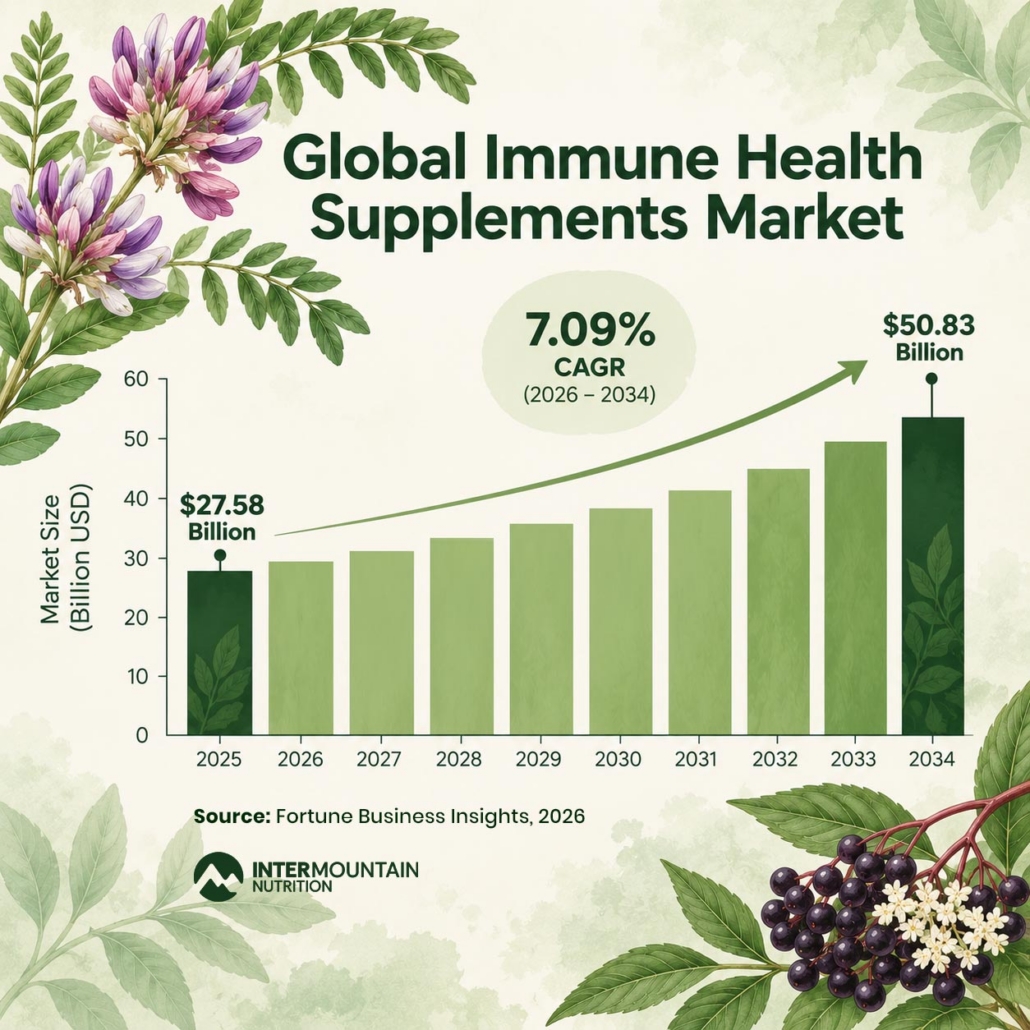
INFOGRAPHIC: Global Immune Health Supplements Market

Immune Support Supplement Trends

Immune support is evolving from a seasonal purchase into a broader everyday wellness opportunity. Daily Immune Defense Capsules were developed with that shift in mind, combining familiar immune nutrients with recognizable and emerging botanicals in a stock formula designed to give supplement brands a relevant, scalable starting point for today’s immune-health market.

A 2026 Pew Research Center survey found that 67% of U.S. adults currently take vitamin or mineral supplements, making them the most commonly used supplement category measured in the survey.

Immune health remains a substantial supplement category. Fortune Business Insights valued the global immune health supplements market at $27.58 billion in 2025 and projects it to reach $50.83 billion by 2034, representing a 7.09% CAGR from 2026 through 2034.

North America accounted for 36.25% of the global market in 2025.

Beyond overall growth, several category trends are especially relevant for supplement formulation.

Familiar Nutrients Remain Foundational

Innovation does not necessarily mean abandoning ingredients consumers already recognize.

Vitamin C, vitamin D, and zinc also remain well-established ingredients within the broader supplement market. Recent industry research continues to identify vitamin C and zinc as core immune-support ingredients, while vitamin D remains one of the most widely used individual supplements.

For brands, these familiar nutrients can provide an understandable nutritional foundation while leaving room for botanicals and other ingredients to create differentiation.

Botanicals Expand the Immune Health Story

Herbal extracts represent another opportunity. Fortune Business Insights points to consumer interest in natural ingredients as one factor supporting demand for botanical extracts within the immune supplement category.¹

Elderberry is already strongly associated with immune wellness. Astragalus offers a less conventional complement, with a long history of traditional use and growing scientific interest in its bioactive compounds and potential interactions with immune pathways.

Capsules Remain Relevant

New delivery systems continue to expand across the supplement industry, but capsules remain well suited to botanical and nutrient-based formulations.

Fortune Business Insights identifies capsules as one of the leading immune supplement formats and points to defined dosing, shelf life, affordability, and convenient packaging as factors supporting continued demand for capsules and tablets.¹

For brands, capsules can also accommodate ingredients that may be challenging to deliver in sensory-driven formats because of flavor, bitterness, color, or dose.

A Flexible Stock Formula for Immune Health Brands

Daily Immune Defense Capsules provide supplement brands with a ready starting point for an everyday immune-support product.

The formula provides 30 servings in a 60-capsule bottle, with the full formula delivered in two capsules per day.

Brands can take the stock concept forward as designed or work with Intermountain Nutrition to evaluate modifications based on target consumer, positioning, cost goals, serving requirements, and distribution channel.

Potential customization strategies could include adding ingredients such as beta-glucans, echinacea, andrographis, probiotics, functional mushrooms, or other complementary nutrients and botanicals.

Any modification should be evaluated for dose, capsule capacity, ingredient interactions, stability, testing requirements, and finished-product cost.

Meet Daily Immune Defense Capsules

Daily Immune Defense combines three essential nutrients with two botanical extracts.

Ingredient Amount Per Serving Role in the Formula
Vitamin C 300 mg Supports normal immune function and antioxidant protection
Vitamin D3 50 mcg (2,000 IU) Supports normal immune-system function and immune signaling
Zinc 20 mg Supports normal immune-cell function and cellular processes
Elderberry Extract 250 mg Provides botanical and antioxidant support for an immune-focused formula
Astragalus Root Extract 200 mg Adds complementary botanical support and an immune-resilience positioning opportunity

Daily Immune Support Is Becoming an Everyday Wellness Strategy

Immune support is no longer confined to cold and flu season. Consumers increasingly incorporate immune health into broader daily wellness routines alongside sleep, stress management, gut health, nutrition, and healthy aging.

That creates an opportunity for supplement brands to think beyond products designed primarily for occasional or seasonal use. Daily formulas can combine familiar nutritional ingredients with complementary botanicals to support normal immune function throughout the year.

Daily Immune Defense Capsules were developed for this broader positioning. The stock formula combines vitamin C, vitamin D3, and zinc with elderberry and astragalus in a convenient two-capsule daily serving.

How the Ingredients Work Together

The immune system is not a single pathway. It includes physical barriers, specialized immune cells, signaling molecules, antioxidant defenses, and coordinated innate and adaptive responses.

Daily Immune Defense brings together nutrients and botanicals that interact with different parts of this system.

Foundational Immune Nutrition: Vitamin C + Vitamin D3 + Zinc

Vitamin C contributes to normal immune function while also acting as an antioxidant. It supports several cellular functions involved in both innate and adaptive immunity.

Vitamin D3 plays a regulatory role. Immune cells contain vitamin D receptors, and vitamin D signaling is involved in multiple aspects of innate and adaptive immune response.

Zinc is also required for normal immune function. Adequate zinc status supports immune-cell development and activity as well as the integrity of physical barriers that form part of the body’s first line of defense.

Together, these three nutrients establish the nutritional foundation of the formula.

Botanical Immune Support: Elderberry + Astragalus

The botanical portion adds a different dimension.

Elderberry (Sambucus nigra) contributes naturally occurring plant compounds, including anthocyanins and other polyphenols, and provides a familiar ingredient for immune and seasonal wellness positioning.

Astragalus (Astragalus membranaceus) contains several groups of bioactive compounds, including polysaccharides, flavonoids, and saponins. Research is exploring how these compounds may interact with immune signaling, inflammatory pathways, and oxidative stress.²

Rather than duplicating the nutritional role of vitamin C, vitamin D3, or zinc, the botanicals broaden the formulation story.

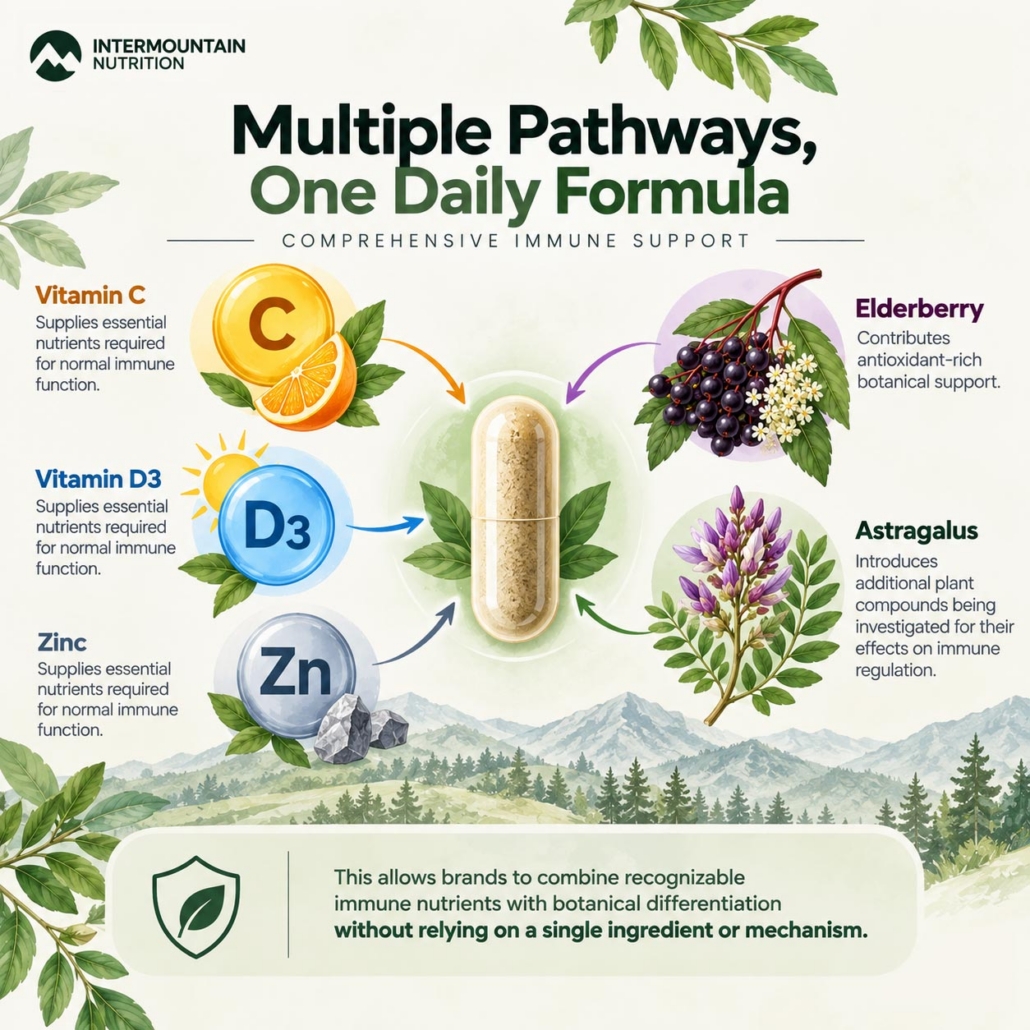
INFOGRAPHIC: Multiple Pathways One Daily Formula

Multiple Pathways, One Daily Formula

The immune system works more like a network than a single switch. Physical barriers, immune cells, signaling molecules, and antioxidant defenses all have different jobs, but they must work together to maintain a normal immune response. That is one reason immune-support formulas often combine ingredients with different nutritional and botanical roles.

Daily Immune Defense follows this approach. Rather than asking one ingredient to carry the entire product story, the formula brings together essential nutrients with complementary botanicals. Vitamin C, vitamin D3, and zinc provide nutrients the body requires for normal immune function, while elderberry and astragalus broaden the formulation with plant-derived compounds.

For brands, this creates a straightforward positioning advantage: consumers get familiar immune-support ingredients they already understand, while the botanical combination gives the product a more distinctive identity. The value of the formula is not one “hero” ingredient. It’s the combination of complementary ingredients within one practical daily product.

Daily Immune Resilience vs. Seasonal Defense

Immune supplements have traditionally been closely associated with winter, travel, or other periods when consumers become particularly conscious of immune health.

Those occasions remain important, but they are only one part of the opportunity.

Seasonal defense tends to focus on short periods of heightened consumer concern. Daily immune resilience takes a broader view: supporting normal immune function consistently as part of an everyday wellness routine.

Daily Immune Defense was designed to work particularly well within that second approach.

Vitamin C, vitamin D3, and zinc provide recognizable daily nutritional support. Elderberry maintains a connection to traditional immune-category positioning, while astragalus helps extend the story toward ongoing immune resilience.

This creates room for brands to position immune health alongside other daily wellness priorities rather than treating immunity as a category consumers only think about during winter.

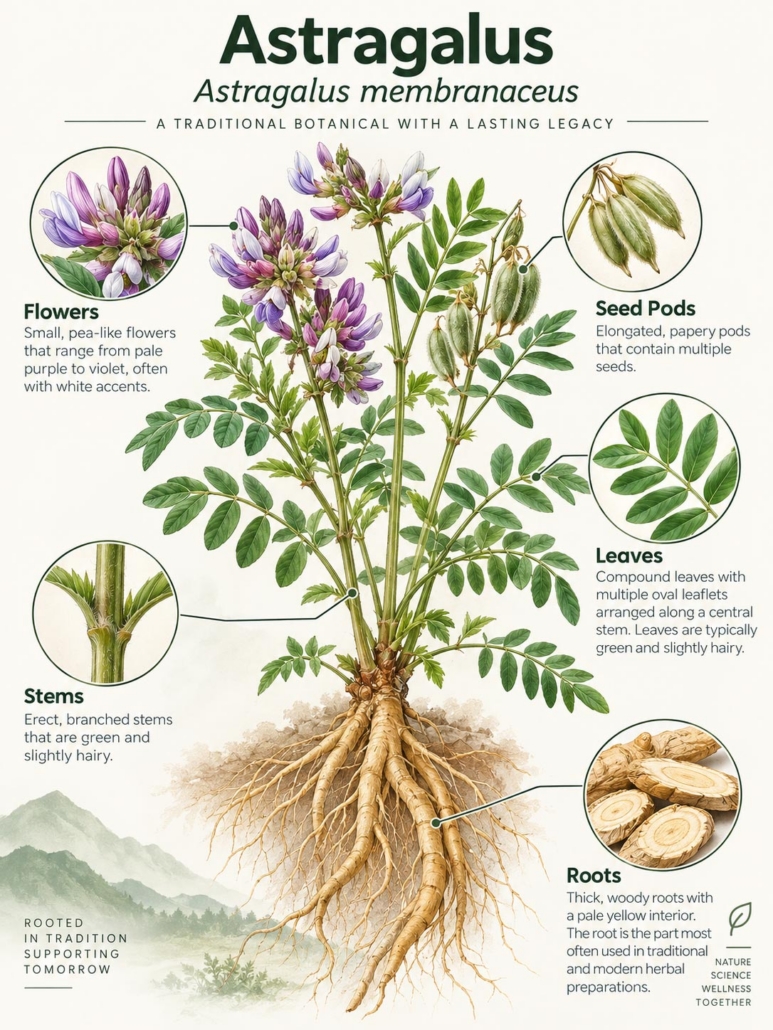
ILLUSTRATION: Astragalus Membranaceuis - A Botanical with Legacy

Why Astragalus? A Traditional Botanical for Modern Immune Formulas

Astragalus is one of the more distinctive ingredients in Daily Immune Defense.

The root of Astragalus membranaceus, also known as Huang Qi, has been used for centuries in traditional Chinese medicine.

Its long history and botanical identity give brands an opportunity to introduce a recognizable traditional ingredient while offering consumers something beyond the more familiar immune-support botanicals.

For supplement formulators, astragalus can help differentiate a product through its heritage, ingredient story, and positioning as an emerging botanical for general immune support.

It may be especially useful in formulas designed to communicate a thoughtful, tradition-informed approach to wellness rather than relying solely on conventional, widely used ingredients.

Astragalus is best presented as part of a broader immune-support formulation, with responsible language focused on general wellness rather than specific disease treatment or clinical outcomes.

What Does Immune Modulation Mean?

A healthy immune system needs to do more than become more active. It must recognize potential threats, coordinate communication among immune cells, generate an appropriate response, and regulate that response as conditions change.

Immune modulation describes this broader regulation of immune activity rather than indiscriminately stimulating it. This distinction is useful for daily wellness products, where the goal is to support normal immune function and balance rather than suggest that “more immune activity” is always better.

Astragalus is particularly interesting in this context because its polysaccharides are being studied for interactions with macrophages, dendritic cells, T cells, B cells, and immune-signaling pathways.

Laboratory and preclinical studies suggest astragalus polysaccharides may interact with pattern-recognition receptors and downstream pathways involved in cytokine signaling and immune-cell communication.

INFOGRAPHIC: Immune Modulation

Manufacturing Daily Immune Supplements at Scale

Combining vitamins, minerals, and botanical extracts in a capsule may appear straightforward, but successful commercialization still depends on ingredient specifications and manufacturing controls.

Low-dose ingredients such as vitamin D3 require careful premixing and blend-uniformity controls. Mineral sources need to be evaluated based on elemental yield and manufacturing characteristics. Botanical extracts require appropriate identity, specification, contaminant, and supplier controls.

Intermountain Nutrition supports supplement brands from formulation and product development through scale-up, manufacturing, quality, packaging, and logistics. Our capsule manufacturing capabilities are designed to help brands translate product concepts into commercially scalable products.

Interested in adding an everyday immune-support product to your portfolio? Contact Intermountain Nutrition to learn more about Daily Immune Defense Capsules or discuss a customized immune-health formula.

Frequently Asked Questions

Daily Immune Defense is an Intermountain Nutrition stock capsule formula combining vitamin C, vitamin D3, zinc, elderberry extract, and astragalus root extract. It is designed for brands seeking an everyday immune-support product with both nutritional and botanical ingredients.

Astragalus adds botanical differentiation beyond more familiar immune ingredients. Its root contains polysaccharides, flavonoids, saponins, and other compounds being studied for their interactions with immune and inflammatory signaling pathways. Current evidence supports scientific interest in astragalus, but it should not be positioned as preventing or treating specific diseases.

The product concept is designed around daily immune wellness rather than only short-term seasonal use. Final directions, warnings, target consumers, and label language should be established during product development and regulatory review.

Yes. The stock formula can serve as a starting point for customization. Ingredient additions, substitutions, dosage changes, capsule count, packaging, and positioning can be evaluated based on a brand’s objectives and target COGS.

References

Immune Health Supplement Market & Consumer Trends

Fortune Business Insights. (2026, August 17). Immune health supplements market size, share & industry analysis, by ingredient type, form, source type, distribution channel and regional forecast, 2026–2034.

Kikuchi, E., & Kennedy, B. (2026, September 10). About 8 in 10 Americans take supplements, and many see them as important to their health. Pew Research Center.

Vitamin C, Vitamin D & Zinc

National Institutes of Health, Office of Dietary Supplements. (2025, July 31). Vitamin C: Fact sheet for health professionals.

National Institutes of Health, Office of Dietary Supplements. (n.d.). Vitamin D: Fact sheet for health professionals.

National Institutes of Health, Office of Dietary Supplements. (n.d.). Zinc: Fact sheet for health professionals.

National Institutes of Health, Office of Dietary Supplements. (2025, March 10). Dietary supplements for immune function and infectious diseases: Fact sheet for health professionals.

Elderberry

Osman, A. G., Avula, B., Katragunta, K., Ali, Z., Chittiboyina, A. G., & Khan, I. A. (2023). Elderberry extracts: Characterization of the polyphenolic chemical composition, quality consistency, safety, adulteration, and attenuation of oxidative stress- and inflammation-induced health disorders. Molecules, 28(7), 3148.

Astragalus: Background, Evidence & Safety

National Center for Complementary and Integrative Health. (Updated May 2025). Astragalus: Usefulness and Safety.

National Center for Complementary and Integrative Health. (2025, May). Astragalus: Usefulness and safety.

Li, S., Hu, X., Liu, F., & Hu, W. (2025). Bioactive components and clinical potential of Astragalus species. Frontiers in Pharmacology, 16, 1585697.

Zhang, X., Qu, X., & Zou, Y. (2023). The effect of astragalus on humoral and cellular immune response: A systematic review and meta-analysis of human studies. Complementary Medicine Research, 30(6), 535–543.

Astragalus Polysaccharides & Immune Modulation

Wang, B., Wu, B., Ma, Y., Liu, X., Tao, L., Jia, L., Ding, X., & Zhou, X. (2025). Astragalus polysaccharides: Structure-immunomodulation relationships, multi-target pharmacological activities, and cutting-edge applications in immune modulation. Frontiers in Immunology, 16, 1714898.

Zheng, Y., Ren, W., Zhang, L., Zhang, Y., Liu, D., & Liu, Y. (2020). A review of the pharmacological action of astragalus polysaccharide. Frontiers in Pharmacology, 11, 349.

Related Postings

three friends discussing and researching supplements for health and wellness
Blue Spirulina for Antioxidant Supplements
STOCK FORMULA: Antioxidant Gummies for Healthy Aging Support