STOCK FORMULA: Antioxidant Gummies for Healthy Aging Support

October 2, 2026 |

Oxidative stress is one piece of the healthy-aging puzzle. A well-designed antioxidant supplement can help consumers support the body’s defenses with familiar nutrients and plant-derived compounds that fit easily into a daily wellness routine.

STOCK FORMULATION  |  GUMMIES  |  MOQ 10,000

At a Glance

  • Oxidative stress occurs when the production of reactive oxygen species exceeds the body’s ability to neutralize or manage them.
  • Oxidative stress tends to increase with age and interacts with inflammation, mitochondrial function, cellular signaling, and other biological processes associated with aging.
  • Antioxidant supplements are increasingly relevant to the broader healthy-aging and longevity market as consumers shift toward proactive, long-term wellness.
  • Vitamin C provides established antioxidant activity, while grape seed and pomegranate extracts add complementary plant-derived polyphenols.
  • Gummies can make antioxidant support approachable, convenient, and enjoyable for consumers who do not want another capsule in their daily routine.
  • Intermountain Nutrition’s Antioxidant Healthy Aging Gummy combines 150 mg vitamin C, 100 mg grape seed extract, and 100 mg pomegranate fruit extract in a pomegranate-blueberry gummy.
INFOGRAPHIC: Why Antioxidant Support Matters for Healthy Aging

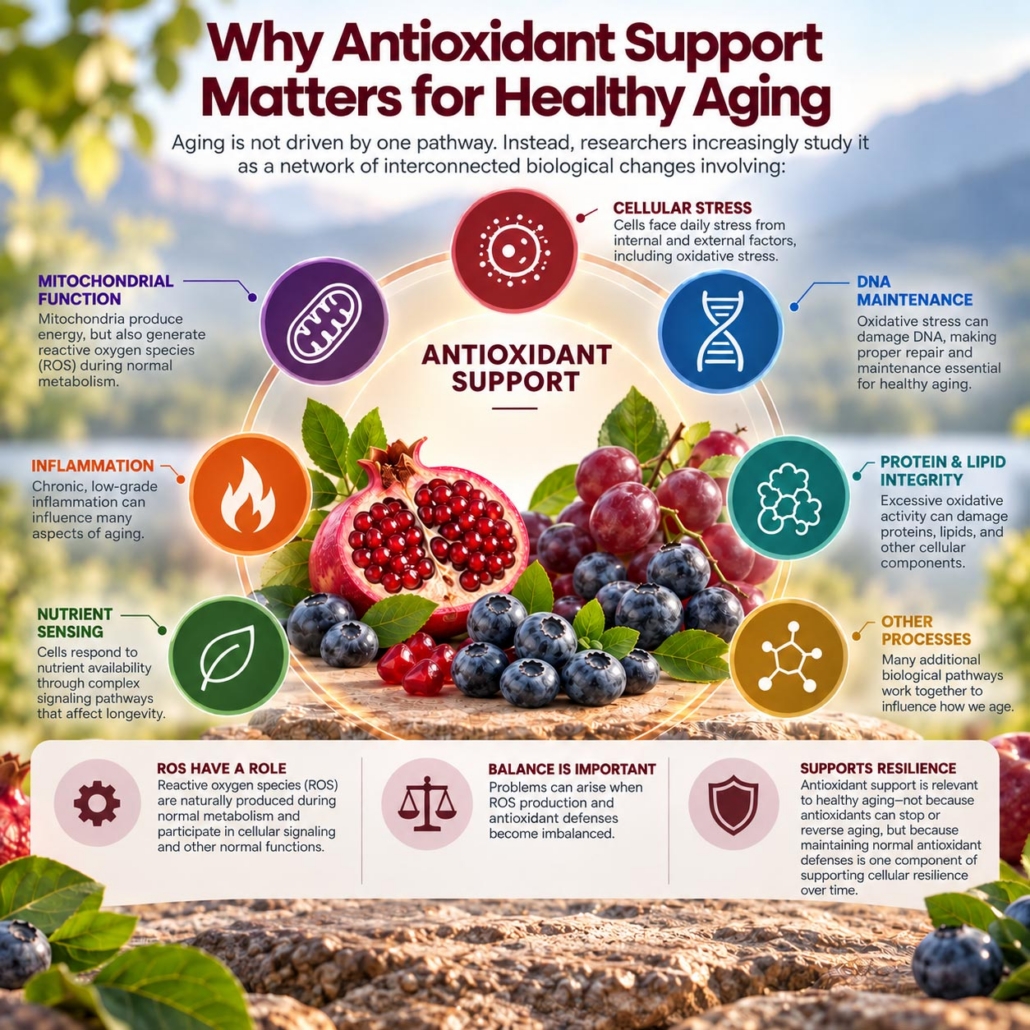
Why Antioxidant Support Matters for Healthy Aging

Aging is not driven by one pathway. Instead, researchers increasingly study it as a network of interconnected biological changes involving cellular stress, mitochondrial function, inflammation, nutrient sensing, DNA maintenance, and other processes.

Oxidative stress intersects with many of these systems.

Reactive oxygen species, or ROS, are naturally produced during normal metabolism. They are not inherently harmful. In controlled amounts, they participate in cellular signaling and other normal physiological functions.

Problems can arise when ROS production and antioxidant defenses become imbalanced. Excessive oxidative activity can damage lipids, proteins, DNA, and other cellular components.

This makes antioxidant support relevant to healthy aging — not because antioxidants can stop or reverse aging, but because maintaining normal antioxidant defenses is one component of supporting cellular resilience over time.

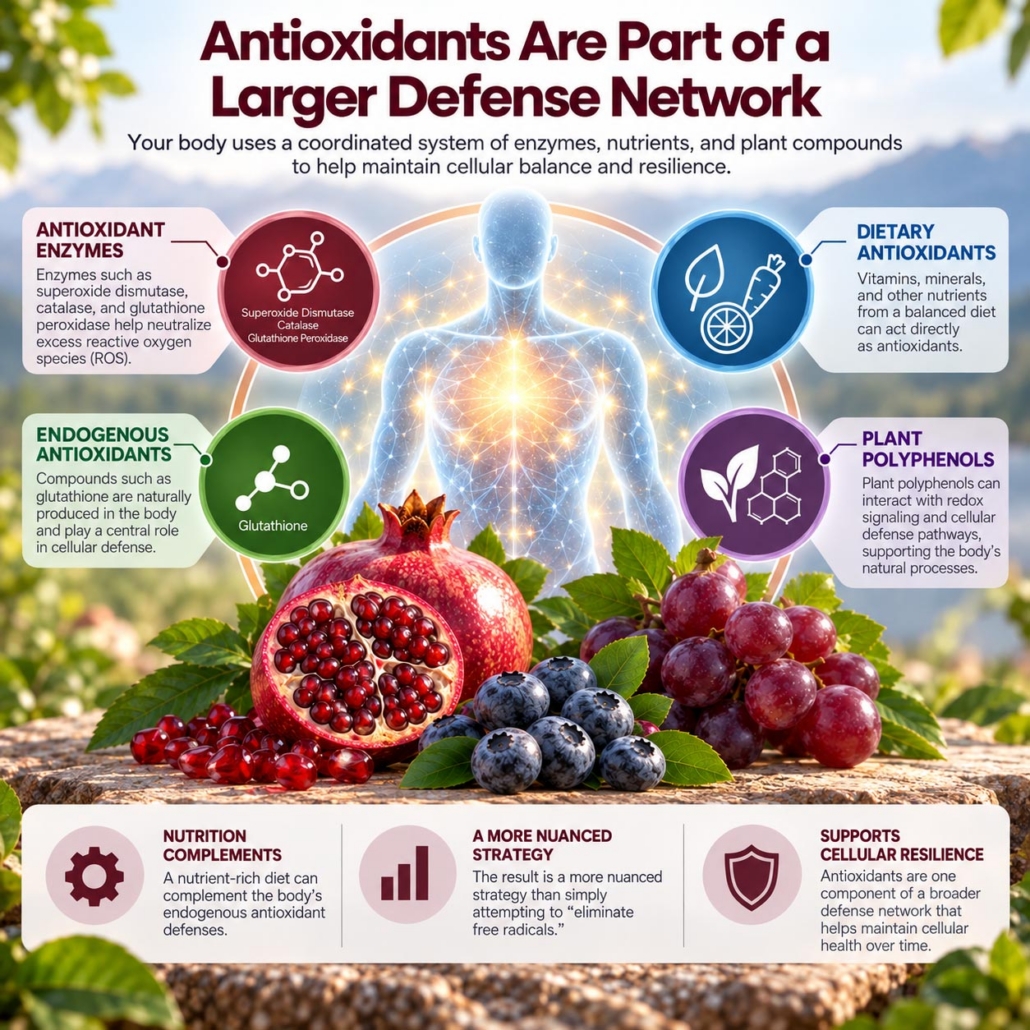
Antioxidants Are Part of a Larger Defense Network

The body already has sophisticated antioxidant systems. Enzymes such as superoxide dismutase, catalase, and glutathione peroxidase work alongside compounds such as glutathione and dietary antioxidants.

Nutrition can complement these endogenous defenses.

Some nutrients act directly as antioxidants. Plant polyphenols can also interact with redox signaling and cellular defense pathways. The result is a more nuanced strategy than simply attempting to “eliminate free radicals.”

For supplement brands, that creates an opportunity to position antioxidant products within healthy aging, cellular wellness, and everyday resilience rather than relying on older, overly simplistic antioxidant messaging.

INFOGRAPHIC: Antioxidants Are Part Of A Larger Defense Network

Healthy Aging Is Becoming a Larger Supplement Opportunity

Consumer interest in longevity is expanding beyond highly specialized biohacking products.

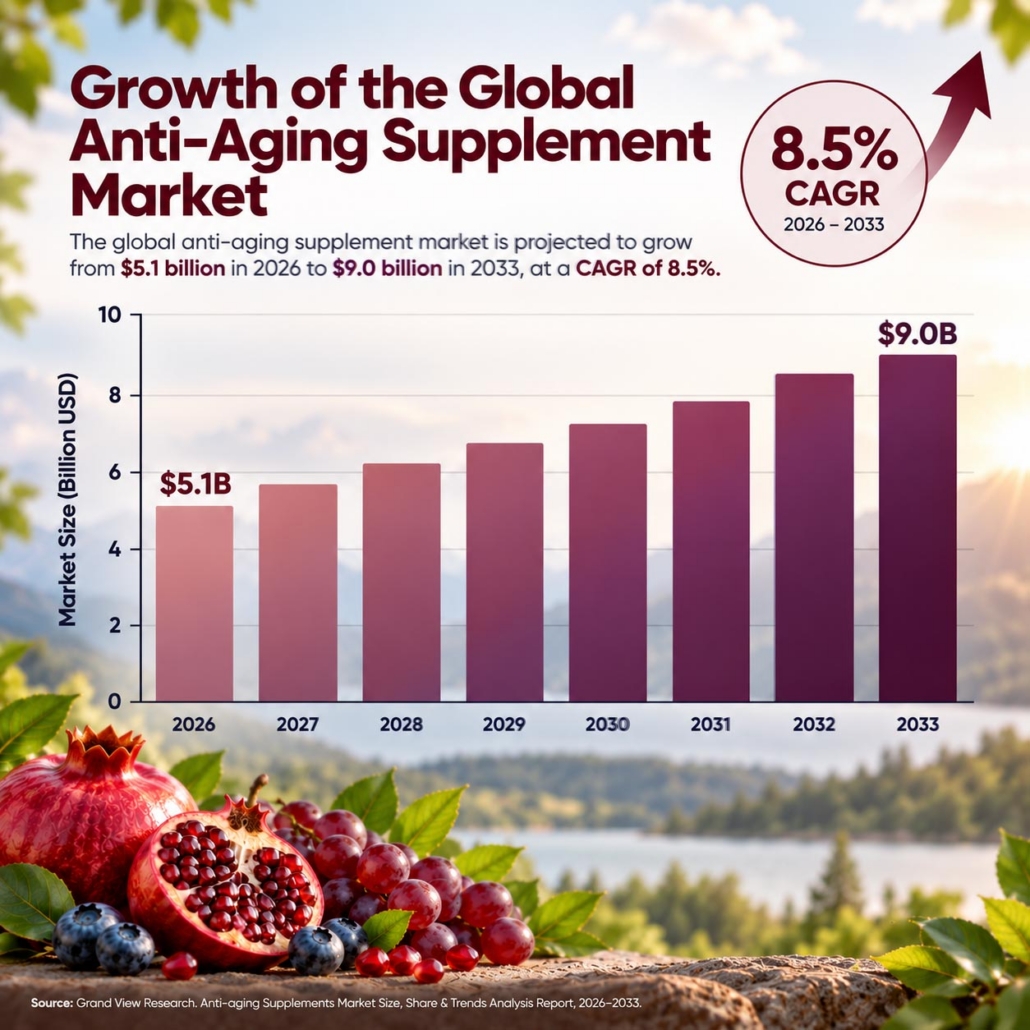
Grand View Research estimates the global anti-aging supplement market at approximately $5.1 billion in 2026, with projected growth to $9.0 billion by 2033, representing an 8.5% compound annual growth rate. North America represented 35.7% of the market in 2025.

The research firm identifies growing wellness awareness, an aging population, nutraceutical innovation, and demand for natural products among the factors supporting growth.

INFOGRAPHIC: Growth Of The Global Anti-Aging Supplement Market

Antioxidants Offer a Familiar Entry Point

Antioxidants already have considerable consumer recognition. Vitamin C, berries, grapes, pomegranate, and other antioxidant-rich foods give brands familiar reference points that can make cellular wellness easier to communicate.

The natural-antioxidants market also continues to expand. Grand View Research estimates the global market at approximately $1.2 billion in 2026, projecting it to reach $1.5 billion by 2030.

For brands building healthy-aging collections, antioxidant support can therefore function as a foundational category alongside products targeting areas such as mitochondrial health, cognitive wellness, healthy inflammatory response, mobility, and metabolic resilience.

A Simple Antioxidant Formula Designed for Healthy Aging

Healthy aging is shaped by multiple interconnected biological processes, and oxidative stress is one factor that can influence cellular health over time. Normal metabolism continually generates reactive oxygen species, while environmental and lifestyle stressors can add to the body’s oxidative burden.

That makes antioxidant defense a logical component of a broader healthy-aging strategy. Rather than positioning antioxidants as a way to stop aging, the goal is to support the systems that help cells maintain redox balance, protect cellular components, and remain resilient over time.

The Antioxidant Healthy Aging Gummy approaches this through complementary nutritional and botanical pathways. Vitamin C provides foundational water-soluble antioxidant defense. Grape seed extract contributes polyphenols that support cellular antioxidant defenses and redox balance. Pomegranate adds another spectrum of plant polyphenols that complements the body’s antioxidant network.

A Stock Formula for Antioxidant Support

Intermountain Nutrition developed its Antioxidant Healthy Aging Gummy as a cost-conscious stock formula built around three recognizable antioxidant ingredients.

Each two-gummy serving provides:

  • Vitamin C (as ascorbic acid) — 150 mg
  • Grape Seed Extract (Vitis vinifera) — 100 mg
  • Pomegranate (Punica granatum) Fruit Extract — 100 mg

Rather than maximizing ingredient count, the formula uses a focused combination of a familiar antioxidant vitamin and two botanical polyphenol sources. This keeps the Supplement Facts panel straightforward while creating multiple layers of antioxidant positioning.

Together, these ingredients create a focused antioxidant strategy that can sit alongside other healthy aging formulations targeting mitochondrial function, cognitive health, metabolic resilience, healthy inflammatory response, and other dimensions of healthy aging.

The objective is not to address every biological pathway associated with aging in one product. Instead, the formula has a clearly defined role: supporting antioxidant defense and cellular resilience as part of a broader healthy-aging strategy.

Vitamin C: Foundational Antioxidant Defense

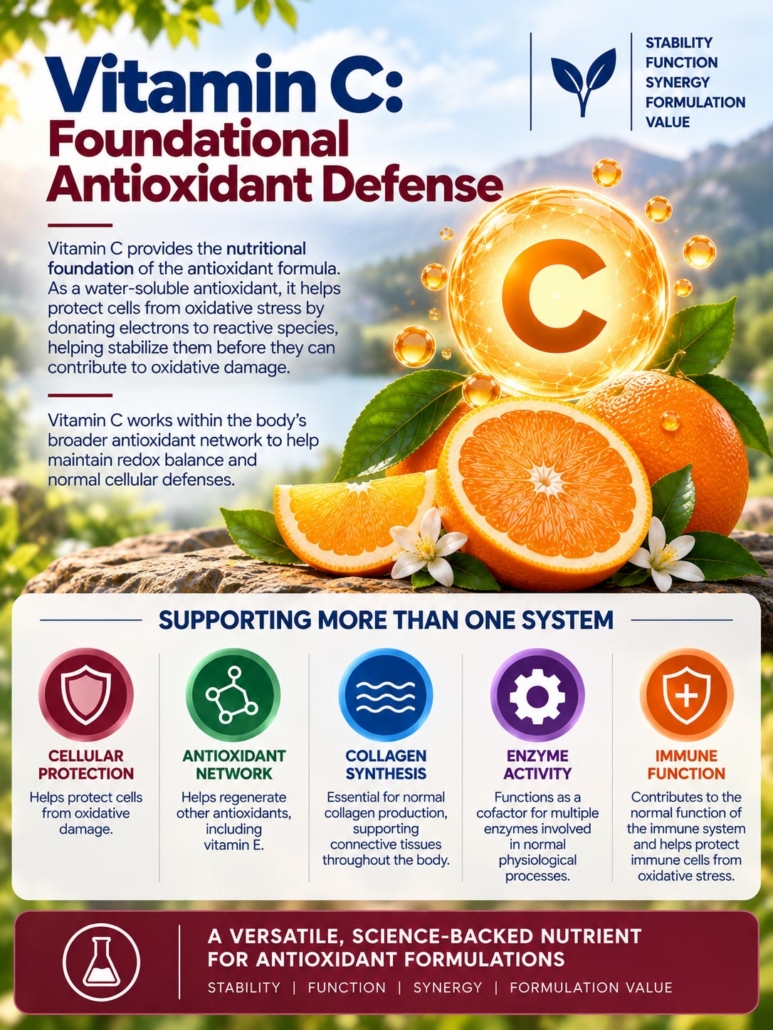
Vitamin C provides the nutritional foundation of the antioxidant formula. As a water-soluble antioxidant, it can donate electrons to reactive species, helping stabilize them before they contribute to oxidative damage.

This function is particularly relevant to healthy aging. Reactive oxygen species are continuously generated during normal metabolism, and additional oxidative stress can come from environmental and lifestyle exposures. Vitamin C works within the body’s broader antioxidant network to help maintain redox balance and normal cellular defenses.

Supporting More Than One System

Vitamin C’s value extends beyond direct antioxidant activity. It contributes to several physiological functions that remain important throughout the lifespan:

  • Cellular protection: Vitamin C helps protect cells from oxidative damage caused by free radicals.
  • Antioxidant network: It participates in the body’s interconnected antioxidant system and can help regenerate other antioxidants, including vitamin E.
  • Collagen synthesis: Vitamin C is essential for normal collagen production, supporting connective tissues throughout the body.
  • Enzyme activity: It functions as a cofactor for multiple enzymes involved in normal physiological processes.
  • Immune function: Vitamin C contributes to normal immune function and helps protect immune cells from oxidative stress.

For longevity-focused formulation, these overlapping roles make vitamin C more than a familiar label ingredient.

It provides a recognizable nutritional anchor for a product centered on antioxidant defense and cellular resilience.

At 150 mg per two-gummy serving, vitamin C establishes the antioxidant foundation of the formula while leaving room for complementary plant polyphenols from grape seed and pomegranate.

INFOGRAPHIC: Vitamin C for Foundational Antioxidant Defense
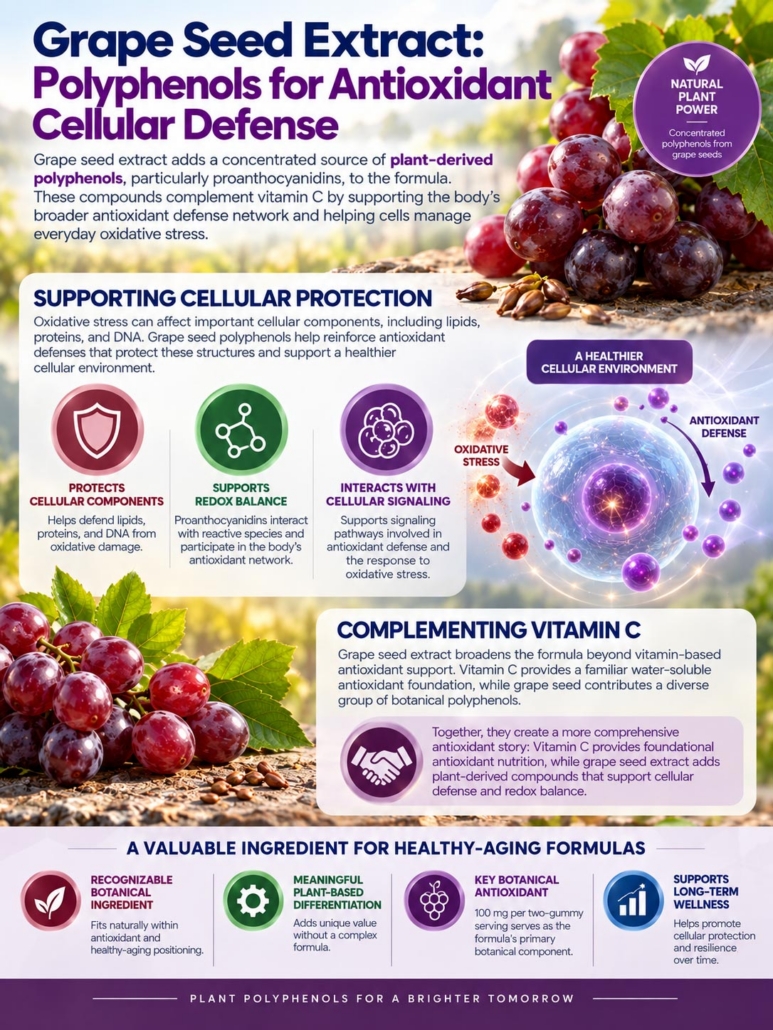
INFOGRAPHIC: Grape Seed Extract - Polyphenols for Antioxidant Cellular Defense

Grape Seed Extract: Polyphenols for Antioxidant Cellular Defense

Grape seed extract adds a concentrated source of plant-derived polyphenols, particularly proanthocyanidins, to the formula.

These compounds complement vitamin C by supporting the body’s broader antioxidant defense network and helping cells manage everyday oxidative stress.

Supporting Cellular Protection

Oxidative stress can affect important cellular components, including lipids, proteins, and DNA.

Grape seed polyphenols help reinforce antioxidant defenses that protect these structures and support a healthier cellular environment.

Proanthocyanidins can interact with reactive species and participate in the body’s redox network. They can also interact with cellular signaling pathways involved in antioxidant defense and the response to oxidative stress.

This gives grape seed extract an important role within a longevity formulation.

Rather than contributing another vitamin or mineral, it introduces a diverse group of botanical compounds relevant to cellular protection, redox balance, and resilience.

Complementing Vitamin C

Grape seed extract also broadens the antioxidant strategy beyond vitamin-based support.

Vitamin C provides the familiar water-soluble antioxidant foundation, while grape seed contributes plant-derived polyphenols with complementary antioxidant activity. Together, they create a more comprehensive approach to supporting the cellular environment.

At 100 mg per two-gummy serving, grape seed extract serves as the formula’s primary grape-derived botanical component. Its inclusion gives brands a recognizable botanical ingredient with a clear role in the overall antioxidant story.

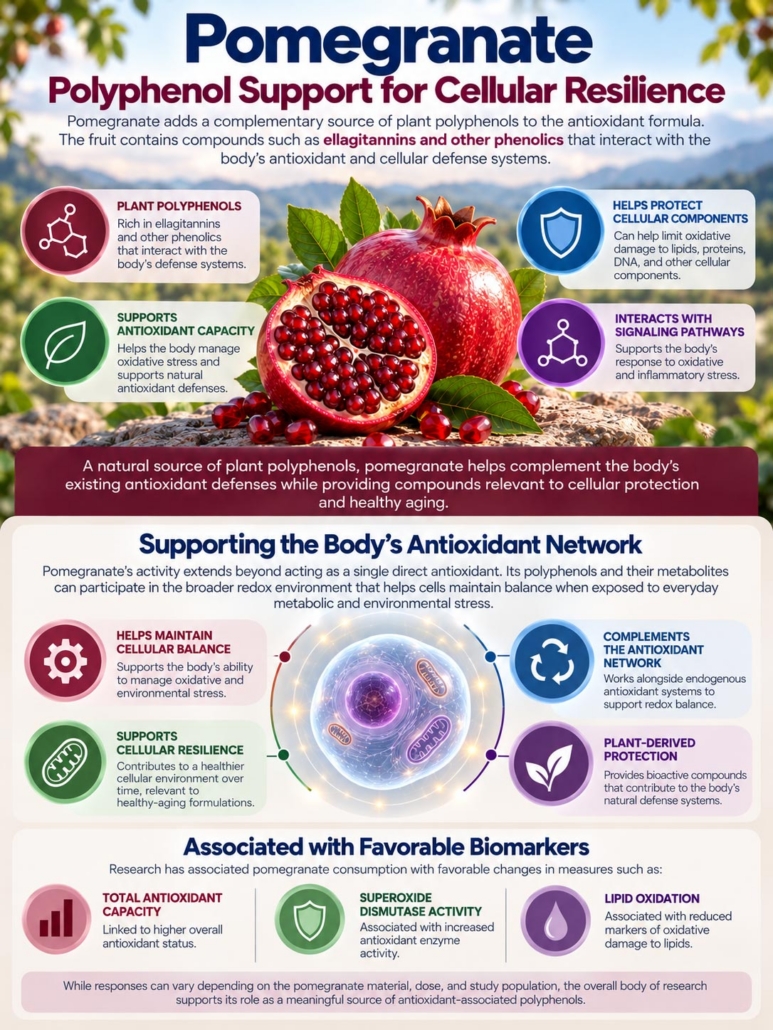
Pomegranate: Polyphenol Support for Cellular Resilience

Pomegranate adds another complementary source of plant-derived polyphenols. The fruit contains compounds such as ellagitannins and other phenolics that interact with the body’s antioxidant and cellular defense systems.

These compounds can help the body manage oxidative stress by supporting antioxidant capacity and helping limit oxidative damage to cellular components.

Pomegranate polyphenols can also interact with signaling pathways involved in the body’s response to oxidative and inflammatory stress.

This makes pomegranate particularly relevant to healthy-aging formulations, where the objective is to support cellular resilience over time rather than simply “neutralize free radicals.”

Supporting the Body’s Antioxidant Network

Pomegranate’s role extends beyond acting as a single direct antioxidant. Its polyphenols and their metabolites can participate in the broader redox environment that helps cells maintain balance when exposed to everyday metabolic and environmental stress.

In this way, pomegranate complements the body’s existing antioxidant defenses while providing additional plant-derived compounds relevant to cellular protection and resilience.

That creates a natural progression across the formula: vitamin C establishes foundational antioxidant nutrition, grape seed contributes proanthocyanidin-rich polyphenols, and pomegranate broadens the plant-derived antioxidant profile.

INFOGRAPHIC: Pomegranate - Polyphenol Support for Cellular Resilience

Connecting Function With Flavor

Pomegranate also contributes to the coherence of the product concept. Its antioxidant-rich fruit identity naturally complements vitamin C and grape seed, while its tart sensory profile provides a logical foundation for the Pomegranate Blueberry flavor system.

This connection between the active ingredient story and the sensory experience helps the finished product feel intentional rather than like a collection of unrelated antioxidant ingredients.

Why Pomegranate Blueberry Flavor Works

Flavor is not an afterthought in gummy formulation. It can determine whether a technically strong product becomes something consumers actually want to take every day.

Grape seed extracts can introduce tannic, dry, or astringent notes. Pomegranate naturally complements that profile because its tart character fits rather than fights the botanical experience.

Blueberry then provides a softer berry note that rounds out the profile.

The resulting Pomegranate Blueberry flavor is intended to be tart and dark-fruit-forward without becoming excessively sour or medicinal. Blueberry functions as a flavor note rather than another active ingredient, allowing the formula to maintain a simpler Supplement Facts panel and testing strategy.

Sweetness Does More Than Make the Gummy Taste Good

The sweetener system also performs important technical functions.

A conventional pectin gummy system can use glucose or corn syrup alongside sucrose. These ingredients contribute sweetness, but they also help control solids, texture, chew, crystallization, and processing behavior. The sugar system therefore supports both sensory acceptance and the physical structure of the finished gummy.

Citric acid provides brightness and helps manage pH and pectin gelation. Malic acid can be evaluated during development if additional tartness or botanical masking is needed.

This balance matters for compliance in the practical sense: a daily supplement provides little value if consumers do not want to keep taking it.

A pleasant flavor, manageable serving size, and consistent texture can turn antioxidant supplementation from another wellness task into an easy daily habit.

Why a Gummy Is a Strong Format for Antioxidant Support

Capsules remain valuable for many healthy-aging formulations, especially when formulas require high active loads, difficult flavors, oils, or specialized ingredients.

This particular antioxidant formula is different.

Its three-active system can be delivered in a two-gummy serving, while the fruit-derived botanical story naturally complements a berry-forward flavor profile. The result is a format where the delivery system reinforces the product concept rather than working against it.

Gummies Make Healthy Aging More Approachable

Longevity products can quickly become technically complicated. A gummy provides a familiar counterpoint.

Consumers do not need to understand advanced aging biology to understand the idea of a daily antioxidant gummy made with vitamin C, grape seed, and pomegranate.

That accessibility gives brands an opportunity to reach consumers who are interested in healthy aging but may not identify with the highly technical end of the longevity market.

The Format Supports Daily Routine Formation

Healthy aging is inherently a long-term proposition. That makes repeat use especially important.

A two-gummy serving eliminates mixing, measuring, and swallowing capsules. Flavor also provides an immediate sensory cue that can help make the supplement part of an established routine.

For this particular formula, those advantages make gummies a particularly strong format — not because gummies are universally superior to capsules or powders, but because the dose, ingredient profile, flavor concept, and intended consumer experience align unusually well with gummy delivery.

Formulation Considerations for Antioxidant Gummies

Turning antioxidant ingredients into a commercially stable gummy requires more than combining them with a flavored pectin base. Several variables need to be addressed during development:

  • Vitamin C stability: Ascorbic acid can be sensitive to processing and storage conditions. Processing temperature, addition point, overage, packaging, and shelf-life performance should be validated.
  • Botanical sensory variation: Grape seed can contribute astringency, while pomegranate materials can add bitterness, dryness, acidity, and color. Raw-material lots should be screened before the flavor system is finalized.
  • Pectin performance: Acidity, soluble solids, moisture, and water activity all influence gummy set, texture, sticking, crystallization, and shelf stability.
  • Flavor masking: Pomegranate and blueberry provide a logical dark-fruit system for integrating the botanicals, but the final acid and flavor balance should be established with the actives present.
  • Ingredient specifications: A stock product does not necessarily require highly standardized botanical extracts. Qualified materials with reliable identity, documentation, consistency, and appropriate contaminant specifications may provide a better balance of credibility and commercial scalability.
  • Finished-product validation: Final potency, physical stability, sensory quality, microbiological requirements, packaging, and shelf life should be established through the appropriate development and quality process.

Why Develop Antioxidant Gummies With Intermountain Nutrition?

Antioxidant gummies illustrate why formulation strategy matters just as much as ingredient selection.

Intermountain Nutrition supports supplement brands through formulation and R&D, flavor development and masking, scale-up, quality and regulatory support, packaging, and commercial manufacturing.

Our Antioxidant Healthy Aging Gummy provides brands with a streamlined starting point for entering or expanding within the healthy-aging category. The stock formula is designed for commercial scalability while still allowing brands to build a clear consumer story around daily antioxidant support.

Looking to expand your healthy-aging supplement portfolio? Connect with Intermountain Nutrition to explore our stock formulations or develop a custom antioxidant product for your brand.

Frequently Asked Questions

Antioxidants help the body manage oxidative stress by participating in systems that control reactive molecules and maintain normal redox balance. Oxidative stress can affect lipids, proteins, DNA, and other cellular structures, making antioxidant defense relevant to maintaining cellular health as people age.

Antioxidants should not be viewed as compounds that stop or reverse aging. Healthy aging involves many interconnected processes, including metabolic health, mitochondrial function, inflammatory regulation, physical activity, nutrition, sleep, and other lifestyle factors. Antioxidant support is one part of that larger picture.

Vitamin C provides a familiar essential nutrient with established antioxidant activity, while grape seed and pomegranate provide plant-derived polyphenols. Combining them creates a broader ingredient story without requiring a large number of actives.

For a stock formula, this simplicity is valuable. It keeps the product understandable for consumers while helping brands manage ingredient cost, sensory challenges, testing requirements, and manufacturing complexity.

Grape seed extract provides polyphenols, including proanthocyanidins, that have been studied for their effects on oxidative-stress biomarkers.

Grape seed also works well conceptually in a fruit-based antioxidant product. The primary formulation challenge is its potential astringency, which can be addressed through raw-material selection and an appropriate flavor and acid system.

The right format depends on the formula. Capsules are often better for high-dose, strongly flavored, oily, or technically challenging healthy-aging ingredients.

For this formula, however, the active load fits a two-gummy serving and the grape-pomegranate ingredient story pairs naturally with a pomegranate-blueberry flavor. Gummies also provide a convenient, enjoyable daily experience that can make antioxidant support accessible to consumers who prefer not to take another capsule.

Stock formulations are designed to provide brands with an efficient starting point for product development and commercialization. Specific customization opportunities depend on ingredient requirements, flavor, packaging, manufacturing feasibility, testing, regulatory considerations, minimum order requirements, and other project specifications.

Brands that need a substantially different antioxidant strategy can also work with Intermountain Nutrition on custom formulation and product development.

References

Vitamin C & Antioxidant Support

National Institutes of Health, Office of Dietary Supplements. (2025). Vitamin C: Fact sheet for health professionals.

Kocot, J., et al. (2026). Vitamin C as a potential geroprotector: Interactions with aging hallmarks and implications for healthy longevity. Nutrients, 18(16), 2704.

Traber, M. G., & Stevens, J. F. (2011). Vitamins C and E: Beneficial effects from a mechanistic perspective. Free Radical Biology and Medicine, 51(5), 1000–1013.

Du, J., Cullen, J. J., & Buettner, G. R. (2012). Ascorbic acid: Chemistry, biology and the treatment of cancer. Biochimica et Biophysica Acta (BBA) – Reviews on Cancer, 1826(2), 443–457.

Grape Seed Extract & Grape Polyphenols

Hosseinzadeh, M., et al. (2021). The effect of grape products containing polyphenols on oxidative stress: A systematic review and meta-analysis of randomized clinical trials. Nutrition Journal, 20.

Bagchi, D., Swaroop, A., Preuss, H. G., & Bagchi, M. (2014). Free radical scavenging, antioxidant and cancer chemoprevention by grape seed proanthocyanidin: An overview. Mutation Research/Fundamental and Molecular Mechanisms of Mutagenesis, 768, 69–73.

Pomegranate Polyphenols & Antioxidant Support

Lorzadeh, E., Heidary, Z., Mohammadi, M., Nadjarzadeh, A., Ramezani-Jolfaie, N., & Salehi-Abargouei, A. (2022). Does pomegranate consumption improve oxidative stress? A systematic review and meta-analysis of randomized controlled clinical trials. Clinical Nutrition ESPEN, 47, 117–127.

Asgary, S., Karimi, R., Mohammadi Pour, P., Heydarpour, F., Mostafaei, S., Farzaei, M. H., Moradi, S., & Aneva, I. Y. (2023). Is consumption of pomegranate supplementation effective on oxidative stress biomarkers including MDA, ox-LDL, POX1, GPX, TAC, and TBARS? A systematic review and meta-analysis of randomized controlled trials. Current Problems in Cardiology, 48(8), 101198.

Market Trends

Grand View Research. (2026). Anti-aging supplements market size, share & trends analysis report, 2026–2033.

Grand View Research. (2025). Natural antioxidants market size, share & trends analysis report, 2025–2030. 

Persistence Market Research. (2025). Super antioxidant supplement market size, share, growth, and regional forecast, 2025 to 2032.

Related Postings

older couple walking in the park during autumn
three friends discussing and researching supplements for health and wellness
Blue Spirulina for Antioxidant Supplements