The Longevity–Microbiome Axis: How Gut Biology May Shape Healthy Aging

October 30, 2026 |

Gut microbes communicate with the body through the intestinal barrier, immune system, and microbial metabolites — offering new ways to explore the biology of healthy aging.

At a Glance

  • The gut microbiome and the aging body influence one another.
  • Researchers are studying how the gut barrier, immune signaling, and microbial metabolites connect to healthy-aging biology.
  • These mechanisms are promising areas of research, but they do not yet show that changing the microbiome can extend lifespan.
  • For supplement brands, the opportunity is to build precise, evidence-informed concepts and communicate their limits clearly.

How the Gut Microbiome May Influence Healthy Aging & Longevity

Healthy aging involves more than the passage of time. It reflects how well the body maintains function across interconnected systems, including the gut, immune system, and metabolism. The gut microbiome, the community of microorganisms and their collective functions, may be part of this picture.

Researchers are examining how microbes interact with the body through the intestinal barrier and immune signaling, as well as through compounds they produce or transform. These connections are sometimes described as the longevity–microbiome axis. The term captures a two-way relationship: aging can change the gut environment, while microbial activity may influence processes relevant to health.

This area of research offers intriguing mechanisms, but important questions remain. There is no single microbiome profile known to guarantee healthy aging, and a plausible biological pathway does not prove that a supplement can extend lifespan.

This article explores how the gut barrier, immune activity, and microbial metabolites may connect and what the emerging science could mean for responsible supplement development.

What Is the Longevity–Microbiome Axis?

The longevity–microbiome axis describes the two-way relationship between the gut’s microbial community and the body’s systems for maintaining health over time. Gut microbes do more than help break down food. They also produce compounds that interact with the intestinal lining, immune system, and metabolism.

At the same time, the aging body changes the environment microbes live in. Shifts in gut tissue, immune activity, diet, medication use, and overall health can influence which microbes thrive and what they produce.

Researchers are therefore studying the microbiome as part of a larger network involved in healthy aging—not as a single cause or cure.

The phrase “longevity–microbiome axis” describes an active area of research. It does not mean scientists have identified a microbiome profile that guarantees a longer life, or that changing one microbial species can slow aging.

Microbial Composition vs. Function: Why Both Matter

The gut microbiome can be described by composition — which microorganisms are present — and by function — what those microorganisms do. These measures are related, but they are not interchangeable. Different microbial communities may carry out similar functions, while the same microbes may behave differently depending on their environment and available nutrients.

That distinction helps explain why microbiome research looks beyond lists of bacteria or diversity scores. Researchers also study microbial genes, the compounds microbes produce or modify, and how the host responds to those signals.

Together, these measures offer a more complete picture of how the gut ecosystem may interact with health as people age.

What Shapes the Gut Microbiome as We Age?

Age is one influence on the gut microbiome, but it is not the only one. Diet, medications, health status, and lifestyle can all shape which microbes are present and what they do. These factors may also change the nutrients and other compounds available for microbes to use.

That matters because microbial activity helps determine which metabolites are produced or modified in the gut. In turn, these compounds can interact with the intestinal barrier, immune system, and other host pathways. The relationship is dynamic: the gut environment shapes microbial activity, while microbial products contribute to signals within the host.

Researchers interpret age-related microbiome patterns in context. Diet, medications, health status, and living conditions may all contribute to differences attributed to age. Greater microbial diversity is not automatically better, either: its meaning depends on the person, the microbes involved, and the functions they perform. A single diversity score cannot define a universally healthy microbiome.

The Gut Barrier: A Vital Interface

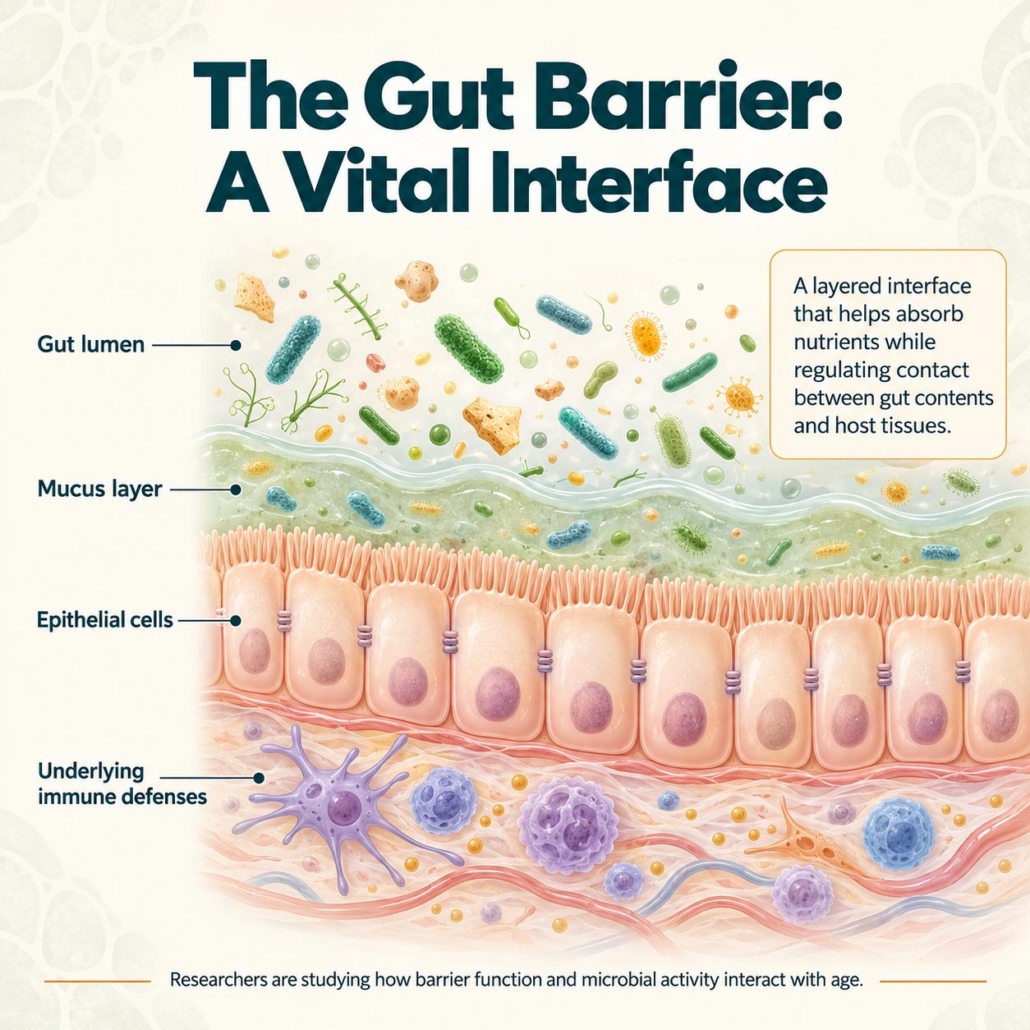
The gut is a major point of contact between the outside world and the body’s internal systems. Its barrier includes a mucus layer, intestinal epithelial cells, and immune defenses beneath and within the lining. Together, these layers help absorb nutrients while regulating contact with microbes and other substances in the gut.

Researchers are investigating whether age-related changes in this barrier can alter communication between the gut and the immune system. If the barrier’s normal functions shift, microbial products may interact differently with immune cells.

In turn, inflammatory signals may affect the gut environment and the microbial community. This proposed relationship helps explain why scientists view gut-barrier function and microbiome composition as connected parts of a broader system.

The relationship may also work in the other direction: changes in the gut’s microbial community could influence the conditions that support the barrier. Researchers call this a bidirectional relationship. It is a useful framework for understanding the biology, although many details—and their relevance to human aging—remain under investigation.

The Longevity-Microbiome Axis
INFOGRAPHIC: Inflammaging and the Gut-Immune Feedback Loop

Inflammaging & the Gut–Immune Feedback Loop

Inflammaging is a term for the chronic, low-grade inflammatory activity associated with aging. It is not the same as a short-term immune response to infection or injury. Instead, it describes a persistent pattern that researchers are studying across multiple tissues and biological systems.

The gut may contribute to this process through ongoing interactions among microbes, the barrier, and immune defenses. For example, changes in microbial activity could influence immune signaling; changes in immune activity could then alter the gut environment. A less supportive environment may affect microbial activity again. Researchers have proposed this as a feedback loop linking gut-barrier changes, immune function, and inflammation.

This model connects several biological processes. However, it should not be simplified into a claim that a particular bacterial imbalance causes inflammaging in people. The microbiome varies widely, and the direction of cause and effect can be difficult to determine. Age, health status, diet, medications, and other factors may all shape the pattern.

Microbial Metabolites: Signals Between the Gut and the Body

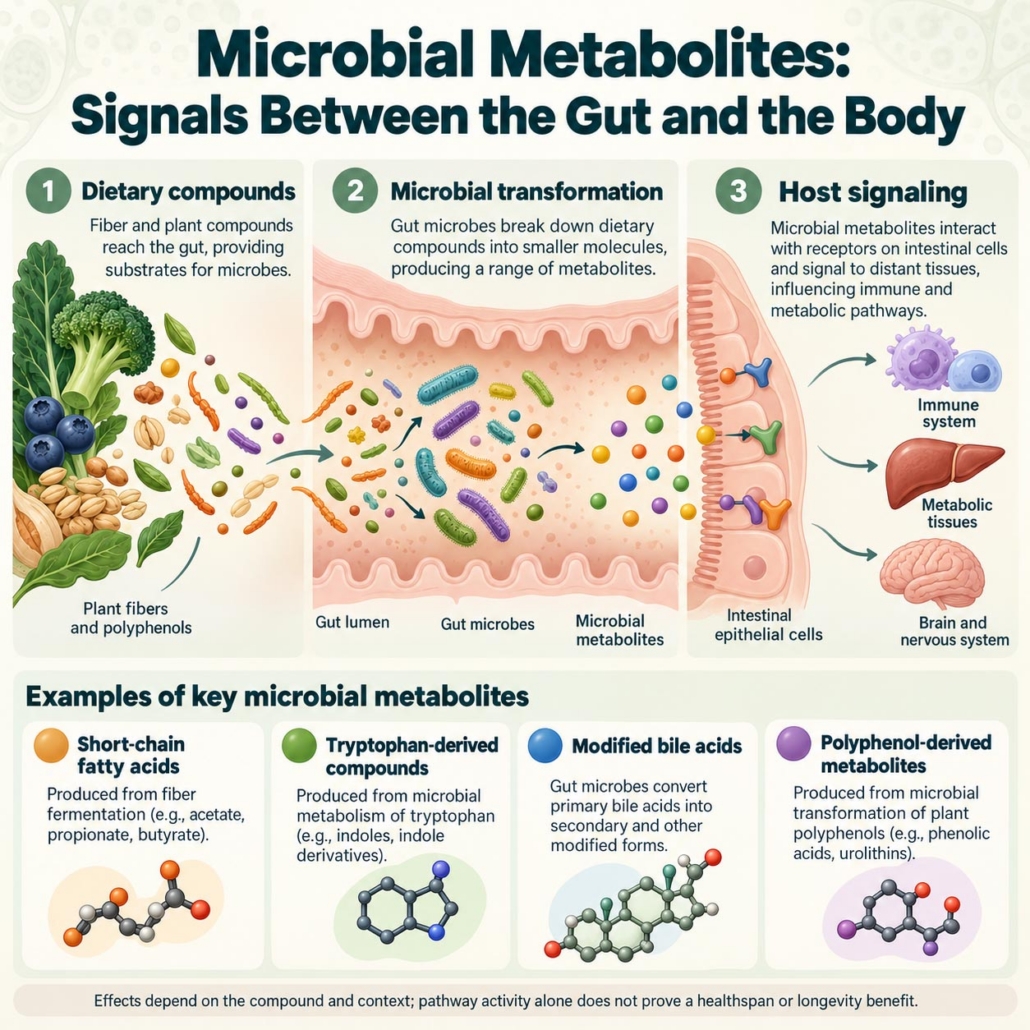
Gut microbes transform components of food and other compounds into metabolites. These molecules can act as signals, helping communicate between the gut ecosystem and host tissues. This makes microbial function — what the community is doing — as important to study as which organisms are present.

Short-chain fatty acids are one example. Certain microbes produce them while fermenting dietary fiber. Researchers study how these compounds interact with the gut lining and immune signaling. Their effects depend on factors such as the specific compound, where it is produced, and the surrounding biological context. A single metabolite level is not, by itself, a measure of longevity or overall gut health.

Microbes also transform tryptophan, an amino acid found in food, into several different metabolites. Some can interact with the aryl hydrocarbon receptor, or AhR, a signaling pathway involved in communication between microbes and host cells. These pathways are being investigated for their roles in intestinal and immune function. The effects are not uniform: different tryptophan-derived compounds may have different actions.

INFOGRAPHIC: Microbial Metabolites: Signals Between the Gut and Body

Bile acids provide another example of microbial–host communication. The gut microbiome can modify bile acids, which in turn participate in signaling related to metabolism and other host functions.

Researchers are also studying polyphenol-derived metabolites and polyamines. Gut microbes can transform certain dietary polyphenols into compounds such as urolithins, while microbes and the host both contribute to polyamine metabolism.

These compounds are being investigated for their roles in host–microbe communication and gut function. Their effects depend on the specific compound and biological context, so their presence alone does not demonstrate a health benefit.

A metabolite’s ability to affect a biological pathway does not, by itself, show that it improves healthspan or extends lifespan.

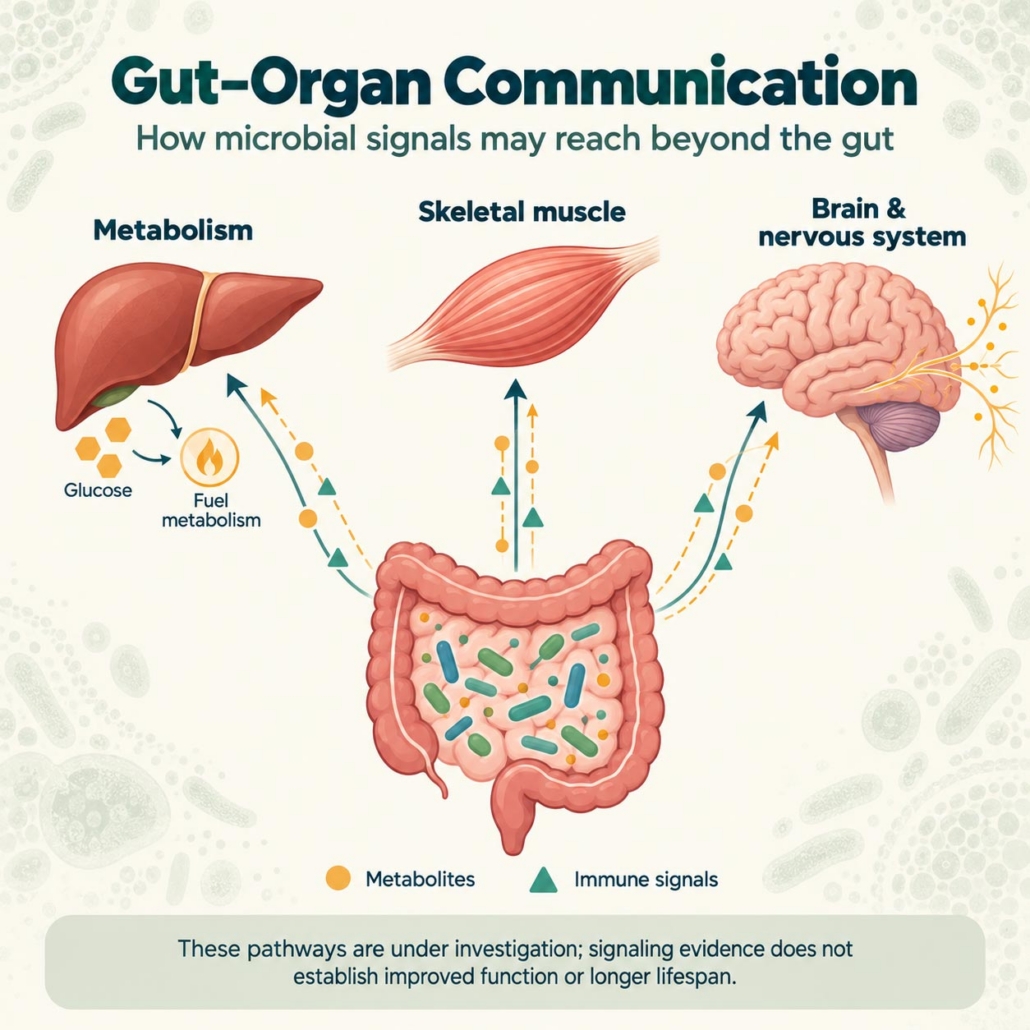
INFOGRAPHIC: Gut-Organ Communication

Gut–Organ Communication: How Microbial Signals May Reach Beyond the Gut

Microbial signals do not necessarily stay within the digestive tract. Metabolites and immune signals can interact with host pathways involved in metabolism and other organ functions. Researchers are also investigating communication between the gut microbiome and skeletal muscle — the gut–muscle axis — including possible links to muscle metabolism and function.

These connections offer a broader way to think about the longevity–microbiome axis: the gut may participate in body-wide networks that help maintain health. However, the mechanisms and their significance for healthy aging are still being studied.

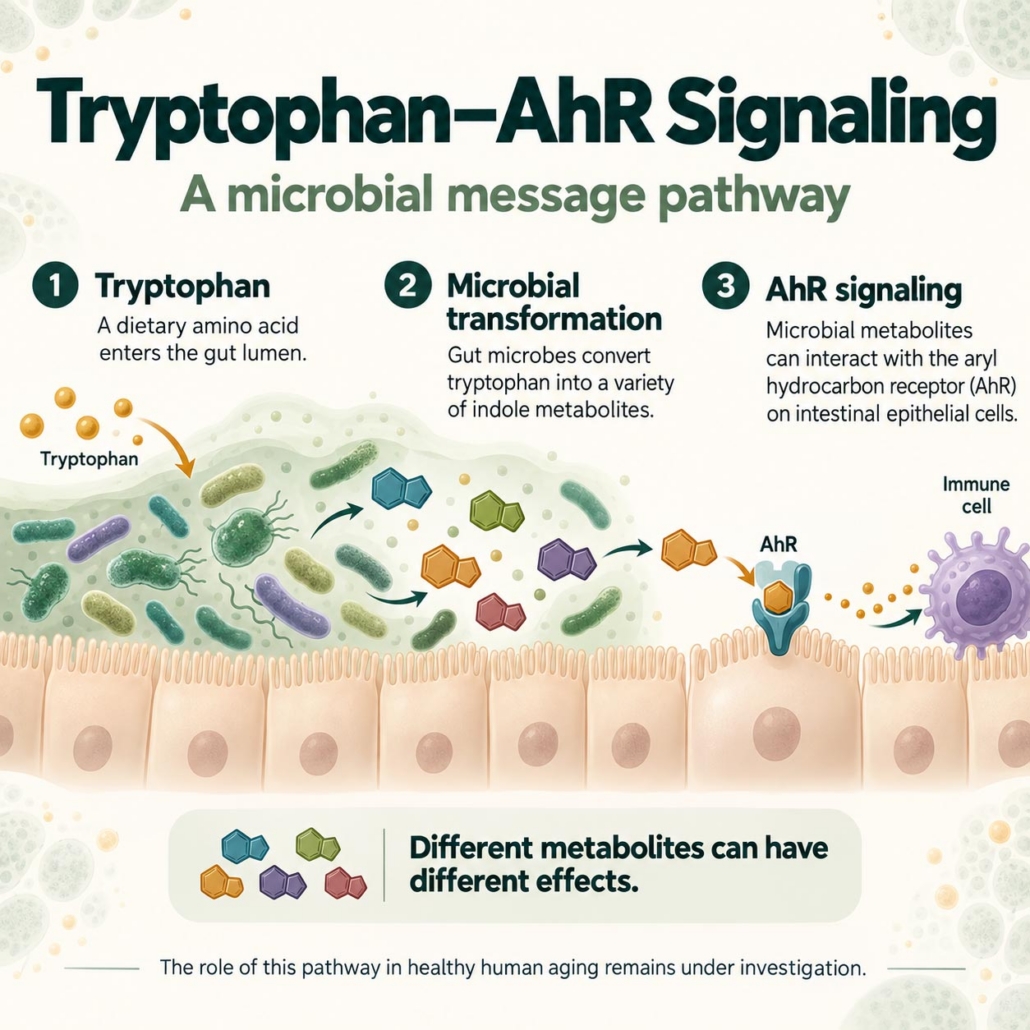
Tryptophan–AhR Signaling: A Microbial Message Pathway

Tryptophan is an amino acid used by both the body and gut microbes. Some gut microbes convert it into indole compounds, a diverse group of metabolites that can interact with host cells. One route involves the aryl hydrocarbon receptor, or AhR — a sensor that responds to certain compounds and helps regulate communication between the gut and the body.

AhR signaling is studied in connection with intestinal barrier function and immune activity. But the pathway is not a simple on/off switch. Different compounds can produce different effects, and the outcome may depend on where the signal occurs and the host’s biological state. Researchers are still working to understand how these microbial messages relate to healthy aging in people.

This is one reason microbiome research increasingly examines metabolites and microbial activity, rather than relying only on the presence or absence of particular bacterial species. Two people can have different microbial communities that perform similar functions — or similar communities that behave differently in response to diet and other conditions.

INFOGRAPHIC: Tryptophan–AhR Signaling: A Microbial Message Pathway
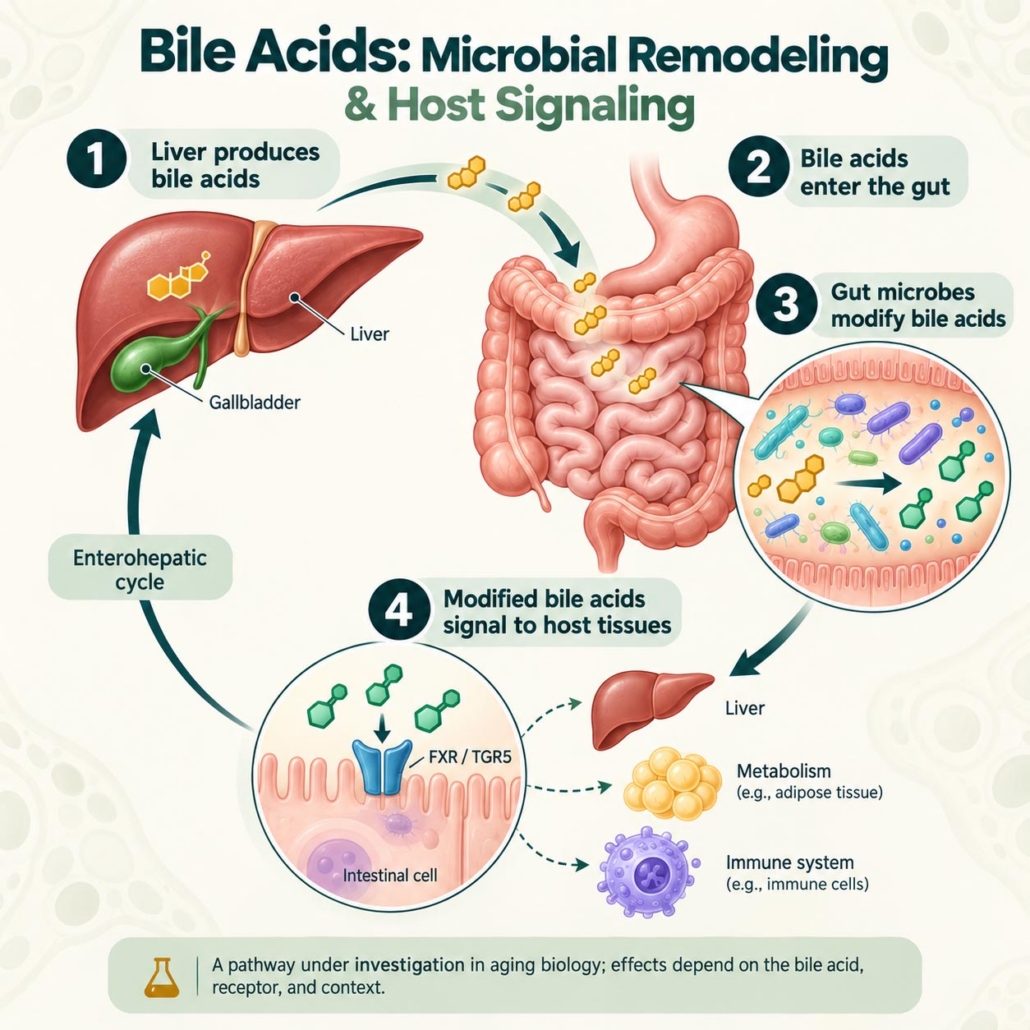
INFOGRAPHIC: Bile Acids: Microbial Remodeling & Host Signaling

Bile Acids: Microbial Remodeling & Host Signaling

Bile acids help the body digest and absorb fats. After their initial production by the liver, they travel through the gut, where microbes can chemically modify them. The resulting bile-acid pool can then participate in signaling between the gut and host tissues.

Researchers are exploring how this exchange may connect microbial activity with metabolic and immune processes. Some bile acids interact with host receptors, including FXR and TGR5. Because bile-acid profiles and microbial communities can both change with age, this pathway offers another way to study how the gut ecosystem may communicate with the wider body.

These mechanisms remain an evolving area of research. It would be premature to describe a particular bile acid, bacterium, or supplement as a longevity intervention based on these pathways alone. The direction and significance of an effect can depend on the specific molecule, its concentration, and the biological context.

A Connected System: Barrier, Immunity, and Metabolism

The gut barrier, immune system, and microbial metabolism are not separate topics. They continually influence one another. The barrier shapes contact between microbes and host tissues. Immune signals help regulate the gut environment. Microbial metabolites provide chemical messages that may affect both.

This creates a useful framework for thinking about the longevity–microbiome axis: the function of the whole system may matter more than any single microbe or marker. Researchers are investigating how changes in these connected processes relate to health over time. Microbiome patterns also differ with health status and other factors, so there is no one profile that can be called universally “young” or “healthy.”

The framework can guide future research, but it should not be presented as proof that modifying the microbiome will slow aging. Mechanistic plausibility is a starting point for investigation; it does not, on its own, establish a meaningful health outcome in people.

What This Science Could Mean for Supplement Brands

For supplement brands, the growing interest in microbiome science creates an opportunity to ask more precise questions. Which biological function is a product intended to support? What evidence applies to the specific ingredient, strain, or preparation? How will the finished product maintain its quality through storage and use?

Those questions matter because microbiome ingredients are not interchangeable. Probiotic evidence may depend on the strain and intended use. Prebiotic fibers differ in structure and fermentability. Postbiotic preparations can vary in composition and manufacturing. A general “microbiome support” rationale does not establish that a product supports healthy aging or longevity.

Product design should also account for practical quality considerations. Live microorganisms may require specific formulation and packaging controls to preserve viable amounts through shelf life.

Other ingredients may have different stability, compatibility, serving-size, or sensory requirements. In each case, the development brief should connect ingredient identity, evidence, finished-product specifications, and intended claims.

The most credible opportunity is to translate microbiome science into clear, substantiated product concepts. That means explaining what an ingredient is intended to do, what evidence supports that role, and what remains unknown.

For U.S. dietary supplements, structure/function claims must be substantiated and FDA notification requirements apply after marketing; claims should not imply that a product prevents, treats, or reverses disease.

From Microbiome Mechanism to Formulation Brief

A microbiome-focused product can start from different points in the biology. A live microorganism introduces a specific strain or combination of strains. A fermentable substrate provides material that microbes can use. A microbial metabolite delivers a compound produced or modified through microbial activity. These approaches involve different mechanisms, so they call for different evidence and quality questions.

Different Approaches

For a live microorganism, brands should ask whether the evidence applies to the specific strain and intended benefit, and whether the finished product can maintain the specified viable amount through shelf life.

For a fermentable substrate, relevant questions include its identity, dose, fermentability, tolerability, and the evidence for the intended use.

For a microbial metabolite, teams should assess the identity and form of the compound, the evidence for its direct use, and how it fits the product’s target benefit.

Across all three approaches, the formulation brief should connect mechanism, evidence, product specifications, and intended claims. That gives R&D, quality, regulatory, and marketing teams a shared basis for evaluating the concept.

It also helps keep the product story specific: what the ingredient is, how it is intended to work, and what the available evidence can support.

Probiotic evidence, for example, depends on the microorganism and the demonstrated benefit; the category name alone does not substantiate a healthy-aging claim.

INFOGRAPHIC: From Microbiome to Formulation Brief

Market Trends: Longevity and Microbiome Interest

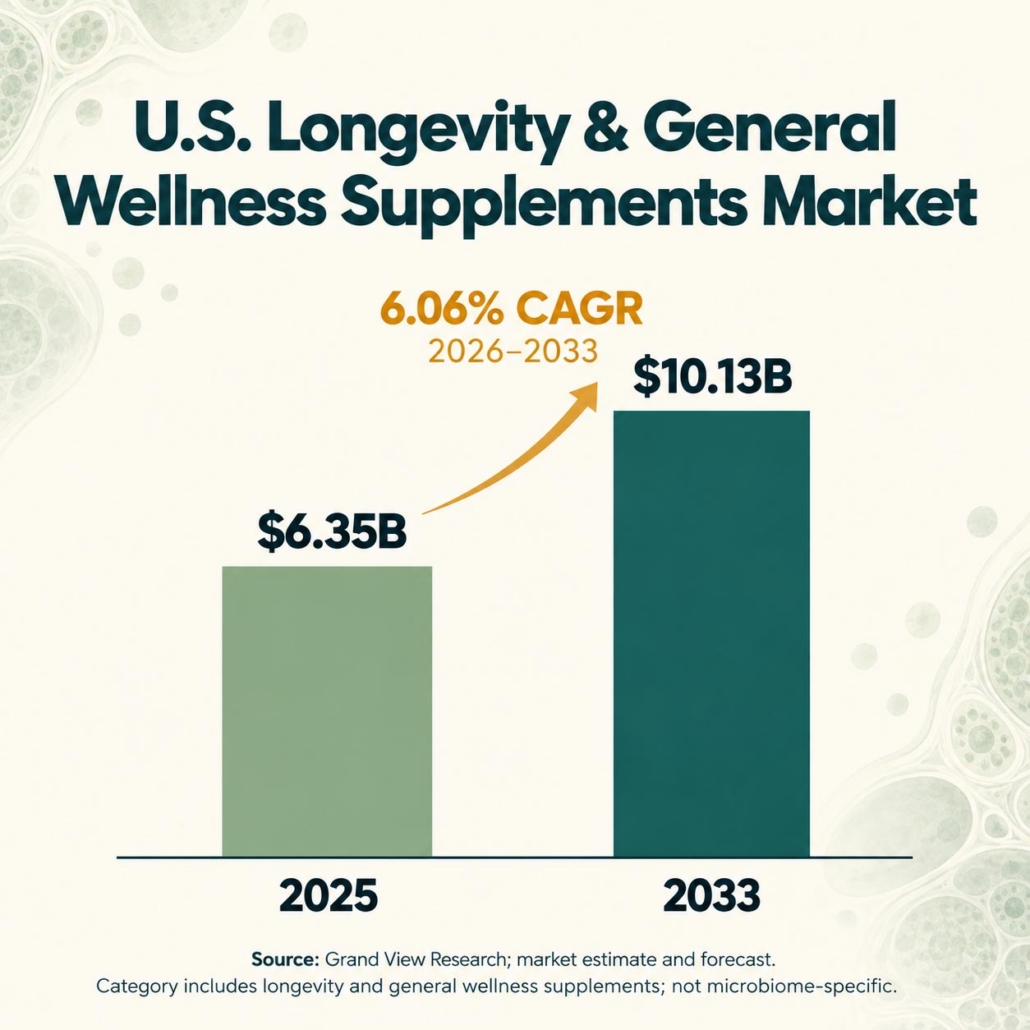
INFOGRAPHIC: U.S. Longevity and General Wellness Supplements Market

Consumer interest in healthy aging is creating opportunities for supplement brands to explore products that connect wellness with specific biological mechanisms.

Grand View Research estimates the U.S. longevity and general wellness supplements market at $6.35 billion in 2025 and projects it will reach $10.13 billion by 2033, a 6.06% CAGR from 2026 to 2033. This broad category combines longevity and general wellness products, so it does not measure demand for microbiome supplements specifically.

For brands, the opportunity is to translate emerging science into clear, evidence-informed product concepts. A strong formulation story should identify the ingredient or preparation, explain its intended role, and connect that role to relevant evidence. Precise positioning and transparent communication can help distinguish a credible healthy-aging concept from a broad longevity promise.

Market growth reflects commercial interest; it does not establish that a microbiome-focused ingredient improves healthspan or extends lifespan. Those outcomes require evidence specific to the product and intended benefit.

What Researchers Still Need to Learn

The gut microbiome offers several plausible pathways through which microbes may interact with aging biology. But researchers still need to clarify when these relationships influence health, how they vary among people, and which changes matter most.

One challenge is separating cause from consequence. A microbial pattern may contribute to a change in host function, reflect a change that has already occurred, or arise alongside it. Diet, medications, health conditions, and other factors can also affect both the microbiome and health outcomes. Longitudinal human research and better measurement of microbial activity may help untangle these relationships.

Researchers also need to connect proposed mechanisms to outcomes that matter in everyday life. Changes in microbial composition or metabolite levels can provide useful clues, but they do not automatically show that a person’s healthspan has improved. Understanding that distinction will help the field move from promising mechanisms toward more precise and responsible applications.

A More Connected View of Healthy Aging

The longevity–microbiome axis offers a useful way to explore how gut microbes may communicate with the body through the intestinal barrier, immune signaling, and microbial metabolites. These pathways connect gut biology with broader systems involved in maintaining health over time.

The science is still developing. Researchers have not identified a single microbiome profile or ingredient that guarantees healthy aging or extends lifespan. For supplement brands, the most credible path is to start with a clearly defined product purpose, select ingredients with relevant evidence, and communicate what is known — and what remains uncertain — with care.

Developing a microbiome-focused supplement concept? Intermountain Nutrition can help evaluate formulation, ingredient fit, product quality, and manufacturing needs as your idea moves toward scale.

Frequently Asked Questions

The longevity–microbiome axis describes the two-way relationship between the gut’s microbial community and host systems involved in maintaining health over time. Researchers are studying how this relationship may involve the intestinal barrier, immune signaling, metabolism, and compounds produced or modified by microbes.

The term describes a research framework. It does not mean that scientists have found a single microbiome profile that ensures a longer life.

No. Aging reflects many interacting biological, environmental, and lifestyle factors. The microbiome may influence some processes related to health, but current evidence does not show that it alone controls a person’s aging trajectory or lifespan.

Researchers have observed differences in microbial composition and function across age groups and health conditions. However, age alone does not explain those differences. Diet, medications, health status, living environment, and other factors can also shape the gut ecosystem. As a result, there is no single pattern that applies to every older adult or defines a universally “healthy” microbiome.

Not necessarily. The meaning of diversity depends on the person, the organisms present, and their functions. A single diversity score cannot define a universally healthy microbiome, and researchers increasingly examine microbial activity and host context alongside composition.

Inflammaging is a term for chronic, low-grade inflammatory activity associated with aging. Researchers are investigating whether changes in gut-barrier function, immune activity, and microbial signaling interact with this process. The proposed connection is complex, and it does not mean gut microbes are the sole cause of inflammation associated with aging.

The intestinal barrier is a multi-layered interface between the gut and the rest of the body. It includes mucus, intestinal epithelial cells, and immune defenses. These components help the body absorb nutrients while regulating contact with microbes and other substances in the gut.

Researchers are studying how barrier function interacts with microbial activity and immune signaling over the lifespan. The exact role of these changes in healthy human aging remains an active area of research.

Microbial metabolites are compounds that microbes produce or modify as they use food components and other substances. Some can act as signals between gut microbes and host tissues. Short-chain fatty acids, compounds derived from tryptophan, modified bile acids, polyphenol-derived metabolites, and polyamines are examples researchers are investigating.

A metabolite’s effect depends on the specific compound, where it is produced, its concentration, and the host’s biological context. The presence of a particular metabolite does not, by itself, prove that a person’s microbiome is healthy or that aging will slow.

Short-chain fatty acids are produced when certain gut microbes ferment dietary fiber. Researchers study how these compounds interact with the gut lining, immune signaling, and other host processes. Their effects can vary based on the compound and biological context, so it is too simple to assume that more is always better.

Tryptophan is an amino acid that the body and gut microbes can use in different ways. Some microbes convert it into indole compounds. Certain compounds can interact with the aryl hydrocarbon receptor (AhR), a signaling pathway involved in communication between microbes and host cells.

Researchers are studying this pathway in relation to intestinal and immune function. Different compounds can have different effects, and the implications for healthy aging are not yet fully established.

The liver produces bile acids that help digest and absorb fats. Gut microbes can chemically modify some bile acids, and these modified compounds may participate in signaling with host tissues. Researchers are investigating how this interaction relates to metabolism and other biological functions, including those that may change with age.

No. A probiotic is a live microorganism that confers a health benefit when administered in adequate amounts. A prebiotic is a substrate selectively used by microorganisms that confers a health benefit.

A synbiotic combines live microorganisms and substrates that work together to provide a health benefit. A postbiotic is a preparation of inanimate microorganisms and/or their components that confers a health benefit.

These categories have different definitions and evidence requirements. For a specific probiotic benefit, the supporting evidence should match the microorganism and intended use; the word “probiotic” alone does not establish a healthy-aging or longevity benefit.

Not necessarily. Fermented foods are made through the growth of microorganisms, but not every fermented food contains live microorganisms when consumed, and not every live microorganism has demonstrated a health benefit. A probiotic designation requires evidence of a benefit from the relevant microorganism at an adequate amount.

A microbiome test cannot determine an individual’s lifespan. Microbiome measurements vary, and there is no single accepted profile that predicts longevity for everyone. Test results should not be treated as a diagnosis or as proof that a specific diet or supplement will extend life.

A proposed biological mechanism does not establish that a supplement extends lifespan or improves healthspan. Claims should match the evidence for the specific ingredient or preparation and comply with applicable requirements. In the United States, manufacturers must substantiate structure/function claims and meet FDA notification requirements for claims covered by those rules.

Brands should define the intended benefit, assess evidence for the specific ingredient or strain, and set finished-product specifications that support quality through shelf life. Formulation, packaging, storage, serving size, and sensory experience can all affect product performance.

Claims should be clear and substantiated. Broad language about “microbiome support” should not imply a longevity outcome unless evidence supports that specific claim.

References

The Microbiome & Healthy Aging

Ghosh, T. S., Shanahan, F., & O’Toole, P. W. (2025). Healthy and unhealthy aging and the human microbiome. Annual Review of Medicine, 76, 115–127.

O’Toole, P. W., Jeffery, I. B., & Claesson, M. J. (2024). Ageing, microbes and health. Nature Reviews Microbiology, 22, 647–660.

Santoro, A., O’Toole, P. W., & Franceschi, C. (2024). The human gut microbiome and aging. Current Opinion in Clinical Nutrition and Metabolic Care, 27(1), 18–24.

García-Mantrana, I., Calatayud, M., Romo-Vaquero, M., Espín, J. C., Selma, M. V., & Collado, M. C. (2024). How diet and lifestyle can fine-tune gut microbiomes for healthy aging. Annual Review of Food Science and Technology, 15, 283–305.

Ross, F. C., Patangia, D., Grimaud, G., Lavelle, A., Dempsey, E. M., Ross, R. P., & Stanton, C. (2024). The interplay between diet and the gut microbiome: Implications for health and disease. Nature Reviews Microbiology, 22, 671–686.

Microbial Metabolites & Signaling Pathways

Mukhopadhya, I., & Louis, P. (2025). Gut microbiota-derived short-chain fatty acids and their role in human health and disease. Nature Reviews Microbiology.

Agus, A., Planchais, J., & Sokol, H. (2018). Gut microbiota regulation of tryptophan metabolism in health and disease. Cell Host & Microbe, 23(6), 716–724.

Lamas, B., Natividad, J. M., & Sokol, H. (2018). Aryl hydrocarbon receptor and intestinal immunity. Mucosal Immunology, 11, 1024–1038.

Dodd, D., Spitzer, M. H., Van Treuren, W., Merrill, B. D., Hryckowian, A. J., Higginbottom, S. K., Le, A., Cowan, T. M., Nolan, G. P., Fischbach, M. A., & Sonnenburg, J. L. (2017). A gut bacterial pathway metabolizes aromatic amino acids into nine circulating metabolites. Nature, 551, 648–652.

Wahlström, A., Sayin, S. I., Marschall, H.-U., & Bäckhed, F. (2016). Intestinal crosstalk between bile acids and microbiota and its impact on host metabolism. Cell Metabolism, 24(1), 41–50.

Ridlon, J. M., Kang, D.-J., & Hylemon, P. B. (2006). Bile salt biotransformations by human intestinal bacteria. Journal of Lipid Research, 47(2), 241–259.

Turroni, S., Fiori, J., Rampelli, S., Schnorr, S. L., Consolandi, C., Barone, M., Biagi, E., Fanelli, F., Mezzullo, M., Crittenden, A. N., Henry, A. G., Brigidi, P., & Candela, M. (2020). Fecal metabolome of the Hadza hunter-gatherers: A host-microbiome integrative view. Scientific Reports, 10, 1–11.

Gut Barrier, Immune Signaling, & Inflammaging

Thaiss, C. A., Zmora, N., Levy, M., & Elinav, E. (2016). The microbiome and innate immunity. Nature, 535, 65–74.

Belkaid, Y., & Hand, T. W. (2014). Role of the microbiota in immunity and inflammation. Cell, 157(1), 121–141.

Franceschi, C., Garagnani, P., Parini, P., Giuliani, C., & Santoro, A. (2018). Inflammaging: A new immune–metabolic viewpoint for age-related diseases. Nature Reviews Endocrinology, 14, 576–590.

Communication with Other Organs

Picca, A., Ponziani, F. R., Calvani, R., Marini, F., Biancolillo, A., Coelho-Júnior, H. J., Bossola, M., Basso, M., Cesari, M., Landi, F., & Marzetti, E. (2024). Gut-muscle axis mechanism of exercise prevention of sarcopenia. Frontiers in Nutrition, 11, 1418778.

Cryan, J. F., O’Riordan, K. J., Cowan, C. S. M., Sandhu, K. V., Bastiaanssen, T. F. S., Boehme, M., Codagnone, M. G., Cussotto, S., Fulling, C., Golubeva, A. V., Guzzetta, K. E., Jaggar, M., Long-Smith, C. M., Lyte, J. M., Martin, J. A., Molinero-Perez, A., Moloney, G., Morelli, E., Moriguti, S., … Dinan, T. G. (2019). The microbiota-gut-brain axis. Physiological Reviews, 99(4), 1877–2013.

Related Postings

Golden pear-colored craving control gummy supplements featuring saffron and chromium
a team of scientists and business professionals discussing a supplement product
a trade show attendee discussing nutraceutical formulation at the Intermountain Nutrition exhibitor booth at SupplySide Global 2026