Prickly Pear Extract: From Desert Cactus to Functional Supplement Ingredient

August 27, 2026 |

Prickly pear combines a distinctive botanical story with betalains, polyphenols, fiber, natural color, and growing potential across modern supplement formulations.

At a Glance: Prickly Pear Extract for Supplement Formulation

  • Botanical name: Opuntia ficus-indica (L.) Mill.
  • Plant family: Cactaceae
  • Common names: Prickly pear, cactus pear, Indian fig, nopal and opuntia
  • Origin: Mexico
  • Plant parts used commercially: Fruit/pulp, peel, cladodes, seeds and flowers
  • Notable fruit compounds: Betalains, phenolic compounds, flavonoids, carotenoids, vitamin C and minerals
  • Cladode characteristics: Fiber, mucilage and a phytochemical profile distinct from the fruit
  • Commercial ingredient forms: Fruit powder, juice powder, concentrated fruit extract, cladode powder or extract, and seed oil
  • Potential supplement formats: Powders, stick packs, capsules, gummies and other botanical blends
  • Key formulation consideration: Composition can vary with plant part, cultivar, growing conditions, maturity, extraction method and processing.
  • Important scientific distinction: Evidence involving one Opuntia preparation should not automatically be applied to another.

Why Prickly Pear Extract Is Gaining Attention

Prickly pear has survived in hot, water-limited environments for centuries. Today, this resilient cactus is attracting a different kind of attention as supplement brands look for botanical ingredients that combine recognizable sourcing, functional compounds, formulation versatility, and a compelling agricultural story.

The Botanical Source

The ingredient most often comes from Opuntia ficus-indica, a cactus species native to Mexico and now cultivated across many arid and semi-arid regions.

Its colorful fruit contains betalains, phenolic compounds, flavonoids, vitamins, minerals, and other phytochemicals. Meanwhile, the cactus pads, known as cladodes or nopales, provide a different nutritional profile that includes substantial dietary fiber and mucilage.

Why the Plant Part Matters

That distinction matters. Prickly pear fruit, fruit extract, fruit powder, cladode extract, and seed oil are not interchangeable ingredients. They differ in composition, processing requirements, potential applications, and the research available to support them.

Opportunities and Responsibilities for Supplement Brands

For supplement brands, that creates both opportunity and responsibility. A prickly pear ingredient can bring color, flavor, phytochemicals, and botanical positioning to a product.

However, brands need to understand exactly what they are sourcing — and whether the science behind that specific ingredient supports the intended formulation.

From Field to Finished Supplement

This guide follows prickly pear from the field to the finished supplement. We will explore where it grows, how it is harvested and processed, what its bioactive compounds do, what human research tells us, and how formulators can work with different prickly pear ingredients.

What Is Prickly Pear Extract?

Prickly pear extract is a concentrated botanical ingredient produced from a part of an Opuntia cactus, most commonly Opuntia ficus-indica. However, there is no single universal composition for “prickly pear extract.”

The finished ingredient depends on what goes into the extraction process and how it is processed afterward.

A Cactus With Several Commercially Valuable Parts

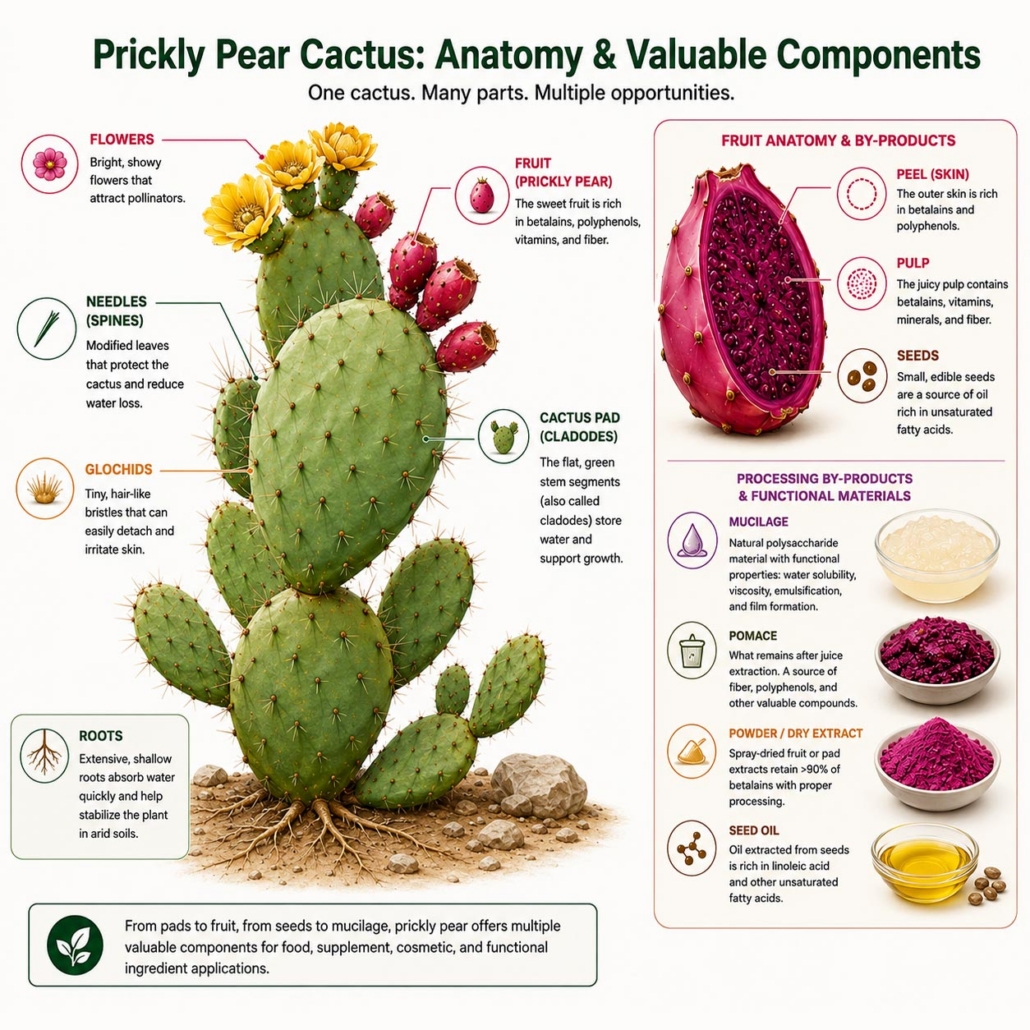
Opuntia ficus-indica produces flattened, fleshy stems called cladodes, colorful flowers, seeds, and oval fruits. The fruit itself contains peel, pulp and seeds, each with its own composition.

Research has identified numerous phytochemicals in prickly pear fruit, including phenolic compounds, flavonoids and betalains. Betalains are particularly notable because they contribute to the yellow, orange, red and purple colors found across prickly pear cultivars while also exhibiting antioxidant activity.

Cladodes are different. They contain fiber and mucilage in addition to minerals and phytochemicals. As a result, research involving nopal or cladode preparations should not automatically be interpreted as evidence for fruit extract—and vice versa.

Why the Ingredient Form Matters

“Prickly pear extract” may sound like a single ingredient, but the term can describe very different materials.

For example, an extract made from red prickly pear fruit may be selected for its betalains and other phytochemicals. A whole-fruit powder retains a broader food-derived matrix but may require a higher inclusion level. Cladode ingredients provide a different profile, while seed oil represents an entirely separate lipid-based ingredient.

Research reflects these differences. Therefore, supplement developers should identify the species, plant part, ingredient form, extraction method, and standardization before evaluating potential benefits or determining a target dose.

Not All Prickly Pear Ingredients Are the Same

Even two ingredients derived from prickly pear fruit may not have identical compositions.

Species and cultivar matter. Fruit color can correspond with different pigment and phytochemical profiles. Growing environment, maturity at harvest, storage, and processing can also influence the raw material before extraction begins.

Extraction adds another layer of variability. Water extraction, hydroalcoholic extraction, juice concentration, spray drying, freeze drying and other technologies can produce ingredients with different concentrations and physical characteristics.

For a supplement brand, the practical lesson is straightforward: the words “prickly pear extract” on a specification sheet do not provide enough information to evaluate an ingredient.

What Should Brands Look for in a Prickly Pear Ingredient?

Supplier documentation should clearly establish:

  • Botanical species and identity
  • Plant part used
  • Country or region of origin
  • Extraction method
  • Extract ratio, when applicable
  • Standardized compounds, when applicable
  • Carrier or excipient system
  • Moisture and microbiological specifications
  • Contaminant testing
  • Physical characteristics such as particle size, color and solubility or dispersibility
  • Stability data relevant to the intended finished format

These details become particularly important when a brand wants to connect the ingredient with published research. The closer the commercial material aligns with the ingredient used in supporting studies, the more scientifically defensible that connection becomes.

Key Takeaway: Prickly pear is better understood as an ingredient family than as one standardized botanical. Selecting the right form starts with the intended product benefit and delivery format.

Where Is Prickly Pear Grown?

Opuntia ficus-indica originated in Mexico, where Opuntia species have been intertwined with food, agriculture, and culture since pre-Hispanic times. The cactus later spread well beyond its native range and is now established throughout many tropical, subtropical, arid, and semi-arid regions.

Today, Opuntia ficus-indica can be found across Central and South America, the Mediterranean region, South Africa, Australia, and other areas with suitable climates. Its broad distribution reflects one of the plant’s defining characteristics: an exceptional ability to function under environmental conditions that can challenge conventional crops.

Mexico Is Central to the Prickly Pear Story

Mexico is more than the botanical origin of O. ficus-indica. It has a long history of cultivating and using Opuntia species for food and other agricultural purposes.

The edible pads are commonly called nopales or nopalitos, while the fruit is known as tuna in Mexico. Historical records indicate that Opuntia was an important food source well before European contact, alongside other foundational crops such as maize and agave.

Over time, human selection and cultivation helped create diverse varieties suited to different uses. Commercial production can now focus on fruit quality, color, reduced spines, cladode production or other agricultural characteristics.

Texas Could Become an Important U.S. Prickly Pear Resource

Mexico remains central to the history and commercial cultivation of prickly pear, but the cactus also has a substantial presence north of the border.

Opuntia species grow throughout Texas and are particularly well adapted to the state’s dry and semiarid environments. Their water-storing cladodes allow the plants to tolerate prolonged periods of drought, helping explain their extensive presence across Texas rangelands.

Historically, that abundance has created an interesting agricultural contradiction. Prickly pear can become dense enough to interfere with conventional rangeland management, yet the same plant provides food for wildlife and can serve as supplemental livestock forage during periods of drought. Its fruit and young pads also have established food uses.

More recently, researchers have begun exploring whether this resilient crop could support higher-value commercial markets. That possibility is particularly relevant as agriculture looks for crops capable of producing useful biomass under increasingly water-constrained growing conditions.

For supplement and functional-food brands, Texas is therefore worth watching. Expanded U.S. cultivation could eventually create new opportunities for fruit, cladodes, fiber-rich fractions, pigments, and other value-added Opuntia ingredients. However, brands should distinguish this emerging opportunity from Mexico’s much longer-established prickly pear cultivation and processing infrastructure.

Why Does Prickly Pear Grow So Well in Dry Climates?

Much of prickly pear’s resilience comes from its physiology.

O. ficus-indica uses Crassulacean Acid Metabolism, or CAM photosynthesis. Unlike many plants that open their stomata primarily during daylight hours, CAM plants largely take in carbon dioxide at night. This strategy reduces water loss during the hottest part of the day.

Its fleshy cladodes also store water, helping the plant tolerate extended periods of limited rainfall.

These adaptations allow prickly pear to grow in areas characterized by dry conditions, irregular rainfall, and soils that may be less suitable for conventional crops. FAO materials describe Opuntia as well adapted to arid environments with erratic rainfall and erosion-prone soils.

Climate Resilience Creates a Compelling Agricultural Story

Prickly pear’s drought tolerance has led to increasing interest in its role in dryland agriculture. However, describing the cactus as simply a “sustainable ingredient” can overlook important nuances.

Sustainability depends on the complete supply chain — including cultivation practices, irrigation, fertilizer inputs, harvesting, processing, transportation and land management.

A more defensible advantage is climate adaptation. Prickly pear can remain productive under environmental conditions that place greater water stress on many conventional crops. That characteristic could become increasingly relevant as agricultural regions respond to water scarcity and changing climate conditions.

For supplement brands, this creates an authentic sourcing story without relying on broad environmental claims that may be difficult to substantiate.

Growing Region Can Also Affect the Finished Ingredient

Where prickly pear grows matters for more than storytelling.

Genetics, soil, temperature, rainfall, environmental stress, maturity and agricultural practices can influence botanical composition. Reviews of O. ficus-indica describe considerable genetic variability and ecological adaptation across its growing range.

This reinforces an important procurement principle: country of origin alone does not define ingredient quality.

A strong supplier specification should connect geographic origin with botanical identity, plant part, processing method and analytical testing. Those controls help manufacturers manage the natural variability that comes with botanical ingredients.

Key Takeaway: Prickly pear originated in Mexico but now grows across many arid and semi-arid regions worldwide. Its CAM physiology and drought tolerance make it particularly well adapted to water-limited environments, while geographic and genetic variability make supplier qualification and ingredient specifications especially important.

How Is Prickly Pear Grown & Harvested?

Prickly pear is a perennial cactus crop adapted to warm, dry environments. Commercial growers cultivate different varieties depending on whether the primary objective is fruit, edible cladodes, animal feed, or another agricultural use.

For supplement ingredients derived from the fruit, harvest timing and post-harvest handling can influence the quality of the raw material entering the extraction process.

How Prickly Pear Develops

Prickly pear fruit forms along the edges of mature cladodes after flowering. As the fruit develops, the pulp, peel, and seeds mature at different rates.

Ripening brings several visible and measurable changes. The peel develops its characteristic color, the fruit softens, soluble solids increase, and some glochids begin to loosen. Depending on the cultivar, ripe fruits may be green, yellow, orange, red, or deep purple.

Growers can evaluate several characteristics when determining harvest maturity, including fruit size, weight, firmness, peel color, soluble solids, peel thickness, and ease of peeling. These factors matter because harvesting too early or too late can affect flavor, physical quality, storage performance, and processing characteristics.

INFOGRAPHICS: Anatomy Of A Prickly Pear Cactus

Harvesting Requires Careful Handling

Prickly pear fruit presents an unusual harvesting challenge: glochids.

Glochids are tiny, detachable, barbed structures found on the fruit and cactus pads. Although much smaller than the prominent spines associated with many cacti, they can lodge in skin and other tissues and cause significant irritation.

As a result, commercial harvesting requires appropriate handling procedures. Research and agricultural literature describe fruit being manually cut or detached using techniques designed to limit damage. In some systems, a small portion of the cladode remains attached to the harvested fruit to improve post-harvest integrity.

Harvesting may also occur during cooler periods of the day, when fruit tissues maintain greater turgor and glochids may be less easily detached.

De-Spining Is an Important Post-Harvest Step

After harvest, processors need to remove remaining glochids before the fruit moves further through the supply chain.

Mechanical brushing or specialized de-spining equipment can remove glochids from the fruit surface. The fruit can then be sorted according to maturity, color, physical condition, cultivar, and intended application.

A 2025 study of red and yellow O. ficus-indica varieties, for example, harvested fruit at horticultural maturity and then used mechanical de-spining before post-harvest evaluation. This illustrates how glochid removal fits into the normal handling sequence for commercially processed cactus pear.

Harvest Quality Carries Forward Into Ingredient Quality

For supplement manufacturers, harvesting is not simply an agricultural detail.

Fruit maturity, cultivar, environmental conditions, storage time, and handling can influence the raw material entering production. Research has shown that prickly pear varieties can differ in pigments, phenolic compounds, fiber, antioxidant capacity, and other characteristics.

INFOGRAPHIC: De-Spining of Prickly Pear is Important After Harvest to Prepare for Use in Supplement Formulations

Therefore, a consistent finished ingredient begins well before extraction.

Supplier qualification should consider not only botanical identity and plant part but also how the raw material is cultivated, harvested, handled, and stored before processing.

Key Takeaway: Harvest timing and handling influence the quality of prickly pear entering the ingredient supply chain. Glochid removal, maturity, cultivar, and post-harvest controls all contribute to the consistency of the raw material.

How Is Prickly Pear Extract Made?

There is no single manufacturing process for prickly pear extract. Processing depends on the plant part, target compounds, desired concentration, and intended finished-product application.

A fruit powder designed for a hydration stick pack may require a very different process from a concentrated botanical extract intended for capsules.

INFOGRAPHIC: Plant Part Matters in Prickly Pear for Supplement Formulation

From Fresh Fruit to Ingredient

A typical fruit-based process begins with cleaned and de-spined prickly pears. Depending on the desired ingredient, processors may then separate the peel, pulp, and seeds or process a larger portion of the fruit.

The material can be crushed, pressed, or pulped before further processing.

From this point, several pathways are possible:

  • Juice concentration produces a concentrated fruit-derived material.
  • Drying fruit or juice creates powders suitable for dry formulations.
  • Water extraction can concentrate water-soluble constituents.
  • Hydroalcoholic or other extraction methods can target different phytochemical fractions.
  • Seed processing can produce prickly pear seed oil.
  • Cladode processing creates powders or extracts with a composition distinct from fruit-derived ingredients.

The extraction solvent, temperature, time, pH, and other processing conditions can all influence the resulting phytochemical profile.

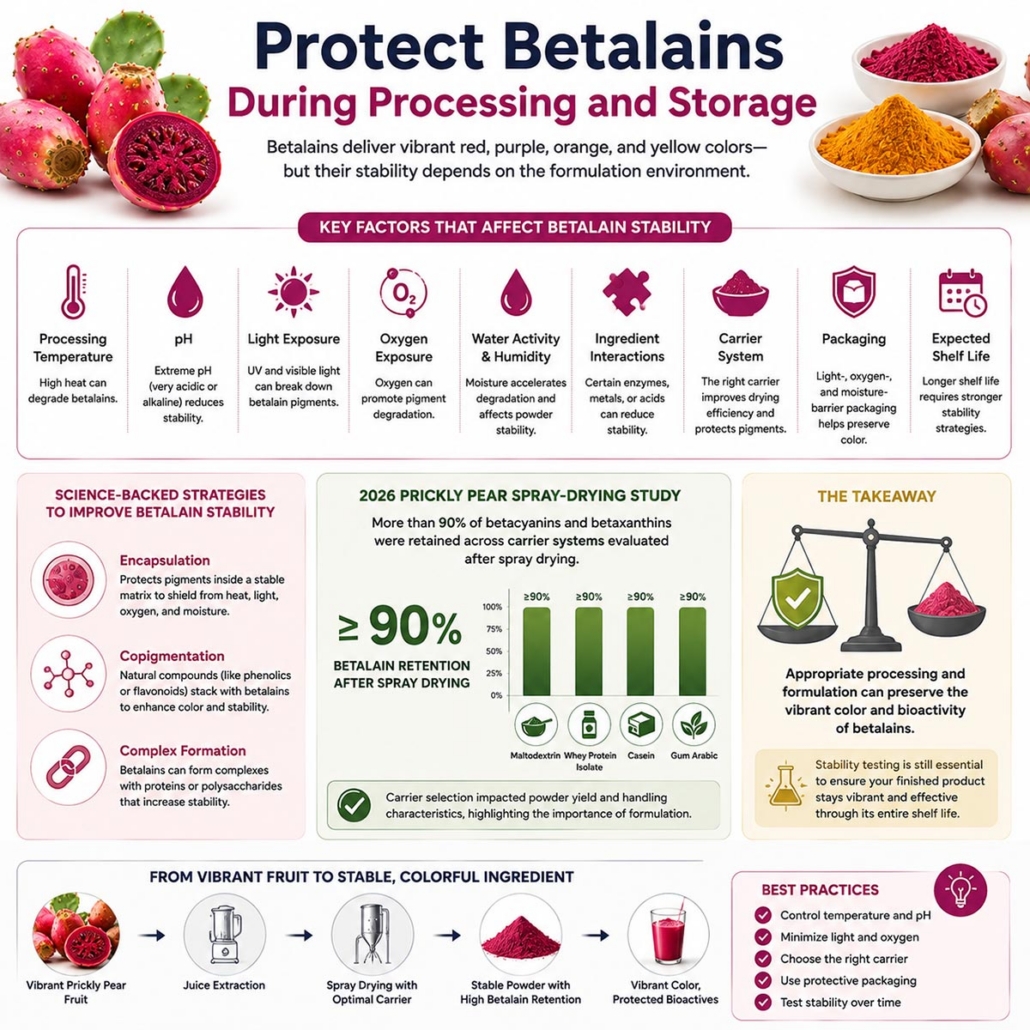
Spray Drying Can Convert Prickly Pear Juice Into a Stable Powder

Spray drying is particularly relevant to supplement manufacturers because it can transform liquid prickly pear juice or concentrate into a free-flowing powder.

However, fruit juice presents technical challenges. Naturally occurring sugars can make spray-dried powders sticky, reduce production yield, and contribute to caking. Consequently, manufacturers often use carrier materials such as maltodextrin, gums, or proteins to improve drying performance and powder characteristics.

A 2026 Journal of Food Science study provides unusually relevant data for prickly pear specifically. Researchers spray-dried orange O. ficus-indica juice using several carrier systems, including maltodextrin, whey protein isolate, casein, and gum arabic. Betalain retention exceeded 90% across the tested systems after spray drying, while carrier selection affected powder yield and handling characteristics.

That study demonstrates an important formulation principle: processing does not necessarily eliminate prickly pear’s betalain pigments, but the carrier system and storage environment matter.

INFOGRAPHIC: Spray Drying Can Convert Prickly Pear Juice Into a Stable Powder

Moisture Control Matters After Drying

Creating a powder is only part of the challenge. Manufacturers also need to keep it stable.

In the same 2026 study, relative humidity affected both pigment retention and physical powder behavior. Visible caking developed under higher-humidity storage conditions, although the threshold varied with the carrier system.

These findings have practical implications for powdered supplements and stick packs. Moisture-barrier packaging, carrier selection, storage conditions, and finished-product stability testing should all be considered when developing a prickly pear powder formulation.

INFOGRAPHIC: Protect Betalains During Processing

Betalains Require Thoughtful Processing

Betalains are water-soluble pigments that contribute to the distinctive red, purple, yellow, and orange colors of prickly pear.

They are attractive to product developers because they can contribute both phytochemical content and natural color.

However, betalain stability can be influenced by the surrounding matrix and processing environment.

Scientific reviews have examined stabilization approaches such as encapsulation, copigmentation, and complex formation.

This does not mean prickly pear cannot tolerate commercial processing.

In fact, the recent spray-drying research demonstrates high pigment retention under appropriate conditions.

Instead, it means formulators should design around betalain stability rather than assume the pigments will behave the same way in every matrix.

Processing Can Also Create New Ingredient Opportunities

Researchers are increasingly examining prickly pear by-products such as peel rather than treating them exclusively as processing waste.

The peel can contain fiber, mucilage, phenolic compounds, and pigments. Studies have explored techniques such as ultrasound-assisted extraction and alternative solvent systems to recover valuable compounds from these materials.

This creates an interesting long-term opportunity for greater utilization of the harvested fruit. However, these newer extraction technologies should be viewed as emerging processing strategies rather than evidence that every commercial prickly pear ingredient uses these methods today.

Key Takeaway: Prickly pear can become juice powder, whole-fruit powder, concentrated extract, cladode ingredient, or seed oil. Processing method and carrier selection influence composition, stability, handling, and ultimately the ingredient’s suitability for a finished supplement.

What Bioactive Compounds Does Prickly Pear Contain?

Prickly pear contains a diverse mixture of nutrients and phytochemicals, but the composition varies substantially by plant part and ingredient form.

The fruit is particularly interesting for its betalains and phenolic compounds. Cladodes provide a different matrix rich in fiber and mucilage, while seeds contain a lipid fraction that can be processed into seed oil.

Betalains Give Prickly Pear Its Distinctive Color

Betalains are nitrogen-containing, water-soluble plant pigments. They fall into two major groups: betacyanins, which generally produce red-to-purple colors, and betaxanthins, which contribute yellow-to-orange hues.

Prickly pear can contain both groups. Betanin is one of the better-known betacyanins, while indicaxanthin is a notable betaxanthin found in some prickly pear fruits.

Beyond their role as pigments, betalains have demonstrated antioxidant activity in experimental research. This makes them especially interesting for supplement developers because the same compounds can contribute to both the ingredient’s phytochemical identity and its visual characteristics.

However, betalain content is not uniform across all prickly pear fruit. Cultivar, color, maturity, growing conditions, and processing can influence the pigment profile.

Phenolic Compounds & Flavonoids Add to The Phytochemical Profile

Prickly pear fruit also contains phenolic compounds and flavonoids. Research has identified compounds from several phenolic classes, although concentrations vary among species, cultivars, tissues, and analytical methods.

These compounds contribute to the fruit’s antioxidant activity by participating in reactions involving reactive oxygen species and other oxidants.

Importantly, laboratory measurements of antioxidant capacity do not automatically establish a clinical benefit in humans. They tell us something about the chemical properties of the ingredient, but human outcomes require human research.

That distinction becomes important when translating phytochemical science into responsible supplement positioning.

Vitamin C, Carotenoids & Minerals Contribute Nutritional Value

Prickly pear fruit can also provide vitamin C, carotenoids, and minerals. Potassium, calcium, and magnesium are among the minerals reported in Opuntia fruit, although amounts vary according to cultivar, soil, growing conditions, and plant tissue.

Whole-fruit powders may retain a broader spectrum of these naturally occurring constituents than a narrowly targeted extract. Conversely, concentrated extracts can deliver selected phytochemicals at lower inclusion levels.

Neither approach is inherently better. The appropriate choice depends on the product objective.

Cladodes Provide Fiber & Mucilage

The cladodes, or cactus pads, deserve separate consideration because they are chemically different from the fruit.

They contain soluble and insoluble fiber as well as mucilage, a complex polysaccharide-rich material that helps the cactus retain water. These characteristics are particularly relevant to digestive and metabolic research involving nopal or cladode preparations.

This distinction also helps explain why some clinical findings involving prickly pear cannot be generalized across ingredient forms. A fiber-rich cladode preparation does not have the same composition or physiological behavior as a betalain-rich fruit extract.

Seeds Create Another Distinct Ingredient Stream

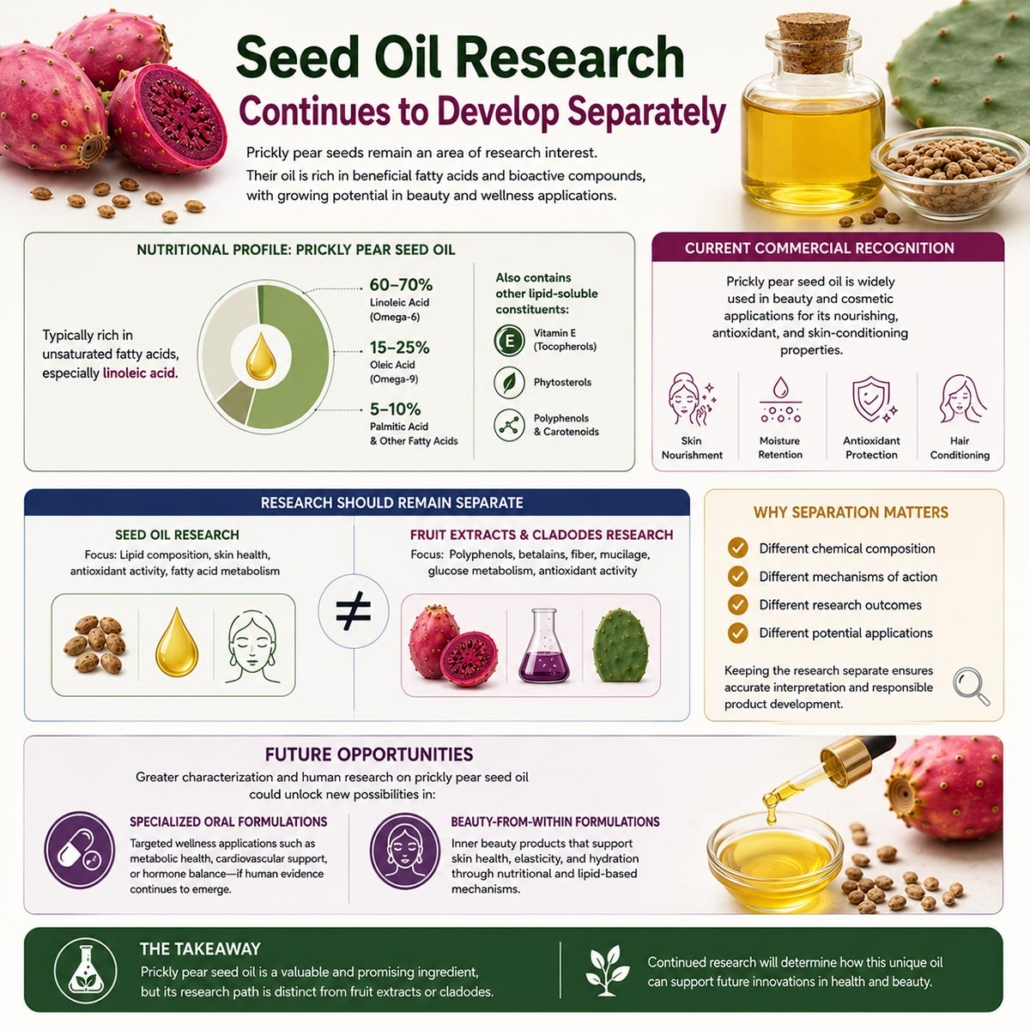
Prickly pear seeds contain oil rich in unsaturated fatty acids, with linoleic acid frequently identified as a major fatty acid. Seed oil also contains other lipid-soluble constituents.

However, prickly pear seed oil is a separate ingredient category.

Research involving seed oil should not be used as direct evidence for fruit extract, fruit powder, or cladode products.

For brands evaluating the science, that distinction is essential.

Key Takeaway: Prickly pear contains betalains, phenolic compounds, flavonoids, fiber, vitamins, minerals, and other constituents, but their concentrations depend heavily on the plant part and ingredient form.

Understanding that composition is the first step toward matching a commercial ingredient with appropriate research.

INFOGRAPHIC: Seed Oil Research Continues

How Does Prickly Pear Extract Work?

Prickly pear does not have one universal mechanism of action. Its biological effects depend on the compounds present in the specific ingredient.

For fruit-derived ingredients, research has focused heavily on betalains, phenolic compounds, and antioxidant pathways. Cladode preparations introduce additional mechanisms related to fiber and the physical properties of the plant matrix.

Betalains & Phenolics Interact With Oxidative Pathways

Normal metabolism continually produces reactive oxygen species. At controlled levels, these molecules participate in cellular signaling. Problems can arise when their production exceeds the body’s antioxidant defenses, creating a state commonly described as oxidative stress.

Betalains and phenolic compounds can participate in redox reactions and have demonstrated antioxidant activity in experimental models. Prickly pear fruit’s combination of these compounds helps explain why antioxidant activity appears frequently in the scientific literature.

However, antioxidant capacity measured in a laboratory is not the same as a demonstrated health outcome in people.

For supplement brands, that distinction is important. Mechanistic research can explain why an ingredient is scientifically interesting, but product positioning should reflect the level of human evidence available for the specific preparation.

INFOGRAPHIC: Betalains Interact With Oxidative Pathways
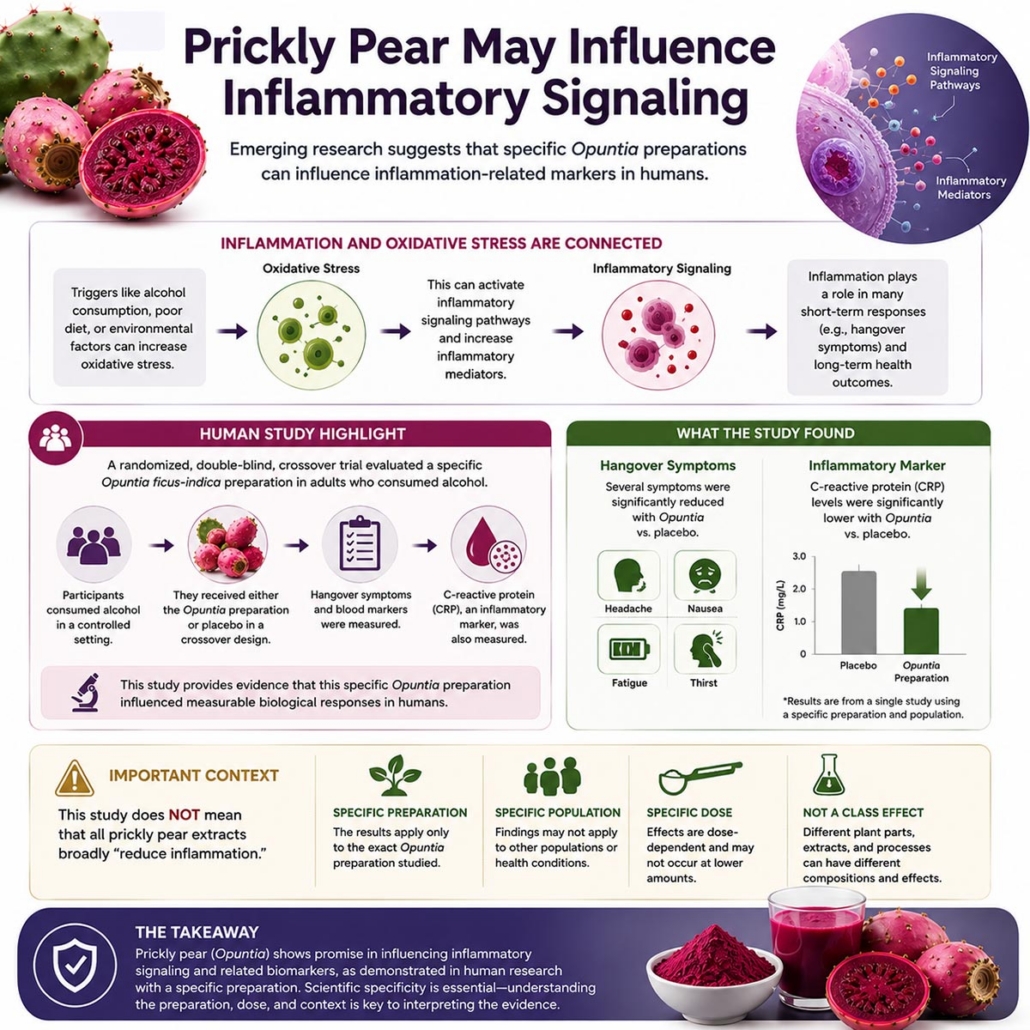
INFOGRAPHIC: Prickly Pear May Influence Inflammatory Signaling

Prickly Pear May Influence Inflammatory Signaling

Oxidative stress and inflammatory signaling are closely connected biological processes. Experimental research involving Opuntia constituents has examined inflammatory mediators and related pathways.

One particularly interesting human study used a specific O. ficus-indica preparation in a randomized, double-blind crossover trial involving alcohol consumption. Researchers observed changes in several hangover symptoms and in C-reactive protein, an inflammatory marker.

The study provides evidence that an Opuntia preparation can influence measurable biological responses in humans. However, it does not establish that all prickly pear extracts broadly “reduce inflammation.”

That level of specificity is important when interpreting botanical research.

Fiber-Rich Cladodes Work Differently From Fruit Extracts

The metabolic research surrounding prickly pear provides one of the clearest examples of why plant part matters.

Cladodes contain fiber and mucilage that can alter the physical characteristics of food in the gastrointestinal tract. These components may influence digestion, nutrient absorption, gastric processes, and post-meal metabolic responses.

Human research has investigated cladode preparations in relation to glucose and insulin responses. However, systematic reviews show that findings involving cladodes should not be automatically extended to prickly pear fruit.

This means a brand developing a metabolic-health product needs to ask a more precise question than “Does prickly pear support blood sugar?”

The better question is:

Which Opuntia preparation was studied, at what dose, in which population, and does our commercial ingredient meaningfully match it?

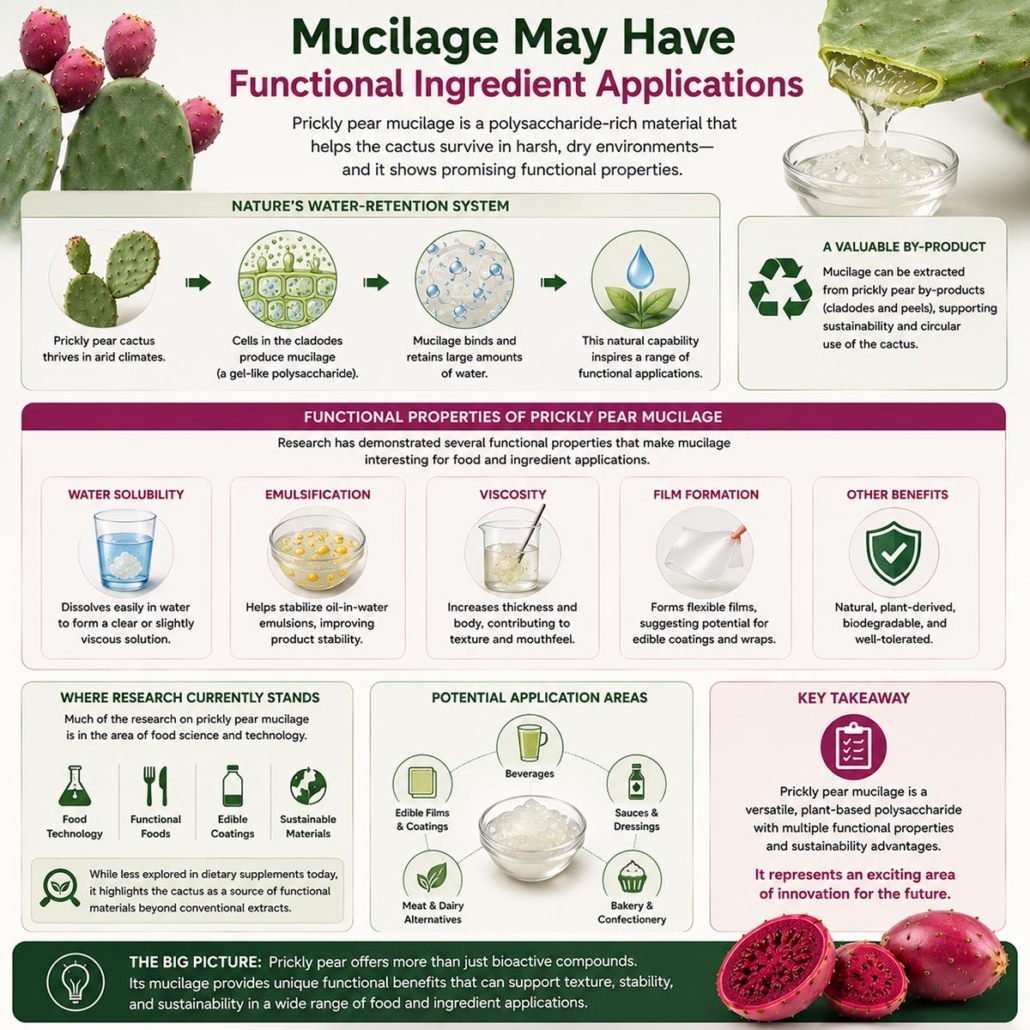
INFOGRAPHIC: Mucilage May Have Functional Ingredients

Different Ingredient Forms Can Produce Different Physiological Effects

This principle extends across the entire prickly pear category.

A whole-fruit powder delivers a complex food matrix. A concentrated fruit extract may emphasize specific phytochemicals. A cladode powder can provide substantial fiber. Seed oil delivers a lipid fraction.

Each may interact with the body differently.

Therefore, the mechanism should follow the ingredient specification, not the ingredient name.

For supplement developers, this evidence-first approach provides a stronger foundation for formulation, claims development, supplier qualification, and product differentiation.

Key Takeaway: Prickly pear’s potential effects arise from several different mechanisms, including antioxidant activity from fruit phytochemicals and gastrointestinal effects associated with fiber-rich cladodes. The relevant mechanism depends on the plant part, preparation, dose, and composition of the ingredient being used.

What Does Human Research Say About Prickly Pear?

Human research on prickly pear is promising in several areas, but the evidence is not equally strong across outcomes or ingredient forms. Studies have used fruit, cladodes, extracts, and proprietary preparations, sometimes in very different populations.

For supplement brands, the most useful approach is to look beyond the phrase “clinically studied” and ask what was studied, how it was prepared, how much was used, and whether that material resembles the commercial ingredient under consideration.

Metabolic Health Research Highlights The Importance of Plant Part

Blood glucose is one of the most frequently discussed potential benefits of prickly pear. However, systematic reviews reveal a more complicated picture.

A 2019 systematic review examined 20 human intervention studies involving Opuntia fruit, cladodes, or other preparations. The researchers found that cladode consumption showed the more consistent potential for reducing post-meal blood glucose and insulin responses, although study methods and preparations varied considerably.

Prickly pear fruit did not consistently produce the same glucose or insulin effects.

This distinction makes biological sense. Cladodes provide a fiber- and mucilage-rich matrix that differs substantially from the phytochemical profile of prickly pear fruit.

For brands developing metabolic-health products, the research supports a more precise formulation strategy: identify the Opuntia ingredient used in the relevant research rather than assuming that any prickly pear extract provides the same effect.

Lipid Research Shows a Different Pattern

Research involving cholesterol and other lipid markers provides another example of plant-part specificity.

A 2020 systematic review evaluated 11 human intervention studies involving prickly pear fruit, cladodes, and related Opuntia products. The review found evidence suggesting that prickly pear fruit consumption may influence total and LDL cholesterol, while effects associated with cladodes were generally less consistent.

However, the evidence base remains relatively small, and study designs, doses, populations, and preparations differ.

These findings are therefore better interpreted as promising human evidence for further investigation than as proof that every prickly pear fruit extract produces a predictable lipid effect.

An Unusual Area of Human Research: Alcohol-Related Recovery

One of the better-known clinical studies involving prickly pear examined a very specific application: alcohol-related hangover symptoms.

In a randomized, double-blind, placebo-controlled crossover trial, 64 healthy adults received either an O. ficus-indica preparation or placebo five hours before alcohol consumption. Fifty-five participants completed both study arms.

Three of nine individual symptoms — nausea, dry mouth, and loss of appetite — were significantly lower with the Opuntia preparation. Researchers also found that the risk of a severe hangover was lower in the Opuntia condition. However, the difference in the study’s overall symptom index did not reach conventional statistical significance.

C-reactive protein, an inflammatory marker, was also lower following the Opuntia intervention than following placebo.

The findings are interesting because they provide human evidence of a measurable response to a specific Opuntia preparation. Still, this single study does not demonstrate that prickly pear broadly “prevents hangovers” or that all extracts have the same effect.

Antioxidant Research Is Biologically Plausible but Requires Careful Interpretation

Prickly pear fruit contains betalains and phenolic compounds with well-documented antioxidant activity in chemical, cellular, and preclinical research.

That provides a strong mechanistic basis for continued research into oxidative stress and related physiological processes.

However, the phrase “antioxidant-rich” should not become a shortcut for unproven clinical outcomes.

A compound can neutralize radicals in an experimental assay without necessarily producing a clinically meaningful effect after digestion, absorption, metabolism, and distribution in the human body. Bioavailability, dose, food matrix, individual metabolism, and ingredient preparation all matter.

For supplement brands, the most defensible approach is to separate three evidence levels:

  • Composition: What compounds does the ingredient contain?
  • Mechanism: What have those compounds demonstrated experimentally?
  • Clinical evidence: What outcomes have been demonstrated in people using a relevant preparation?

Keeping those levels distinct makes the science more credible and helps reduce the risk of overextending research.

What Can Supplement Brands Conclude From the Evidence?

The current evidence does not support treating prickly pear as one clinically interchangeable ingredient.

Instead, human research suggests several areas worthy of continued investigation, particularly metabolic markers and responses associated with specific Opuntia preparations.

For product developers, that creates a clear evidence standard: match the intended positioning to research involving the closest possible botanical species, plant part, extract, dose, and population.

Key Takeaway: Human studies provide promising evidence for selected prickly pear preparations, but results differ by plant part and product type. Brands should avoid transferring findings from cladodes, whole fruit, seed oil, or a proprietary extract to a materially different ingredient.

How Is Prickly Pear Used in Supplement Formulations?

Prickly pear can fit into several supplement categories because different ingredient forms provide different combinations of phytochemicals, fiber, color, flavor, and consumer appeal.

The strongest product concepts start with the intended benefit and delivery format, then select the prickly pear ingredient that fits that objective.

Hydration & Electrolyte Powders

Prickly pear is particularly well suited to the sensory language of hydration.

Its mild fruit profile can complement watermelon, citrus, mango, berry, and tropical flavors. Red and purple fruit ingredients can also contribute appealing natural color, depending on the ingredient concentration and finished-product matrix.

Potential complementary ingredients include:

  • Sodium, potassium, and magnesium
  • Coconut water powder
  • Vitamin C
  • Watermelon
  • Hibiscus
  • Acerola
  • Taurine
  • Amino acids

Importantly, brands should distinguish between using prickly pear as part of a hydration flavor system and claiming that prickly pear itself has clinically demonstrated hydration effects. Those are different propositions.

Antioxidant & Healthy Aging Formulations

Betalains and phenolic compounds create a logical role for fruit-derived prickly pear ingredients in antioxidant-focused products.

Potential combinations include vitamin C, polyphenol-rich botanical extracts, carotenoids, astaxanthin, or other ingredients positioned around cellular wellness and healthy aging.

Here again, ingredient selection matters. A standardized or chemically characterized fruit extract may provide a clearer phytochemical story than an unspecified cactus powder.

Metabolic Wellness Products

Metabolic health may be one of prickly pear’s most interesting research areas, but it also requires some of the greatest formulation precision.

Much of the glucose-related human research involves cladodes or specific Opuntia preparations, not generic fruit extract. Therefore, a brand interested in post-meal metabolic positioning should select an ingredient supported by research relevant to that objective.

Prickly pear may be paired with other evidence-based metabolic ingredients depending on the formulation strategy, serving size, regulatory framework, and intended claims.

Digestive & Fiber-Focused Products

Cladode powders and other fiber-containing Opuntia ingredients can fit naturally into digestive-health formulations.

The fiber and mucilage found in cladodes distinguish these materials from concentrated fruit extracts.

This makes ingredient form especially important when developing powders intended to provide meaningful amounts of dietary fiber.

Serving size can also become a practical constraint.

Delivering substantial fiber generally requires more ingredient mass than delivering a concentrated phytochemical extract.

Beauty-From-Within Formulations

Prickly pear’s colorful fruit, antioxidant compounds, and strong association with prickly pear seed oil in the beauty market create an intuitive bridge to beauty-from-within concepts.

Fruit-derived ingredients could complement:

  • Collagen peptides
  • Vitamin C
  • Hyaluronic acid
  • Ceramides
  • Astaxanthin
  • Biotin and other micronutrients

However, oral fruit extract and topical prickly pear seed oil should not be treated as scientifically equivalent simply because both come from the same plant.

Active Lifestyle and Recovery Concepts

Prickly pear may also fit active-lifestyle formulations that emphasize antioxidants, plant-derived ingredients, or post-exercise wellness.

Some research has investigated Opuntia preparations in exercise and metabolic contexts. Still, the evidence is not broad enough to treat generic prickly pear as an established sports-performance ingredient.

For many products, its greatest immediate value may be as a supporting botanical that contributes phytochemicals, flavor, color, and differentiation alongside ingredients with more established performance evidence.

Flavor Can Be Part of the Product Strategy

Prickly pear also has value beyond its bioactive compounds.

The fruit has been described as mild and sweet, with flavor characteristics that can evoke melon and other refreshing fruits. Historical flavor-trend data have shown prickly pear appearing particularly often in beverage applications.

Potential pairings include:

  • Watermelon
  • Strawberry
  • Raspberry
  • Citrus
  • Orange
  • Mango
  • Passion fruit
  • Pineapple
  • Coconut

This makes prickly pear especially interesting for hydration powders, stick packs, gummies, and other formats where flavor is central to repeat purchase.

Key Takeaway: Prickly pear can support hydration, antioxidant, metabolic, digestive, beauty, and active-lifestyle concepts, but the best ingredient form depends on the product objective. Flavor and natural color can also contribute meaningful consumer-facing differentiation.

What Should Brands Consider When Formulating With Prickly Pear?

Prickly pear can be an attractive ingredient, but successful commercialization requires more than selecting a botanical name from a supplier catalog.

Brands should define the desired function first, then evaluate the plant part, extract specifications, sensory properties, stability, serving size, and finished-product format.

Choose the Ingredient Form Based on the Product Objective

  • Fruit powder: Useful when a broader whole-food story, fruit profile, or higher inclusion level fits the product.
  • Juice powder: Particularly relevant to drink mixes where flavor and color contribute to the sensory experience.
  • Fruit extract: Can provide more concentrated phytochemicals and lower inclusion levels, depending on the extract.
  • Cladode powder or extract: Better aligned with research and product concepts involving the cactus pad, fiber, mucilage, or specific metabolic applications.
  • Seed oil: A lipid-based ingredient with a very different composition and application profile.

The ingredient name should never substitute for the specification.

Protect Betalains During Processing & Storage

Betalains can provide attractive red, purple, orange, and yellow color, but their stability depends on the formulation environment.

Formulators should consider:

  • Processing temperature
  • pH
  • Light exposure
  • Oxygen exposure
  • Water activity and humidity
  • Ingredient interactions
  • Carrier system
  • Packaging
  • Expected shelf life

Scientific literature has explored encapsulation, copigmentation, and complex formation as strategies for improving betalain stability.

Recent prickly pear-specific spray-drying research also provides encouraging evidence. In a 2026 study, more than 90% of betacyanins and betaxanthins were retained across the carrier systems evaluated after spray drying.

That does not eliminate the need for stability testing. Instead, it shows that appropriate processing can preserve a substantial portion of the pigments.

Control Moisture in Powdered Products

Prickly pear powders can present moisture-management challenges.

Fruit sugars and other constituents can contribute to stickiness and caking. In the 2026 spray-drying study, storage humidity influenced physical powder stability, and visible caking developed under higher-humidity conditions.

For powdered supplements, practical controls may include:

  • Appropriate carrier selection
  • Moisture-barrier packaging
  • Controlled manufacturing humidity
  • Suitable desiccation strategies where appropriate
  • Accelerated and real-time stability testing

These considerations become particularly important for stick packs, tubs, and other products expected to remain free flowing throughout shelf life.

Consider Color as Both an Advantage and a Variable

A vivid natural color can help prickly pear stand out in drink mixes and gummies.

However, natural pigment systems rarely behave exactly like synthetic colors. The shade can vary with cultivar, raw material, pH, concentration, processing, and storage.

Brands should therefore evaluate the actual commercial ingredient in the intended finished matrix rather than assuming the raw powder’s color will translate directly into the final product.

Evaluate Flavor Early

Prickly pear’s relatively mild fruit character gives formulators considerable flexibility.

It can work particularly well with citrus, berry, watermelon, mango, passion fruit, pineapple, and other tropical systems. However, concentrated extracts can introduce botanical, bitter, or astringent notes that are not obvious from the fresh fruit.

Bench-top flavor work should therefore begin early enough to account for the actual extract and use level, rather than developing the flavor system around prickly pear in the abstract.

Account for Serving Size & Delivery Format

Ingredient form can dramatically change the required inclusion level.

A concentrated extract may fit easily into a capsule or gummy. A whole-fruit or fiber-rich material may require substantially more space, making powders or stick packs more practical.

Before committing to a formulation, brands should evaluate:

  • Target dose
  • Bulk density
  • Capsule capacity
  • Gummy active load
  • Powder scoop or stick-pack weight
  • Sensory impact
  • Cost per serving
  • Label declaration
  • Finished-product stability

These practical considerations can determine whether an attractive concept becomes commercially viable.

Key Takeaway: Successful prickly pear formulation depends on matching the ingredient form to the product objective, then managing pigment stability, moisture, flavor, serving size, supplier documentation, and finished-product performance.

What Market Trends Are Creating Opportunities for Prickly Pear?

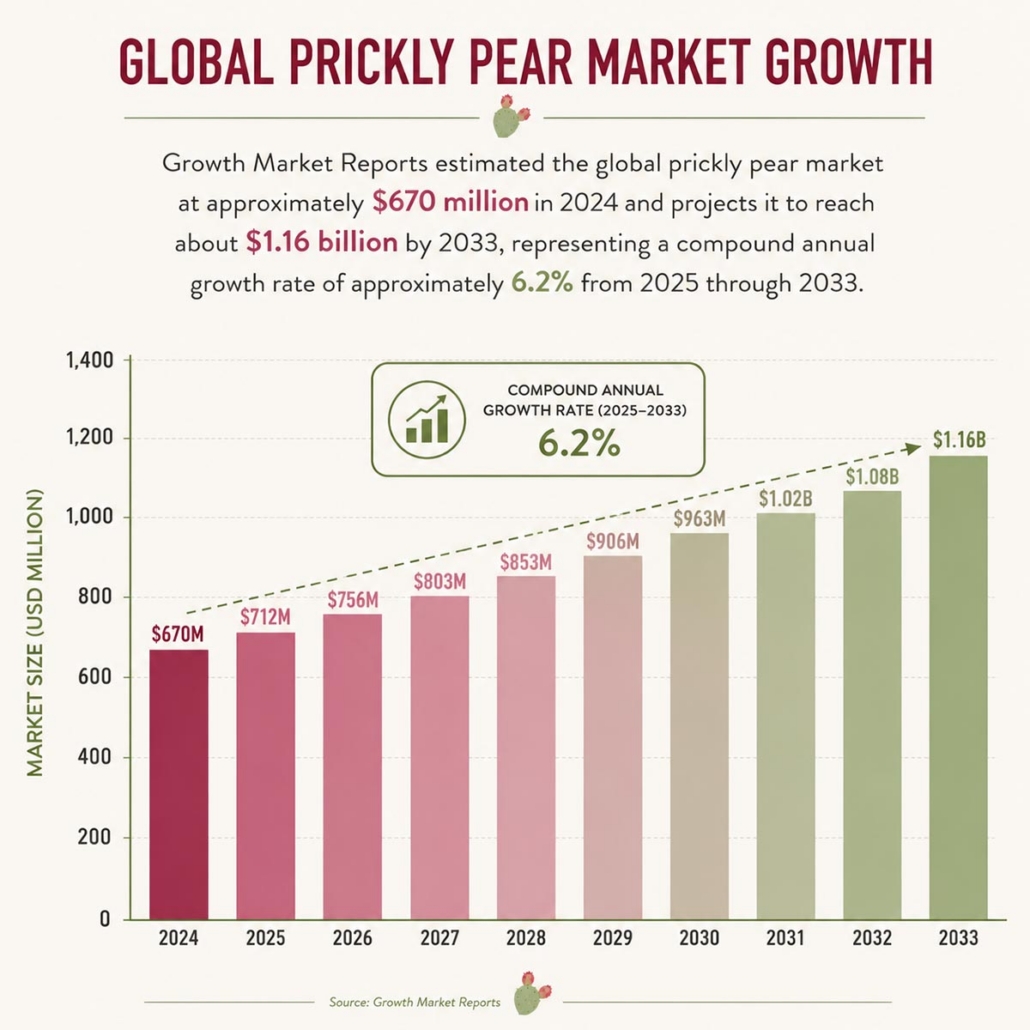
CHART: Prickly Pear Market Growth

Prickly pear remains a relatively specialized supplement ingredient, so market forecasts should be interpreted carefully. The broader commercial opportunity includes fresh fruit, beverages, food ingredients, cosmetics, seed oil, and extracts — not supplements alone.

Still, several trends suggest a favorable environment for prickly pear innovation.

The Broader Prickly Pear Market Is Expanding

Growth Market Reports estimated the global prickly pear market at approximately $670 million in 2024 and projects it to reach about $1.16 billion by 2033, representing a compound annual growth rate of approximately 6.2% from 2025 through 2033.

Importantly, that forecast covers the broader prickly pear market, including fruit, juice, oil, extracts, and other applications. It should not be interpreted as the size of the prickly pear supplement market.

For supplement brands, the more meaningful signal is that commercial interest extends across multiple industries and ingredient forms.

Flavor Familiarity Can Lower the Barrier to Innovation

Prickly pear also benefits from an advantage that many emerging botanical extracts lack: it already has an established flavor identity.

McCormick/FONA reported that global prickly pear-flavored product introductions increased 60% in its 2021 analysis, while prickly pear menu appearances increased 67% from Q2 2020 to Q2 2021. Beverages accounted for the large majority of menu applications tracked at the time.

Those figures are historical and should not be treated as current 2026 growth rates. However, they demonstrate that prickly pear had already established a presence in beverage innovation before its more recent nutraceutical interest.

That familiarity could benefit powders, hydration mixes, gummies, and other supplement formats where an appealing flavor story helps consumers understand the product.

Hydration Creates a Natural Product-Development Platform

The continued convergence of supplements and functional beverages creates another opportunity.

Consumers increasingly encounter electrolytes, vitamins, amino acids, botanicals, and other functional ingredients in flavored powder systems rather than traditional pills alone. Prickly pear’s desert origin, fruit flavor, and visual identity fit naturally within that format.

The formulation opportunity is especially strong when the brand clearly separates the sensory story from the scientific benefit story.

A prickly pear-flavored hydration product can be compelling without implying that prickly pear itself is responsible for every hydration claim on the label.

Climate-Adapted Botanicals Create a Stronger Sourcing Narrative

Prickly pear also aligns with growing interest in agricultural resilience.

Its CAM physiology allows the cactus to use water efficiently and remain productive in dry environments. Recent research continues to explore Opuntia as a crop for arid and semi-arid agriculture and as a potential source of higher-value products.

For brands, this creates an opportunity to discuss drought adaptation, dryland agriculture, and ingredient utilization using specific, supportable language rather than broad environmental claims.

Greater Utilization Could Create New Ingredient Streams

Research into peel, mucilage, seeds, pigments, and other prickly pear fractions points toward another emerging trend: valorization of agricultural by-products.

Instead of treating peel and seeds solely as waste, researchers are exploring ways to recover phenolic compounds, pigments, polysaccharides, and oils.

Some of these technologies remain at the research stage. However, they illustrate how prickly pear could eventually support a broader portfolio of ingredients from the same agricultural crop.

Prickly Pear Sits at the Intersection of Several Consumer Trends

The ingredient’s commercial potential does not depend on a single wellness category.

Prickly pear can intersect with:

That combination gives brands multiple ways to differentiate a product while still grounding the formulation in a recognizable botanical.

The strategic opportunity is not simply to add prickly pear because it is novel. It is to identify which aspect of prickly pear genuinely strengthens the product concept — science, flavor, color, ingredient story, or a combination of those attributes.

Key Takeaway: Prickly pear sits at the intersection of botanical wellness, functional beverages, distinctive flavor, natural color, and climate-adapted agriculture. Brands that match those attributes with the right ingredient form and evidence base have the strongest opportunity to create differentiated products.

Why Is Prickly Pear Interesting for Supplement Brands?

Prickly pear is not compelling because of one breakthrough benefit. Its value comes from the way several attributes converge in a single botanical: distinctive phytochemicals, recognizable flavor, natural color, formulation versatility, and a strong agricultural story.

For brands, that creates several paths to differentiation.

It Can Support More Than One Product Story

Many botanical ingredients are closely associated with a single benefit. Prickly pear is broader.

Depending on the plant part and ingredient form, it can fit products positioned around:

  • Antioxidant and cellular wellness
  • Digestive health
  • Metabolic wellness
  • Hydration and functional beverages
  • Healthy aging
  • Beauty-from-within
  • Active lifestyle support
  • Plant-based wellness

That flexibility can be valuable when developing multifunctional products. However, brands should resist using every possible benefit at once. The strongest products usually choose a clear primary purpose and use prickly pear only where its ingredient form and supporting evidence genuinely fit.

Flavor, Color & Function Can Work Together

Prickly pear is unusual because its sensory attributes can become part of the product strategy.

Fruit-derived ingredients may contribute a pink, red, orange, or purple hue depending on cultivar, concentration, processing, and finished-product conditions. Meanwhile, the flavor has an approachable fruit profile that pairs well with citrus, watermelon, berry, mango, and tropical systems.

That combination can be especially useful in powders and gummies, where appearance and taste strongly influence consumer experience.

A hydration stick pack, for example, could use prickly pear as part of the flavor and color identity while electrolytes provide the primary hydration function. A different product might use a characterized fruit extract primarily for its phytochemical profile.

In both cases, the botanical serves a purpose. The purpose is simply different.

The Sourcing Story Is Easy for Consumers to Understand

Prickly pear also has an agricultural story that can be communicated without extensive consumer education.

The cactus is visibly adapted to dry environments. Its CAM physiology helps it conserve water, while its long history of cultivation in Mexico and other dryland regions provides cultural and agricultural context.

For brands, this creates an opportunity to discuss:

  • Desert-adapted agriculture
  • Water-efficient plant physiology
  • Geographic sourcing
  • Traditional food use
  • Greater utilization of fruit, peel, cladodes, and seeds

These points are stronger when they remain specific. Claims such as “drought adapted” or “suited to dryland agriculture” are more defensible than broad statements declaring prickly pear inherently sustainable.

Botanical Specificity Can Become a Differentiator

The variability within the Opuntia category may initially look like a formulation challenge. It can also become an advantage.

A brand that clearly identifies the species, plant part, extract type, and standardized compounds can create a more credible ingredient story than a product that simply lists “prickly pear powder.”

That additional specificity supports:

  • Stronger technical positioning
  • Better alignment with published research
  • Greater supply-chain transparency
  • More defensible product education
  • Clearer differentiation from generic botanical formulas

For sophisticated consumers and retail buyers, those details increasingly matter.

Novelty Should Support the Concept, Not Replace It

Prickly pear is visually distinctive and still relatively uncommon in mainstream supplements. That gives it novelty.

However, novelty alone rarely creates a durable product.

The strongest opportunity is to combine the botanical’s consumer appeal with a clearly defined product benefit, appropriate ingredient selection, and supporting evidence.

In other words, prickly pear should strengthen the formula rather than become the entire reason the formula exists.

Key Takeaway: Prickly pear offers brands several forms of differentiation at once—science, flavor, color, agricultural identity, and formulation flexibility. The strongest concepts choose the attributes that genuinely support the product rather than trying to use every possible story.

What Emerging Research Could Expand Prickly Pear Applications?

Most current prickly pear products rely on familiar ingredient forms such as fruit powder, juice powder, extracts, cladodes, and seed oil. However, research is beginning to explore new ways to recover and use components from the cactus.

Some of these technologies remain early-stage, but they point toward a broader future for Opuntia-derived ingredients.

Researchers Are Exploring Greater Use of the Peel

Prickly pear processing generates peel and other by-products that contain potentially useful compounds.

Researchers have identified dietary fiber, mucilage, phenolic compounds, betalains, carotenoids, and other constituents in prickly pear peel. Newer studies are investigating methods to recover these materials more efficiently.

Potential approaches include:

  • Ultrasound-assisted extraction
  • Alternative solvent systems
  • Pressurized extraction
  • Pulsed electric fields
  • Encapsulation technologies

These methods could eventually help manufacturers create higher-value ingredients from plant material that might otherwise have limited commercial use.

Mucilage May Have Functional Ingredient Applications

Prickly pear mucilage is a polysaccharide-rich material that contributes to the cactus’s exceptional ability to retain water.

Research on mucilage extracted from prickly pear by-products has demonstrated functional properties such as water solubility, emulsification, viscosity, and film formation.

Much of this research currently sits closer to food technology than mainstream dietary supplements. Still, it illustrates how the cactus may provide functional materials in addition to conventional extracts.

Plant-Derived Nanovesicles Represent an Early Research Frontier

Another particularly interesting area involves nanoscale vesicles naturally present in plant tissues.

Recent researchers have isolated extracellular vesicle-like structures from O. ficus-indica fruit juice and evaluated them in cellular models. Experimental findings have included antioxidant and anti-inflammatory activity as well as effects associated with epithelial wound processes.

This research is preclinical. It does not establish a consumer health benefit, and commercial supplement applications remain speculative.

However, it demonstrates that the prickly pear research story is continuing to evolve beyond traditional fruit extracts and powders.

INFOGRAPHIC: Plant-Derived Nanovesicles

Seed Oil Research Continues to Develop Separately

Prickly pear seeds also remain an area of research interest.

The oil is typically rich in unsaturated fatty acids, particularly linoleic acid, along with other lipid-soluble constituents. Much of its commercial recognition currently comes from beauty and cosmetic applications.

Research involving seed oil should remain separate from evidence on fruit extracts or cladodes. Nevertheless, greater characterization of the oil could create future opportunities in specialized oral or beauty-from-within formulations if human evidence develops.

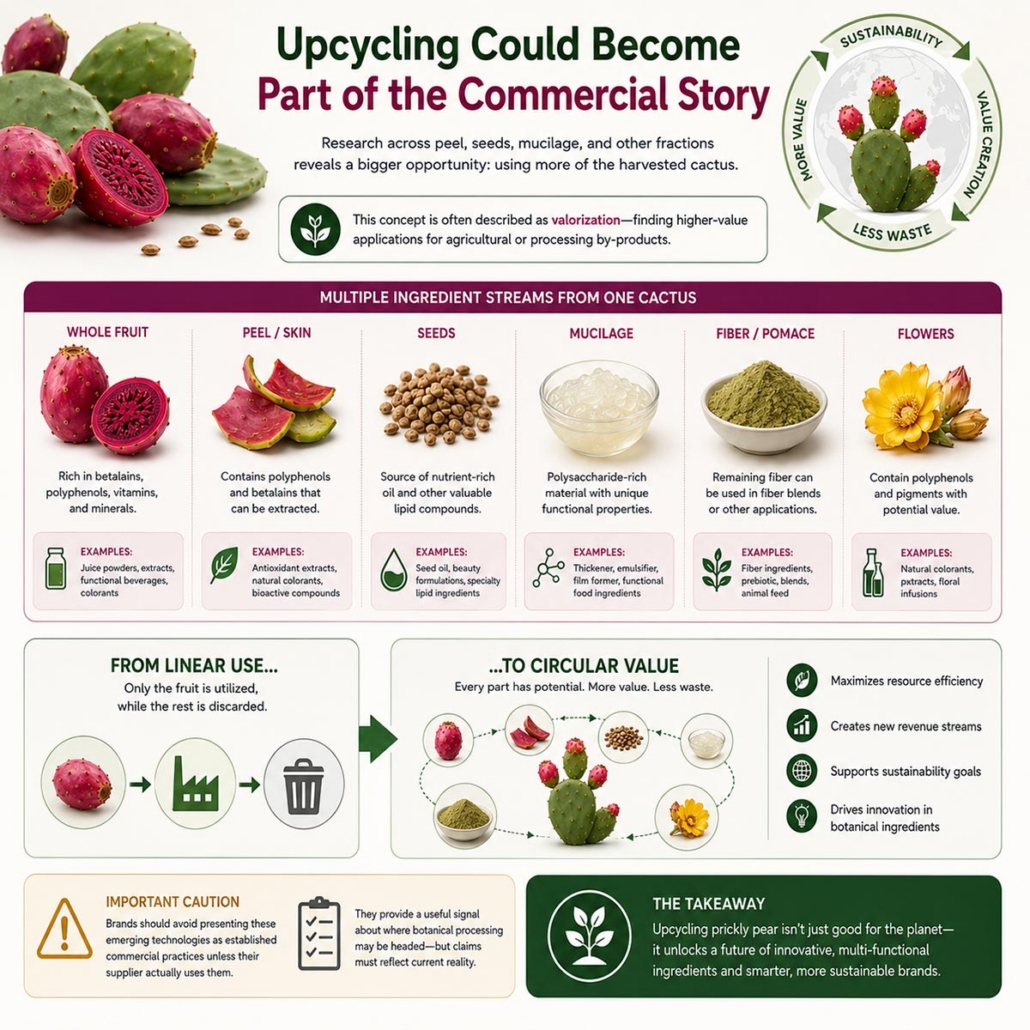
INFOGRAPHIC: Upcycling Could Become Part of The Commercial Story

Upcycling Could Become Part of the Commercial Story

Taken together, research involving peel, seeds, mucilage, and other fractions suggests a broader opportunity: using more of the harvested cactus.

This concept is often described as valorization — finding higher-value applications for agricultural or processing by-products.

For prickly pear, that could mean moving beyond a single fruit ingredient toward multiple complementary ingredient streams.

Brands should avoid presenting these emerging technologies as established commercial practices unless their supplier actually uses them. However, they provide a useful signal about where botanical processing may be headed.

Key Takeaway: Research is expanding beyond conventional prickly pear fruit extracts into peel phenolics, mucilage, seed oil, advanced extraction, and plant-derived nanovesicles. Most of these applications remain emerging, but they could broaden the commercial value of the cactus over time.

Turning Prickly Pear Into a Commercially Viable Supplement

Prickly pear offers a compelling combination of botanical science, formulation flexibility, distinctive flavor, natural color, and agricultural resilience. However, its potential depends on choosing the right ingredient for the intended product.

Start With the Product Objective

The most effective development process begins with a clear question: What role should prickly pear play in the finished formula?

A brand may want prickly pear primarily for:

  • Its betalains and other fruit phytochemicals
  • A fiber-rich cladode ingredient
  • Flavor and natural color
  • A hydration or functional beverage concept
  • A beauty-from-within story
  • A metabolic-health formulation supported by relevant research
  • A broader botanical or climate-adapted sourcing story

Once that objective is defined, the species, plant part, ingredient form, specification, dosage, and delivery format can follow.

Match the Science to the Ingredient

Prickly pear research makes one principle especially clear: evidence should follow the specific ingredient, not the botanical name alone.

Fruit, cladodes, seed oil, whole-food preparations, and concentrated extracts can differ substantially. Therefore, brands should evaluate whether the commercial ingredient closely matches the material used in supporting research before building product education or claims around those findings.

That extra diligence can strengthen both scientific credibility and long-term product positioning.

Build Formulation & Stability Into the Concept Early

Prickly pear can work in powders, stick packs, capsules, gummies, and other supplement formats, but each format creates different technical requirements.

Color stability, moisture, flavor, serving size, carrier materials, and ingredient interactions should be considered during development — not after the formula has already been finalized.

Early formulation work can help determine whether prickly pear is best used as a primary functional botanical, a supporting ingredient, or part of the sensory identity of the product.

Partner With an Experienced Supplement Manufacturer

Working with an experienced manufacturing partner can help brands evaluate ingredient specifications, dosage feasibility, flavor systems, stability, delivery format, packaging, quality requirements, and scale-up before committing to commercialization.

At Intermountain Nutrition, our product development and manufacturing teams work with supplement brands to translate ingredient concepts into scalable finished products. We support formulation development, flavor optimization, pilot work, manufacturing, packaging, quality, and regulatory considerations across powders, stick packs, capsules, and gummies.

Exploring prickly pear or another emerging botanical for your next supplement? Contact Intermountain Nutrition to discuss your formulation goals and determine the best path from ingredient selection to commercial production.

Frequently Asked Questions

Prickly pear extract is a concentrated botanical ingredient made from a part of an Opuntia cactus, commonly Opuntia ficus-indica. Commercial ingredients may come from the fruit, cladodes, peel, or other plant tissues, so their composition can differ significantly.

The species, plant part, extraction process, and standardization should be identified before evaluating an extract.

The terms overlap, but they are not always used the same way.

Nopal commonly refers to the edible cactus pads, or cladodes, of Opuntia species. Prickly pear may refer to the plant broadly or specifically to its fruit.

This distinction matters because fruit and cladodes have different compositions and different research profiles.

Several parts can be used, including fruit pulp, juice, peel, cladodes, and seeds.

Commercial supplement ingredients include whole-fruit powders, juice powders, concentrated fruit extracts, cladode powders or extracts, and prickly pear seed oil. These forms should not be considered interchangeable.

Prickly pear fruit can contain betalains, phenolic compounds, flavonoids, carotenoids, vitamin C, minerals, and other phytochemicals.

The exact profile varies with species, cultivar, fruit color, maturity, growing environment, and processing.

Yes. Many prickly pear fruits contain betalain pigments.

Betacyanins generally contribute red-to-purple colors, while betaxanthins contribute yellow-to-orange colors. Betanin and indicaxanthin are among the betalains associated with Opuntia fruit.

The answer depends on the ingredient.

Fruit-derived ingredients are commonly studied for their phytochemicals and antioxidant activity. Cladodes contain substantial fiber and mucilage and have been examined in human metabolic research. Other preparations have been studied for different outcomes.

There is not enough evidence to assume that every prickly pear extract produces the same physiological effects.

Some human studies involving cladodes or specific Opuntia preparations have reported effects on post-meal glucose or insulin responses.

However, systematic reviews show that prickly pear fruit has not consistently demonstrated the same effects. Brands should therefore match metabolic positioning to the specific ingredient and human evidence rather than applying cladode findings to generic fruit extract.

Human research has examined prickly pear fruit and other Opuntia preparations in relation to blood lipid markers. Some studies have reported reductions in total or LDL cholesterol, particularly with fruit consumption.

However, the research base remains limited and heterogeneous. These findings should not be interpreted to mean that every commercial prickly pear extract has been clinically demonstrated to lower cholesterol.

Many fruit-derived components, including betalains, are water soluble. However, the behavior of a commercial powder depends on its extraction method, carriers, particle characteristics, and other processing factors.

Formulators should evaluate the supplier’s actual material for solubility or dispersibility in the intended finished matrix.

Yes, prickly pear ingredients can potentially be incorporated into gummies.

However, heat, moisture, pH, active load, and storage conditions may affect color and pigment stability. Pilot production and finished-product stability testing are important when betalains contribute to the desired appearance.

Yes. Prickly pear fruit ingredients can work particularly well in flavored powders and stick packs because of their mild fruit profile and potential natural color.

Electrolytes or other established hydration ingredients should provide the primary functional hydration system unless the specific prickly pear preparation has relevant supporting evidence.

Prickly pear pairs naturally with several fruit profiles, including:

  • Watermelon
  • Citrus
  • Orange
  • Strawberry
  • Raspberry
  • Mango
  • Passion fruit
  • Pineapple
  • Coconut

The ideal flavor system depends on the commercial extract, use level, sweetener system, and finished-product format.

Brands should identify the botanical species, plant part, country of origin, extraction process, standardized compounds where applicable, carrier materials, physical properties, contaminant specifications, and stability information.

Most importantly, the commercial ingredient should align as closely as practical with the material used in research supporting the intended product positioning.

Prickly pear is well adapted to arid and semi-arid agriculture because its CAM physiology helps reduce water loss.

However, sustainability depends on the entire supply chain. Cultivation methods, irrigation, processing, energy use, transportation, packaging, and land management all influence environmental impact.

It is more accurate to describe prickly pear as drought adapted and well suited to dryland agriculture than to make an absolute sustainability claim.

References

Al-Naqeb, G., Fiori, L., Ciolli, M., & Aprea, E. (2021). Prickly pear seed oil extraction, chemical characterization and potential health benefits. Molecules, 26(16), 5018.

Blue Book Services. (n.d.). Prickly pear: Know your commodity.

Butera, D., Tesoriere, L., Di Gaudio, F., Bongiorno, A., Allegra, M., Pintaudi, A. M., Kohen, R., & Livrea, M. A. (2002). Antioxidant activities of Sicilian prickly pear (Opuntia ficus indica) fruit extracts and reducing properties of its betalains: Betanin and indicaxanthin. Journal of Agricultural and Food Chemistry, 50(23), 6895–6901

Chaloulos, P., Mourouti, A., & Mandala, I. (2026). Spray drying of prickly pear (Opuntia ficus-indica [L.] Mill) juice: Effects of different carriers on yield and powder properties. Journal of Food Science, 91(7), e71221.

Coronado-Contreras, A., Ruelas-Chacón, X., Reyes-Acosta, Y. K., Dávila-Medina, M. D., Ascacio-Valdés, J. A., & Sepúlveda, L. (2023). Valorization of prickly pear peel residues (Opuntia ficus-indica) using solid-state fermentation. Foods, 12(23), 4213.

du Toit, A., de Wit, M., & Hugo, A. (2018). Cultivar and harvest month influence the nutrient content of Opuntia spp. cactus pear cladode mucilage extracts. Molecules, 23(4), 916.

El-Mostafa, K., El Kharrassi, Y., Badreddine, A., Andreoletti, P., Vamecq, J., El Kebbaj, M. S., Latruffe, N., Lizard, G., Nasser, B., & Cherkaoui-Malki, M. (2014). Nopal cactus (Opuntia ficus-indica) as a source of bioactive compounds for nutrition, health and disease. Molecules, 19(9), 14879–14901.

Food and Agriculture Organization of the United Nations. (2001). Cactus (Opuntia spp.) as forage.

Giraldo-Silva, L., Ferreira, B., Rosa, E., & Dias, A. C. P. (2023). Opuntia ficus-indica fruit: A systematic review of its phytochemicals and pharmacological activities. Plants, 12(3), 543.

Gouws, C. A., Georgousopoulou, E. N., Mellor, D. D., McKune, A., & Naumovski, N. (2019). Effects of the consumption of prickly pear cacti (Opuntia spp.) and its products on blood glucose levels and insulin: A systematic review. Medicina, 55(5), 138.

Gouws, C., Mortazavi, R., Mellor, D., McKune, A., & Naumovski, N. (2020). The effects of prickly pear fruit and cladode (Opuntia spp.) consumption on blood lipids: A systematic review. Complementary Therapies in Medicine, 50, 102384.

Growth Market Reports. (n.d.). Prickly pear market: Global industry analysis, growth, share, size, trends and forecast.

Kashif, R. R., D’Cunha, N. M., Mellor, D. D., Alexopoulos, N. I., Sergi, D., & Naumovski, N. (2022). Prickly pear cacti (Opuntia spp.) cladodes as a functional ingredient for hyperglycemia management: A brief narrative review. Medicina, 58(2), 300.

Khan, M. I. (2016). Stabilization of betalains: A review. Food Chemistry, 197, 1280–1285.

Kuksal, K., Mehta, D., Rani, A., & Nile, S. H. (2026). Phytochemical profiling, bioaccessibility, antioxidant, anti-inflammatory, and cytotoxic activities of betalain-rich prickly pear extract for functional yogurt development. Food Bioscience, 80, 108863.

Matsuhiro, B., Lillo, L. E., Sáenz, C., Urzúa, C. C., & Zárate, O. (2006). Chemical characterization of the mucilage from fruits of Opuntia ficus indica. Carbohydrate Polymers, 63(2), 263–267.

McCormick & Company. (2021). Flavor insight: Prickly pear.

Moussa-Ayoub, T. E., Abd El-Hady, E.-S. A., Omran, H. T., El-Samahy, S. K., Kroh, L. W., & Rohn, S. (2014). Influence of cultivar and origin on the flavonol profile of fruits and cladodes from cactus Opuntia ficus-indica. Food Research International, 64, 864–872.

Naselli, F., Volpes, S., Cardinale, P. S., Palumbo, F. S., Cancilla, F., Lopresti, F., Villanova, V., Girgenti, A., Nuzzo, D., Caradonna, F., & Picone, P. (2024). New nanovesicles from prickly pear fruit juice: A resource with antioxidant, anti-inflammatory, and nutrigenomic properties. Cells, 13(21), 1756.

Texas A&M AgriLife. (2026, August 24). Research explores new markets for prickly pear cactus.

Wiese, J., McPherson, S., Odden, M. C., & Shlipak, M. G. (2004). Effect of Opuntia ficus indica on symptoms of the alcohol hangover. Archives of Internal Medicine, 164(12), 1334–1340.

Related Postings

Bacopa Monnieri For Supplements
Akkermansia Muciniphila For Metabolic Health Support Supplement on a shelf at the store
GRAS documentation on a countertop of a lab