Traditional Medicine Trends in Supplement Formulation
May 15, 2026 | Trends
Ancient systems philosophies are actively informing how today’s most competitive supplement brands formulate, position, and differentiate.

May 15, 2026 | Trends
Ancient systems philosophies are actively informing how today’s most competitive supplement brands formulate, position, and differentiate.
Today’s supplement market increasingly blends tradition with innovation. While clinical validation and ingredient standardization remain critical, many of the industry’s most successful formulations are rooted in centuries-old healing systems.
Consumers aren’t just buying ingredients. They’re buying systems of belief, heritage, and holistic health philosophies. As a result, brands that understand how traditional frameworks translate into modern formulation strategy are better positioned to lead in both efficacy and storytelling.
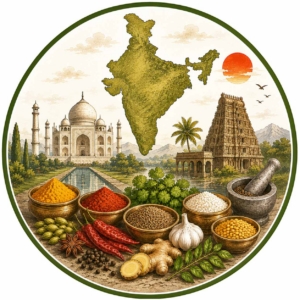
(India)
Ayurveda is one of the world’s oldest holistic healing systems, originating in India over 3,000 years ago. Rooted in the concept of balance between mind, body, and environment, Ayurveda classifies individuals into three primary constitutional types, or doshas: Vata, Pitta, and Kapha.
Each dosha reflects unique physiological and psychological tendencies, guiding personalized nutrition and lifestyle interventions. Traditionally, Ayurveda utilizes whole herbs, minerals, and dietary practices to restore balance and promote longevity.
Today, its influence is most visible in the widespread use of adaptogens like ashwagandha and holy basil, as well as in the growing emphasis on personalized supplementation strategies aligned with individual health needs.
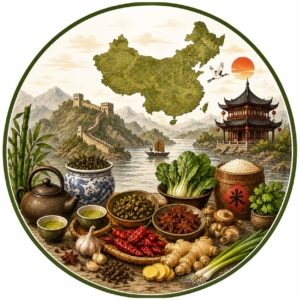
(China)
Traditional Chinese Medicine (TCM) dates back more than 2,000 years and is based on the foundational principles of Qi (vital energy), Yin-Yang balance, and the interconnectedness of organ systems.
TCM views health as a dynamic equilibrium and uses herbal formulas, acupuncture, and dietary therapy to maintain or restore this balance. Unlike reductionist approaches, TCM emphasizes complex herbal combinations designed to work synergistically across multiple physiological systems.
In modern supplement formulation, this philosophy has translated into multi-ingredient blends, particularly in categories like immune support, stress management, and cognitive health. Functional mushrooms such as reishi and cordyceps are among the most visible examples of TCM’s growing influence in global nutraceutical markets.
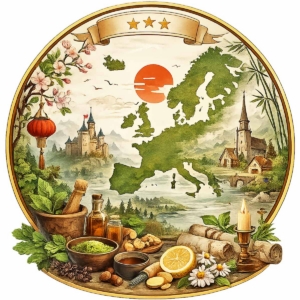
(European / Eclectic Medicine)
Traditional Western herbalism evolved across Europe and was later shaped by Eclectic medicine practices in 19th-century North America. This system focuses on the therapeutic properties of plants, often categorized by their affinity for specific organs or systems, such as the liver, digestive tract, or nervous system.
Western herbalism emphasizes both empirical observation and evolving scientific understanding, making it a natural bridge between traditional use and modern pharmacology.
Many of today’s most widely used botanical ingredients, such as milk thistle for liver support or echinacea for immune health, originate from this tradition. Its legacy is particularly evident in the standardization of botanical extracts and the development of targeted, condition-specific supplements.
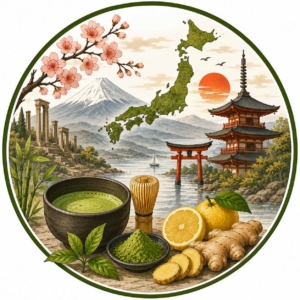
(Japan)
Kampo is a traditional Japanese system of medicine derived from ancient Chinese practices but refined over centuries into a highly standardized and regulated framework. Unlike broader TCM approaches, Kampo relies on fixed herbal formulas with precise ingredient ratios, many of which are now integrated into Japan’s modern healthcare system and prescribed by physicians.
These formulations are produced under strict quality controls and have been studied in clinical settings, offering a rare example of traditional herbal medicine operating within a pharmaceutical model.
For supplement brands, Kampo represents a blueprint for creating reproducible, evidence-backed botanical blends that maintain consistency across batches while delivering measurable outcomes.

(Amazon, Africa, and North America)
Indigenous and ethnobotanical healing systems encompass a diverse range of practices from regions including the Amazon, Africa, and North America. These traditions are deeply rooted in ecological knowledge, cultural rituals, and the use of native plants for healing and resilience.
Rather than isolating compounds, these systems often rely on whole-plant preparations and emphasize a relationship between humans and their environment. Many modern “emerging” ingredients—such as adaptogenic herbs, nootropic plants, and antioxidant-rich superfoods—originate from these traditions.
Today, they play a critical role in the discovery pipeline for novel bioactives, while also driving consumer interest in sustainability, ethical sourcing, and traceability within the supplement industry.
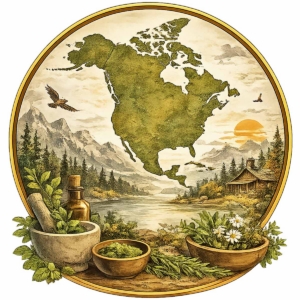
(Europe, North America)
Naturopathy is a modern integrative system of medicine that emerged in Europe in the 19th century and later gained traction in North America.
It combines elements of traditional healing systems, including herbal medicine, nutrition, and lifestyle therapy, with contemporary clinical practices. The core philosophy centers on supporting the body’s innate ability to heal and addressing root causes rather than symptoms.
In the supplement space, naturopathy has influenced the development of multi-ingredient formulations that combine botanicals, vitamins, and minerals to support specific health outcomes. It is particularly prominent in practitioner-grade supplements and functional wellness protocols designed for long-term health optimization.
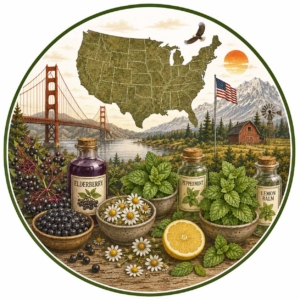
(United States)
Functional nutrition and orthomolecular medicine are modern approaches that build on traditional principles while incorporating advances in biochemistry and clinical research.
Popularized in the mid-20th century by scientists like Linus Pauling, orthomolecular medicine focuses on optimizing health through precise nutrient intake tailored to individual needs. Functional nutrition expands on this by considering genetic, metabolic, and lifestyle factors to create personalized interventions.
While not traditional in origin, these systems echo earlier concepts of individuality found in Ayurveda and TCM. Their influence is evident in today’s personalized supplement stacks, condition-specific formulations, and the growing use of diagnostic data to guide product development.
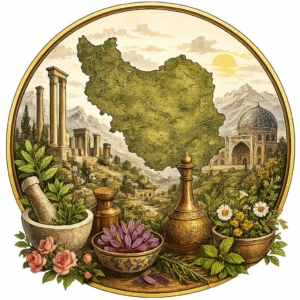
(Persia, Iran)
Traditional Persian Medicine (TPM) is an ancient system with roots in Greco-Arabic medicine, developed and refined in Persia (modern-day Iran) over thousands of years. It is based on the concept of “Mizaj,” or temperament, which categorizes individuals and substances according to qualities such as hot, cold, wet, and dry.
Health is achieved by maintaining balance among these qualities through diet, herbal remedies, and lifestyle practices. Historically influential in the development of early pharmacology, TPM contributed significantly to the documentation and classification of medicinal plants.
While less commonly referenced in modern supplement marketing, its frameworks provide valuable depth and historical context for understanding systemic balance and holistic formulation approaches.
Systems-Based Formulation
Instead of relying on single actives, traditional systems emphasize ingredient synergy, which now drives multi-ingredient blends.
Adaptogenic and Tonifying Approaches
Ayurveda and TCM prioritize resilience, which has accelerated demand for adaptogens and daily wellness formulas.
Personalization Frameworks
Concepts like doshas and constitutional types laid the foundation for personalized nutrition and targeted SKUs.
Holistic Health Positioning
These systems focus on root causes, aligning with consumer demand for long-term wellness solutions.
Modern formulators rarely follow a single traditional system in isolation. Instead, they adopt hybrid wellness routines that combine:
This convergence creates demand for multi-functional, system-inspired formulations that address stress, cognition, immunity, and metabolic health simultaneously.
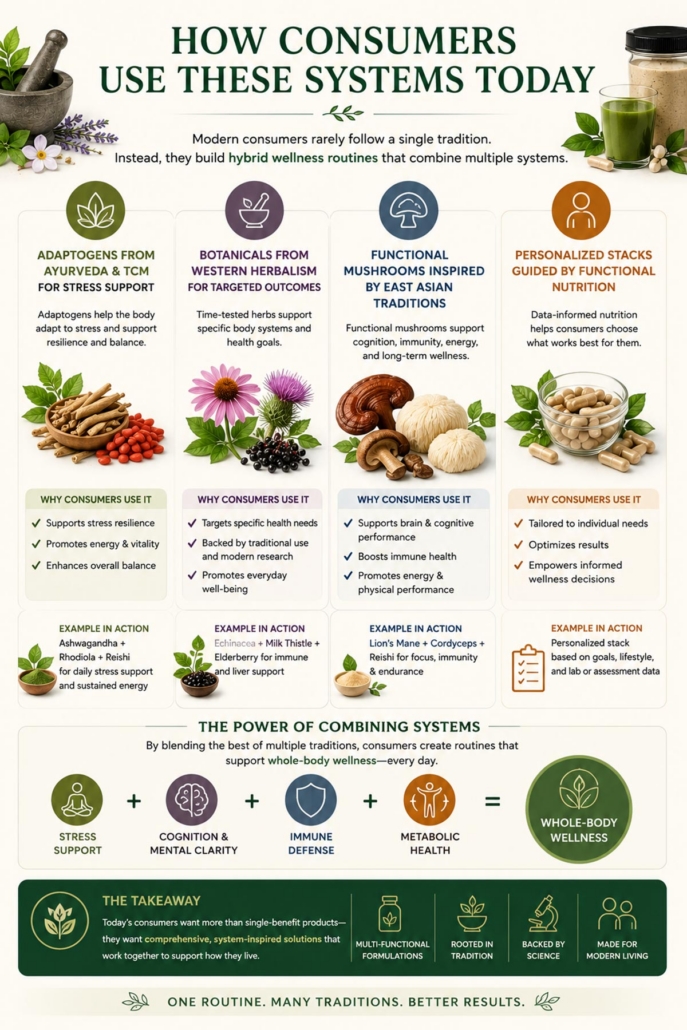
As traditional healing systems influence formulation strategy, they also shape flavor innovation and sensory storytelling. Many of today’s most compelling supplement products draw directly from regional flavor profiles tied to heritage systems, creating a more immersive and authentic consumer experience.
Rather than masking tradition, leading brands are leaning into it — translating cultural flavor cues into modern, approachable formats.
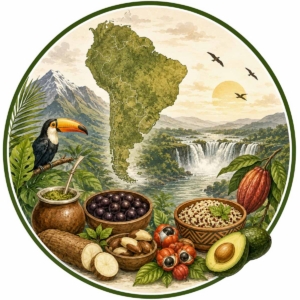
Bright, bold, and naturally energizing flavors are often tied to superfoods and adaptogens. Cacao, acai, guarana, and passionfruit bring both flavor and functional associations tied to energy, vitality, and performance, making them ideal for pre-workout and cognitive blends.
Earthy, slightly bitter, and subtly sweet flavor profiles are gaining traction, particularly in premium products. Ingredients like goji berry, jujube (red date), ginseng, and chrysanthemum are often paired with honey or light fruit notes to create a more refined sensory experience. These flavors align with longevity, vitality, and functional mushroom formulations.
Clean, subtle, and lightly herbal flavor profiles dominate. Matcha, yuzu, ginger, and lightly sweetened botanical notes are commonly used, reflecting a focus on precision, simplicity, and daily wellness rituals. These profiles perform especially well in premium powders and stick packs.
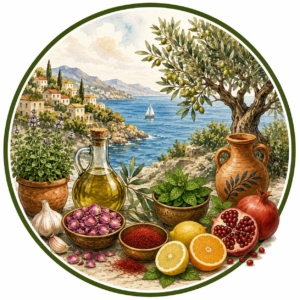
Floral, aromatic, and slightly sweet profiles are increasingly used for differentiation. Rose, saffron, mint, citrus, and pomegranate create a sophisticated sensory experience that supports positioning around calm, mood, and luxury wellness.
Familiar, comforting flavors remain foundational for mass appeal. Elderberry, chamomile, peppermint, and lemon balm are often paired with fruit-forward profiles like berry or citrus to balance familiarity with function, especially in immune and sleep products.
Warm, grounding spice profiles are increasingly used in powders and functional blends. Common flavors include turmeric, ginger, cardamom, cinnamon, and chai-inspired combinations. These profiles reinforce positioning around balance, digestion, and daily rituals, especially in wellness powders and evening formulations.
| System | Origin | Core Philosophy | Key Ingredients | Modern Formulation Influence | Strategic Brand Opportunity |
|---|---|---|---|---|---|
| Ayurveda | India (3,000+ years) | Balance of doshas (Vata, Pitta, Kapha); individualized health | Ashwagandha, turmeric, holy basil, triphala | Adaptogens, personalization frameworks, daily wellness formulas | Personalized product lines; stress & longevity positioning |
| Traditional Chinese Medicine (TCM) | China (2,000+ years) | Qi, Yin-Yang balance, organ system harmony | Ginseng, astragalus, reishi, cordyceps | Multi-ingredient synergistic blends; functional mushrooms | Systems-based formulations; premium cognitive & immune products |
| Western Herbalism | Europe / North America | Organ affinity; plant energetics; empirical use | Milk thistle, echinacea, valerian, elderberry | Standardized extracts; condition-specific supplements | Clinically positioned SKUs; targeted health claims |
| Kampo | Japan (derived from TCM) | Fixed, standardized herbal formulas | Ginger, licorice root, peony, ginseng blends | Precision dosing; reproducible, clinically studied blends | High-trust, evidence-backed botanical formulations |
| Indigenous / Ethnobotanical | Global (Amazon, Africa, North America) | Whole-plant use; ecological and cultural knowledge | Maca, cacao, baobab, medicinal plants | Novel ingredient discovery; sustainability-driven sourcing | Premium storytelling; innovation pipeline for new SKUs |
| Naturopathy | Europe / North America (19th century) | Support innate healing; treat root causes | Botanicals + vitamins/minerals (blended protocols) | Multi-functional formulations; practitioner-grade supplements | Practitioner channel growth; condition-specific bundles |
| Functional Nutrition / Orthomolecular | Modern (20th century) | Nutrient optimization; biochemical individuality | Vitamins, minerals, amino acids, targeted nutrients | Precision dosing; personalized nutrition; high-efficacy blends | Personalized supplement stacks; data-driven wellness |
| Traditional Persian Medicine (TPM) | Persia (ancient Iran) | Balance of temperament (hot/cold, wet/dry) | Saffron, rose, herbs used for systemic balance | Early pharmacognosy concepts; holistic balance frameworks | Differentiation through underutilized heritage systems |
The integration of traditional healing systems is not just conceptual. It’s driving measurable growth across the supplement industry.
The future of supplement formulation is not about choosing between tradition and science. It’s about integrating both into a cohesive, evidence-informed strategy.
Traditional systems provide the framework. They define how ingredients interact, how balance is achieved, and how long-term wellness is sustained. Meanwhile, modern science delivers the validation. It confirms efficacy, refines dosing, and ensures consistency, safety, and compliance.
When brands align these two forces, they move beyond commodity products and into high-value, differentiated formulations.
This integration is already reshaping the industry. Adaptogens now combine traditional use with clinical backing. Multi-ingredient blends inspired by TCM benefit from bioavailability research. Even personalization—once rooted in doshas—now evolves into data-driven nutrition.
However, the opportunity goes beyond formulation. Brands that bridge heritage and innovation strengthen their market positioning. They tell richer stories while reinforcing trust through science.
At Intermountain Nutrition, we help brands translate traditional systems into scalable, high-performance products that meet today’s regulatory and commercial demands.
The result is not just a better supplement. It’s a smarter one, built at the intersection of history, science, and innovation.
The future of supplement formulation is not about choosing between tradition and science—it is about integrating both.
Traditional systems provide structured frameworks for understanding health, balance, and ingredient synergy. While modern science validates efficacy through clinical studies, these systems offer valuable insights into multi-ingredient formulations and long-term wellness strategies.
As consumer demand shifts toward holistic health, these frameworks help brands create products that feel both credible and meaningful. Additionally, many ingredients used in traditional systems, such as ashwagandha or ginseng, now have growing bodies of scientific support, making them highly relevant for modern product development.
Yes, many traditional ingredients have been extensively studied in modern clinical and preclinical research. For example, adaptogens like ashwagandha and rhodiola have demonstrated effects on stress response and cortisol regulation, while functional mushrooms have been studied for immune and cognitive benefits.
However, not all traditional ingredients have the same level of evidence. Brands must evaluate ingredient quality, standardization, and available research to ensure claims are substantiated and compliant with regulatory guidelines.
Formulating with traditional ingredients presents several technical challenges, including variability in raw materials, strong taste profiles, and bioavailability limitations. Botanical extracts may differ in potency depending on sourcing and processing methods.
Additionally, many herbs have bitter or earthy flavors that require taste masking, particularly in powders or gummies. Ensuring consistent dosing, stability, and regulatory compliance also requires careful formulation strategy and quality control processes.
Brands can differentiate by combining traditional storytelling with modern science and premium formulation practices. This includes using clinically studied ingredients, transparent sourcing, and innovative delivery formats. Positioning products around holistic systems, such as stress resilience or metabolic balance, can also resonate strongly with consumers.
Additionally, incorporating emerging botanicals or lesser-known traditional systems can create unique market positioning and expand product portfolios.
The ideal format depends on the ingredient profile and target consumer. Capsules are often preferred for complex botanical blends due to ease of dosing and minimal taste concerns.
Powders and stick packs work well for daily wellness routines but require careful attention to solubility and flavor.
Gummies can improve compliance but may limit ingredient load and require additional formulation considerations. Ultimately, format selection should align with both functional goals and consumer experience.
Grand View Research. (2023). Herbal Supplements Market Size Report.
Fortune Business Insights. (2023). Adaptogens Market Size Report.
World Health Organization (WHO). (2025). Global Centre for Traditional Medicine.
World Health Organization. (2025). Global traditional medicine strategy 2025–2034.
World Health Organization. (n.d.). WHO Global Traditional Medicine Centre.
National Center for Complementary and Integrative Health. (n.d.). Herbs at a glance.
American Botanical Council. (n.d.). HerbMed.
National Center for Complementary and Integrative Health. (2025). Ayurvedic medicine: In depth.
National Center for Complementary and Integrative Health. (2024). What is Ayurveda?
National Center for Complementary and Integrative Health (NCCIH). Ayurvedic Medicine.
National Center for Complementary and Integrative Health. (n.d.). Traditional Chinese medicine: What you need to know.
Merck Manual Consumer Version. (n.d.). Traditional Chinese Medicine.
National Center for Complementary and Integrative Health. (n.d.). Herbs at a glance.
American Botanical Council. (n.d.). About the American Botanical Council.
Watanabe, K., Matsuura, K., Gao, P., et al. (2011). Traditional Japanese Kampo medicine: Clinical research between modernity and traditional medicine. Evidence-Based Complementary and Alternative Medicine.
Arai, I., & Kawahara, N. (2020). Kampo for the treatment of pain in Japan: A review. Pain and Therapy.
Britannica. (n.d.). Ethnobotany.
Caetano, C. M., et al. (2023). Modern drug discovery using ethnobotany: A large-scale cross-cultural analysis of traditional medicine. Proceedings of the National Academy of Sciences.
Banerjee, S. (2024). Introduction to ethnobotany and traditional medicine. Springer.
National Center for Complementary and Integrative Health. (2025). Naturopathy.
U.S. Government Publishing Office / NIH. (n.d.). Naturopathy: An introduction.
EBSCO. (n.d.). Orthomolecular medicine.
National Center for Complementary and Integrative Health. (n.d.). Know the science.
Ahmadi, M., Shirafkan, H., & Mozaffarpur, S. A. (2023). Assessment of the diagnostic methods of Mizaj in Persian Medicine: A systematic review. Diagnostics.
Ansari, A. P., Ahmed, N. Z., Wadud, A., & Arif, M. (2019). Concepts and quality considerations in Unani system of medicine. European PMC.
Data Bridge Market Research. (n.d.). Global medicinal mushroom market – Industry trends and forecast.
Grand View Research. (n.d.). Functional mushroom market size, share & trends analysis.
Market Research Future. (n.d.). Medicinal mushroom market research report: Global forecast.
SuperSmart. (n.d.). Medicinal mushrooms: The triumphant return of a thousand-year-old heritage.
 https://intermountainnutrition.com/wp-content/uploads/2026/10/creatine-for-healthy-aging-04.jpg
1200
1200
Larisa Graham
https://intermountainnutrition.com/wp-content/uploads/2026/01/IMN-gradient-logo-NEW.png
Larisa Graham2026-10-16 08:00:002026-10-15 08:32:40Creatine for Healthy Aging
https://intermountainnutrition.com/wp-content/uploads/2026/10/creatine-for-healthy-aging-04.jpg
1200
1200
Larisa Graham
https://intermountainnutrition.com/wp-content/uploads/2026/01/IMN-gradient-logo-NEW.png
Larisa Graham2026-10-16 08:00:002026-10-15 08:32:40Creatine for Healthy Aging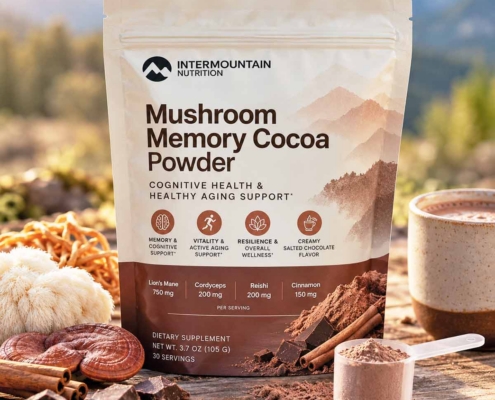 https://intermountainnutrition.com/wp-content/uploads/2026/10/mushroom-memory-powder-cocoa-23.jpg
1200
1200
Larisa Graham
https://intermountainnutrition.com/wp-content/uploads/2026/01/IMN-gradient-logo-NEW.png
Larisa Graham2026-10-15 09:00:002026-10-08 16:17:36STOCK FORMULA: Mushroom Memory Powder for Cognitive Health & Healthy Aging
https://intermountainnutrition.com/wp-content/uploads/2026/10/mushroom-memory-powder-cocoa-23.jpg
1200
1200
Larisa Graham
https://intermountainnutrition.com/wp-content/uploads/2026/01/IMN-gradient-logo-NEW.png
Larisa Graham2026-10-15 09:00:002026-10-08 16:17:36STOCK FORMULA: Mushroom Memory Powder for Cognitive Health & Healthy Aging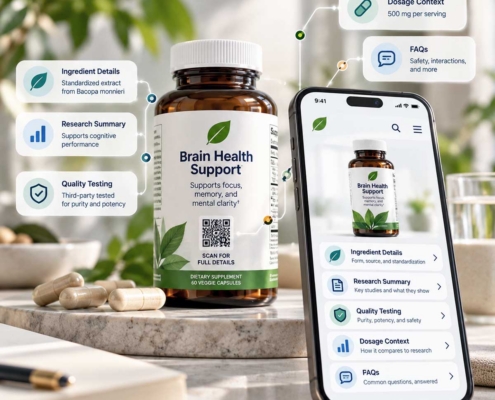 https://intermountainnutrition.com/wp-content/uploads/2026/10/evidence-economy-08.jpg
1200
1200
Larisa Graham
https://intermountainnutrition.com/wp-content/uploads/2026/01/IMN-gradient-logo-NEW.png
Larisa Graham2026-10-14 08:00:002026-10-14 00:57:25The Evidence Economy
https://intermountainnutrition.com/wp-content/uploads/2026/10/evidence-economy-08.jpg
1200
1200
Larisa Graham
https://intermountainnutrition.com/wp-content/uploads/2026/01/IMN-gradient-logo-NEW.png
Larisa Graham2026-10-14 08:00:002026-10-14 00:57:25The Evidence Economy

 Women’s Metabolic Health