Beyond Stress Support: The Expanding Role of Adaptogens in Wellness

August 17, 2026 |

Discover how adaptogens are evolving from stress-support ingredients into multifunctional wellness solutions that address energy, cognitive performance, metabolic health, healthy aging, sleep quality, and women’s health.

At a Glance

  • Adaptogens are increasingly being formulated for cognitive health, energy, healthy aging, metabolic wellness, sleep, sports nutrition, and women’s health—not just stress support.
  • Consumers are seeking multifunctional supplements that address interconnected wellness concerns through comprehensive formulations.
  • Emerging clinical research continues to expand the understanding of how adaptogens influence multiple physiological systems beyond the HPA axis.
  • Adaptogens pair well with nootropics, medicinal mushrooms, amino acids, probiotics, vitamins, and minerals to create differentiated formulations.
  • Premium botanical extracts with standardized active compounds help brands deliver consistency, transparency, and consumer confidence.
  • As demand for holistic wellness solutions grows, adaptogens represent one of the industry’s most versatile botanical ingredient categories.

Adaptogens Are Entering A New Era

For decades, adaptogens have been synonymous with stress management. Ingredients such as ashwagandha, rhodiola, eleuthero, and holy basil built their reputation by helping the body maintain resilience during physical and mental stress. While that positioning remains relevant, today’s supplement market tells a much larger story.

Consumers no longer view stress as an isolated concern. Instead, they recognize that stress influences nearly every aspect of health — from sleep quality and cognitive performance to immune function, healthy aging, exercise recovery, and metabolic wellness.

As a result, brands are increasingly incorporating adaptogens into products designed for multiple wellness goals rather than marketing them solely as “stress support.”

Consumer Expectations Are Expanding

Today’s wellness consumers expect supplements to deliver multiple benefits in a single product. Rather than purchasing separate products for stress, focus, sleep, energy, and immune support, many are seeking comprehensive formulations that fit seamlessly into their daily routines. This shift has encouraged supplement brands to rethink how adaptogens are positioned within broader wellness categories.

Scientific Research Continues to Expand

At the same time, scientific research continues to deepen our understanding of how adaptogenic botanicals influence human physiology.

Rather than acting as stimulants or sedatives, many adaptogens appear to help regulate the body’s stress response through the hypothalamic-pituitary-adrenal (HPA) axis while also influencing inflammatory pathways, mitochondrial function, neurotransmitter activity, and cellular resilience.

These diverse mechanisms make adaptogens attractive ingredients across numerous product categories.

A New Opportunity for Supplement Brands

For supplement brands, this evolution presents an opportunity to create more differentiated formulations. Instead of positioning adaptogens as single-benefit ingredients, brands can formulate around broader consumer goals such as daily performance, healthy aging, resilience, focus, sleep, women’s wellness, sports nutrition, and metabolic support.

In this article, we’ll explore how adaptogens are reshaping the wellness industry, why consumer demand continues to grow, and how innovative formulations can move beyond traditional stress products.

Why Adaptogens Are Becoming Core Wellness Ingredients

The wellness market has shifted from treating individual symptoms toward supporting overall resilience. Today’s consumers increasingly recognize that stress affects virtually every aspect of health, including sleep, cognition, immune function, digestion, metabolism, athletic recovery, and emotional well-being. Consequently, they are looking for products that support multiple health outcomes simultaneously.

Consumers Want Holistic Wellness Solutions

Adaptogens naturally fit this broader wellness philosophy because their traditional use — and growing body of scientific evidence — centers on helping the body maintain physiological balance rather than targeting a single symptom.

Unlike ingredients designed for one narrow application, adaptogens can complement a wide range of functional health categories.

Preventative Health Is Driving Innovation

Several market forces are accelerating this trend. Consumers are seeking cleaner labels, botanical ingredients, and clinically supported natural solutions.

Additionally, many are adopting proactive wellness routines focused on maintaining long-term health instead of waiting to address problems after they arise. This preventative mindset has created demand for ingredients that can become part of a daily wellness ritual.

Adaptogens Fit Nearly Every Delivery Format

Manufacturers are also responding to evolving product innovation opportunities. Adaptogens now appear in powders, gummies, capsules, stick packs, functional beverages, coffee alternatives, protein products, hydration formulas, and even beauty-from-within supplements.

Their versatility allows brands to develop products that appeal to diverse consumer segments while maintaining a science-forward positioning.

As research continues to demonstrate the interconnected nature of stress physiology with other health outcomes, adaptogens are becoming foundational ingredients that support comprehensive wellness strategies rather than serving only as stress-management botanicals.

Key Takeaway: Adaptogens have evolved into multifunctional wellness ingredients that align with today’s consumer preference for proactive, holistic health solutions.

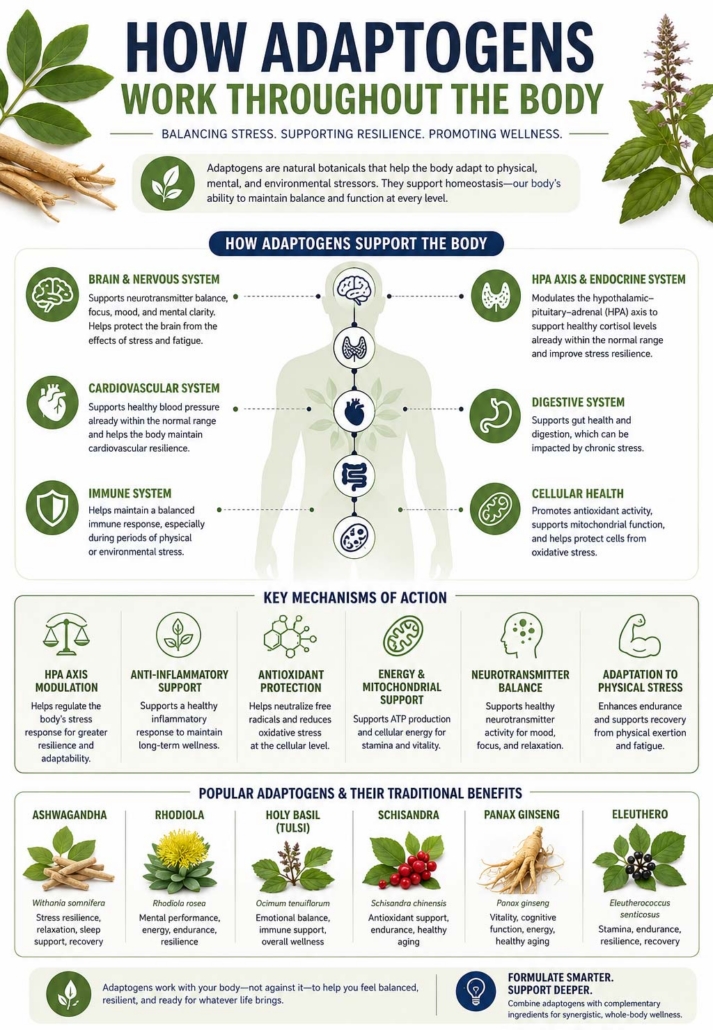
How Adaptogens Work Throughout the Body

Adaptogens are unique because they do not simply stimulate or suppress physiological processes. Instead, they appear to help the body adapt to changing internal and external stressors by supporting homeostasis — the body’s ability to maintain stable biological function despite environmental challenges.

Popular Adaptogens for Wellness Supplements

Supporting the HPA Axis

One of their best-studied mechanisms involves modulation of the hypothalamic-pituitary-adrenal (HPA) axis, which regulates the body’s stress response. During periods of chronic stress, prolonged activation of this system can influence cortisol regulation, sleep quality, cognitive performance, immune activity, and metabolic health.

Several adaptogenic botanicals have demonstrated the ability to support healthy HPA-axis function, potentially improving resilience without acting as conventional stimulants or sedatives.

Beyond Cortisol Regulation

However, the expanding interest in adaptogens extends well beyond cortisol. Researchers have identified several additional mechanisms that may contribute to their broad wellness applications, including:

  • Supporting mitochondrial energy production and cellular resilience.
  • Promoting healthy inflammatory responses.
  • Helping regulate oxidative stress through antioxidant activity.
  • Supporting neurotransmitter balance involved in mood, focus, and cognitive function.
  • Enhancing recovery from physical exertion.
  • Supporting healthy immune system function during periods of physiological stress.

Different Adaptogens Offer Different Functional Benefits

Importantly, different adaptogens possess distinct phytochemical profiles that influence these mechanisms in different ways.

For example, withanolides from ashwagandha, rosavins and salidroside from rhodiola, ginsenosides from Panax ginseng, and eleutherosides from eleuthero each contribute unique biological activities.

This diversity enables formulators to select specific adaptogens — or combine complementary botanicals — to support targeted wellness goals while creating differentiated product offerings.

As the scientific literature grows, adaptogens are increasingly recognized as versatile botanical tools that can contribute to comprehensive wellness formulations across multiple consumer health categories.

Key Takeaway: Adaptogens support multiple interconnected physiological systems, making them valuable ingredients for modern wellness formulations that extend well beyond traditional stress support.

Market Trends: Adaptogens Continue to Gain Momentum

Adaptogens have evolved from niche herbal ingredients into mainstream wellness solutions. What began primarily in stress support supplements has expanded into products targeting cognitive performance, sports nutrition, healthy aging, metabolic wellness, beauty-from-within, women’s health, and sleep support.

As consumers adopt more holistic approaches to health, they increasingly expect supplements to provide multiple complementary benefits in a single formulation.

Consumers Are Prioritizing Daily Resilience

Modern consumers face a combination of physical, emotional, and environmental stressors that extend well beyond occasional periods of anxiety.

Busy lifestyles, poor sleep quality, digital fatigue, and growing interest in preventative health have created demand for ingredients that fit into everyday wellness routines. Rather than looking for quick fixes, consumers increasingly seek products that support long-term resilience and overall well-being.

This shift has fueled interest in botanical ingredients with a long history of traditional use backed by emerging scientific research. Adaptogens align well with these expectations because they are perceived as natural, plant-based ingredients that support the body’s ability to respond to everyday stress while complementing broader wellness goals.

Innovation Is Expanding Beyond Traditional Stress Products

The supplement industry has responded by incorporating adaptogens into nearly every major product category. While capsules remain popular, brands are increasingly introducing adaptogens into gummies, stick packs, powdered drink mixes, protein blends, hydration products, coffee alternatives, functional beverages, and even beauty supplements.

Rather than featuring a single botanical, today’s formulations often combine adaptogens with complementary ingredients to address multiple consumer needs. For example, products may pair ashwagandha with magnesium and L-theanine for relaxation, rhodiola with nootropics for focus, or schisandra with collagen and antioxidants for healthy aging.

These synergistic formulations allow brands to tell a broader wellness story while differentiating themselves in a competitive marketplace.

Clinical Research Continues to Build Consumer Confidence

The growing body of clinical research surrounding adaptogens has further accelerated market growth. Standardized botanical extracts supported by human clinical studies provide formulators with stronger scientific foundations for product development while giving consumers greater confidence in ingredient quality and consistency.

As ingredient suppliers continue investing in research, standardized extracts, and sustainability initiatives, supplement brands have more opportunities to formulate premium products that emphasize transparency, efficacy, and traceability.

Key Takeaway: Consumer demand, scientific validation, and formulation innovation are transforming adaptogens into foundational ingredients across multiple wellness categories, creating significant opportunities for forward-thinking supplement brands.

Key Adaptogens Driving Today’s Wellness Market

While dozens of botanicals are classified as adaptogens, several ingredients have emerged as market leaders because of their growing clinical support, formulation versatility, and broad consumer recognition. Understanding their unique characteristics allows brands to build targeted formulations that align with specific health goals.

Ashwagandha: Popular Adaptogens for Wellness Supplements

Ashwagandha

(Withania somnifera)

Ashwagandha remains one of the most researched and widely recognized adaptogens. Standardized extracts have been investigated for their role in supporting healthy cortisol levels already within the normal range, promoting restful sleep, supporting exercise recovery, and maintaining cognitive performance under stress.

Its versatility makes it suitable for products targeting stress management, active lifestyles, women’s wellness, men’s health, healthy aging, and sleep support. Because consumers are already familiar with ashwagandha, it often serves as the anchor ingredient in multifunctional formulations.

Rhodiola: Popular Adaptogens for Wellness Supplements

Rhodiola

(Rhodiola rosea)

Rhodiola has long been associated with supporting mental performance and physical endurance during periods of fatigue. Clinical research has explored its potential role in maintaining energy, supporting attention, and promoting resilience during demanding physical or cognitive activities.

Brands frequently position rhodiola in products designed for professionals, students, athletes, and consumers seeking sustained daily performance without relying on stimulants.

Holy Basil: Popular Adaptogens for Wellness Supplements

Holy Basil

(Ocimum tenuiflorum)

Also known as tulsi, holy basil has traditionally been used in Ayurvedic medicine to promote balance and overall wellness. Modern formulations increasingly incorporate standardized tulsi extracts into products focused on emotional well-being, immune support, metabolic health, and healthy aging.

Its clean-label appeal and strong botanical heritage make it attractive for brands emphasizing natural wellness solutions.

Schisandra: Popular Adaptogens for Wellness Supplements

Schisandra

(Schisandra chinensis)

Schisandra has gained attention for its antioxidant properties and its traditional use in supporting endurance, vitality, and healthy aging.

Formulators often combine it with beauty-from-within ingredients, collagen, antioxidants, and liver-support botanicals to create premium wellness products.

Panax Ginseng & Eleuthero

Although sometimes grouped together, these botanicals offer distinct phytochemical profiles. Panax ginseng is commonly associated with vitality, cognitive performance, and healthy aging, while eleuthero has traditionally been used to support stamina, endurance, and resilience during physical stress.

Both continue to play important roles in sports nutrition, energy products, and active lifestyle formulations.

Key Takeaway: Selecting the appropriate adaptogen, or combining complementary botanicals, allows brands to create differentiated formulations tailored to specific consumer wellness goals while leveraging growing clinical evidence.

Comparison: Popular Adaptogens & Their Wellness Applications

Adaptogen Botanical Name Primary Wellness Focus Key Bioactive Compounds Common Synergistic Ingredients Popular Delivery Formats
Ashwagandha Withania somnifera Stress resilience, sleep support, recovery, healthy aging Withanolides Magnesium, L-theanine, saffron, glycine, GABA, vitamin D Capsules, gummies, powders, stick packs, beverages
Rhodiola Rhodiola rosea Mental performance, focus, physical endurance, resilience Rosavins, salidroside Citicoline, lion’s mane, tyrosine, caffeine, B vitamins Capsules, drink mixes, energy beverages, gummies
Holy Basil (Tulsi) Ocimum tenuiflorum Emotional wellness, immune support, metabolic health Eugenol, ursolic acid, rosmarinic acid Cinnamon, chromium, probiotics, ginger, turmeric Capsules, teas, gummies, powdered beverages
Schisandra Schisandra chinensis Healthy aging, antioxidant support, endurance Schisandrins Collagen, CoQ10, astaxanthin, resveratrol, vitamin C Capsules, beauty powders, beverages
Panax Ginseng Panax ginseng Energy, cognitive support, vitality Ginsenosides Cordyceps, B vitamins, CoQ10, electrolytes Capsules, functional beverages, powders
Eleuthero Eleutherococcus senticosus Physical endurance, recovery, resilience Eleutherosides Rhodiola, creatine, electrolytes, tart cherry Sports powders, capsules, hydration products

Emerging Applications Beyond Stress Support

One of the most exciting developments in botanical nutrition is the rapid expansion of adaptogens into new health categories. Rather than appearing only in relaxation products, adaptogens now support formulations designed for performance, longevity, metabolic wellness, beauty, and everyday vitality.

Cognitive Health & Mental Performance

Consumers increasingly recognize the relationship between chronic stress and cognitive function. As a result, brands are pairing adaptogens with nootropics such as citicoline, phosphatidylserine, lion’s mane mushroom, and L-theanine to create comprehensive brain health products that support focus, productivity, and mental resilience.

Healthy Aging & Cellular Wellness

Oxidative stress and chronic inflammation contribute to many aspects of healthy aging. Adaptogens that demonstrate antioxidant activity are increasingly being combined with ingredients such as collagen peptides, CoQ10, NAD⁺ precursors, polyphenols, and vitamins to support healthy aging strategies that emphasize resilience at the cellular level.

Women’s Health

Women’s wellness represents another rapidly growing application for adaptogens. Formulators are incorporating botanicals into products designed to support healthy aging, active lifestyles, emotional well-being, and hormone-related wellness throughout different stages of life.

Adaptogens often work alongside magnesium, saffron, probiotics, omega-3 fatty acids, and botanicals traditionally used to support women’s health.

Sports Nutrition & Recovery

Athletes and active consumers are increasingly looking beyond stimulants for performance support. Adaptogens complement ingredients such as creatine, electrolytes, protein, beta-alanine, and branched-chain amino acids by helping create well-rounded formulations focused on recovery, endurance, and resilience during training.

Metabolic Wellness

As consumers seek comprehensive approaches to healthy weight management and metabolic health, adaptogens are being explored alongside ingredients such as berberine, chromium, cinnamon extract, fiber, probiotics, and green tea.

Although these products require careful regulatory positioning, they reflect growing interest in addressing metabolic wellness through multiple physiological pathways.

Key Takeaway: Adaptogens are no longer confined to stress support. They have become versatile ingredients that enable supplement brands to innovate across nearly every major wellness category.

Comparison: Which Adaptogen Is Best

Formulation Goal Best Adaptogens Key Considerations
Daily stress resilience Ashwagandha, Holy Basil Use standardized extracts with clinically relevant active compounds.
Sustained energy without stimulants Rhodiola, Panax Ginseng Pair with nootropics or mitochondrial support ingredients rather than relying solely on caffeine.
Healthy aging Schisandra, Ashwagandha Combine with antioxidants and collagen-support ingredients for broader positioning.
Cognitive performance Rhodiola, Panax Ginseng Consider synergistic nootropics and B vitamins to support focus and mental clarity.
Exercise recovery Rhodiola, Eleuthero Pair with protein, creatine, electrolytes, and recovery botanicals.
Multifunctional wellness Ashwagandha + Rhodiola Combining complementary adaptogens can support multiple wellness outcomes while simplifying the consumer’s supplement routine.

Flavoring & Sensory Experience: Formulating Adaptogens Consumers Will Enjoy

Although adaptogens offer compelling health benefits, many botanical extracts present formulation challenges that directly influence consumer acceptance. Bitter, earthy, astringent, or lingering flavor notes can negatively affect repeat purchases if they are not carefully addressed during product development.

Understanding Botanical Flavor Profiles

Each adaptogen contributes a unique sensory profile. Ashwagandha often exhibits earthy and slightly bitter notes, while rhodiola can produce a floral bitterness.

Schisandra contributes tart, astringent characteristics, and holy basil introduces herbal complexity. When several botanicals are combined, these flavors may become even more pronounced.

Recognizing these characteristics early in formulation allows developers to create more balanced sensory experiences without compromising ingredient integrity.

Taste Masking Creates Better Consumer Experiences

Successful formulations often rely on multiple taste-masking strategies rather than a single solution. Natural flavors, botanical flavor pairings, organic acids, sweetness systems, and specialized masking technologies can significantly improve palatability while maintaining clean-label positioning.

Popular flavor profiles for adaptogen products include berry blends, citrus, peach, tropical fruit, chai, vanilla, chocolate, caramel, apple spice, and botanical tea-inspired combinations. These familiar flavors help complement rather than compete with the natural characteristics of adaptogenic herbs.

Delivery Format Influences Sensory Success

The delivery format also plays an important role in the consumer experience. Gummies require careful flavor balancing because botanical notes remain on the palate longer. Powdered drink mixes benefit from acid systems and natural fruit flavors, while capsules eliminate taste concerns altogether but sacrifice sensory engagement.

Choosing the right format depends on the target audience, ingredient load, desired positioning, and overall brand experience.

Key Takeaway: Exceptional flavor is often what transforms a clinically sound adaptogen formulation into a product consumers enjoy using every day. Investing in sensory optimization can improve compliance, encourage repeat purchases, and strengthen brand loyalty.

Formulation Considerations for Adaptogen Supplements

Developing a successful adaptogen supplement requires more than selecting trending botanicals. Formulators must balance efficacy, ingredient compatibility, stability, sensory experience, and regulatory compliance to create products that consistently deliver a positive consumer experience.

Because adaptogens are increasingly incorporated into multifunctional formulations, careful attention to formulation strategy becomes even more important.

Select Standardized Extracts with Clinical Support

Standardized botanical extracts help ensure batch-to-batch consistency by delivering defined levels of active compounds, such as withanolides in ashwagandha or rosavins and salidroside in rhodiola. Selecting ingredients backed by human clinical studies can also strengthen product positioning while providing consumers with greater confidence in product quality.

When evaluating ingredient suppliers, brands should consider:

  • Standardization of active compounds.
  • Clinical research supporting the specific extract.
  • Identity testing and botanical authentication.
  • Supply chain transparency and traceability.
  • Sustainability initiatives and responsible sourcing.
  • Documentation supporting quality and regulatory compliance.
Schisandra berries for Adaptogens Wellness Supplements

Build Synergistic Ingredient Combinations

Adaptogens perform particularly well when paired with complementary functional ingredients that support the desired wellness objective. Rather than relying on a single botanical, many successful formulations combine multiple ingredients that work through complementary physiological pathways.

Examples include:

  • Stress & Relaxation: Ashwagandha, magnesium glycinate, L-theanine, saffron, lemon balm.
  • Focus & Productivity: Rhodiola, citicoline, lion’s mane mushroom, phosphatidylserine, B vitamins.
  • Sleep Support: Ashwagandha, magnesium, glycine, L-theanine, chamomile.
  • Healthy Aging: Schisandra, CoQ10, collagen peptides, astaxanthin, polyphenols.
  • Sports Nutrition: Rhodiola, creatine, electrolytes, beta-alanine, tart cherry.
  • Metabolic Wellness: Holy basil, chromium, cinnamon extract, probiotics, soluble fiber.

These combinations allow brands to formulate around complete wellness experiences instead of isolated ingredient stories.

Optimize Solubility & Delivery Format

Not every adaptogen performs equally across every delivery format. Solubility, particle size, moisture sensitivity, and ingredient loading all influence manufacturing efficiency and consumer experience.

For example:

  • Powdered beverages benefit from highly dispersible extracts and careful particle-size management.
  • Gummies require concentrated extracts that minimize bitterness while maintaining stability.
  • Capsules allow higher botanical loading but may require flow agents for efficient encapsulation.
  • Stick packs and hydration powders should disperse rapidly without excessive sedimentation.
  • Functional beverages often require attention to pH stability and long-term clarity.

Selecting ingredients appropriate for the intended format early in development helps reduce reformulation later in the process.

Prioritize Sensory Performance & Shelf Stability

Botanical extracts can contribute bitterness, earthy notes, color variation, and aroma changes over time. Formulators should evaluate flavor systems, masking technologies, antioxidant protection, packaging materials, and moisture control during product development.

Stability testing should evaluate:

  • Active compound retention.
  • Organoleptic stability.
  • Moisture migration.
  • Color consistency.
  • Flavor stability.
  • Microbiological quality.
  • Shelf-life under intended storage conditions.

Key Takeaway: Successful adaptogen formulations combine clinically supported ingredients, thoughtful formulation strategies, excellent sensory performance, and robust quality systems to create products consumers trust and repurchase.

Strategic Opportunities for Supplement Brands

The adaptogen category continues to evolve rapidly, creating significant opportunities for brands willing to move beyond conventional stress-support positioning. Instead of marketing adaptogens as single-purpose ingredients, forward-thinking companies are developing complete wellness platforms that address multiple interconnected aspects of health.

Position Adaptogens Around Consumer Outcomes

Consumers increasingly purchase supplements based on desired outcomes rather than ingredient names alone. Positioning products around goals such as “Daily Resilience,” “Healthy Aging,” “Focused Energy,” “Women’s Wellness,” or “Recovery & Performance” allows brands to communicate benefits in language that resonates with modern consumers while naturally incorporating adaptogens as foundational ingredients.

Create Lifestyle-Based Product Collections

Rather than offering a single adaptogen SKU, brands can develop complementary product families designed for different times of day or wellness objectives.

Examples include:

  • Morning Focus
  • Daily Performance
  • Afternoon Balance
  • Workout Recovery
  • Evening Relaxation
  • Healthy Aging
  • Women’s Wellness
  • Metabolic Support

This portfolio approach increases opportunities for repeat purchases while strengthening long-term customer loyalty.

Differentiate Through Quality & Transparency

As adaptogens become more common, ingredient quality will increasingly separate premium brands from commodity products. Consumers are becoming more knowledgeable about standardized extracts, clinically studied ingredients, sustainability practices, and manufacturing quality.

Brands that communicate sourcing, testing, standardization, and manufacturing transparency can establish greater credibility in a crowded marketplace.

Partner with an Experienced Manufacturing Team

Developing successful botanical supplements requires expertise in ingredient compatibility, flavor optimization, stability testing, manufacturing processes, and regulatory considerations. Working with an experienced manufacturing partner allows brands to accelerate product development while reducing formulation risk and improving scalability.

At Intermountain Nutrition, we collaborate with supplement brands to develop custom formulations that combine clinically supported ingredients, premium botanical extracts, exceptional sensory experiences, and manufacturing excellence. From concept development through commercialization, our team helps brands bring differentiated wellness products to market with confidence.

Key Takeaway: The greatest opportunity lies not in selling adaptogens as ingredients but in formulating complete wellness solutions that address the interconnected health priorities of today’s consumers.

Frequently Asked Questions

Adaptogens are a class of botanicals traditionally used to help the body adapt to physical, mental, and environmental stressors. Unlike stimulants or sedatives, adaptogens are generally believed to support homeostasis — the body’s ability to maintain physiological balance during changing conditions.

Many adaptogens have centuries of traditional use in Ayurvedic and Traditional Chinese Medicine, while modern research continues to investigate their mechanisms of action, including effects on the hypothalamic-pituitary-adrenal (HPA) axis, inflammatory pathways, oxidative stress, and cellular resilience. Although each botanical has unique properties, adaptogens are increasingly incorporated into comprehensive wellness formulations designed to support multiple aspects of health.

No. While stress support remains one of their best-known applications, adaptogens are now widely formulated into products targeting cognitive health, sleep quality, sports nutrition, healthy aging, metabolic wellness, immune support, and women’s health.

This broader use reflects both growing scientific interest and consumer demand for multifunctional wellness products. Many brands combine adaptogens with nootropics, amino acids, probiotics, vitamins, minerals, medicinal mushrooms, and other botanicals to create formulations that address interconnected health goals rather than a single concern.

Some of the most widely used adaptogens include ashwagandha (Withania somnifera), rhodiola (Rhodiola rosea), holy basil (Ocimum tenuiflorum), schisandra (Schisandra chinensis), Panax ginseng (Panax ginseng), and eleuthero (Eleutherococcus senticosus).

Each contains unique phytochemicals and has different traditional uses and emerging areas of scientific research. Formulators often select specific adaptogens based on the desired product positioning, target consumer, delivery format, and compatibility with other functional ingredients.

Successful adaptogen formulations require attention to ingredient standardization, clinical support, botanical sourcing, flavor optimization, delivery format, ingredient compatibility, stability, and regulatory compliance. Standardized extracts help improve consistency, while thoughtful ingredient combinations can create synergistic wellness solutions.

Brands should also evaluate taste masking, moisture sensitivity, packaging requirements, and shelf-life throughout product development. Partnering with an experienced contract manufacturer can help streamline formulation, testing, and commercialization while reducing development challenges.

Standardized extracts provide consistent concentrations of key bioactive compounds, helping ensure that every production batch delivers the intended ingredient profile. This consistency supports product quality, manufacturing reliability, and consumer confidence.

Many clinically studied adaptogens are standardized to specific marker compounds, allowing brands to formulate using ingredients that closely match published research. Standardization also simplifies quality control and helps differentiate premium products from less consistent botanical materials.

References

Panossian, A., & Wikman, G. (2010). Effects of Adaptogens on the Central Nervous System and the Molecular Mechanisms Associated with Their Stress-Protective Activity. Pharmaceuticals, 3(1), 188–224.

Panossian, A. G. (2017). Understanding adaptogenic activity: Specificity of the pharmacological action of adaptogens and other phytochemicals. Annals of the New York Academy of Sciences, 1401(1), 49–64.

American Botanical Council. HerbalGram.

Botanical Adulterants Prevention Program.

Council for Responsible Nutrition.

United States Pharmacopeia. Botanical Dietary Supplements.

Cleveland Clinic. (2022, February 10). Adaptogens: What they are, how they work, and types.

UCLA Health. (2022, February 16). What are adaptogens and should you be taking them?

Panossian, A., & Wikman, G. (2010). Effects of adaptogens on the central nervous system and the molecular mechanisms associated with their stress-protective activity. Pharmaceuticals, 3(1), 188–224.

Gerontakos, S., Casteleijn, D., & Wardle, J. (2021). Clinician perspectives and understanding of the adaptogenic concept: A focus group study with naturopaths and Western herbalists. Integrative Medicine Research, 10(1), 100433.

Panossian, A. G., Efferth, T., Shikov, A. N., et al. (2021). Evolution of the adaptogenic concept from traditional use to medical systems: Pharmacology of stress- and aging-related diseases. Medicinal Research Reviews, 41, 630–703.

Sánchez, I. A., Cuchimba, J. A., Pineda, M. C., et al. (2023). Adaptogens on depression-related outcomes: A systematic integrative review and rationale of synergism with physical activity. International Journal of Environmental Research and Public Health, 20(7), 5298.

Patyra, A., Kołtun-Jasion, M., Kupniewska, K., Parzonko, A., & Kiss, A. K. (2025). Eleutherococcus root: A comprehensive review of its phytochemistry and pharmacological potential in the context of its adaptogenic effect. Frontiers in Pharmacology, 16, 1683795.

Panossian, A., Lemerond, T., & Efferth, T. (2025). Adaptogens in long-lasting brain fatigue: An insight from systems biology and network pharmacology. Pharmaceuticals, 18(2), 261.

Comparison between the biological active compounds in plants with adaptogenic properties (Rhaponticum carthamoides, Lepidium meyenii, Eleutherococcus senticosus and Panax ginseng). (2022). Plants.

Plant adaptogens—History and future perspectives. (2021). Nutrients.

Related Postings

Andrographis for Immunity Support Supplements
STOCK FORMULA: Elderberry Gummies for Immune Support
Bees Using Propolis As a to Build the Honeycomb Structure of Their Hive