Magnesium and Energy: The Overlooked Driver of Cellular Performance

July 10, 2026 |

When consumers think about energy, they often focus on caffeine, adaptogens, or B vitamins. However, magnesium may be one of the most important — and most overlooked — nutrients supporting cellular energy production.

At a Glance

  • Magnesium plays a critical role in ATP production, the body’s primary energy currency.
  • More than 300 enzymatic reactions depend on magnesium, including many involved in energy metabolism.
  • Low magnesium status may contribute to fatigue, reduced physical performance, and impaired metabolic function.
  • Consumers increasingly associate magnesium with sleep and relaxation, creating opportunities for broader energy-support positioning.
  • Magnesium works synergistically with B vitamins, electrolytes, CoQ10, adaptogens, and mitochondrial-support ingredients.
  • Multiple delivery formats—including capsules, powders, gummies, and stick packs—allow brands to target diverse energy occasions.

Why Magnesium Deserves A Place in the Energy Conversation

The energy category continues to evolve. While stimulant-based products remain popular, many consumers now seek sustained energy, metabolic resilience, and daily vitality rather than short-lived stimulation.

Magnesium’s Role in Cellular Energy Production

As a result, supplement brands are increasingly exploring nutrients that support energy production at the cellular level. Magnesium stands out because it is directly involved in the biological processes that generate usable energy inside every cell.

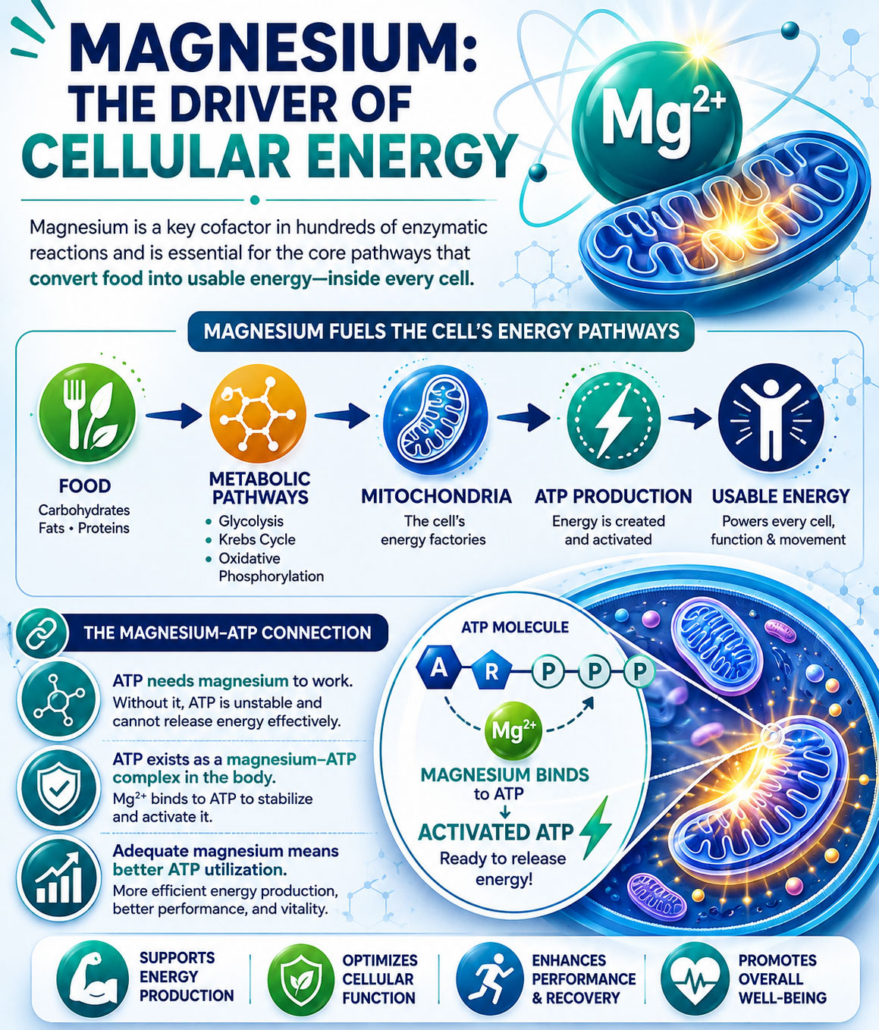
Magnesium serves as a cofactor in hundreds of enzymatic reactions throughout the body. More importantly for energy-focused formulations, it is required for glycolysis, oxidative phosphorylation, and ATP production—the core pathways that convert food into cellular energy.

The Magnesium-ATP Connection

Without adequate magnesium, cells cannot efficiently produce or utilize ATP. In fact, ATP itself primarily exists as a magnesium-ATP complex inside the body, highlighting how closely these two molecules are linked.

A Strategic Opportunity for Differentiation

Despite this critical role, magnesium is rarely positioned as a primary energy ingredient. Instead, it is often marketed for sleep, stress management, or muscle support. This creates a significant opportunity for brands seeking differentiation within an increasingly crowded energy category.

Key Takeaway: Magnesium supports the fundamental biological processes that create energy, making it one of the most foundational ingredients in cellular performance nutrition.

How Magnesium Powers Cellular Energy Production

Every cell in the body relies on mitochondria to generate ATP. These microscopic energy factories convert carbohydrates, fats, and proteins into usable fuel.

Magnesium supports this process in several important ways:

ATP Activation

ATP cannot effectively function without magnesium. The mineral binds to ATP molecules, enabling energy transfer throughout the body.

Mitochondrial Function

Magnesium supports mitochondrial enzyme activity involved in oxidative phosphorylation, one of the body’s primary energy-generating pathways.

Glucose Metabolism

Magnesium helps regulate glucose utilization and insulin signaling, supporting the efficient conversion of nutrients into energy.

Electrolyte Balance

The mineral works alongside sodium, potassium, and calcium to support cellular communication, muscle function, and hydration—all important components of physical and mental energy.

Nervous System Function

Magnesium supports nerve signaling and neuromuscular performance, helping maintain normal energy utilization during daily activities.

Magnesium For Cellular Energy

Key Takeaway

Magnesium does not simply “boost” energy. Instead, it helps optimize the cellular systems responsible for producing and utilizing energy throughout the body.

WATCH NOW: Magnesium for Energy

The Hidden Cost of Inadequate Magnesium Intake

Although severe magnesium deficiency is uncommon, inadequate intake appears to be widespread.

Research suggests that many adults fail to consume recommended amounts of magnesium through diet alone. Modern dietary patterns that rely heavily on processed foods may contribute to lower intake levels.

When magnesium status declines, energy-related symptoms may emerge, including:

  • Fatigue
  • Reduced exercise performance
  • Muscle weakness
  • Impaired recovery
  • Reduced metabolic efficiency
  • Increased feelings of physical exhaustion

These outcomes make biological sense given magnesium’s central role in ATP production and energy metabolism.

Additionally, several consumer groups may have elevated magnesium needs or increased risk of insufficiency, including:

  • Active individuals
  • Older adults
  • Individuals experiencing chronic stress
  • Consumers with highly processed diets
  • Individuals using certain medications that affect magnesium balance

As consumer awareness grows around foundational wellness and nutrient optimization, magnesium is becoming increasingly relevant beyond its traditional sleep-support positioning.

Key Takeaway: Even marginally inadequate magnesium intake may affect energy metabolism, creating opportunities for targeted supplementation strategies.

Key Magnesium Ingredients for Energy Formulations

Supplement brands have several magnesium forms to consider depending on product goals.

Magnesium Form Primary Benefit Energy Application
Magnesium Malate Combines magnesium with malic acid Popular for cellular energy support
Magnesium Glycinate Highly tolerated Daily wellness and stress-energy support
Magnesium Citrate Good bioavailability General energy and metabolic support
Magnesium Taurate Cardiovascular support Active lifestyle products
Magnesium Bisglycinate Premium positioning Comprehensive wellness formulas

Competitive Positioning: Where Magnesium Fits in the Energy Category

The energy supplement category has become increasingly crowded. Consumers can choose from stimulant-based energy products, nootropic formulas, mitochondrial support ingredients, sports nutrition products, and daily wellness supplements that promise improved vitality and performance.

For supplement brands, this creates an important challenge: how do you differentiate in a market dominated by caffeine and other highly visible energy ingredients?

The answer may lie in addressing energy production further upstream.

Many energy ingredients work by stimulating the nervous system, increasing alertness, or supporting physical performance. While these approaches can be effective, they often do not address the fundamental biological processes responsible for creating energy at the cellular level.

Magnesium occupies a unique position in the category. Rather than acting as a stimulant, it supports ATP activation, mitochondrial function, glucose metabolism, electrolyte balance, and neuromuscular performance. In other words, magnesium helps support the systems that allow the body to produce and utilize energy efficiently.

This distinction creates a valuable opportunity for brands seeking to develop products focused on sustainable energy, metabolic resilience, recovery, hydration, and healthy aging.

As consumers increasingly look beyond short-term stimulation, magnesium offers a compelling science-backed alternative that aligns with growing interest in foundational wellness and cellular performance.

How Magnesium Compares to Popular Energy Ingredients

Ingredient Primary Mechanism Immediate Energy Perception Cellular Energy Support Consumer Awareness Positioning Opportunity
Caffeine Central nervous system stimulation Very High Low Very High Alertness, focus, quick energy
B Vitamins Cofactors in energy metabolism pathways Moderate Moderate High Daily energy support
CoQ10 Supports mitochondrial electron transport and ATP production Moderate High Moderate Cellular energy, healthy aging
Acetyl-L-Carnitine Supports fatty acid transport into mitochondria Moderate High Moderate Mitochondrial performance
Creatine Supports ATP regeneration and energy buffering Moderate High High Performance and strength
Rhodiola rosea Adaptogenic support for stress and fatigue resilience Moderate Low to Moderate Moderate Stress-related energy support
Electrolytes Support hydration, muscle function, and cellular communication Moderate Moderate High Hydration and performance
Magnesium ATP activation, mitochondrial function, glucose metabolism, electrolyte balance, and neuromuscular function Low Very High Moderate Foundational cellular energy support

Market Trends Driving Magnesium Energy Products

Consumer interest in magnesium continues to expand rapidly. According to recent market data, the global magnesium supplement market is projected to grow at a compound annual growth rate (CAGR) of over 6% through 2030, reflecting increasing consumer awareness of its health benefits.

Historically associated with relaxation and sleep, magnesium is now increasingly discussed in the context of recovery, performance, metabolic health, and energy production.

Several broader trends support this shift:

  • Growing demand for non-stimulant energy solutions, with over 60% of consumers reporting interest in alternatives to caffeine-based products
  • Increased awareness of mitochondrial health, driven by a 40% rise in online searches related to cellular energy and metabolism over the past five years
  • Consumer interest in metabolic wellness, with nearly 50% of supplement users prioritizing metabolic health as part of their daily routine
  • Demand for foundational nutrient optimization, as surveys indicate that more than 70% of consumers believe they are not meeting their daily micronutrient needs through diet alone
  • Growth of active lifestyle and recovery categories, with the sports nutrition market expected to exceed $45 billion globally by 2028

Perhaps most importantly, consumers are moving beyond short-term energy fixes. Instead, they increasingly seek products that support sustainable daily performance, with 65% of consumers indicating a preference for long-lasting energy over immediate stimulation.

This trend aligns well with magnesium’s physiological role as a foundational energy nutrient rather than a stimulant.

Key Takeaway: Magnesium sits at the intersection of multiple growing categories, including energy, performance, recovery, metabolic health, and healthy aging.

Consumer Trends Reshaping the Energy Category

Today’s Energy Consumer Wants More Than Stimulation

The energy category is undergoing a significant transformation. Historically, consumers associated energy products with caffeine, sugar, and quick stimulation.

Today, however, many consumers are seeking sustained energy, improved resilience, better recovery, and long-term performance rather than a temporary boost followed by a crash.

This shift is creating new opportunities for supplement brands to move beyond traditional stimulant-focused formulations and explore ingredients that support energy production at the cellular level.

Industry experts report growing consumer interest in natural and non-stimulant energy solutions, particularly among health-conscious consumers looking to support productivity, fitness, and daily performance without compromising sleep quality.

As a result, ingredients that support foundational energy metabolism are gaining attention across the supplement and functional beverage categories.

Five Consumer Trends Driving Demand for Cellular Energy Solutions

1. Demand for Sustained Energy Without the Crash

Many consumers are actively seeking alternatives to traditional stimulant-heavy products.

Industry observers note increasing demand for non-stimulant energy ingredients that help consumers stay productive throughout the day without the jitters, anxiousness, sleep disruption, or energy crashes commonly associated with excessive caffeine intake.

2. Growing Interest in Mitochondrial & Cellular Health

Consumers are becoming more educated about the biological foundations of energy production. As discussions around cellular health, healthy aging, metabolic wellness, and longevity become more mainstream, ingredients that support ATP production and mitochondrial function are gaining relevance.

Magnesium aligns naturally with these emerging consumer interests because of its direct role in energy metabolism.

3. The Convergence of Energy, Recovery, & Performance

Increasingly, consumers view energy as part of a larger wellness ecosystem rather than a standalone benefit. Many active consumers want products that support exercise performance, recovery, hydration, focus, and resilience simultaneously.

This trend favors multifunctional ingredients that can support multiple physiological systems within a single formulation.

4. Expansion of the Sports Nutrition Market

Consumers are becoming more educated about the biological foundations of energy production. As discussions around cellular health, healthy aging, metabolic wellness, and longevity become more mainstream, ingredients that support ATP production and mitochondrial function are gaining relevance.

Magnesium aligns naturally with these emerging consumer interests because of its direct role in energy metabolism.

5. Preference for Foundational Wellness Ingredients

Consumers are increasingly looking for products that support long-term health rather than simply masking symptoms. This trend has fueled interest in ingredients that address underlying physiological processes, including nutrient sufficiency, cellular function, metabolic health, and healthy aging.

Because magnesium supports ATP activation, mitochondrial function, glucose metabolism, electrolyte balance, and nervous system function, it fits squarely within this movement toward foundational wellness.

What This Means for Supplement Brands

These trends suggest that consumers are becoming more receptive to energy products built around biological function rather than stimulation alone.

For supplement brands, this creates an opportunity to reposition magnesium beyond its traditional associations with sleep, relaxation, and muscle support. Instead, magnesium can be positioned as a foundational cellular energy nutrient that helps support the systems responsible for producing and utilizing energy throughout the body.

As consumers continue to seek sustainable performance, metabolic resilience, and all-day vitality, magnesium’s role in cellular energy production may become an increasingly valuable point of differentiation.

Key Takeaway: The future of the energy category is shifting from stimulation toward cellular performance. Magnesium is uniquely positioned to help brands capitalize on this trend because it supports many of the biological systems that make energy production possible.

Delivery Format Strategy: Matching Magnesium to the Energy Occasion

Selecting the right magnesium form is only part of the formulation equation. Equally important is choosing the delivery format that aligns with consumer expectations, usage occasions, positioning strategy, and target demographics.

Today’s energy consumers are not looking for a single solution. Instead, they are seeking products that fit specific lifestyles, routines, and performance goals. As a result, delivery format can be just as influential as ingredient selection in determining a product’s market success.

For brands exploring magnesium-based energy products, understanding the strengths and limitations of each format can help create a more compelling consumer experience while maximizing differentiation within the category.

Aligning Magnesium with High-Growth Energy Formats

Energy supplementation continues to expand beyond traditional capsules and caffeinated beverages.

Consumers increasingly expect energy support to integrate seamlessly into their daily routines, whether at work, in the gym, during travel, or as part of a broader wellness regimen.

Magnesium’s versatility allows it to be incorporated into multiple delivery systems, creating opportunities to target different use cases and market segments.

Delivery Format Comparison for Magnesium Energy Products

Format Primary Consumer Need Positioning Strength Technical Considerations Ideal Market Segments
Capsules Daily wellness and energy support Simplicity, convenience, premium supplementation Limited storytelling opportunity; capsule size considerations at higher doses Healthy aging, wellness, foundational nutrition
Gummies Convenient daily nutrition Enjoyable experience and high compliance Taste masking, dose limitations, moisture management Lifestyle wellness, younger consumers, women’s health
Powdered Drink Mixes Performance and hydration Multi-benefit energy support Solubility, flavor optimization, mineral interactions Sports nutrition, active lifestyle, recovery
Stick Packs Portable energy and hydration Convenience and travel-friendly positioning Flowability, moisture control, sensory optimization Professionals, fitness consumers, on-the-go lifestyles
Functional Beverages Everyday consumption occasions Highly differentiated energy experience Stability, flavor, ingredient compatibility Mainstream wellness, energy, recovery
Electrolyte Hydration Products Hydration and sustained performance Natural fit with magnesium’s biological role Mineral balancing and taste management Athletes, active consumers, outdoor enthusiasts
Sleep-to-Energy Systems Recovery and next-day performance Unique positioning opportunity Daypart formulation strategy Wellness-focused consumers, healthy aging
Multi-Ingredient Performance Formulas Comprehensive energy support Strong scientific storytelling Ingredient compatibility and serving size constraints Sports nutrition, performance, longevity

Where the Largest Opportunities Exist

Several delivery formats may be particularly attractive for magnesium-centered energy products because they naturally align with magnesium’s biological functions.

Hydration + Energy

Consumers increasingly recognize the connection between hydration, physical performance, and energy levels. Magnesium pairs naturally with sodium and potassium, making hydration-focused products a logical platform for energy-support positioning.

Cellular Energy Stick Packs

Stick packs allow brands to combine magnesium with mitochondrial-support ingredients such as CoQ10, Acetyl-L-Carnitine, B vitamins, and electrolytes. This creates a convenient format for communicating a cellular energy narrative while supporting portability and daily use.

Active Lifestyle Powders

Powdered drink mixes offer greater formulation flexibility and allow brands to incorporate clinically meaningful doses of magnesium alongside performance, recovery, and hydration ingredients.

Healthy Aging Energy Solutions

As consumers seek ways to support vitality throughout the aging process, magnesium-based energy products can bridge the gap between performance nutrition and healthy aging formulations.

Choosing the Right Format for Your Brand

The most successful magnesium energy products are not built around a delivery format alone. Instead, they are built around a consumer need.

Brands should begin by identifying the primary energy occasion they want to address:

  • Daily vitality
  • Workplace productivity
  • Exercise performance
  • Recovery
  • Hydration
  • Healthy aging
  • Stress-related fatigue
  • Non-stimulant energy support

Once the occasion is defined, the optimal delivery format becomes much easier to identify.

Key Takeaway: Magnesium’s versatility allows brands to participate across multiple high-growth energy categories. The most successful products will align magnesium’s cellular energy benefits with delivery formats that naturally support the consumer’s desired energy experience.

Flavoring & Sensory Experience

Magnesium presents unique formulation challenges depending on the selected form.

Certain magnesium salts can contribute bitterness, mineral notes, or lingering aftertaste in powdered beverages and gummies. Therefore, flavor systems should be designed early in development rather than treated as a final consideration.

Successful approaches may include:

  • Citrus flavor profiles
  • Berry systems
  • Tropical blends
  • Natural sweetness modulation
  • Acid-balancing systems
  • Multi-layer taste masking technologies

For functional beverages and stick packs, sensory optimization can significantly influence repeat purchase behavior.

Where Magnesium Creates White Space in the Energy Category

A Crowded Category with an Untapped Opportunity

The energy category remains one of the largest and most competitive segments in the supplement industry. New products launch every year promising more focus, more stamina, more endurance, and more productivity. Yet despite this innovation, many energy products continue to rely on remarkably similar ingredient strategies.

Caffeine dominates the category. Adaptogens, nootropics, B vitamins, and performance ingredients frequently appear alongside it. While these ingredients serve important functions, they often focus on how consumers feel rather than the biological processes responsible for creating energy.

This creates an opportunity for brands willing to tell a different story.

Most Energy Products Focus on Output Rather Than Production

Many energy products emphasize stimulation, alertness, or performance enhancement. However, relatively few products educate consumers about how energy is actually generated within the body.

The result is a significant gap between consumer understanding and biological reality.

At the cellular level, energy production depends on processes such as:

  • ATP activation
  • Mitochondrial function
  • Glucose metabolism
  • Electrolyte balance
  • Neuromuscular communication

Magnesium plays a role in each of these systems, yet it rarely serves as the lead ingredient in energy-focused products.

This disconnect creates a unique positioning opportunity for brands that want to move beyond traditional energy narratives.

The Cellular Energy White Space

Consumers are increasingly becoming familiar with concepts such as:

  • Mitochondrial health
  • Metabolic wellness
  • Longevity
  • Recovery
  • Cellular performance

However, most energy products have not fully adapted to these evolving interests.

Brands that successfully connect magnesium to ATP production and cellular energy metabolism may be able to occupy a position that remains relatively underdeveloped in the marketplace:

Energy support built on biological function rather than stimulation.

Rather than asking consumers to think about energy as a temporary feeling, brands can encourage them to think about energy as a physiological process.

The Opportunity Ahead

As consumers continue to move beyond short-term stimulation and seek more sustainable approaches to energy, the category is likely to evolve toward products that support how energy is produced rather than simply how energy feels.

Magnesium sits at the center of that transition.

Brands that educate consumers about magnesium’s role in ATP activation, mitochondrial function, glucose metabolism, electrolyte balance, and cellular performance may be able to establish a differentiated position in one of the industry’s most competitive categories.

Key Takeaway: The largest opportunity may not be creating another energy product. It may be creating a product that helps consumers understand where energy actually comes from—and positioning magnesium as a foundational part of that story.

Bridging The Gap Cellular Energy

The Strategic Opportunity

Consumers Understand Magnesium for Sleep. Few Understand Magnesium for Energy.

One of the most significant opportunities in today’s supplement market may not be introducing a new ingredient. It may be repositioning a familiar one.

Most consumers already associate magnesium with relaxation, sleep support, stress management, and muscle health. As a result, magnesium enjoys a level of consumer recognition and trust that many emerging ingredients have yet to achieve.

However, far fewer consumers understand magnesium’s fundamental role in cellular energy production.

This knowledge gap creates a compelling opportunity for supplement brands.

Reframing the Energy Conversation

The majority of energy products focus on helping consumers feel energized through stimulation, alertness, or performance enhancement. While these benefits remain important, they often overlook a more fundamental question:

Where does energy actually come from?

At the cellular level, energy production depends on ATP activation, mitochondrial function, glucose metabolism, electrolyte balance, and neuromuscular communication. Magnesium plays a direct role in each of these systems.

This gives brands an opportunity to tell a different story—one focused on supporting how energy is produced rather than simply how energy feels.

The Shift Toward Cellular Performance

Consumer interest continues to expand beyond quick fixes and temporary stimulation. Increasingly, consumers are seeking products that support:

  • Sustainable daily energy
  • Metabolic health
  • Recovery and resilience
  • Active lifestyles
  • Healthy aging
  • Long-term vitality

These trends align naturally with magnesium’s biological functions and create a pathway for brands to position magnesium as a foundational energy ingredient rather than solely a relaxation or recovery nutrient.

A Rare Combination of Awareness & White Space

Many emerging energy ingredients face a common challenge: consumers have never heard of them.

Magnesium is different.

Consumers already recognize the ingredient. They already trust it. What remains largely untapped is educating consumers about its role in ATP production and cellular energy metabolism.

This combination of high familiarity and underdeveloped positioning is relatively rare within the supplement industry.

The Opportunity for Brand Leaders

Brands that successfully connect magnesium to cellular energy production may be able to differentiate from traditional stimulant-focused products while aligning with growing demand for science-backed, sustainable energy solutions.

Rather than competing directly in the crowded race for more stimulation, brands can occupy a more strategic position:

Helping consumers understand how their bodies naturally create, convert, and sustain energy.

Executive Takeaway

The future of energy innovation may not belong to the ingredient that delivers the strongest stimulation. It may belong to the ingredient that best supports the biological systems responsible for producing energy in the first place.

Magnesium sits at the center of that opportunity.

Frequently Asked Questions

Yes. Magnesium plays a critical role in cellular energy production because it is required for ATP activation, mitochondrial function, glucose metabolism, and numerous enzymatic reactions involved in energy metabolism. ATP serves as the body’s primary energy currency, and ATP molecules must bind with magnesium to function effectively.

While magnesium does not act as a stimulant like caffeine, it helps support the biological processes responsible for creating and utilizing energy throughout the body. As a result, magnesium is increasingly being incorporated into energy, hydration, performance, and healthy aging formulations that focus on sustainable energy rather than short-term stimulation.

Magnesium is essential because ATP primarily exists in the body as a magnesium-ATP complex. Without adequate magnesium, ATP cannot efficiently transfer energy to cells. In addition, magnesium supports multiple enzymatic reactions involved in glycolysis, oxidative phosphorylation, and mitochondrial energy production.

These pathways convert carbohydrates, fats, and proteins into usable energy. For supplement brands, this makes magnesium a foundational ingredient for products positioned around cellular energy, mitochondrial health, metabolic wellness, and sustained performance.

The ideal magnesium form depends on the formulation goal, target consumer, and delivery format. Magnesium malate is commonly used in energy-focused products because malic acid participates in cellular energy metabolism. Magnesium glycinate and bisglycinate are often selected for premium wellness products because they are well tolerated and highly bioavailable.

Magnesium citrate remains a popular option for general wellness and energy-support formulations. Formulators should evaluate bioavailability, sensory profile, stability, dose requirements, and positioning objectives when selecting a magnesium source for energy applications.

Yes. Magnesium can complement caffeine-based energy formulations by supporting the cellular processes involved in energy production while caffeine primarily affects alertness and perceived energy. This combination allows brands to create more comprehensive energy products that address both stimulation and foundational energy metabolism.

Many formulators also pair magnesium with B vitamins, electrolytes, CoQ10, Acetyl-L-Carnitine, adaptogens, and nootropics to support multiple pathways involved in energy production, performance, recovery, and focus.

Mitochondria are responsible for producing most of the body’s ATP. Magnesium supports mitochondrial enzyme activity involved in oxidative phosphorylation, one of the primary pathways used to generate cellular energy. It also helps regulate numerous enzymatic reactions that support efficient energy metabolism.

As consumer interest in mitochondrial health, healthy aging, and metabolic wellness continues to grow, magnesium provides brands with a scientifically credible ingredient that supports several foundational aspects of cellular performance and energy production.

Absolutely. Magnesium is uniquely positioned for non-stimulant energy formulations because it supports energy production without directly stimulating the central nervous system.

This makes it attractive for consumers seeking sustained energy without jitters, crashes, sleep disruption, or excessive caffeine intake. Brands can use magnesium as the foundation of cellular energy, hydration, recovery, healthy aging, and daily vitality products that align with growing demand for sustainable wellness solutions.

Magnesium works synergistically with several ingredients commonly used in energy and performance products. Popular pairings include CoQ10 for mitochondrial support, Acetyl-L-Carnitine for fatty acid transport, B-complex vitamins for energy metabolism, electrolytes for hydration and muscle function, Rhodiola rosea for stress resilience, and creatine for ATP regeneration.

Combining magnesium with complementary ingredients allows brands to support multiple aspects of energy production while creating more compelling product stories and differentiated market positioning.

Magnesium can be incorporated into capsules, gummies, powdered drink mixes, stick packs, hydration products, and functional beverages. Each format offers distinct advantages depending on the target consumer and positioning strategy.

Capsules are ideal for daily wellness products, while powdered drinks and stick packs provide greater flexibility for combining magnesium with hydration, performance, and mitochondrial-support ingredients.

Functional beverages and electrolyte products are particularly attractive because they naturally align with magnesium’s role in hydration, cellular communication, and sustained energy support.

Consumer demand is shifting away from purely stimulant-based energy products toward solutions that support sustainable performance, metabolic health, recovery, and long-term vitality. Magnesium aligns with these trends because it supports ATP production, mitochondrial function, glucose metabolism, electrolyte balance, and nervous system function.

Additionally, consumers already recognize and trust magnesium, creating an opportunity for brands to expand awareness around its role in cellular energy production. This combination of scientific credibility, consumer familiarity, and category white space makes magnesium increasingly attractive for energy-focused innovation.

The greatest opportunity may be helping consumers understand the difference between feeling energized and producing energy. Most energy products focus on stimulation, alertness, and short-term performance. Magnesium allows brands to tell a broader story centered on ATP activation, cellular energy production, mitochondrial health, and metabolic function.

As interest in foundational wellness and cellular performance continues to grow, brands that successfully connect magnesium to how energy is created—not just how energy feels—may be able to establish a differentiated position within the evolving energy category.

Consumers often assume all magnesium supplements work the same way, but different forms are commonly used for different wellness goals. Magnesium glycinate and bisglycinate are frequently selected for relaxation and sleep-support products, while magnesium malate is often used in energy and active lifestyle formulations.

Magnesium citrate remains popular for general wellness applications, and magnesium L-threonate is commonly found in cognitive health products. For supplement brands, clearly communicating why a specific form was chosen can help consumers make more informed decisions while differentiating products in an increasingly crowded marketplace.

References

National Institutes of Health Office of Dietary Supplements. (2025). Magnesium Fact Sheet for Health Professionals.

Linus Pauling Institute, Oregon State University. (2025). Magnesium.

Fiorentini, D., Cappadone, C., Farruggia, G., & Prata, C. (2021). Magnesium: Biochemistry, Nutrition, Detection, and Social Impact of Diseases Linked to Its Deficiency. Nutrients, 13(4), 1136.

Costache, A. D., et al. (2023). Magnesium—An Ion with Multiple Invaluable Actions, Often Insufficiently Supplied. Nutrients, 15(14), 3135.

DiNicolantonio, J. J., O’Keefe, J. H., & Wilson, W. (2018). Subclinical Magnesium Deficiency: A Principal Driver of Cardiovascular Disease and a Public Health Crisis. Open Heart, 5(1).

Gröber, U., Schmidt, J., & Kisters, K. (2015). Magnesium in Prevention and Therapy. Nutrients, 7(9), 8199–8226.

Uwitonze, A. M., & Razzaque, M. S. (2018). Role of Magnesium in Vitamin D Activation and Function. Journal of the American Osteopathic Association, 118(3), 181–189.

Barbagallo, M., Veronese, N., Dominguez, L. J. (2021). Magnesium in Aging, Health and Diseases. Nutrients, 13(2), 463.

Cuciureanu, M. D., & Vink, R. (2011). Magnesium and Stress. Neurochemical Research, 36(7), 1222–1231.

de Baaij, J. H. F., Hoenderop, J. G. J., & Bindels, R. J. M. (2015). Magnesium in Man: Implications for Health and Disease. Physiological Reviews, 95(1), 1–46.

Vormann, J. (2003). Magnesium: Nutrition and Metabolism. Molecular Aspects of Medicine, 24(1–3), 27–37.

Cowan, J. A. (2002). Structural and Catalytic Chemistry of Magnesium-Dependent Enzymes. Biometals, 15(3), 225–235.

Wolf, F. I., & Cittadini, A. (2003). Chemistry and Biochemistry of Magnesium. Molecular Aspects of Medicine, 24(1–3), 3–9.

Nielsen, F. H. (2018). Magnesium Deficiency and Increased Inflammation. Current Opinion in Clinical Nutrition & Metabolic Care, 21(6), 488–493.

Advances in Nutrition. (2023). Magnesium and Human Health: Perspectives and Research Directions.

Energy Metabolism, ATP, and Mitochondrial Function

Berg, J. M., Tymoczko, J. L., Gatto, G. J., & Stryer, L. (2019). Biochemistry (9th ed.). W.H. Freeman.

Nelson, D. L., & Cox, M. M. (2021). Lehninger Principles of Biochemistry (8th ed.). W.H. Freeman.

Wallace, D. C. (2005). A Mitochondrial Paradigm of Metabolic and Degenerative Diseases, Aging, and Cancer. Cell, 57(2), 201–214.

Picard, M., et al. (2016). Mitochondrial Psychobiology: Foundations and Applications. Current Opinion in Behavioral Sciences, 28, 142–151.

Market Trends and Industry Insights

Grand View Research. (2025). Sports Nutrition Market Size, Share & Trends Analysis Report.

Grand View Research. (2025). Dietary Supplements Market Size, Share & Trends Analysis Report.

Nutrition Business Journal. (2025). U.S. Supplement Industry Overview.

Innova Market Insights. (2025). Top Trends in Nutrition and Supplements

Related Postings

Back To School Supplements
Inflammation Support Supplements
Nerve Health Support Supplements