More Than Taste: How Flavor Shapes the Supplement Experience

November 18, 2026 |

Flavor can do more than make a supplement pleasant. It can set expectations, evoke memories, and help a product feel at home in a daily routine. For supplement brands, that makes flavor a strategic part of the user experience.

Prefer to listen to the audio summary?

At a Glance

  • Flavor combines taste, aroma, texture, temperature, sweetness, and aftertaste.
  • Familiar flavor cues can make a product feel approachable; a thoughtful twist can make it memorable.
  • Flavor associations vary by person and culture, so brands should test assumptions with their intended audience.
  • Bold, soft, or layered flavors can each suit different product goals and use occasions.
  • Public data can show which flavors appear in launches, but it does not always show which flavors sell best in every supplement category.
  • Sensory testing should look beyond first-sip liking to ask whether the full experience invites repeat use.

How does flavor influence supplement purchasing decisions?

Flavor can shape a consumer’s first impression, perceived enjoyment, and willingness to keep using a product. Familiar flavors may feel approachable, while a well-chosen twist can make a product more memorable. For supplement brands, flavor is one part of the overall user experience—and should be evaluated alongside aroma, texture, sweetness, and aftertaste.

A 2026 report from The Vitamin Shoppe says more than half of surveyed consumers find flavor meaningful in supplement purchase decisions. That retailer’s findings are a useful market signal, though they should not be treated as a universal measure of consumer behavior.

Picture opening a stick pack on a warm morning. Citrus rises first: bright, fragrant, almost sparkling. The first sip is tart, then gently sweet, with a clean finish. Now picture a berry gummy: soft fruit aroma, a familiar sweetness, and a small flash of sourness at the end. These products do more than deliver ingredients. They create moments.

That moment begins before the first taste. Color, aroma, texture, and the flavor name all build expectations. Then the product either meets them, pleasantly surprises the user, or disappoints.

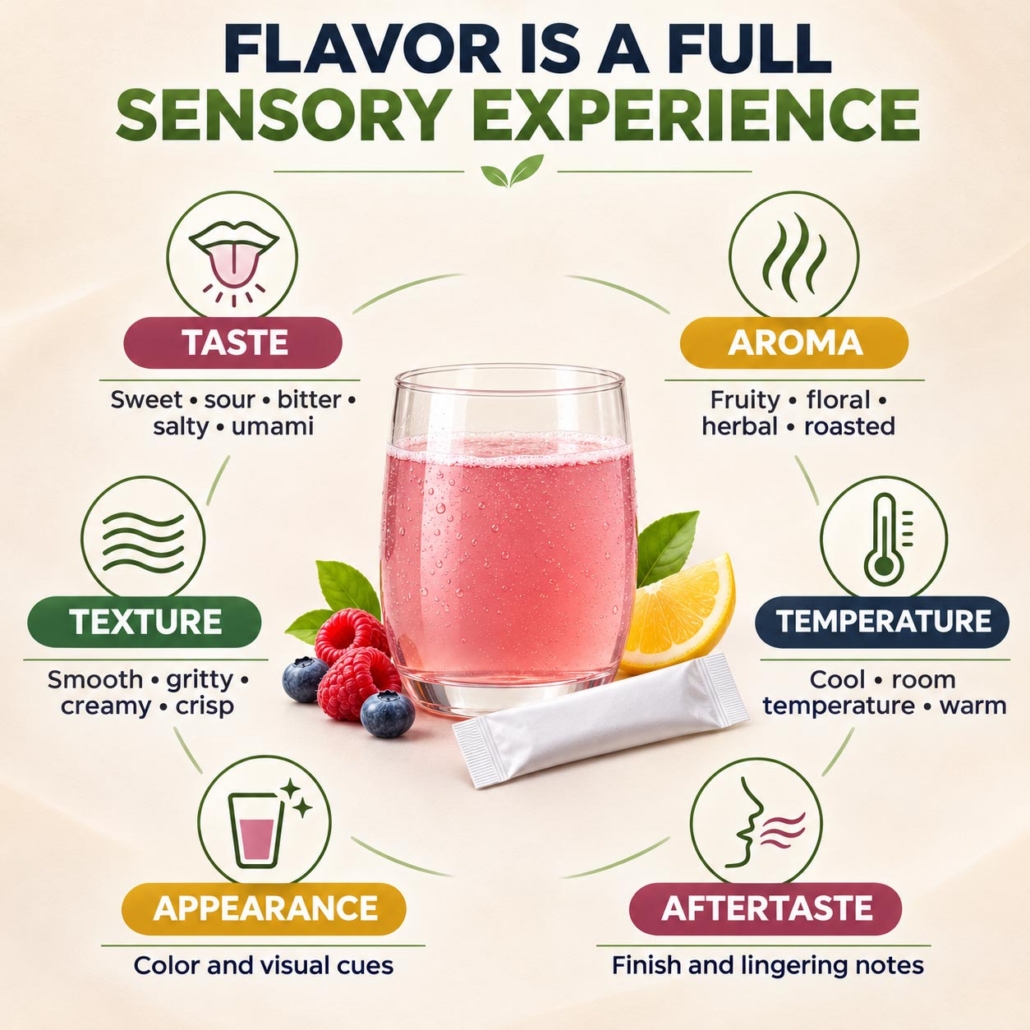
INFOGRAPHIC: Flavor Is A Full Sensory Experience

What do we mean by “flavor”?

Flavor is a combined sensory experience. Taste contributes sweetness, sourness, bitterness, saltiness, and umami. Smell adds much of the character people describe as fruity, floral, roasted, or herbal. Texture, temperature, and lingering sensations also influence how a product feels.

That matters in supplements because users experience the whole serving—not an isolated flavor label. “Lemon” might feel juicy and refreshing in a light powder, sharp and sour in a gummy, or creamy and dessert-like when paired with vanilla. The formula, format, sweetness system, and use occasion all change the experience.

Visual cues matter too. Color can influence what people expect a product to taste like, although the effect depends on context and can vary. A bright pink drink may suggest berries or watermelon; a pale golden powder may suggest citrus, ginger, or honey. The flavor and appearance should tell a compatible story.

Why do flavors bring back memories and emotions?

A familiar aroma can call up a place, person, season, or routine before someone consciously identifies why it feels familiar. The smell of cinnamon may suggest baking or winter holidays. Citrus may remind someone of a favorite drink or a refreshing shower after a workout. Vanilla can bring to mind a dessert, a candle, or a childhood kitchen.

These associations are personal rather than universal. Someone may find mint cooling and invigorating, while another associates it with toothpaste. Research reviews show that taste and smell can prompt emotional responses, and that familiarity, culture, and individual differences help shape those responses.

For a brand, the useful question is not “What does this flavor mean to everyone?” It is “What experience might this flavor invite for the people we hope to serve?”

A morning energy product may call for a profile that feels crisp and lively. A nighttime product may benefit from a softer, warmer direction. These are starting points for formulation and consumer testing—not fixed rules about how people will respond.

How can a flavor surprise feel satisfying?

Surprise can come from contrast: a familiar fruit with a tart finish, a gentle herbal note behind a sweet berry, or a warm spice that arrives after a bright citrus opening. When the surprise fits the product and feels balanced, it can make the experience more distinctive.

The key is to keep the experience understandable. If consumers expect a refreshing hydration powder, a heavy dessert profile may feel out of place. If they expect a comforting evening drink, a sharp sour note may distract from the intended mood. Sensory research also cautions that responses to novelty and familiarity differ among people and situations.

A useful formulation question is: Where should the surprise happen? It might be in the aroma, the contrast between sweet and tart, a cooling finish, or a subtle botanical note. One clear point of distinction can be more effective than adding several competing flavor ideas.

How should brands choose bold or softer supplement flavors?

Start with the product’s purpose, format, use occasion, active ingredients, and target consumer. Then decide how intense the experience should feel.

Flavor direction May suit Formulation question
Bold and vivid Products positioned around energy, performance, refreshment, or playful enjoyment Does the profile stand out while remaining easy to drink or chew regularly?
Soft and rounded Products associated with calm, evening routines, or gentle daily use Does it feel soothing without becoming bland or overly sweet?
Familiar and simple Products for broad audiences or consumers new to a flavor-forward format Does the flavor set a clear expectation and make the product approachable?
Layered with a twist Products seeking distinction while keeping a recognizable base Is the twist noticeable but balanced enough to encourage another serving?

Boldness is not the same as intensity at every point. A powder can open with a lively aroma, taste smooth in the middle, and finish clean. A gummy can have a familiar fruit base with a lightly tart edge. The design challenge is to create a coherent arc from first aroma to aftertaste.

Flavor signals across supplement categories

The table below is a directional planning guide, not a sales ranking. Emerging ideas are therefore presented as concepts to test, not proven category preferences.

Supplement category Common flavor cues Sensory goal Emerging direction to test
Daily vitamins and gummies Strawberry, orange, raspberry, berry Familiar and approachable Fruit-citrus blends or more natural fruit profiles
Protein and sports nutrition Chocolate, vanilla, strawberry; fruit flavors in lighter powders Satisfying, smooth, and enjoyable over repeated servings Coffee or dessert-inspired profiles
Hydration and electrolytes Lemon-lime, citrus, fruit punch Bright, refreshing, clean finish Distinctive citrus, tropical fruit, or light botanical notes
Greens and superfood powders Berry, tropical fruit Soften earthy notes and keep the finish fresh Pineapple-coconut or layered fruit blends
Beauty and collagen Berry and other fruit profiles Polished, pleasant, easy to incorporate into a routine Peach or fruit paired with a subtle floral note
Immune support Orange, berry, familiar fruit Bright and reassuring Fruit with a gentle ginger or botanical accent
Digestive health and fiber Berry, citrus, fruit blends Balanced sweetness and comfortable repeat use Bright fruit profiles tailored to the formula’s sweetness and texture
Sleep and relaxation Berry and soft fruit Gentle and comforting Soft fruit with a restrained floral or warm note
Brain, focus, and mood Berry, citrus Clear, fresh, and approachable Tea-inspired or fruit-and-herbal combinations
Energy and pre-workout Fruit punch, berry, citrus Vivid and energizing Coffee-inspired or more indulgent profiles

How to read the table: Public launch data supports some broad signals, but it does not establish the top-selling flavor in each benefit category.

The flavor directions in the final column are ideas for product teams to explore. These signals can help teams generate concepts. They cannot tell a brand which flavor will perform best in a particular formula, format, audience, or market.

For that, brands need to evaluate prototypes with the intended users. Test them with the intended audience and the actual formula: ingredient notes, sweetener system, format, and serving size can all change the experience.

What the data supports: Innova launch data cited by McCormick identifies strawberry, berry, raspberry, orange, and passion fruit among leading flavors in U.S. supplement and sports nutrition gummy launches from 2024–2026. Strawberry-lemonade and other fruit-citrus combinations also appear among the reported blends.

Kerry’s 2026 North American supplement chart also lists orange, strawberry, raspberry, lemon, and mixed berry among the leading flavors overall. It identifies strawberry-watermelon and tropical punch among trending flavors, and pumpkin spice and guava among forecast flavors.

In sports nutrition, Innova reports milk chocolate as a leading flavor in U.S. and Canadian launches, with dessert flavors such as ice cream and brownie gaining traction.

Recent U.S. supplement and sports nutrition gummy launches commonly feature strawberry, berry, raspberry, orange, and passion fruit. In a separate North American report, coffee was the fastest-growing flavor in sports nutrition launches over the most recent 12-month period it analyzed.

Seasonal Flavors Give Products a Sense of Occasion

Seasonal flavors can connect a supplement to a particular moment in the year. Cinnamon and apple may evoke crisp autumn days, while citrus and berries can feel bright and refreshing in warmer months. These associations can make a product feel timely and memorable.

For brand owners, seasonal flavor planning can support limited editions, promotional campaigns, and new product concepts. It can also help a familiar format feel fresh. The best choice still depends on the product’s ingredients, intended use, sweetness level, and format. A flavor that sounds appealing on a label should also work in the finished powder or gummy.

Season Popular flavor directions Sensory cues and possible applications
Winter Eggnog, cinnamon, spiced pear, creamy chocolate, peppermint, vanilla Cozy, warming, and indulgent; can suit evening powders, cocoa-style blends, and seasonal gummy concepts
Spring Lemon, grapefruit, berry, floral, honey, cucumber-mint Bright, light, and delicate; can work well in refreshing powders and fruit-forward gummies
Summer Watermelon, citrus, tropical fruit, peach, coconut, mixed berries, mint Juicy, cooling, and refreshing; can pair with hydration and active-lifestyle products
Autumn Apple, cinnamon, vanilla, maple, ginger, chai-inspired spice, cranberry Comforting, aromatic, and familiar; can support warm beverage concepts and limited seasonal flavors

These are creative directions rather than fixed rules. Regional preferences, audience expectations, formulation constraints, and the product’s sensory profile all influence the right choice. Testing combinations in the intended format can help teams assess aroma, first taste, mouthfeel, finish, and repeat appeal before committing to a seasonal launch.

Sweetener Choice Shapes the Whole Sensory Experience

Sweetener selection affects more than perceived sweetness. Different sweeteners can change how quickly sweetness appears, how long it lingers, and how a flavor feels in the mouth. They may also influence body, texture, and the finish.

For example, a fruit profile may need a clean finish to feel refreshing. A creamy vanilla or chocolate profile may benefit from a fuller sweetness and mouthfeel. Meanwhile, some high-intensity sweeteners can leave a lingering note that affects how well the flavor holds together.

That’s why sweetener decisions should happen alongside flavor development. Formulators can consider the product’s ingredients, format, target sweetness, and desired sensory profile. Brand and procurement teams can also weigh label goals, ingredient availability, cost, and supply consistency.

The most effective approach is to assess the finished product as a whole. Does sweetness arrive at the right moment? Does it support the characterizing flavor? Does the finish invite another serving? These questions help teams choose a sweetener system that fits the product experience, not just a sweetness target.

How can brands test a flavor for repeat use?

A single “Did you like it?” question can miss important details. A flavor may score well in a brief tasting but become too sweet after a full serving, leave an unwelcome aftertaste, or feel tiring when used every day.

Build sensory review around the complete experience:

  • First impression: What do aroma, appearance, and the first taste suggest?
  • Balance: Do sweetness, acidity, bitterness, and flavor intensity work together?
  • Texture and mouthfeel: Does the product feel smooth, gritty, sticky, refreshing, or coating?
  • Finish: What remains after the serving, and for how long?
  • Use occasion: Does the flavor fit when and how the product is meant to be used?
  • Repeat appeal: Would the person choose it again tomorrow or use it as part of a daily routine?
  • Expectation match: Does the product taste the way its name and appearance suggest?

Whenever possible, test more than one serving and include the actual preparation method. A powder stirred into cold water may taste different from one mixed into a smoothie. A flavor that works in a gummy may not translate to a powder. Format, ingredient load, sweetener system, and processing all influence the final sensory result.

Taste, aroma, and product sensory characteristics can affect palatability and intake. However, research on oral nutritional supplements also emphasizes that adherence depends on other personal and contextual factors, and that more work is needed to understand how sensory changes influence long-term use. Brands should treat flavor as one contributor to user experience, not a guarantee of adherence or loyalty.

Turn flavor into a product-development decision

Flavor works best when the team considers it early. A formula’s active ingredients may bring bitterness, earthiness, acidity, or mineral notes. The dosage form affects how long those notes remain in the mouth. Sweeteners and acids can change both taste and texture. Packaging and product color also influence what consumers expect.

For that reason, flavor selection belongs alongside decisions about ingredients, serving size, format, positioning, and manufacturing feasibility. A thoughtful sensory brief can guide development:

  • Define the intended feeling and use occasion. Should the product feel bright, comforting, indulgent, clean, or gently botanical?
  • Describe the audience and their flavor comfort zone. What will feel familiar, and where might they welcome discovery?
  • Map the formula’s sensory challenges. Identify bitter, earthy, metallic, sour, or lingering notes.
  • Choose a flavor direction and intensity. Decide whether familiarity, boldness, or a layered profile best supports the concept.
  • Prototype and test the full experience. Evaluate aroma, taste, texture, finish, and repeat appeal.
  • Refine for the intended format and routine. Make sure the flavor holds up in the actual serving size and preparation method.

Intermountain Nutrition’s formulation team can help brands evaluate flavor systems, taste-masking needs, ingredient compatibility, format choices, and manufacturing considerations. Teams can also request samples during development to assess taste, texture, and overall formulation quality. Explore Intermountain Nutrition’s formulation services.

Flavor can make the routine feel worth returning to

A flavor does not need to be dramatic to be memorable. Sometimes it is the bright first note that wakes up a morning routine. Sometimes it is a soft, familiar finish that makes an evening serving feel easy. Sometimes it is a small surprise that gives a product its own character.

For brand owners and formulators, the opportunity is to design that experience with intention. Ask what the product should feel like, what the user expects, and what details might invite them back. Then test those ideas with the people the product is meant to serve.

Flavor is one part of a supplement’s value. When it aligns with the formula, format, and occasion, it can help a product feel more considered—and more naturally at home in everyday life.

Ready to explore a flavor direction for your next supplement? Intermountain Nutrition’s formulation team can help you assess ingredient challenges, sensory goals, format requirements, and manufacturing feasibility as you move from concept to prototype. Start a formulation conversation.

Frequently Asked Questions

Flavor can influence first impressions and perceived enjoyment, and it may contribute to whether consumers want to use a product again. The effect depends on the audience, product format, formula, and use occasion. Flavor should be evaluated as part of the complete product experience.

Aroma and taste can become associated with people, places, foods, and routines. Later exposure may bring back a sense of familiarity or emotion. These associations vary by individual and culture, so brands should avoid assuming one flavor means the same thing to every consumer.

Choose intensity based on the product’s purpose, format, audience, and active ingredients. Bold flavors may suit energizing or playful concepts, while softer profiles may fit calmer routines. Prototype testing can show whether the direction remains appealing across a full serving and repeated use.

Recent U.S. supplement and sports nutrition gummy launches most often feature strawberry, berry, raspberry, orange, and passion fruit, according to Innova New Products data cited by McCormick. Launch frequency does not establish which flavors sell best.

Evaluate the full sensory experience: aroma, appearance, sweetness, acidity, texture, bitterness, aftertaste, and fit with the use occasion. Ask whether people would want another serving, and test the product as consumers will actually prepare or consume it.

Pleasant sensory characteristics can support palatability, which may help make a product easier to consume. However, adherence depends on many factors, and sensory appeal alone cannot guarantee regular use. Evidence from oral nutritional supplements should also be applied carefully to other supplement types.

References

Scientific Research

Lester, S., et al. Factors Affecting Adherence, Intake, and Perceived Palatability of Oral Nutritional Supplements: A Literature Review. The Journal of Nutrition, Health & Aging, 2022.

Mastinu, M., et al. Emotional responses to taste and smell stimuli: Self-reports, physiological measures, and a potential role for individual and genetic factors. Journal of Food Science, 2023.

Miranda, M. I. (2012). Taste and odor recognition memory: The emotional flavor of life. Reviews in the Neurosciences, 23(5–6), 481–499.

Spence, C. On the Relationship(s) Between Color and Taste/Flavor. i-Perception, 2019.

Tan, V. W. K., Wee, M. S. M., Tomic, O., & Goh, A. T. (2019). Temporal sweetness and side tastes profiles of 16 sweeteners using temporal check-all-that-apply (TCATA). Food Research International, 121, 39–47.

Industry and Market Sources

Glanbia Nutritionals. Gummy supplement trends: Formats, flavors, and functions for 2026.

Kerry. (2026). Supplements taste charts 2026: North America [Trend report].

McCormick Flavor Solutions. Creating memorable taste experiences: Texture in action.

McCormick Flavor Solutions.  First in Flavor™: Predicting flavor trends before they happen.

McCormick Flavor Solutions. Familiar sweet flavors, fresh possibilities.

McCormick Flavor Solutions. Nutrition & functional beverages.

McCormick Flavor Solutions. Traditional protein beverages: Whey & plant [Trend snapshot]. 

McCormick Flavor Solutions. Trends in Supplement Gummies.

McCormick Flavor Solutions. Understanding flavor.

McCormick Flavor Solutions. (2026, September 16). Voice of the expert: Tapping into the complexity of vanilla.

The Vitamin Shoppe. (2026, June 29). From fiber to flavor: The Vitamin Shoppe unveils five defining trends shaping the next era of health and wellness.

Related Postings

Thermogenic Activation Tea Powder Stock Formula Supplement
GLP-1 Injector Pens
Ingredients for Metabolic Supplement Formulation