Citrus Flavonoids in Supplement Formulation: Why This Ingredient Category Is Trending

September 4, 2026 |

Citrus peels contains a diverse range of flavonoids that may offer far more formulation potential than traditional vitamin C. Explore the key compounds and how supplement brands can evaluate their sources and commercial applications.

At a Glance

  • Citrus flavonoids are a family of polyphenolic compounds, rather than a single ingredient.
  • Important compounds for supplement development include hesperidin, naringin, eriocitrin, nobiletin, and tangeretin.
  • Citrus species and plant tissues contain different flavonoid profiles, giving formulators multiple sourcing and standardization options.
  • Citrus peel is an especially valuable commercial source because it can contain higher concentrations of phenolic compounds than the corresponding edible portions of the fruit.
  • Research extends beyond direct antioxidant activity to areas including vascular function, metabolic signaling, inflammatory pathways, neurological health, bioavailability, and interactions with the gut microbiota.
  • Bioavailability can be a significant formulation consideration. Many citrus flavonoids undergo extensive metabolism, including transformations involving intestinal microorganisms.
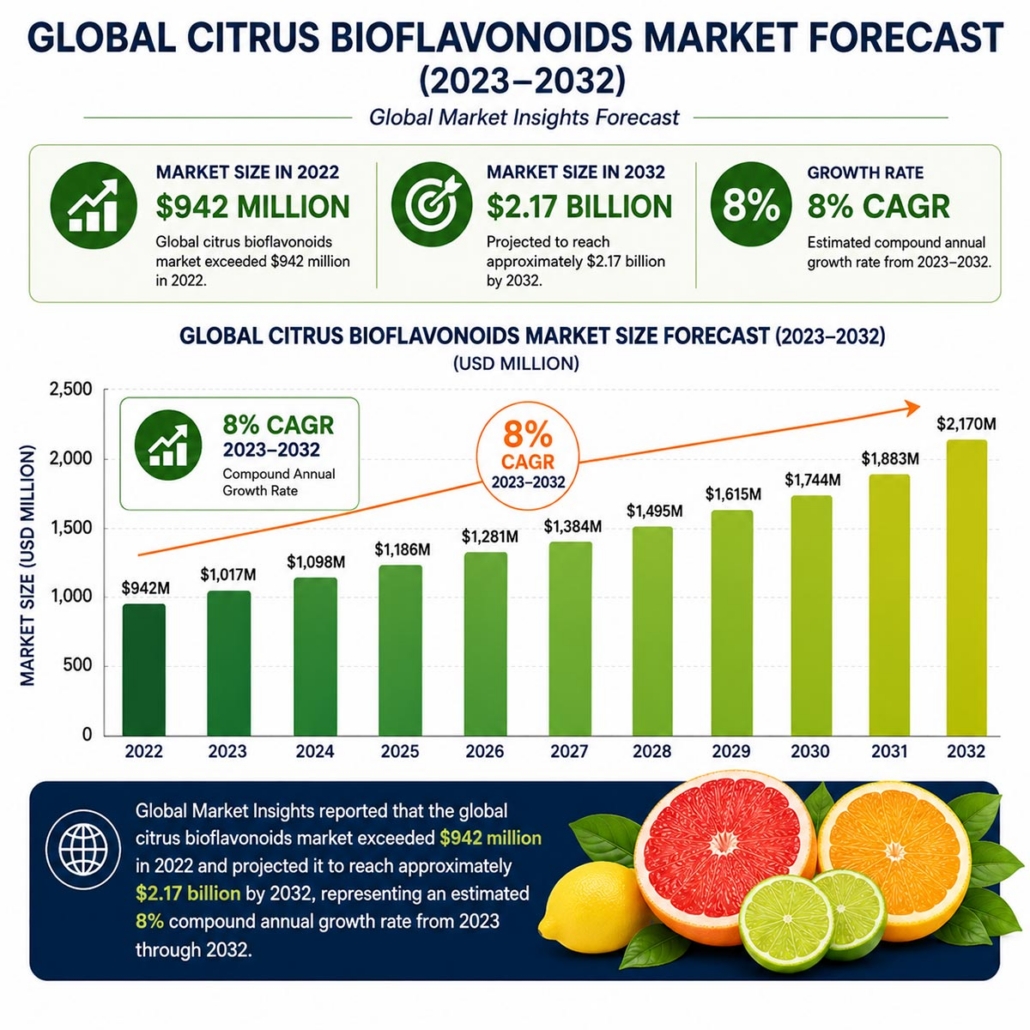
  • Commercial interest is also growing. Global Market Insights valued the citrus bioflavonoids market at more than $942 million in 2022 and projected an 8% CAGR from 2023 through 2032, reaching approximately $2.17 billion by 2032.

A Growing Category Beyond Vitamin C

Citrus flavonoids are moving beyond their familiar role alongside vitamin C. Today, this diverse family of plant compounds is attracting attention for formulations targeting cardiovascular wellness, metabolic health, healthy aging, active nutrition, cognitive wellness, and antioxidant support.

More Than a Generic Citrus Bioflavonoid Blend

The opportunity extends well beyond a generic “citrus bioflavonoid” blend. Hesperidin, naringin, eriocitrin, nobiletin, tangeretin, and other citrus-derived compounds have distinct chemical structures, source profiles, research histories, and formulation considerations. That gives supplement brands opportunities to select ingredients more intentionally around a specific product concept.

Citrus Processing & Ingredient Valorization

At the same time, citrus processing generates substantial quantities of peel and other side streams rich in potentially valuable bioactive compounds. Citrus peel can account for roughly 40–50% of fruit mass and contains flavanones and polymethoxylated flavones, making citrus flavonoids relevant to the growing conversation around ingredient valorization and circular sourcing.

A Flexible Platform for Supplement Innovation

For supplement brands looking beyond established polyphenols such as curcumin, quercetin, and resveratrol, citrus flavonoids offer a compelling combination: recognizable botanical origins, expanding scientific research, diverse applications, and considerable formulation flexibility.

Why Are Citrus Flavonoids Trending in Supplement Formulation?

Citrus flavonoids occupy an interesting position in today’s nutraceutical market. They are derived from fruits consumers already know, yet the science surrounding their individual constituents is becoming considerably more sophisticated.

That combination gives brands an accessible ingredient story on the front of the package and a deeper technical story behind the formulation.

Plant-Based Ingredients Continue to Carry Strong Appeal

Oranges, lemons, mandarins, grapefruit, and other citrus fruits provide an intuitive botanical origin that consumers can readily understand.

Behind that simple story is a chemically diverse group of compounds. Citrus fruits contain flavanones, flavones, flavonols, and polymethoxylated flavones, with their concentrations varying according to species, cultivar, fruit tissue, maturity, and other factors.

That diversity gives product developers choices. A formulation might use a broad citrus bioflavonoid complex, an extract standardized to a particular compound, or a more specialized ingredient built around polymethoxylated flavones.

The Science Is Moving Beyond Antioxidant Support

Citrus flavonoids have traditionally been associated with antioxidant activity. That remains relevant, but it no longer captures the full research landscape.

Researchers have investigated citrus flavonoids in relation to oxidative and inflammatory pathways, metabolic regulation, neurological health, and other biological processes. Human evidence varies considerably by flavonoid and endpoint, so the strength of evidence should be evaluated compound by compound rather than generalized across the entire category.

Bioavailability research has added another layer. Many citrus flavonoids have limited direct oral bioavailability, and substantial amounts can reach the colon, where interactions with the gut microbiota and subsequent biotransformation may affect their biological activity. Researchers are also investigating delivery technologies intended to improve oral bioavailability.

For formulators, this means ingredient form and specification can matter as much as the ingredient name itself.

Citrus Processing Creates An Upcycling Opportunity

Citrus flavonoids also intersect with another important ingredient trend: extracting higher-value compounds from food-processing side streams.

Citrus peel can represent approximately 40–50% of total fruit mass, depending on the fruit and processing context. Rather than treating this material solely as waste, processors can use citrus peel as a source of phenolic compounds, including hesperidin, naringin, nobiletin, and tangeretin.

Research indicates that citrus peel can contain greater concentrations of these compounds than corresponding edible portions of the fruit.

This creates an interesting narrative for supplement brands. A citrus-derived active may offer both a functional ingredient story and, when the actual supply chain supports it, an opportunity to discuss by-product valorization, upcycling, or circular sourcing.

Those claims should still be supplier-specific. A citrus ingredient should not automatically be described as “upcycled” simply because citrus peel can be sourced from juice-processing streams.

COVID-19 Accelerated Interest in Preventive Wellness

The pandemic also helped elevate consumer awareness of citrus-derived ingredients. Vitamin C and citrus became highly visible within the immune-health category, while consumers more broadly increased their focus on proactive wellness and nutritional supplementation.

For citrus flavonoids, however, the more interesting development is what happened afterward.

The category is no longer limited to immune-support positioning. Research and commercial development increasingly connect individual citrus flavonoids with cardiovascular wellness, metabolic health, healthy aging, cognitive wellness, and active nutrition. That creates a more diversified, and potentially more durable, innovation platform.

Market Forecasts Point to Continued Commercial Growth

Market projections should always be interpreted cautiously because research firms use different category definitions and methodologies. Still, the direction of the forecasts is notable.

Global Market Insights reported that the global citrus bioflavonoids market exceeded $942 million in 2022 and projected it to reach approximately $2.17 billion by 2032, representing an estimated 8% compound annual growth rate from 2023 through 2032. The firm identifies pharmaceuticals and dietary supplements, food and beverages, animal feed, and cosmetics and personal care among the applications contributing to demand.

For supplement brands, the significance is not simply that another botanical market is projected to grow. Citrus flavonoids can participate in multiple established and emerging wellness categories, allowing brands to consider them across a broader innovation pipeline.

Key Takeaway: Citrus flavonoids combine consumer familiarity with increasingly differentiated science. Their potential across cardiovascular, metabolic, healthy-aging, active-nutrition, and other formulations, along with opportunities to derive valuable compounds from citrus processing streams, is helping move the category beyond its traditional association with vitamin C.

INFOGRAPHIC: Global Citrus Bioflavonoids Market Growth
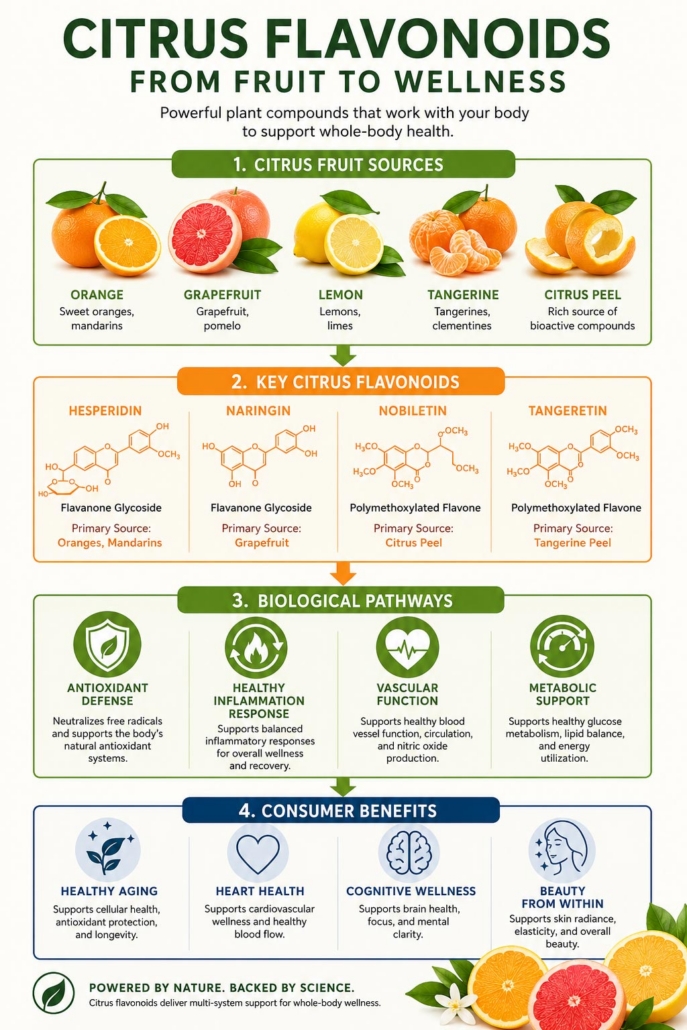
INFOGRAPHIC: What Are Citrus Flavonoids

What Are Citrus Flavonoids?

Citrus flavonoids are naturally occurring polyphenolic compounds produced by plants in the genus Citrus. They occur throughout citrus fruits and plant tissues, including the peel, pulp, juice, membranes, seeds, and leaves, although the type and concentration of flavonoids differ substantially among species and tissues.

“Citrus flavonoids” therefore describes a chemical family rather than one standardized ingredient. Understanding that distinction is important when evaluating commercial raw materials.

What Types of Flavonoids Are Found in Citrus?

Two groups are particularly relevant to supplement development.

Flavanones include compounds such as hesperidin, naringin, narirutin, and eriocitrin. They are among the characteristic flavonoids found in citrus fruits, with their distribution differing among citrus species. For example, naringin is particularly associated with grapefruit and bitter orange and contributes to characteristic bitterness.

Polymethoxylated flavones (PMFs) include nobiletin, tangeretin, and sinensetin. These compounds are particularly associated with citrus peel and have attracted research interest because their structures and biological behavior differ from those of conventional flavanone glycosides.

Citrus also contains other flavonoids — including flavones and flavonols, but their abundance and commercial relevance vary.

Why Is Citrus Peel Such an Important Source?

The peel is particularly interesting from a nutraceutical perspective because it concentrates multiple bioactive compounds.

A review of citrus peel composition identifies flavanones such as naringin and hesperidin and PMFs such as nobiletin and tangeretin among its important phenolic constituents. The authors also note that citrus peels can contain greater amounts of these compounds than the edible portions of the corresponding fruits.

Commercially, this creates an opportunity to recover flavonoids from material generated during citrus juice and food processing. Extraction and purification can concentrate particular compounds or groups of compounds for use in nutraceutical ingredients.

However, the resulting materials are not necessarily equivalent. The citrus species, part of the fruit, extraction process, purification method, standardization target, excipients, and final ingredient specification can all influence what ultimately enters a formulation.

Citrus Bioflavonoid Complex vs. Standardized Flavonoid: What’s the Difference?

A citrus bioflavonoid complex generally supplies multiple naturally occurring citrus flavonoids rather than emphasizing one purified compound. This can be useful for broad botanical formulations and products where the citrus-source story is central to positioning.

A standardized citrus extract provides a defined concentration of one or more target compounds. A brand interested specifically in hesperidin, for example, may prefer an ingredient with a clearly established hesperidin specification rather than a general citrus complex.

More specialized ingredients may concentrate PMFs such as nobiletin and tangeretin or employ delivery technologies intended to address the limited oral bioavailability associated with some citrus flavonoids. Research has explored emulsions, self-emulsifying systems, solid dispersions, and other approaches to improve flavonoid delivery, although improved bioavailability should not automatically be assumed to produce superior clinical outcomes.

Why Ingredient Identity Matters for Supplement Brands

This distinction becomes especially important when a brand wants to build its positioning around published research.

Evidence generated with a specific flavonoid, dose, chemical form, or standardized extract cannot automatically be extrapolated to every ingredient marketed as “citrus bioflavonoids.” Supplier documentation should therefore establish the botanical source, extraction or processing method, identity, assay or standardization, purity, and other specifications relevant to the finished product.

That approach also creates a stronger foundation for formulation decisions. Hesperidin, naringin, eriocitrin, nobiletin, and tangeretin should not be treated as interchangeable actives simply because they all originate from citrus.

In the next section, we’ll look at each of these key citrus flavonoids individually—including alternate names, primary citrus sources, commercial source material and extraction, principal research areas, and where each may fit within supplement formulation.

Key Takeaway: “Citrus flavonoids” is an umbrella category. The source material, flavonoid profile, standardization, processing, and delivery technology can meaningfully distinguish one commercial ingredient from another. Supplement brands should therefore formulate around a defined ingredient specification and relevant evidence rather than relying on the citrus bioflavonoid name alone.

What’s the Difference Between Citrus Flavanone Glycosides & Polymethoxylated Flavones?

Two important groups of citrus flavonoids are flavanone glycosides and polymethoxylated flavones (PMFs). Their different chemical structures influence how they are metabolized and how they behave in supplement formulations.

Flavanone glycosides include hesperidin, naringin, and eriocitrin. These compounds consist of a flavanone attached to one or more sugar molecules. During digestion and metabolism, those sugars may be removed through enzymatic or microbial activity, producing compounds such as hesperetin from hesperidin, naringenin from naringin, and eriodictyol from eriocitrin.

Polymethoxylated flavones (PMFs) such as nobiletin and tangeretin have a different structure. Instead of attached sugars, they contain multiple methoxy groups and are relatively lipophilic. PMFs are particularly associated with citrus peel and have attracted research interest in metabolic, neurological, cellular, and healthy-aging applications.

For formulators, the distinction matters because flavanone glycosides and PMFs can differ in solubility, metabolism, bioavailability, and delivery requirements. Selecting a citrus flavonoid therefore involves more than choosing its botanical source; its chemical form can significantly influence how it performs in a finished supplement.

Comparison: Citrus Flavanone Glycosides vs. Polymethoxylated Flavones

Flavanone Glycosides Polymethoxylated Flavones (PMFs)
Key Citrus Examples Hesperidin, naringin, eriocitrin Nobiletin, tangeretin, sinensetin
Basic Structure Flavanone attached to one or more sugar molecules Flavone containing multiple methoxy groups
Common Citrus Sources Orange, mandarin, grapefruit, pomelo, lemon Mandarin, tangerine, sweet orange, bitter orange
Where They’re Found Peel, membranes, pulp, and juice; distribution varies by compound Concentrated primarily in the peel, especially the outer flavedo
Relative Polarity Generally more polar because of attached sugars More lipophilic because of multiple methoxy groups
Metabolism Sugar groups may be removed by enzymes or gut microorganisms before further metabolism Do not require removal of attached sugars but undergo other metabolic transformations
Research Examples Vascular function, metabolic health, antioxidant and inflammatory pathways Metabolic health, cellular signaling, neurological health, and healthy aging
Formulation Considerations Solubility, metabolism, dose, and—in some cases—bitterness Poor aqueous solubility and lipophilic character can influence delivery-system selection
Potential Formats Capsules, powders, stick packs, gummies, and beverages when technically appropriate Capsules and concentrated extracts; specialized delivery systems may be useful for aqueous formats

Key Citrus Flavonoids for Supplement Brands

Although citrus flavonoids share a botanical family, their source materials, chemistry, sensory properties, research bases, and commercial applications differ substantially. Understanding those differences helps brands choose an ingredient based on the intended formulation rather than treating “citrus bioflavonoids” as a single interchangeable category.

Five compounds are particularly relevant to current supplement development: hesperidin, naringin, eriocitrin, nobiletin, and tangeretin.

Mandarin Orange Fruit for Citrus Flavonoid Hesperidin in Supplement Formulation

What Is Hesperidin?

Also Known As: Hesperetin-7-O-rutinoside, hesperetin 7-rutinoside, hesperidoside, vitamin P (historical/collective terminology)

Hesperidin is a flavanone glycoside found predominantly in sweet oranges and mandarins, although it occurs in other citrus species. It is especially concentrated in citrus peel, including the flavedo and albedo, making orange-processing by-products an important potential commercial source.

Commercial production can involve drying and milling peel followed by solvent-based extraction, separation, purification, and standardization. Researchers have also investigated ultrasound-assisted, microwave-assisted, and subcritical-water approaches for recovering hesperidin from citrus materials.

Among citrus flavonoids, hesperidin has one of the more developed human research profiles. Studies have investigated cardiovascular and vascular function, endothelial function, blood pressure, inflammatory markers, metabolic health, and antioxidant activity.

However, hesperidin has relatively low water solubility and limited oral bioavailability, prompting interest in micronized forms and other delivery approaches. For supplement brands, it is particularly relevant to cardiovascular, circulation, metabolic-health, healthy-aging, and daily antioxidant formulations. Its relatively mild sensory profile also makes it easier to work with than highly bitter flavonoids such as naringin.

Grapefruit for Citrus Flavonoid Naringin in Supplement Formulation

What Is Naringin?

Also Known As: Naringenin-7-O-neohesperidoside, naringenin 7-neohesperidoside, naringoside

Naringin is another flavanone glycoside, but its citrus identity is closely associated with grapefruit and pomelo. It occurs particularly in the peel, pith, and membranes and contributes substantially to the characteristic bitterness of grapefruit.

Commercial recovery typically begins with citrus peel or other processing materials, followed by extraction, separation, purification, and concentration. Conventional solvent extraction remains common in research and processing, while ultrasound-, microwave-, pressure-, and other assisted extraction technologies have also been studied.

Research on naringin spans antioxidant and inflammatory pathways, lipid and glucose metabolism, cardiovascular biology, and metabolic health. Much of the mechanistic evidence remains preclinical, so product developers should distinguish these findings from established human outcomes.

From a formulation standpoint, bitterness is one of naringin’s defining challenges. Capsules can bypass that issue, while gummies and powders may require careful dose selection, flavor architecture, sweetening, and taste masking. Its grapefruit association can also become an advantage when the finished product intentionally uses a grapefruit or sophisticated bitter-citrus flavor profile.

Tangarine Fruit for Citrus Flavonoid Nobiletin for Supplement Formulation

What Is Nobiletin?

Also Known As: NOB; 5,6,7,8,3′,4′-hexamethoxyflavone; citrus polymethoxyflavone

Nobiletin differs structurally from hesperidin, naringin, and eriocitrin. It is a polymethoxylated flavone (PMF) found predominantly in citrus peel, with particularly important sources including mandarins, tangerines, sweet oranges, bitter oranges, and related citrus species.

PMFs are concentrated largely in the outer peel or flavedo. Commercial nobiletin may therefore be supplied through standardized citrus peel extracts or more concentrated PMF ingredients, sometimes alongside tangeretin and other naturally occurring citrus PMFs.

Nobiletin has generated considerable research interest in metabolic health, lipid metabolism, inflammatory signaling, neurological health, cognition, circadian biology, and healthy aging. Much of this work remains preclinical, making careful interpretation essential when developing consumer claims.

Nevertheless, the breadth of emerging research gives nobiletin an interesting position for premium healthy-aging, cognitive-wellness, metabolic-health, and longevity-oriented formulations. Its differentiated PMF chemistry can also give brands a more specialized ingredient story than a conventional citrus bioflavonoid complex.

Lemon Fruit for Citrus Flavonoid Eriocitrin in Supplement Formulation

What Is Eriocitrin?

Also Known As: Eriodictyol-7-O-rutinoside, eriodictyol 7-rutinoside, eriodictyol rutinoside

Eriocitrin is a flavanone glycoside strongly associated with lemons, particularly lemon juice and peel. Chemically, it consists of the flavanone eriodictyol attached to a rutinoside sugar group.

Commercial eriocitrin ingredients may therefore be derived from lemon-processing materials, including peel and other fractions generated during juice production, followed by extraction and concentration or purification. As with other citrus flavonoids, the exact source material and degree of standardization should be verified with the ingredient supplier.

Eriocitrin has been investigated primarily for antioxidant activity, oxidative metabolism, lipid metabolism, and metabolic health, although its clinical evidence base is smaller than that of hesperidin. Its lemon origin makes it particularly interesting for supplement concepts where the botanical source and flavor system can reinforce one another.

Potential applications include active nutrition, metabolic wellness, healthy aging, antioxidant formulas, and citrus-flavored powders or stick packs. Brands should still formulate around the evidence for the specific ingredient rather than assuming that research on hesperidin or other citrus flavanones applies directly to eriocitrin.

Orange Fruit for Citrus Flavonoid Hesperidin in Supplement Formulation

What Is Tangeretin?

Also Known As: Tangeritin; 5,6,7,8,4′-pentamethoxyflavone; citrus polymethoxyflavone

Tangeretin is another polymethoxylated flavone concentrated in citrus peel, particularly the flavedo. It occurs in mandarins and tangerines as well as sweet and bitter oranges and other citrus species. Like nobiletin, tangeretin can be recovered from citrus-processing side streams, and the two compounds frequently occur together in PMF-rich extracts.

Research has demonstrated the feasibility of techniques such as ultrasound-assisted extraction for recovering nobiletin and tangeretin from citrus peel, reinforcing the potential to valorize citrus-processing materials.

Research on tangeretin has explored cellular signaling, oxidative and inflammatory pathways, lipid metabolism, metabolic health, neurological function, and other areas associated with healthy aging. However, much of the evidence remains laboratory or animal-based rather than clinical.

For supplement brands, tangeretin may therefore be most appropriate as part of a standardized PMF complex or advanced citrus extract, rather than as the foundation for aggressive standalone benefit claims. It may fit particularly well in healthy-aging, metabolic, cellular-wellness, and premium botanical formulations.

How Do the Key Citrus Flavonoids Compare?

The differences among these compounds become especially important when selecting an ingredient for a commercial product.

Citrus Flavonoid Primary Citrus Association Flavonoid Type Principal Research Areas Potential Formulation Fit Key Consideration
Hesperidin Orange, mandarin Flavanone glycoside Vascular, cardiovascular, metabolic Heart health, healthy aging, metabolic wellness Limited solubility and bioavailability
Naringin Grapefruit, pomelo Flavanone glycoside Metabolic, lipid, oxidative and inflammatory pathways Metabolic wellness, active nutrition Pronounced bitterness
Eriocitrin Lemon Flavanone glycoside Antioxidant and metabolic research Active nutrition, antioxidant and metabolic wellness Smaller human evidence base
Nobiletin Mandarin, tangerine, orange peel Polymethoxylated flavone Metabolic, cognitive, neurological, healthy aging Longevity, cognitive and premium wellness Much evidence remains preclinical
Tangeretin Tangerine, mandarin, orange peel Polymethoxylated flavone Cellular, metabolic and neurological research Healthy aging, cellular and advanced botanical formulas Often more logical within a PMF-rich extract

Should Brands Choose a Single Flavonoid or a Citrus Complex?

The answer depends on what the product needs to accomplish.

A single standardized flavonoid may make more sense when a formulation is designed around research conducted on that particular compound. Hesperidin is a good example: a brand developing a vascular-health product may want a clearly characterized hesperidin ingredient at a dose informed by relevant human studies.

A citrus bioflavonoid or PMF complex can make more sense when the goal is broader botanical positioning or when multiple naturally co-occurring compounds contribute to the ingredient story. Nobiletin and tangeretin, for example, naturally coexist in citrus peel and are available within PMF-rich extracts.

In either case, the ingredient name alone is not enough. Brands should evaluate botanical source, plant part, extraction method, standardization, assay, purity, excipients, stability, sensory properties, and evidence supporting the specific commercial material.

Key Takeaway: The major citrus flavonoids are not interchangeable. Hesperidin currently offers a comparatively developed human research story, naringin brings metabolic interest alongside significant bitterness, eriocitrin offers a distinctive lemon-derived option, and nobiletin and tangeretin open more specialized opportunities around PMF-rich citrus extracts and emerging healthy-aging research.

Choosing among them should begin with the intended product benefit and evidence base, then account for dose, sensory performance, delivery format, and commercial specification.

How Do Citrus Flavonoids Work in the Body?

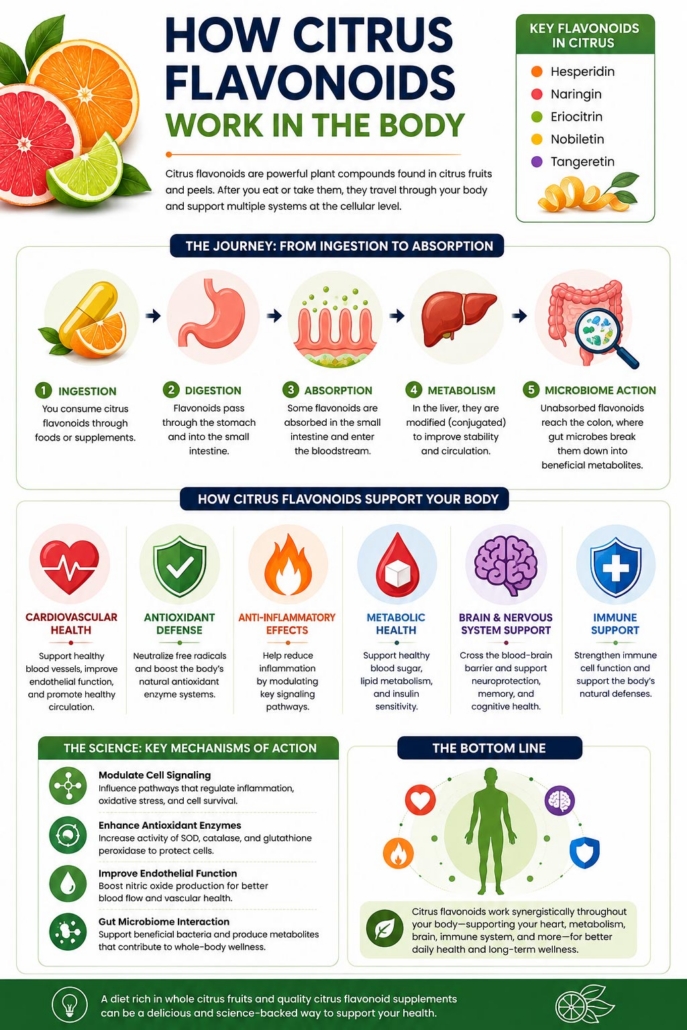
Citrus flavonoids are often described simply as antioxidants. While antioxidant activity is part of the story, current research points to a much more complex picture involving absorption, metabolism, cellular signaling, vascular function, metabolic pathways, and interactions with the gut microbiome.

These mechanisms also vary by compound. Hesperidin, naringin, eriocitrin, nobiletin, and tangeretin differ structurally and do not necessarily follow identical pathways after consumption. Understanding what happens after ingestion helps explain both their potential biological effects and some of the challenges involved in formulating them effectively.

INFOGRAPHIC: How Citrus Flavonoids Work In The Body

From General Probiotics to Targeted Microbiome Solutions

Traditional probiotics often compete on familiar strains, colony-forming unit counts, and broad digestive health claims. Although these products remain relevant, similar formulations have made differentiation increasingly difficult.

Akkermansia offers a different scientific narrative. Rather than focusing primarily on microbial population support within the intestinal lumen, it is closely associated with the mucus layer and gut barrier environment.

This distinction allows brands to build more focused product stories around:

  • Intestinal barrier support
  • Microbiome-host communication
  • Metabolic wellness
  • Healthy weight management
  • Healthy aging
  • Precision microbiome nutrition

The ingredient may be especially valuable for consumers who already understand basic probiotic concepts and are looking for a more advanced microbiome solution.

How Are Citrus Flavonoids Absorbed & Metabolized?

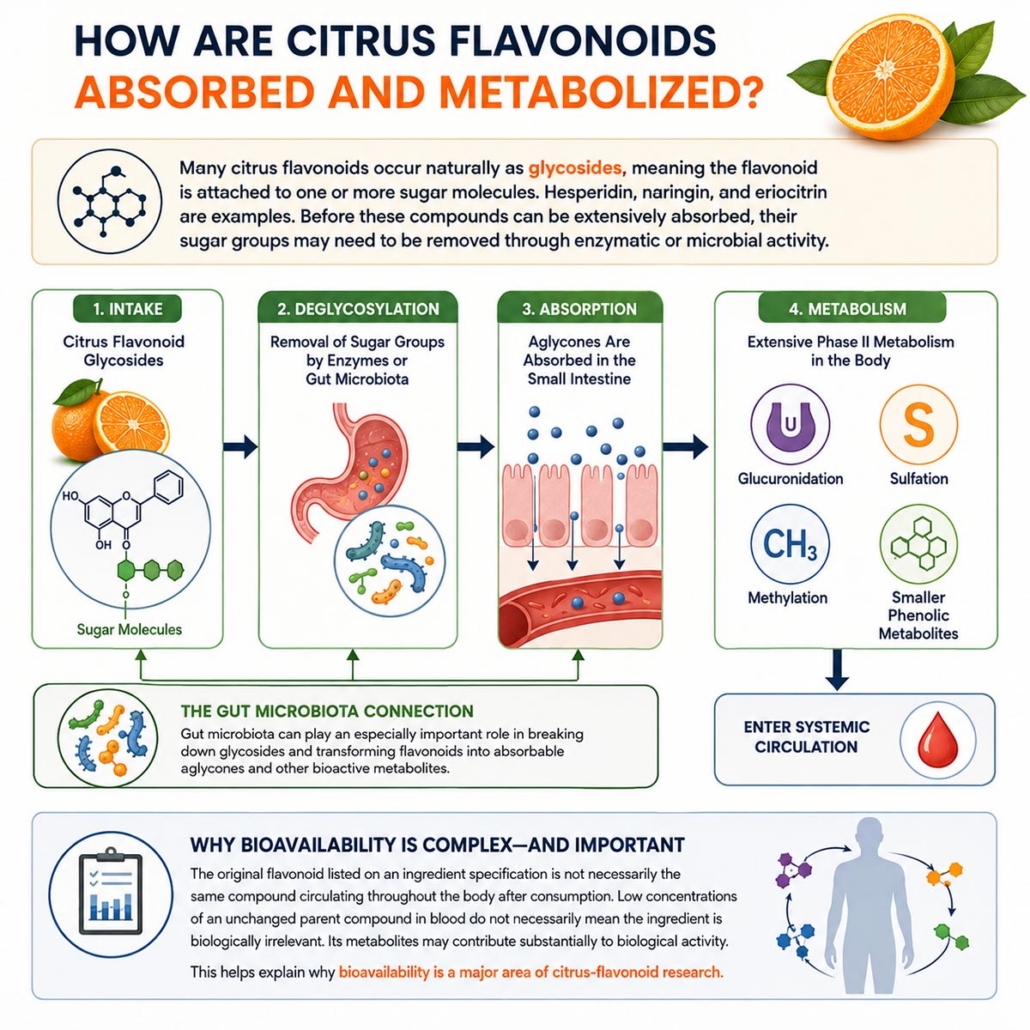
Many citrus flavonoids occur naturally as glycosides, meaning the flavonoid is attached to one or more sugar molecules. Hesperidin, naringin, and eriocitrin are examples. Before these compounds can be extensively absorbed, their sugar groups may need to be removed through enzymatic or microbial activity.

Consequently, the original flavonoid listed on an ingredient specification is not necessarily the same compound circulating throughout the body after consumption.

Citrus flavonoids can be transformed into aglycones and subsequently metabolized into glucuronidated, sulfated, methylated, and smaller phenolic metabolites. The gut microbiota can play an especially important role in these transformations.

This helps explain why bioavailability is a major area of citrus-flavonoid research. Low concentrations of an unchanged parent compound in blood do not necessarily mean the ingredient is biologically irrelevant. Its metabolites may contribute substantially to biological activity.

INFOGRAPHIC: Flavonoids Absorbtion And Metabolization

How Does the Gut Microbiome Influence Citrus Flavonoids?

A portion of ingested citrus flavonoids can reach the large intestine, where microorganisms participate in their metabolism. Gut bacteria can cleave sugar groups and further transform flavonoid structures into smaller compounds that may subsequently be absorbed.

This creates a two-way area of research interest. The microbiota can affect how dietary flavonoids are metabolized, while flavonoids and their metabolites may also influence the intestinal environment and microbial populations. Individual differences in gut microbiota could therefore contribute to variability in how people metabolize and respond to polyphenols.

For supplement developers, this emerging science reinforces an important point: the biological activity of a citrus flavonoid cannot always be predicted solely from the amount of the original compound that reaches systemic circulation unchanged.

Do Citrus Flavonoids Act as Antioxidants?

Yes, but describing citrus flavonoids simply as compounds that “neutralize free radicals” can oversimplify how polyphenols may function in vivo.

Citrus flavonoids can demonstrate direct radical-scavenging activity under experimental conditions. However, after ingestion they are extensively metabolized, and circulating concentrations can be much lower than concentrations commonly used in laboratory antioxidant assays. Researchers therefore increasingly examine how flavonoids and their metabolites may interact with cellular redox signaling and endogenous antioxidant-defense systems.

This distinction is important for supplement communication. A more scientifically accurate formulation story focuses on supporting antioxidant defenses and cellular responses to oxidative stress, rather than implying that citrus flavonoids simply circulate through the body extinguishing free radicals.

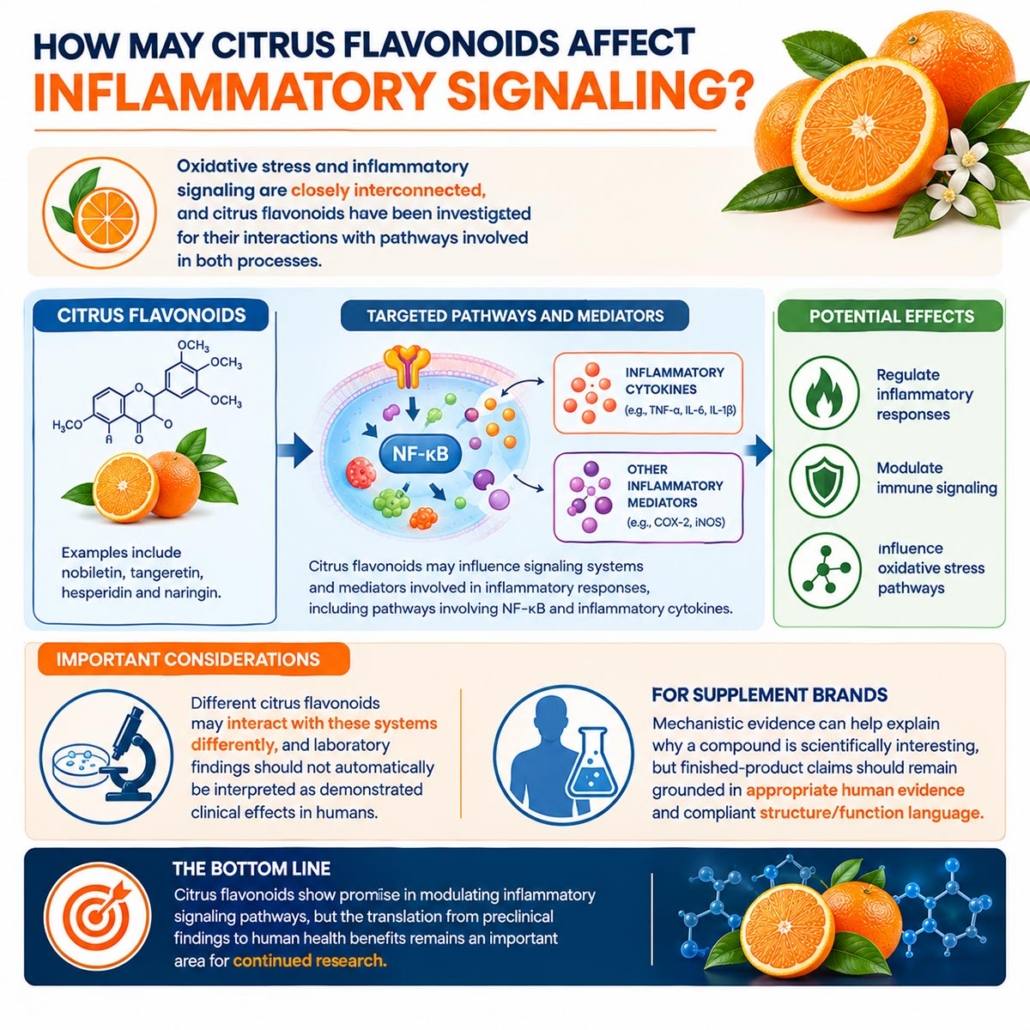
INFOGRAPHIC: Citrus Flavonoids Affect Inflammatory Signaling

How May Citrus Flavonoids Affect Inflammatory Signaling?

Oxidative stress and inflammatory signaling are closely interconnected, and citrus flavonoids have been investigated for their interactions with pathways involved in both processes.

Preclinical research has examined effects on signaling systems and mediators associated with inflammatory responses, including pathways involving NF-κB and inflammatory cytokines.

Different citrus flavonoids may interact with these systems differently, and laboratory findings should not automatically be interpreted as demonstrated clinical effects in humans.

For supplement brands, this distinction is particularly important.

Mechanistic evidence can help explain why a compound is scientifically interesting, but finished-product claims should remain grounded in appropriate human evidence and compliant structure/function language.

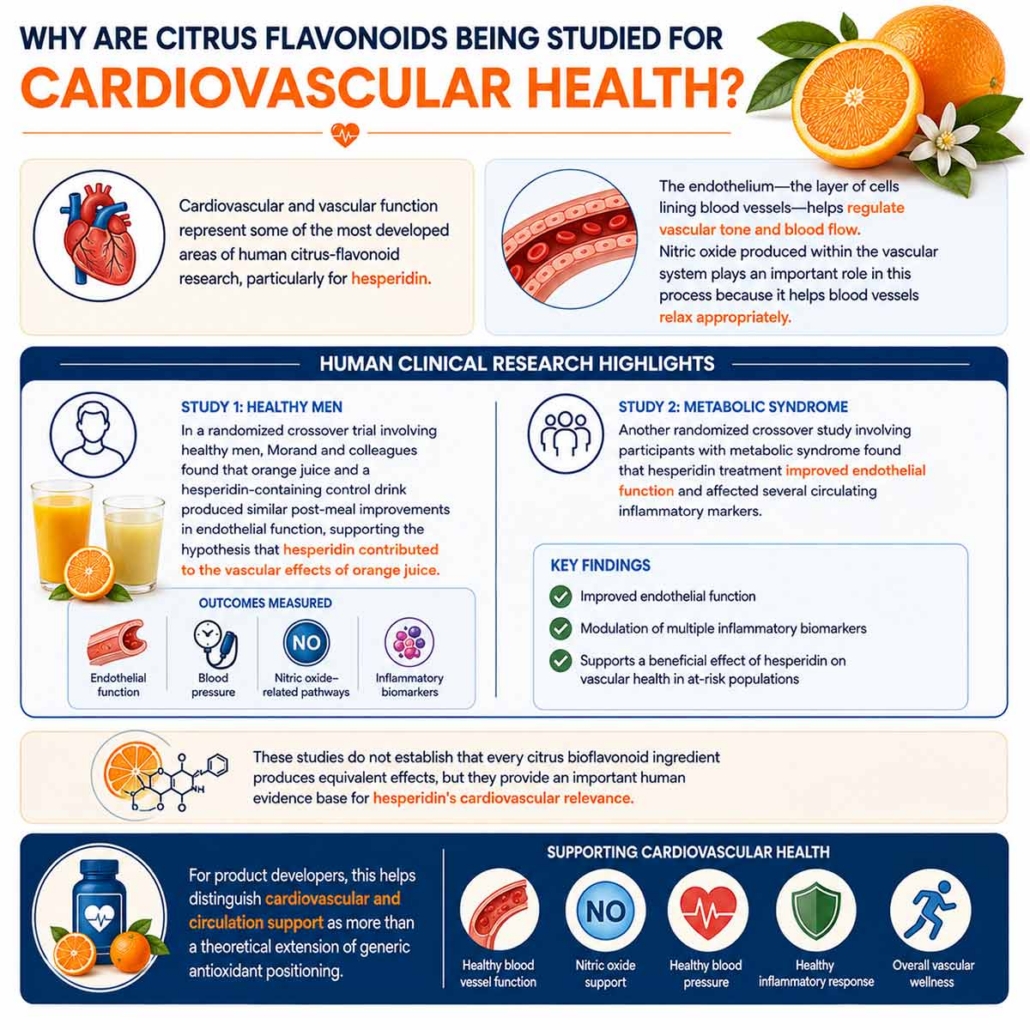
Why Are Citrus Flavonoids Being Studied for Cardiovascular Health?

Cardiovascular and vascular function represent some of the most developed areas of human citrus-flavonoid research, particularly for hesperidin.

The endothelium, the layer of cells lining blood vessels, helps regulate vascular tone and blood flow. Nitric oxide produced within the vascular system plays an important role in this process because it helps blood vessels relax appropriately.

Clinical research has examined whether hesperidin and hesperidin-rich orange products can influence endothelial function, blood pressure, nitric oxide-related pathways, and inflammatory biomarkers.

In a randomized crossover trial involving healthy men, Morand and colleagues found that orange juice and a hesperidin-containing control drink produced similar post-meal improvements in endothelial function, supporting the hypothesis that hesperidin contributed to the vascular effects of orange juice.

Another randomized crossover study involving participants with metabolic syndrome found that hesperidin treatment improved endothelial function and affected several circulating inflammatory markers.

INFOGRAPHIC: Citrus Flavonoids For Cardiovascular Health

These studies do not establish that every citrus bioflavonoid ingredient produces equivalent effects, but they provide an important human evidence base for hesperidin’s cardiovascular relevance.

For product developers, this helps distinguish cardiovascular and circulation support as more than a theoretical extension of generic antioxidant positioning.

INFOGRAPHIC: Citrus Flavonoids For Metabolic Pathways

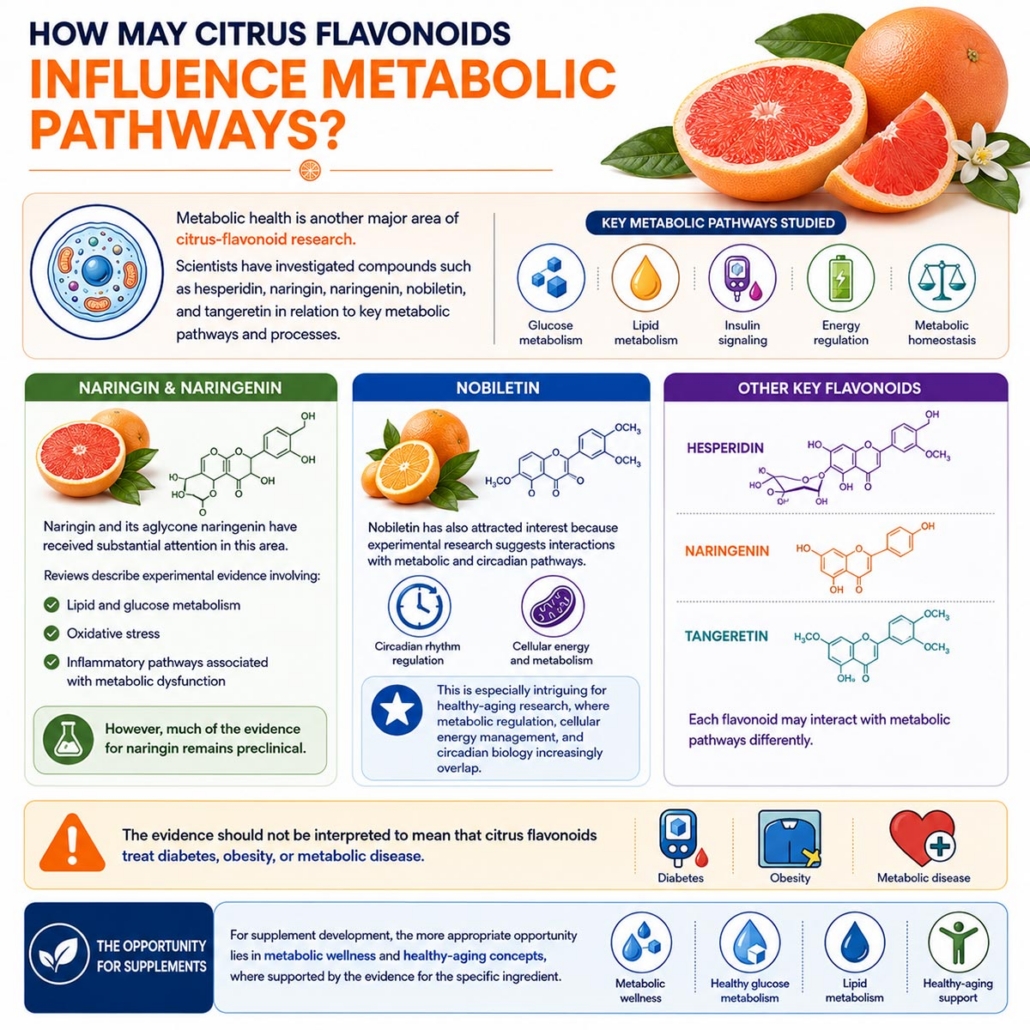
How May Citrus Flavonoids Influence Metabolic Pathways?

Metabolic health is another major area of citrus-flavonoid research. Scientists have investigated compounds such as hesperidin, naringin, naringenin, nobiletin, and tangeretin in relation to glucose metabolism, lipid metabolism, insulin signaling, energy regulation, and pathways associated with metabolic homeostasis.

Naringin and its aglycone naringenin have received substantial attention in this area. Reviews describe experimental evidence involving lipid and glucose metabolism, oxidative stress, and inflammatory pathways associated with metabolic dysfunction. However, much of the evidence for naringin remains preclinical.

Nobiletin has also attracted interest because experimental research suggests interactions with metabolic and circadian pathways.

This is especially intriguing for healthy-aging research, where metabolic regulation, cellular energy management, and circadian biology increasingly overlap.

The evidence should not be interpreted to mean that citrus flavonoids treat diabetes, obesity, or metabolic disease. For supplement development, the more appropriate opportunity lies in metabolic wellness, healthy glucose metabolism, lipid metabolism, and broader healthy-aging concepts, where supported by the evidence for the specific ingredient.

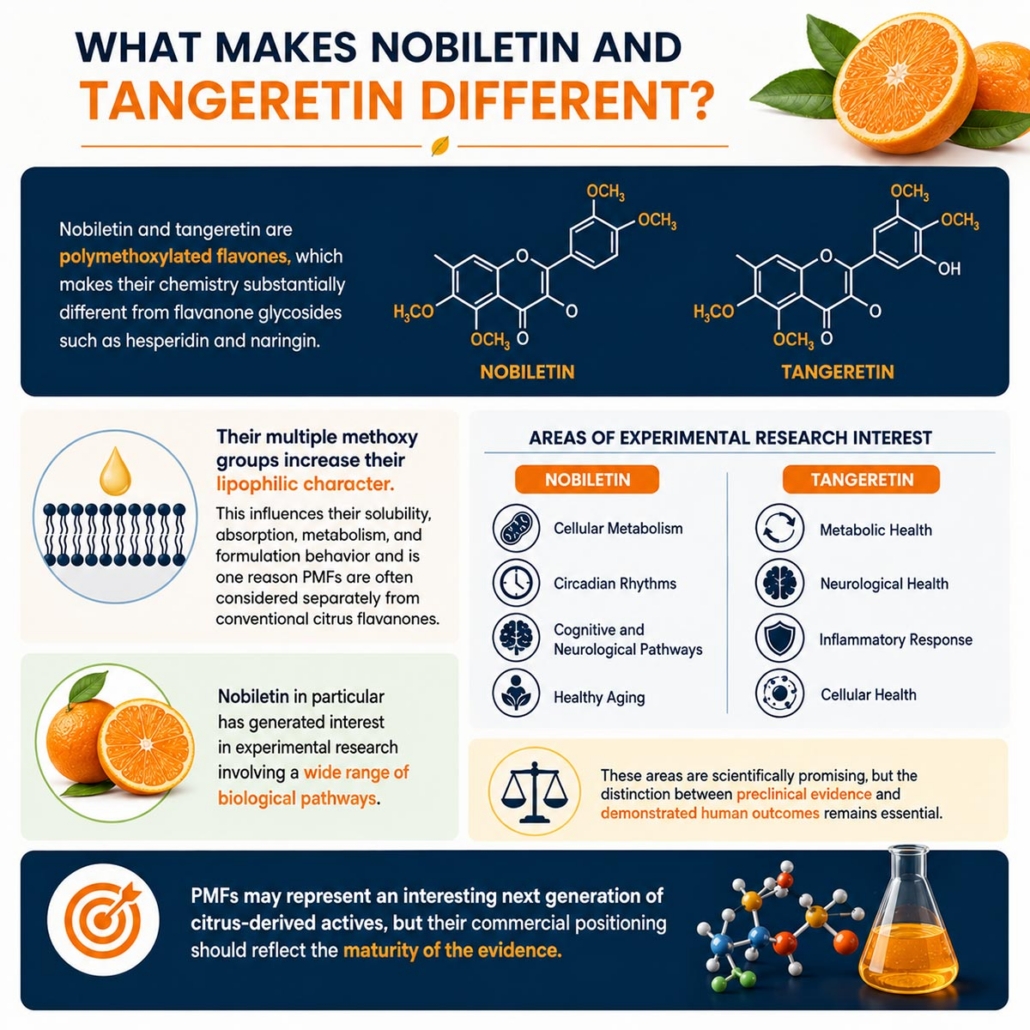
What Makes Nobiletin & Tangeretin Different?

Nobiletin and tangeretin are polymethoxylated flavones, which makes their chemistry substantially different from flavanone glycosides such as hesperidin and naringin.

Their multiple methoxy groups increase their lipophilic character. This influences their solubility, absorption, metabolism, and formulation behavior and is one reason PMFs are often considered separately from conventional citrus flavanones.

Nobiletin in particular has generated interest in experimental research involving cellular metabolism, circadian rhythms, cognitive and neurological pathways, and healthy aging. Tangeretin has also been investigated for metabolic, neurological, inflammatory, and cellular effects.

These areas are scientifically promising, but the distinction between preclinical evidence and demonstrated human outcomes remains essential. PMFs may represent an interesting next generation of citrus-derived actives, but their commercial positioning should reflect the maturity of the evidence.

INFOGRAPHIC: Nobiletin & Tangereting PMFs

Why Does Bioavailability Matter in Supplement Formulation?

Bioavailability is not merely a scientific footnote. It can influence ingredient selection, dose, delivery format, and ultimately the rationale behind a finished formulation.

Hesperidin, for example, has low aqueous solubility, while other citrus flavonoids may undergo extensive metabolism before reaching systemic circulation. Researchers have therefore investigated approaches including particle-size reduction, emulsions, lipid-based systems, solid dispersions, and other delivery technologies intended to improve dissolution, absorption, or exposure.

However, greater measured bioavailability should not automatically be equated with greater clinical efficacy. A delivery technology becomes especially compelling when improved pharmacokinetics are accompanied by evidence demonstrating a meaningful biological or clinical outcome.

For supplement brands evaluating citrus flavonoid ingredients, useful questions include:

  • What chemical form of the flavonoid does the ingredient provide?
  • What concentration or standardization is guaranteed?
  • What evidence exists for the dose being considered?
  • Has bioavailability been evaluated for the specific ingredient or delivery system?
  • Does the published research use the same ingredient form?
  • Will the ingredient’s solubility, particle characteristics, or sensory properties work in the intended finished format?

These questions can help distinguish an evidence-based formulation strategy from simply adding a higher milligram amount to the Supplement Facts panel.

From Citrus Fruit to Biological Activity

The pathway can be summarized as:

Citrus source → flavonoid ingestion → digestion and biotransformation → intestinal and microbial metabolism → absorption of flavonoids and metabolites → interaction with cellular pathways → potential physiological effects

The important point is that citrus flavonoids do not function through one universal mechanism. Their effects depend on chemical structure, dose, metabolism, microbiome interactions, bioavailability, and the biological pathways affected by the resulting metabolites.

That complexity is precisely what makes the category interesting for next-generation supplement development.

Key Takeaway: Citrus flavonoids do more than demonstrate antioxidant activity in laboratory tests. Research points to interactions involving redox and inflammatory signaling, vascular function, metabolic regulation, microbial metabolism, and other cellular processes. However, mechanisms and evidence differ substantially among individual flavonoids. For supplement brands, the strongest formulation strategy connects the specific citrus compound and ingredient form to relevant human evidence, an appropriate dose, and a delivery system capable of supporting the intended application.

Market Trends and Predictions for Citrus Flavonoids

Scientific interest is only one part of the citrus flavonoid story. Commercial forecasts also point toward continued growth as supplement, functional food, beverage, pharmaceutical, and personal-care companies look for plant-derived bioactive ingredients with recognizable consumer origins.

Market estimates vary substantially among research firms because they define the citrus bioflavonoid category differently. For that reason, individual forecasts are more useful as indicators of direction and commercial momentum than as interchangeable measurements of the exact size of the market.

How Large Is the Citrus Bioflavonoids Market?

Global Market Insights valued the global citrus bioflavonoids market at more than $942 million in 2022 and projected it to reach approximately $2.17 billion by 2032, representing an estimated 8% compound annual growth rate from 2023 through 2032.

Other commercial forecasts also anticipate continued expansion, although their estimates differ. The Business Research Company, for example, estimated the citrus bioflavonoids market at approximately $1.32 billion in 2025 and $1.45 billion in 2026, with the market projected to reach approximately $2.15 billion by 2030 at a compound annual growth rate of about 10.3%.

Another 2026 market analysis estimates a smaller base of approximately $916 million in 2026 but forecasts the category to reach approximately $1.64 billion by 2032, representing a CAGR of about 10.05%.

Rather than averaging these figures, it is more useful to recognize what they have in common: multiple market analyses project sustained growth for citrus bioflavonoids through the end of the decade and into the early 2030s.

How Does This Compare With the Broader Flavonoids Market?

The broader flavonoids category provides useful context.

Grand View Research valued the global flavonoids market at approximately $989.6 million in 2023 and projected it to reach approximately $2.06 billion by 2030, representing an 11.1% CAGR from 2024 through 2030.

Importantly for supplement brands, Grand View Research identified nutraceuticals and functional foods as the largest application segment within the broader flavonoids market.

These figures should not be compared directly with citrus-specific market estimates because the reports may use different definitions, products, geographies, and methodologies. However, together they point toward a broader commercial trend: polyphenol-rich botanical ingredients continue to attract attention across wellness-oriented product categories.

What’s Driving Demand for Citrus Flavonoids?

Several forces appear to be supporting commercial interest.

Consumers continue to seek plant-derived ingredients, proactive wellness products, recognizable botanical sources, and multifunctional formulations. Citrus fits naturally into that environment because oranges, lemons, grapefruit, and mandarins already have strong associations with nutrition and wellness.

At the same time, citrus flavonoids can extend into product categories that reach well beyond traditional immune support. Depending on the specific compound and evidence base, developers are exploring applications related to cardiovascular wellness, metabolic health, healthy aging, antioxidant support, active nutrition, and cognitive wellness.

The Business Research Company identifies increasing demand for dietary supplements, greater awareness of antioxidant-rich ingredients, preventive healthcare, immune-health products, natural ingredient sourcing, and advances in extraction technologies among factors influencing the citrus bioflavonoids market.

Are Consumers Moving Beyond Immune Support?

The COVID-19 pandemic increased attention to immune health and helped reinforce the connection consumers already made between citrus and vitamin C.

Some market research published during and after the pandemic specifically identified increased demand for citrus bioflavonoid supplements in the context of immune wellness. At the same time, the pandemic disrupted ingredient manufacturing, logistics, and international supply chains, creating both demand-side opportunities and supply-side challenges.

The longer-term opportunity appears broader.

Citrus flavonoids can now participate in the wider shift from reactive, occasion-based supplementation toward proactive daily wellness. Instead of appearing only in seasonal immune products, individual flavonoids can potentially support product concepts built around everyday cardiovascular, metabolic, cellular, and healthy-aging goals.

That transition may be particularly important for brands looking to create products designed for consistent year-round use.

Is Healthy Aging an Opportunity for Citrus Flavonoids?

Healthy aging provides a logical umbrella for several areas of citrus-flavonoid research.

Oxidative balance, cardiovascular function, metabolic health, cognitive wellness, and cellular resilience all become increasingly relevant as consumers think about maintaining function over time. Different citrus flavonoids intersect with these areas through different research pathways.

Hesperidin offers a comparatively developed cardiovascular and vascular research story. Naringin has attracted substantial interest around metabolic pathways. Nobiletin and tangeretin bring emerging research involving cellular, metabolic, neurological, and aging-related mechanisms.

This does not mean that every citrus flavonoid should be marketed as a “longevity ingredient.” Instead, healthy aging gives product developers a broader framework for selecting compounds whose individual evidence supports a specific aspect of long-term wellness.

Could Metabolic Health Become a Larger Application?

Metabolic wellness may represent another important area for future formulation.

Research involving hesperidin, naringin, naringenin, nobiletin, and other citrus compounds has explored pathways associated with glucose and lipid metabolism, insulin signaling, oxidative balance, and metabolic homeostasis.

The maturity of the evidence varies substantially among compounds, and much of the research remains preclinical. Nevertheless, the overlap between citrus-flavonoid research and consumer interest in healthy glucose metabolism, body composition, energy regulation, and metabolic health makes this an area worth watching.

For supplement brands, the strongest opportunities are likely to come from formulations that connect a well-characterized ingredient with an appropriate evidence base rather than simply attaching citrus flavonoids to a popular metabolic-health trend.

Functional Powders & Beverages Create New Formulation Opportunities

Citrus has another commercial advantage: it already belongs in many flavor systems consumers enjoy.

Lemon, orange, grapefruit, mandarin, yuzu, and other citrus profiles are widely used in hydration powders, stick packs, sports-nutrition products, wellness beverages, and flavored supplements. A citrus-derived active can therefore create a natural connection between ingredient source, flavor, and product story.

The technical challenge is that the flavonoid itself may not behave like citrus juice or flavoring. Some citrus flavonoids have limited water solubility, while others—particularly naringin—can introduce pronounced bitterness.

As a result, growth in powders and beverages may increase demand for dispersible, micronized, encapsulated, emulsified, or otherwise formulation-optimized citrus flavonoid ingredients.

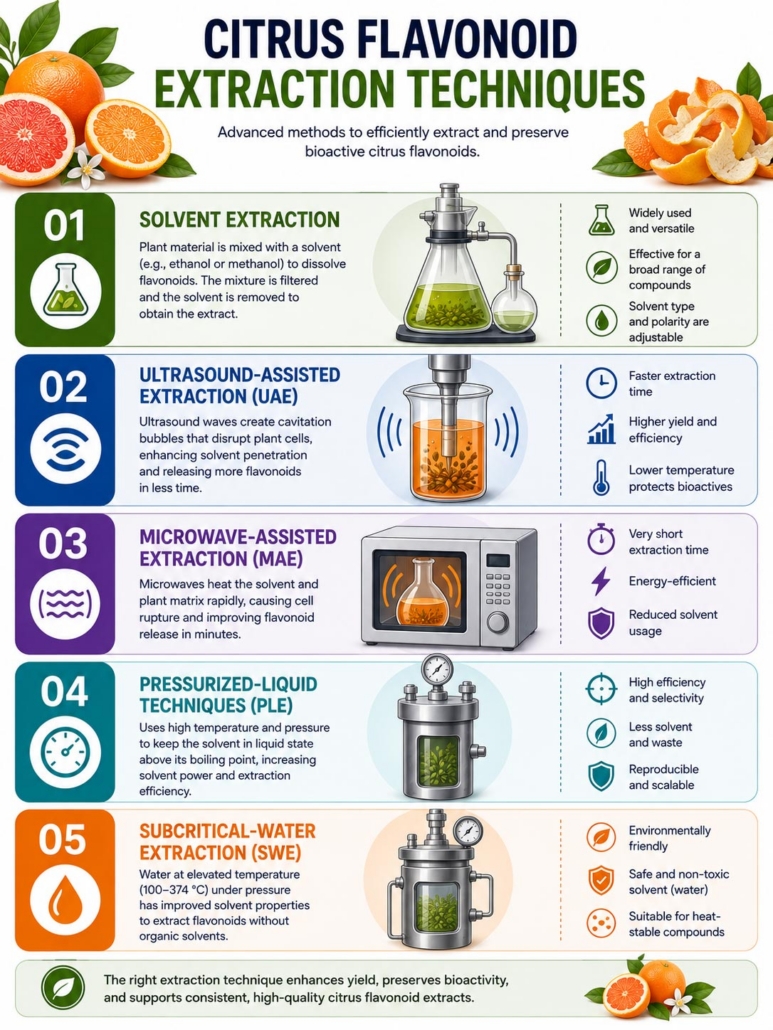
Extraction Techniques For Functional Ingredients in Supplement Formulation

Extraction Technology Could Expand the Ingredient Pipeline

Citrus-flavonoid innovation is also occurring upstream.

Traditional solvent extraction remains important, but researchers and ingredient processors continue to investigate:

  • Ultrasound-assisted extraction
  • Microwave-assisted extraction
  • Pressurized-liquid techniques
  • Subcritical-water extraction
  • And other processing technologies.

These approaches can potentially improve extraction efficiency, reduce processing time or solvent use, and make it more practical to recover valuable compounds from citrus-processing side streams.

That matters because the future of the category may not depend solely on selling more generic citrus bioflavonoid powder.

Improved extraction and separation could support increasingly differentiated ingredients standardized to hesperidin, eriocitrin, naringin, PMFs, or specific combinations of citrus compounds.

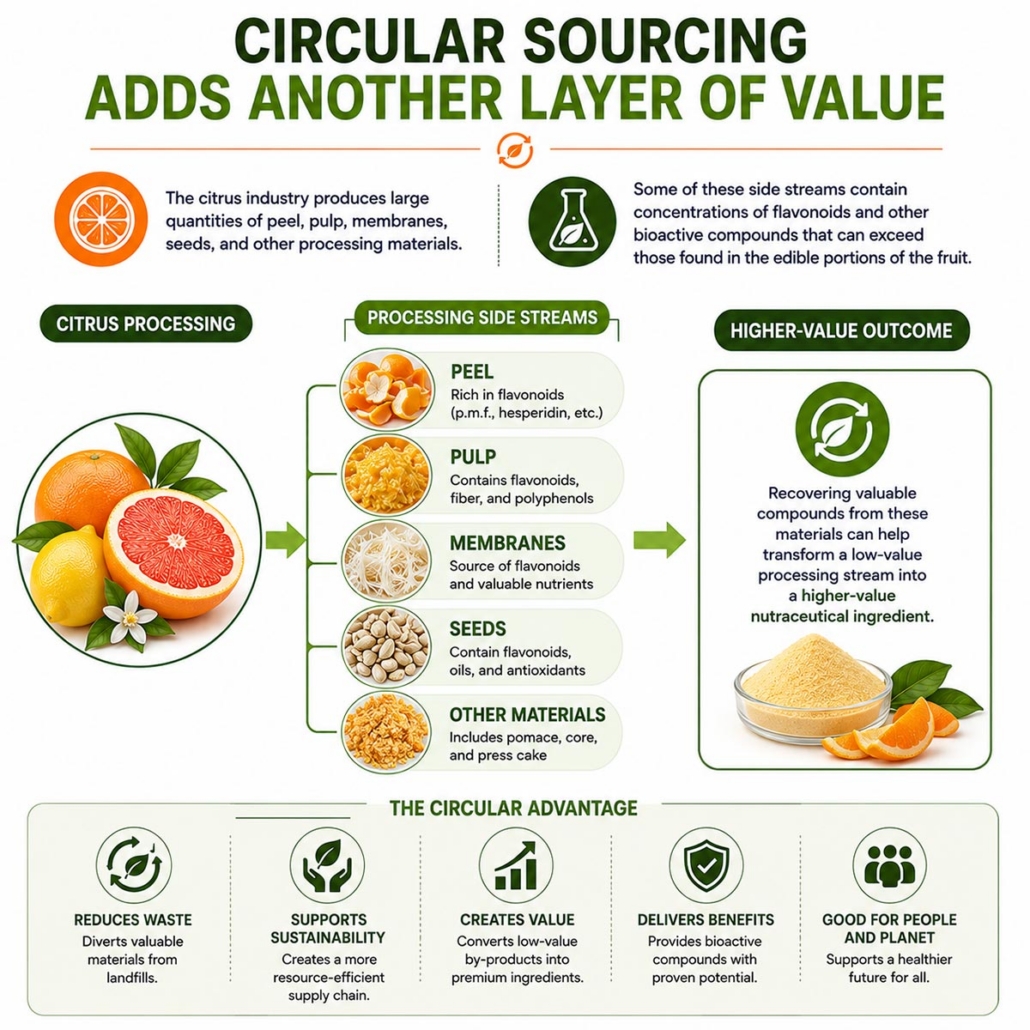
Circular Sourcing Adds Another Layer of Value

The citrus industry produces large quantities of peel, pulp, membranes, seeds, and other processing materials.

Some of these side streams contain concentrations of flavonoids and other bioactive compounds that can exceed those found in the edible portions of the fruit.

Recovering valuable compounds from those materials can help transform a low-value processing stream into a higher-value nutraceutical ingredient.

For brands, that creates the potential for an appealing circular-sourcing or upcycling story, particularly when suppliers can document the origin and processing pathway of the raw material.

However, sourcing claims should remain specific.

Not every citrus flavonoid is necessarily produced from a waste or side stream, and “citrus-derived” should not automatically be translated into “upcycled.”

Circular Sourcing Adds Another Layer of Value to Ingredient Sourcing for Supplement Manufacturing

What Do Market Predictions Mean for Supplement Brands?

The most important market signal is not a single CAGR.

It is the convergence of several developments: continued commercial growth, expanding scientific research, consumer familiarity with citrus, broader healthy-aging and metabolic positioning, interest in plant-derived actives, improved extraction and delivery technologies, and opportunities to recover valuable compounds from citrus-processing streams.

That convergence gives supplement brands several possible innovation paths:

  • Cardiovascular formulations built around well-characterized hesperidin ingredients.
  • Metabolic-wellness products using appropriately supported citrus flavonoids.
  • Healthy-aging formulations combining citrus compounds with complementary polyphenols and micronutrients.
  • Cognitive-wellness concepts exploring emerging PMFs such as nobiletin.
  • Active-nutrition products using citrus flavonoids alongside hydration, recovery, or antioxidant ingredients.
  • Powders and stick packs that connect citrus-derived actives with complementary citrus flavor profiles.
  • Circular-sourcing concepts using documented citrus-processing side streams as ingredient sources.

The strongest concepts will still require more than a trending ingredient. They will need a clearly defined consumer benefit, an appropriate flavonoid and specification, a defensible evidence base, and a delivery format capable of supporting the intended dose and sensory experience.

Key Takeaway: Market forecasts differ on the exact size of the citrus bioflavonoids category, but multiple analyses point toward continued growth. For supplement brands, the larger opportunity lies in the evolution from generic citrus bioflavonoid blends toward more targeted ingredients, differentiated health applications, improved delivery systems, and better-defined sourcing stories.

Where Do Citrus Flavonoids Fit in Today’s Supplement Market?

One of the advantages of citrus flavonoids is that they are not confined to a single supplement category. The research surrounding individual compounds intersects with several major areas of consumer wellness, from cardiovascular and metabolic health to healthy aging and active nutrition.

That flexibility does not mean every citrus flavonoid belongs in every product. The stronger strategy is to match the specific compound, evidence base, dose, and delivery format to a clearly defined consumer need.

Cardiovascular Health Has One of the Strongest Evidence Connections

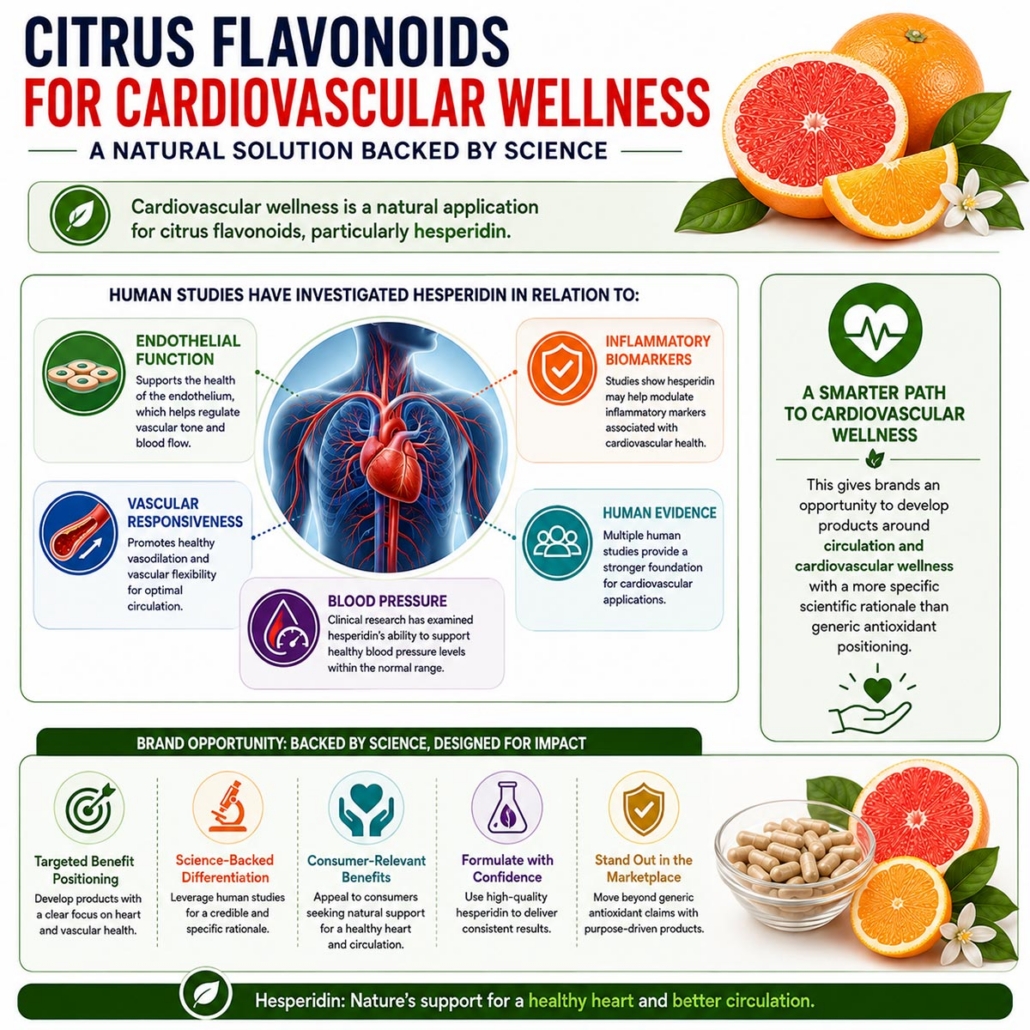
Cardiovascular wellness is a natural application for citrus flavonoids, particularly hesperidin.

Human studies have investigated hesperidin in relation to endothelial function, vascular responsiveness, blood pressure, and inflammatory biomarkers.

This gives brands an opportunity to develop products around circulation and cardiovascular wellness with a more specific scientific rationale than generic antioxidant positioning.

Citrus flavonoids may also complement other ingredients commonly used in cardiovascular formulations, such as magnesium, CoQ10, grape seed extract, beetroot, and selected omega-3 ingredients.

The finished formula should still be designed around compatible doses, mechanisms, and claims rather than simply combining multiple ingredients associated with heart health.

INFOGRAPHIC: Citrus Flavonoids for Cardiovascular Wellness Supplement Formulation

Healthy Aging Creates a Broader Formulation Platform

Healthy aging may ultimately become one of the most versatile applications for citrus flavonoids because the category overlaps with several biological systems relevant to maintaining function over time.

Hesperidin brings vascular and metabolic relevance, while nobiletin and tangeretin are being investigated in areas involving cellular signaling, metabolism, neurological function, and other aging-related pathways. Citrus flavonoids also fit naturally within antioxidant and polyphenol-rich formulations.

This creates opportunities for products positioned around cardiovascular resilience, metabolic wellness, cognitive wellness, cellular health, and everyday healthy aging rather than making broad promises about extending lifespan.

For brands, that distinction is useful. “Healthy aging” can support a more credible product architecture when each ingredient addresses a defined aspect of maintaining health with age.

Metabolic Wellness Is an Emerging Opportunity

Metabolic health has become an increasingly important area of supplement innovation, and several citrus flavonoids intersect with this space.

Naringin and naringenin have been studied extensively in experimental models involving glucose and lipid metabolism, while hesperidin has human research relevant to metabolic and vascular parameters. Nobiletin has generated additional interest around lipid metabolism, energy regulation, and circadian biology.

However, the evidence is not equally mature across these compounds. Brands should avoid treating preclinical metabolic findings as proof of weight-loss or glucose-lowering effects in humans.

A more defensible formulation strategy may focus on supporting healthy metabolism, glucose metabolism, lipid metabolism, or broader metabolic wellness, provided the selected ingredient and finished-product claims are appropriately substantiated.

Cognitive Wellness May Create a More Specialized Opportunity

Cognitive health is not yet the most established application for citrus flavonoids, but it may become an important area of innovation.

Nobiletin is particularly noteworthy. Preclinical research has investigated its effects on neurological pathways, cognition, circadian biology, and processes associated with age-related neurological changes. Tangeretin has also been studied in neurological models.

The current evidence does not justify positioning these compounds as treatments for neurodegenerative disease. It does, however, make PMF-rich citrus extracts interesting candidates for cognitive wellness and healthy-aging formulations, particularly as the human research base develops.

For premium brands, this may offer a differentiated alternative to the increasingly crowded field of conventional nootropic botanicals.

Active Nutrition Can Move Beyond Performance Stimulants

Citrus flavonoids also have potential within active-nutrition products.

Exercise increases metabolic activity and can temporarily influence oxidative and inflammatory processes. Polyphenols are therefore increasingly explored within formulations designed around recovery, circulation, hydration, and everyday physical resilience.

Eriocitrin and hesperidin may be particularly interesting in this context because their citrus origins align naturally with flavored powders and hydration concepts. Hesperidin’s vascular research also provides a potential connection to circulation-focused active-nutrition products.

The objective should not be to eliminate normal exercise-induced oxidative signaling, which is part of physiological adaptation. Instead, formulations can be designed around broader nutritional and recovery support.

Beauty-from-Within Offers a Complementary Role

Citrus flavonoids can also complement the growing beauty-from-within category.

Oxidative stress and environmental exposures are relevant to skin aging, which creates a logical role for dietary antioxidants within broader skin-health formulations. Citrus-derived compounds may be paired with ingredients such as vitamin C, collagen peptides, ceramides, hyaluronic acid, carotenoids, or other polyphenols.

The strongest positioning would generally treat citrus flavonoids as part of a broader skin-nutrition strategy rather than implying that citrus flavonoids alone produce a specific cosmetic outcome without appropriate clinical evidence.

Citrus also provides an appealing sensory and botanical story for gummies and flavored powders targeting beauty consumers.

Daily Antioxidant & Wellness Products Remain Relevant

Not every citrus-flavonoid product needs a highly specialized health position.

Citrus bioflavonoid complexes can still fit effectively within daily wellness, antioxidant, immune-wellness, and foundational nutrition products, particularly when paired with familiar ingredients such as vitamin C.

The opportunity is to modernize that familiar combination.

Instead of treating bioflavonoids as an unexplained secondary ingredient next to vitamin C, brands can identify the citrus source, establish meaningful standardization, and explain why the selected flavonoid profile contributes to the overall formulation.

How Do Citrus Flavonoids Fit Across Supplement Categories?

Supplement Category Particularly Relevant Citrus Flavonoids Why They May Fit Evidence Consideration
Cardiovascular Wellness Hesperidin Human research involving endothelial and vascular function Comparatively developed human evidence for hesperidin
Healthy Aging Hesperidin, nobiletin, tangeretin Vascular, metabolic, cellular and neurological research Evidence maturity varies substantially by compound
Metabolic Wellness Hesperidin, naringin, nobiletin Research involving glucose, lipid and metabolic pathways Significant preclinical evidence; human substantiation varies
Cognitive Wellness Nobiletin, tangeretin Emerging neurological and cognitive research Primarily an emerging/preclinical opportunity
Active Nutrition Hesperidin, eriocitrin Antioxidant, vascular and metabolic relevance Product positioning should reflect available human evidence
Beauty-from-Within Hesperidin, eriocitrin, citrus complexes Complementary antioxidant positioning Often strongest as part of a multi-ingredient formulation
Daily Wellness Citrus bioflavonoid complexes, hesperidin Broad botanical and antioxidant positioning Specification helps differentiate a formula from generic blends

Key Takeaway: Citrus flavonoids can participate in multiple high-interest supplement categories, but their greatest value comes from specificity. Hesperidin offers a comparatively strong cardiovascular story; naringin and nobiletin expand the metabolic conversation; nobiletin and tangeretin create emerging healthy-aging and cognitive opportunities; and eriocitrin provides an interesting fit for antioxidant and active-nutrition concepts.

The strongest products will match the right citrus flavonoid to the right consumer benefit rather than using the category generically.

Flavoring & Sensory Considerations for Citrus Flavonoids

The citrus origin of these ingredients can make them seem like natural candidates for gummies, powders, and beverages. In practice, however, a citrus-derived flavonoid does not necessarily taste like citrus fruit.

Some flavonoids are relatively unobtrusive at practical use levels, while others can introduce significant bitterness or lingering off-notes. Extract concentration, accompanying plant compounds, carrier systems, particle size, and dose can further influence the sensory profile.

For brands developing flavored products, sensory performance should therefore be evaluated early in formulation rather than treated as a final flavor-development problem.

Why Can Citrus Flavonoids Taste Bitter?

Bitterness is a natural characteristic of several citrus compounds and contributes to the sensory differences among citrus fruits.

Naringin is particularly important because it is a major contributor to the characteristic bitterness of grapefruit and pomelo. Its bitterness can become a significant formulation constraint in gummies, powders, chewables, and beverages where the active ingredient directly contacts taste receptors.

Other citrus extracts can also introduce bitterness, astringency, or characteristic botanical notes depending on their flavonoid profile and degree of purification.

This means the sensory behavior of a generic citrus bioflavonoid complex cannot necessarily be predicted from the word “citrus” on its specification. Bench testing the actual commercial ingredient is essential.

Can Citrus Flavors Help Mask Citrus Flavonoids?

Often, yes—but the advantage comes from flavor congruence, not because citrus flavor eliminates bitterness.

Grapefruit naturally has a bitter component, so moderate bitterness from a naringin-containing ingredient may feel less out of place within a sophisticated grapefruit profile than it would in strawberry or vanilla. Lemon, orange, mandarin, yuzu, and mixed-citrus systems can similarly create a sensory context that supports the botanical story.

This creates several potentially intuitive pairings:

  • Eriocitrin + lemon or lemon-lime
  • Hesperidin + orange, mandarin, or blood orange
  • Naringin + grapefruit or grapefruit-citrus blends
  • PMF-rich citrus extracts + mandarin, tangerine, or sophisticated mixed-citrus profiles
  • Citrus bioflavonoid complexes + orange, tropical-citrus, or berry-citrus systems

These pairings are not requirements. They simply provide a useful starting point where ingredient origin, flavor, and consumer story reinforce one another.

Why Acidity & Sweetness Need to Be Balanced Carefully

Citrus-flavored supplements often rely on acids such as citric or malic acid to create brightness and fruit character. Acidity can make a product taste more recognizably citrus, but it does not automatically eliminate flavonoid bitterness.

In some formulations, increasing acidity without sufficient sweetness or flavor depth can make the overall sensory experience more aggressive. Likewise, simply adding more sweetener may reduce the perception of bitterness initially while leaving an unpleasant lingering finish.

Successful masking typically requires a coordinated system involving sweetness, acidity, flavor character, aroma, mouthfeel, and—in some cases—dedicated bitterness-masking technologies.

The appropriate system will depend on the flavonoid, dose, extract matrix, serving size, and delivery format.

Grapefruit Profiles Can Turn Bitterness Into Part of the Experience

Naringin illustrates an interesting formulation principle: an undesirable sensory characteristic can sometimes become more acceptable when it matches consumer expectations.

Consumers already expect grapefruit to have a degree of bitterness. A carefully developed pink grapefruit, ruby grapefruit, grapefruit-lime, or grapefruit-berry profile can therefore incorporate some bitterness as part of an adult, less candy-like flavor experience.

That does not mean unlimited bitterness will be acceptable. High active loads can still overwhelm the flavor system.

But for brands targeting active-nutrition, metabolic-wellness, or sophisticated adult consumers, a controlled bitter-citrus profile may offer a more natural solution than attempting to make the ingredient completely tasteless.

Lemon & Mandarin Offer Different Sensory Opportunities

Eriocitrin’s association with lemon creates a particularly intuitive opportunity for powders, stick packs, gummies, and other flavored products.

Lemon works well as a foundation because it can be developed in multiple directions—from straightforward lemon and lemonade to lemon-lime, raspberry lemon, strawberry lemonade, ginger lemon, or tropical citrus.

Mandarin and tangerine profiles can provide a softer and sweeter citrus character. This may make them useful for PMF-containing concepts where the botanical source is part of the ingredient story but the finished product is intended to feel approachable rather than medicinal.

Orange and blood orange provide additional options for hesperidin-containing products, particularly where brands want the finished flavor to reinforce an orange-derived ingredient story.

Botanical Source & Flavor Can Create a Stronger Product Story

Flavor does more than make a supplement palatable. It can reinforce product architecture.

Consider the difference between a generic “berry-flavored antioxidant powder containing citrus bioflavonoids” and a lemon antioxidant formula built around lemon-derived eriocitrin.

The second concept gives the consumer a clearer connection between what the ingredient is, where it comes from, and why the product tastes the way it does.

The same principle can apply to:

  • Orange-derived hesperidin → blood orange cardiovascular wellness powder
  • Grapefruit-derived naringin → pink grapefruit metabolic-wellness stick pack
  • Lemon-derived eriocitrin → raspberry lemonade active-nutrition powder
  • Mandarin-derived PMFs → mandarin-yuzu healthy-aging gummy

These are formulation concepts rather than evidence-based health claims, but they illustrate how source-to-flavor alignment can make an unfamiliar flavonoid easier for consumers to understand.

When Does Taste Masking Become More Important Than Flavor Pairing?

At higher active loads, flavor congruence may not be enough.

A formulation may require specialized masking flavors, sweetener combinations, encapsulation, coating, or another technical approach to reduce the initial bitterness or lingering aftertaste of the active.

This becomes particularly relevant when:

  • The target dose is relatively high.
  • The extract has pronounced bitterness or astringency.
  • Multiple bitter botanical ingredients appear in the same formula.
  • The serving size is small, concentrating the sensory impact.
  • The product uses a delicate flavor that cannot tolerate substantial botanical notes.
  • The desired sugar or sweetener level limits the available masking system.

In these situations, the most practical solution may sometimes be to change the ingredient specification, reduce the sensory burden elsewhere in the formula, or reconsider the delivery format rather than continuing to add increasingly complex masking systems.

Flavor Should Support the Formula — Not Hide It

The strongest flavored citrus-flavonoid products may not be those that completely disguise the botanical ingredient.

A slight grapefruit bitterness, bright lemon acidity, or sophisticated citrus finish can contribute to a product’s identity when it is intentional and well balanced.

The objective is therefore not always to make the active ingredient sensory-invisible. It is to create a finished product in which flavor, sweetness, acidity, aroma, mouthfeel, active dose, and botanical character work together coherently.

Key Takeaway: Citrus flavonoids provide unusually strong opportunities to connect botanical source with finished-product flavor, but their citrus origin does not guarantee easy sensory performance. Naringin can be distinctly bitter, while extract composition and dose can introduce additional off-notes.

Successful products account for sensory characteristics early and use flavor congruence, sweetness, acidity, masking technology, and delivery-format selection strategically rather than relying on flavoring as a last-minute fix.

Strategic Product Opportunities for Supplement Brands

The opportunity with citrus flavonoids is not simply to add another botanical extract to an existing formula. The category gives brands multiple ways to build more differentiated products around specific compounds, consumer needs, sourcing stories, and delivery experiences.

As citrus-flavonoid ingredients become more specialized, the strongest concepts may move away from generic “citrus bioflavonoids” toward formulations where the selected flavonoid has a clearly defined role.

Move From Generic Bioflavonoids to Named Actives

One of the clearest opportunities is greater ingredient specificity.

Citrus bioflavonoid complexes remain useful for broad antioxidant and daily-wellness products. However, a standardized ingredient such as hesperidin, eriocitrin, naringin, or a defined PMF complex gives brands a more specific story to communicate.

Instead of:

Vitamin C + Citrus Bioflavonoids

a product concept might be built around:

Hesperidin + Vitamin C for Cardiovascular Wellness

or:

Eriocitrin + Complementary Polyphenols for Daily Antioxidant Support

The second approach gives formulators a clearer ingredient identity, while also making it easier to connect the formula to research relevant to the selected compound.

Use Citrus Flavonoids to Differentiate Healthy-Aging Products

Healthy aging is becoming increasingly crowded with familiar ingredients such as resveratrol, curcumin, CoQ10, quercetin, NAD+-related ingredients, and various botanical extracts.

Citrus flavonoids offer a way to expand that ingredient vocabulary.

Hesperidin can contribute a vascular-health dimension, while nobiletin and other PMFs introduce emerging research involving metabolic, cellular, circadian, and neurological pathways.

A citrus-based healthy-aging formula could therefore be designed around maintaining specific aspects of function rather than relying on an undefined “longevity” promise.

That approach may also make the product easier to explain: support the systems that matter as people age rather than promise to slow aging itself.

Develop More Focused Cardiovascular Concepts

Hesperidin creates one of the clearest near-term product opportunities because its human vascular research gives brands a more developed evidence base to work from.

Instead of another broad heart-health multivitamin, developers could explore formulations specifically oriented toward vascular function and circulation.

Potential complementary ingredients might include beetroot-derived nitrate ingredients, grape seed extract, magnesium, CoQ10, or other ingredients selected around the intended cardiovascular application.

The goal would not be to maximize ingredient count. It would be to create a formula in which each component contributes to a coherent cardiovascular strategy.

Watch the Metabolic-Wellness Opportunity

Metabolic health is likely to remain a major area of supplement innovation, but citrus flavonoids offer a different route into the category than stimulant-heavy thermogenic products.

Hesperidin, naringin, naringenin, nobiletin, and related citrus compounds have been investigated in connection with glucose metabolism, lipid metabolism, cellular energy regulation, and other metabolic pathways, although evidence maturity varies substantially among compounds.

This creates opportunities for more holistic metabolic-wellness products positioned around maintaining healthy metabolic function rather than promising rapid weight loss.

Citrus flavonoids may be particularly interesting in formulations that combine metabolic support with healthy aging, cardiovascular wellness, or active nutrition.

PMFs Could Create a Premium Emerging-Ingredient Story

Nobiletin and tangeretin provide a different type of commercial opportunity.

Unlike familiar citrus bioflavonoid blends, PMF-rich extracts can be positioned as more specialized citrus-derived ingredients. Their emerging research involving metabolic, cellular, neurological, and circadian pathways gives them potential relevance to premium healthy-aging and cognitive-wellness products.

The limitation is equally important: much of the research remains preclinical.

For brands, that makes PMFs better suited to science-forward product development with disciplined claims than to aggressive consumer promises.

As human research develops, PMFs could become one of the more distinctive areas within the citrus-flavonoid category.

Align Botanical Source With Flavor and Format

Citrus flavonoids provide an unusual opportunity to connect ingredient identity directly with the consumer experience.

A product built around lemon-derived eriocitrin can naturally use a lemon-based flavor system. Orange-derived hesperidin can support orange or blood-orange positioning. Grapefruit-derived naringin can work within a sophisticated grapefruit concept where some bitterness is expected.

This can create product architectures such as:

  • Blood Orange Cardiovascular Powder featuring hesperidin
  • Raspberry Lemon Antioxidant Stick Pack featuring eriocitrin
  • Pink Grapefruit Metabolic-Wellness Powder featuring naringin
  • Mandarin Healthy-Aging Gummy featuring a concentrated PMF extract
  • Mixed-Citrus Daily Wellness Powder featuring a standardized citrus flavonoid complex

These concepts illustrate a broader strategy: the ingredient source, flavor, benefit, and delivery format can tell one coherent story.

That cohesion can make an unfamiliar flavonoid easier for consumers to understand.

Consider Citrus Flavonoids as Part of a Polyphenol Platform

Another opportunity is to build formulations around complementary polyphenol families.

Instead of using several botanical extracts with overlapping generic antioxidant positioning, brands can select compounds with different research strengths.

A cardiovascular formulation might combine hesperidin with grape seed proanthocyanidins. A healthy-aging product could combine a citrus PMF complex with another well-characterized polyphenol. An active-nutrition powder might combine eriocitrin with berry anthocyanins or other fruit-derived compounds.

The value comes from complementarity — not ingredient count.

Each additional polyphenol should have a clear reason for being present, an appropriate dose, and a role that can be explained without making the formula unnecessarily complex.

Where Could the Next Generation of Citrus Products Emerge?

Several development directions appear particularly interesting:

Targeted flavonoids rather than generic blends. Named, standardized citrus compounds can support more precise positioning.

PMF-rich healthy-aging products. Nobiletin and tangeretin could expand the citrus category into more specialized formulations as the evidence develops.

Metabolic-wellness products. Citrus compounds may complement the shift toward broader metabolic support rather than stimulant-centered weight-management positioning.

Functional powders and stick packs. Citrus flavor systems can create natural opportunities to integrate citrus-derived actives into hydration, active-nutrition, antioxidant, and daily-wellness products.

Advanced-delivery ingredients. Better dispersibility and bioavailability technologies could make flavonoids more practical in formats where conventional extracts struggle.

Circularly sourced ingredients. Documented recovery from citrus-processing side streams can combine formulation value with a responsible-sourcing story.

These opportunities do not require supplement brands to chase every citrus compound entering the market. They provide a framework for identifying where a citrus flavonoid can solve a genuine product-development problem or create meaningful differentiation.

Why Work with Intermountain Nutrition?

Intermountain Nutrition works with supplement brands to develop scientifically grounded, commercially viable formulations and specializes in capsules, gummies, and powders. That combination is particularly relevant to citrus flavonoids because the same ingredient can behave very differently across delivery formats.

Whether the concept starts with hesperidin, eriocitrin, naringin, a PMF-rich citrus extract, or a broader citrus bioflavonoid complex, development should connect ingredient science with the realities of dose, flavor, delivery format, manufacturing, and scale.

Talk with Intermountain Nutrition about developing a citrus-flavonoid supplement designed for both scientific credibility and commercial viability.

Frequently Asked Questions

Citrus flavonoids are naturally occurring polyphenolic compounds found in citrus fruits and other citrus tissues. Important examples include hesperidin, naringin, eriocitrin, nobiletin, and tangeretin. They differ in chemical structure, citrus source, metabolism, bioavailability, and areas of research. Reviews classify citrus flavonoids into several groups, including flavanones and polymethoxylated flavones.

No. Vitamin C and citrus flavonoids are chemically distinct compounds. Citrus fruits naturally provide both, which is one reason they are frequently associated with one another.

A supplement labeled “vitamin C with citrus bioflavonoids” therefore contains two different types of ingredients rather than flavonoids simply being another form of vitamin C.

Hesperidin, naringin, eriocitrin, nobiletin, and tangeretin are among the compounds of greatest interest for supplement formulation.

Hesperidin is strongly associated with oranges and mandarins, while naringin is particularly associated with grapefruit. Nobiletin and tangeretin are polymethoxylated flavones found predominantly in citrus peel. Citrus species and tissues can differ substantially in their flavonoid composition.

Hesperidin is a flavanone glycoside, while hesperetin is its corresponding aglycone. During metabolism, the sugar portion of hesperidin can be removed before further transformation and absorption.

This distinction matters because the chemical form can affect absorption and pharmacokinetics. Human research has demonstrated that enzymatically modifying hesperidin’s sugar structure can substantially alter its absorption.

Naringin is a flavanone glycoside, whereas naringenin is its aglycone. They are closely related but should not be treated as interchangeable ingredient names.

The distinction is important when interpreting research because a study conducted with naringenin does not automatically provide equivalent evidence for a formula containing naringin.

Polymethoxylated flavones, or PMFs, are a group of citrus flavonoids characterized by multiple methoxy groups. Nobiletin and tangeretin are two prominent examples.

PMFs differ structurally from flavanone glycosides such as hesperidin and naringin. Those structural differences influence properties including polarity, solubility, metabolism, and formulation behavior.

Citrus peel can contain substantial concentrations of flavonoids and other phytochemicals. Different citrus varieties also produce markedly different flavonoid profiles; research has identified peel materials rich in compounds including hesperidin, naringin, and nobiletin.

Peel generated during citrus processing can therefore provide useful raw material for nutraceutical extraction. When the commercial supply chain actually recovers material from a processing side stream, it may also support a valorization or circular-sourcing strategy.

Yes, but bioavailability varies by compound and chemical form, and several citrus flavonoids have relatively limited oral bioavailability.

A substantial proportion may reach the colon, where gut microorganisms participate in further biotransformation. This is one reason researchers increasingly consider metabolites and microbiome interactions when evaluating how citrus flavonoids behave in the body.

Potentially. Researchers and ingredient developers have investigated emulsions, self-emulsifying systems, nanoparticles, solid dispersions, enzymatic modification, and other delivery strategies intended to improve absorption or bioavailability.

However, improved dissolution or higher plasma exposure should not automatically be interpreted as improved clinical efficacy. Brands should determine exactly what an enhanced-delivery ingredient has demonstrated.

Research spans cardiovascular and vascular function, metabolic pathways, inflammatory and oxidative processes, neurological health, and other areas. Evidence maturity differs considerably by compound and endpoint.

For supplement development, research interest should not be confused with permission to make disease-treatment claims. Finished-product claims need appropriate substantiation and should comply with applicable dietary supplement regulations.

Citrus flavonoids are widely studied for antioxidant-related activity, but their biological behavior is more complex than simply neutralizing free radicals.

Research increasingly examines their metabolites, cellular signaling, endogenous antioxidant responses, inflammatory pathways, and interactions with the gut microbiota. Their limited direct bioavailability is another reason the simplistic “antioxidant scavenger” model does not tell the entire story.

Yes. Naringin is strongly associated with citrus bitterness, particularly in grapefruit. Research has examined how the molecular structures of citrus flavonoids influence their interaction with bitter taste receptors.

That can make naringin more challenging in gummies, powders, and beverages, although grapefruit and other bitter-citrus flavor profiles can sometimes create a more congruent sensory experience.

There is no single best format.

Capsules can be useful when taste or solubility is challenging. Powders and stick packs can take advantage of citrus flavor associations but require attention to dispersibility and mouthfeel. Gummies can provide an accessible consumer format but impose tighter active-load and sensory constraints.

The best format depends on the particular flavonoid, dose, commercial ingredient, supporting evidence, sensory profile, and desired consumer experience.

No. A citrus bioflavonoid complex generally contains multiple naturally occurring citrus flavonoids, while a standardized extract provides a defined amount or concentration of one or more specified compounds.

Neither approach is inherently superior. A broad complex may make sense for a general botanical formulation, while a standardized ingredient may be preferable when a brand wants to connect the formula with evidence involving a specific flavonoid.

References

Scientific Resources

Addi, M., Elbouzidi, A., Abid, M., Tungmunnithum, D., Elamrani, A., & Hano, C. (2022). An overview of bioactive flavonoids from citrus fruits. Applied Sciences, 12(1), 29.

Alam, M. A., Subhan, N., Rahman, M. M., Uddin, S. J., Reza, H. M., & Sarker, S. D. (2014). Effect of citrus flavonoids, naringin and naringenin, on metabolic syndrome and their mechanisms of action. Advances in Nutrition, 5(4), 404–417.

Barreca, D., Mandalari, G., Calderaro, A., Smeriglio, A., Trombetta, D., Felice, M. R., & Gattuso, G. (2020). Citrus flavones: An update on sources, biological functions, and health promoting properties. Plants, 9(3), 288.

Benavente-García, O., & Castillo, J. (2008). Update on uses and properties of citrus flavonoids: New findings in anticancer, cardiovascular, and anti-inflammatory activity. Journal of Agricultural and Food Chemistry, 56(15), 6185–6205.

Chien, W.-J., Saputri, D. S., & Lin, H.-Y. (2022). Valorization of Taiwan’s Citrus depressa Hayata peels as a source of nobiletin and tangeretin using simple ultrasonic-assisted extraction. Current Research in Food Science, 5, 278–287.

Khan, M. K., Zill-E-Huma, & Dangles, O. (2014). A comprehensive review on flavanones, the major citrus polyphenols. Journal of Food Composition and Analysis, 33(1), 85–104.

Kumar, S. R., Ramli, E. S. M., Nasir, N. A. A., Ismail, N. H. M., & Fahami, N. A. M. (2019). Preventive effect of naringin on metabolic syndrome and its mechanism of action: A systematic review. Evidence-Based Complementary and Alternative Medicine, 2019, 9752826.

Mahmoud, A. M., Hernández Bautista, R. J., Sandhu, M. A., & Hussein, O. E. (2019). Beneficial effects of citrus flavonoids on cardiovascular and metabolic health. Oxidative Medicine and Cellular Longevity, 2019, 5484138.

Morand, C., Dubray, C., Milenkovic, D., Lioger, D., Martin, J. F., Scalbert, A., & Mazur, A. (2011). Hesperidin contributes to the vascular protective effects of orange juice: A randomized crossover study in healthy volunteers. The American Journal of Clinical Nutrition, 93(1), 73–80.

Nakajima, A., & Ohizumi, Y. (2019). Potential benefits of nobiletin, a citrus flavonoid, against Alzheimer’s disease and Parkinson’s disease. International Journal of Molecular Sciences, 20(14), 3380.

Nayik, G. A., & Gull, A. (2017). Citrus peel as a source of functional ingredient: A review. Journal of the Saudi Society of Agricultural Sciences, 17(4), 351–358.

Pyrzynska, K. (2022). Hesperidin: A review on extraction methods, stability and biological activities. Nutrients, 14(12), 2387.

Rizza, S., Muniyappa, R., Iantorno, M., Kim, J.-A., Chen, H., Pullikotil, P., Senese, N., Tesauro, M., Lauro, D., Cardillo, C., & Quon, M. J. (2011). Citrus polyphenol hesperidin stimulates production of nitric oxide in endothelial cells while improving endothelial function and reducing inflammatory markers in patients with metabolic syndrome. The Journal of Clinical Endocrinology & Metabolism, 96(5), E782–E792.

Shilpa, V. S., Shams, R., Dash, K. K., Pandey, V. K., Dar, A. H., Mukarram, S. A., Harsányi, E., & Kovács, B. (2023). Phytochemical properties, extraction, and pharmacological benefits of naringin: A review. Molecules, 28(15), 5623.

Singh, B., Singh, J. P., Kaur, A., & Singh, N. (2020). Phenolic composition, antioxidant potential and health benefits of citrus peel. Food Research International, 132, 109114.

Wang, Y., Liu, X.-J., Chen, J.-B., Cao, J.-P., Li, X., & Sun, C.-D. (2022). Citrus flavonoids and their antioxidant evaluation. Critical Reviews in Food Science and Nutrition, 62(14), 3833–3854.

Yao, L., Liu, W., Bashir, M., Nisar, M. F., & Wan, C. (2022). Eriocitrin: A review of pharmacological effects. Biomedicine & Pharmacotherapy, 154, 113563.

Zhang, M., Zhu, S., Yang, W., Huang, Q., & Ho, C.-T. (2021). The biological fate and bioefficacy of citrus flavonoids: Bioavailability, biotransformation, and delivery systems. Food & Function, 12, 3307–3323.

Marketing Research & Industry Outlook

Global Market Insights. (2023). Citrus bioflavonoids market size & share, 2023–2032.

Grand View Research. (2024). Flavonoids market size, share & trends analysis report by type, by application, by region, and segment forecasts, 2024–2030.

The Business Research Company. (2026). Citrus bioflavonoids global market report 2026.

Related Postings

Andrographis for Immunity Support Supplements
STOCK FORMULA: Elderberry Gummies for Immune Support
Bees Using Propolis As a to Build the Honeycomb Structure of Their Hive