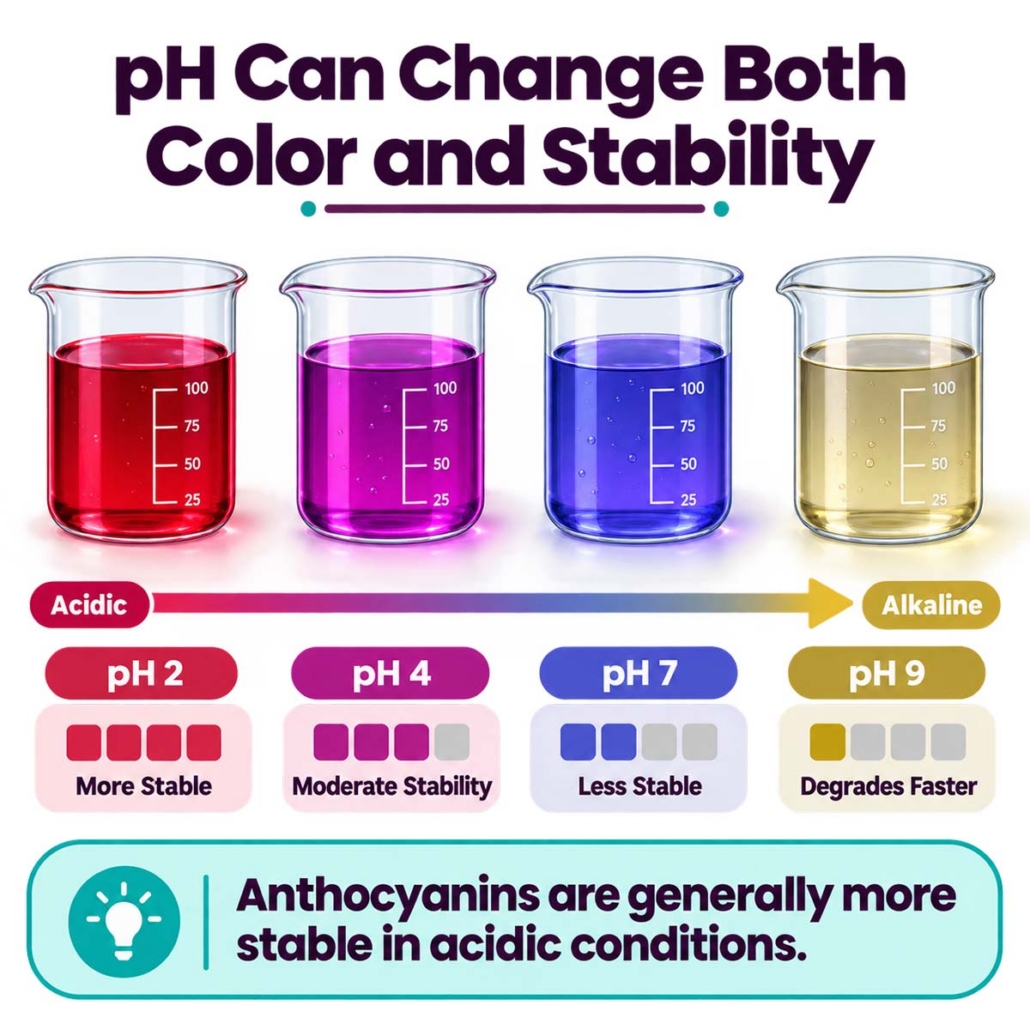
Potential red and pink options include dehydrated beets, qualifying fruit or vegetable juice, grape-derived colors, and carmine or cochineal extract. These materials differ substantially in source, processing, permitted use, pH response, heat stability, and dietary-positioning implications.
Dehydrated Beets
FDA defines dehydrated beets as a dark red powder made by dehydrating sound, mature, edible beets. It may be used to color foods generally at levels consistent with good manufacturing practice. However, it cannot be used in a standardized food unless the applicable standard permits added color.
Dehydrated beet color contains betalain pigments. Although these pigments can produce attractive red to reddish-purple shades, developers must evaluate their response to heat, light, oxygen, water activity, and the finished formula.
Fruit & Vegetable Juice Colors
Fruit juice and vegetable juice may be used to color foods generally at levels consistent with good manufacturing practice. These listings can support colors made from sources such as black carrot, purple sweet potato, radish, and various fruits—provided the commercial ingredient meets the applicable regulatory identity.
Under FDA’s regulations, fruit or vegetable juice color must be prepared by expressing juice from mature, fresh, edible material or by water infusion of dried material. It may then be concentrated or dried.
A selectively extracted, highly purified, or differently processed pigment does not automatically qualify as fruit or vegetable juice. Therefore, brands should obtain a supplier’s regulatory rationale rather than inferring authorization from the source name.
Grape-Derived Colors
FDA recognizes more than one grape-derived color, and their uses are not interchangeable.
Grape color extract may be used in nonbeverage foods. FDA specifically defines it as an aqueous Concord-grape pigment solution, or a dehydrated, water-soluble powder made from that solution, prepared from precipitated lees generated during Concord grape-juice storage. It is not authorized for beverage applications.
Grape skin extract, also known as enocianina, is authorized for still and carbonated drinks and ades, beverage bases, and alcoholic beverages. Its authorization does not extend to gummies or other nonbeverage foods generally.
A third possibility is a grape-based fruit juice color that independently meets the identity and conditions of §73.250. Therefore, “grape color” is not a sufficient regulatory description.
Carmine & Cochineal Extract
Carmine and cochineal extract may be used to color foods generally at good-manufacturing-practice levels. They can provide strong red or pink shades and may offer useful stability in some applications.
However, both come from the cochineal insect. As a result, they may conflict with vegan, vegetarian, plant-based, kosher, halal, or consumer-preference requirements. Finished foods must also declare the specific common or usual name in the ingredient statement.