Rethinking Nerve Health Formulation
August 5, 2026 | Focus on Formulation
How next-generation ingredient science is reshaping nerve health formulations for today’s supplement market.

August 5, 2026 | Focus on Formulation
How next-generation ingredient science is reshaping nerve health formulations for today’s supplement market.
Nerve health supplements are entering a new phase of innovation.
For years, the category has been dominated by relatively simple formulations built around vitamin B12, vitamin B6, and alpha-lipoic acid. While these ingredients remain important, today’s consumers and healthcare practitioners are looking for products that address nerve health more comprehensively.
Researchers now understand that peripheral neuropathy and nerve discomfort rarely result from a single biological process. Instead, nerve dysfunction is influenced by a complex network of oxidative stress, chronic inflammation, impaired mitochondrial function, reduced circulation, metabolic dysfunction, and age-related degeneration.
This shift in understanding is changing how supplement brands approach formulation.
Rather than asking, “Which ingredient helps nerves?” formulators are increasingly asking, “How can we support every pathway involved in maintaining healthy nerve function?”
The result is a new generation of nerve health supplements designed around multiple complementary mechanisms instead of a single active ingredient.
For brands developing new products, this creates an opportunity to move beyond commodity formulas and build clinically credible products that align with emerging science, consumer expectations, and market trends.

Peripheral nerves are remarkably complex.
Unlike many tissues, nerves regenerate slowly and require continuous support from healthy circulation, adequate energy production, efficient antioxidant defenses, and proper nutrient availability.
Modern research has identified several biological processes that contribute to declining nerve health:
No single ingredient addresses every pathway.
As a result, successful formulations increasingly combine ingredients that support different aspects of nerve biology simultaneously.
This systems-based approach is becoming the new standard for premium nerve health products.
Instead of building formulations around one “hero ingredient,” today’s formulators are developing products that support multiple physiological systems.
Oxidative stress remains one of the most studied contributors to nerve damage.
Excess reactive oxygen species can damage nerve membranes, impair cellular communication, and reduce the ability of nerves to regenerate.
Leading ingredients include:
These ingredients help maintain cellular integrity while supporting the body’s natural antioxidant defenses.
Nerves are among the body’s most energy-demanding tissues.
Without adequate ATP production, nerve repair slows and normal signaling becomes less efficient.
This is creating growing interest in ingredients that support mitochondrial function.
Key ingredients include:
Rather than simply reducing symptoms, these ingredients support the cellular energy required for long-term nerve function.
Researchers increasingly recognize neuroinflammation as a major contributor to nerve discomfort.
Instead of suppressing inflammation broadly, newer ingredients help regulate inflammatory pathways involved in nerve signaling.
Promising ingredients include:
These compounds support a balanced inflammatory response while promoting overall nerve comfort.
Supporting the physical structure of nerves remains one of the primary goals of modern formulations.
Several ingredients contribute directly to myelin integrity, nerve regeneration, or neurotransmitter production.
Core ingredients include:
These nutrients help maintain healthy nerve communication while supporting normal repair processes.
Peripheral nerves depend on efficient blood flow for oxygen and nutrient delivery.
Supporting microcirculation has become another important strategy in comprehensive formulations.
Ingredients may include:
Together, these ingredients help support healthy vascular function and nutrient delivery throughout the peripheral nervous system.
A variety of plants naturally produce caffeine as part of their defense against insects and herbivores. These botanical sources differ in their caffeine concentration, accompanying phytochemicals, flavor characteristics, consumer recognition, and formulation considerations.
Understanding these differences helps product developers select ingredients that align with both technical requirements and brand positioning.
In the following sections, we’ll examine the most widely used natural caffeine sources in dietary supplements and compare their strengths, limitations, and ideal applications for modern energy products.
ALA continues to serve as the foundation of many premium nerve health formulations.
Multiple randomized clinical trials have demonstrated improvements in burning, tingling, numbness, and nerve discomfort at daily doses around 600 mg.
Beyond its antioxidant activity, ALA also supports mitochondrial function and healthy glucose metabolism, making it especially valuable for metabolic health formulations.
Benfotiamine remains one of the most effective forms of vitamin B1 for nerve support.
Its superior absorption compared to standard thiamine allows it to help reduce advanced glycation end products (AGEs), which are associated with nerve damage in metabolic disorders.
As consumer awareness of blood sugar health grows, benfotiamine is becoming an increasingly attractive ingredient for premium formulations.
Not all vitamin B12 is created equal.
Methylcobalamin is the biologically active form of vitamin B12 and plays a direct role in maintaining myelin integrity and supporting healthy nerve regeneration.
Premium formulations increasingly favor methylcobalamin over cyanocobalamin because it offers greater physiological relevance and aligns with consumer expectations for active nutrient forms.
While established ingredients provide clinical credibility, newer ingredients offer opportunities to differentiate products in an increasingly competitive market.
Astaxanthin is one of the most potent naturally occurring antioxidants available. It’s a carotenoid antioxidant derived primarily from the microalga Haematococcus pluvialis.
Because oxidative stress is a major contributor to age-related nerve dysfunction, astaxanthin is increasingly being explored as a complementary ingredient in advanced nerve health formulations.
While direct clinical evidence for peripheral nerve support is still emerging, its benefits for mitochondrial health, healthy inflammatory responses, and cellular resilience make it a valuable addition to formulations positioned for healthy aging and long-term neurological wellness.
PEA has rapidly become one of the most exciting ingredients in nerve health.
Rather than functioning as a traditional anti-inflammatory, PEA acts as a naturally occurring lipid mediator that helps regulate neuroinflammatory pathways and mast cell activity.
Growing clinical evidence suggests that PEA may help support nerve comfort while complementing more traditional ingredients like alpha-lipoic acid and methylcobalamin.
For brands seeking innovation without sacrificing scientific credibility, PEA represents one of the strongest opportunities available today.
Curcumin continues to evolve beyond joint health. It’s the primary bioactive compound found in turmeric and has been extensively studied for its ability to support a healthy inflammatory response and antioxidant defenses.
In nerve health formulations, bioavailable curcumin is valued for its potential to help modulate neuroinflammation, reduce oxidative stress, and support overall cellular function.
When combined with ingredients that promote mitochondrial health and healthy nerve metabolism, curcumin contributes to a comprehensive, multi-mechanism approach to maintaining healthy peripheral nerve function.
Best known for cognitive health, citicoline is beginning to attract interest in nerve support formulations.
It contributes phospholipids used in cell membranes and may help support neuronal communication, membrane integrity, and healthy nerve signaling.
Although research in peripheral nerve health is still emerging, citicoline offers an intriguing opportunity for brands developing cognitive-plus-nerve support platforms.
Acetyl-L-carnitine bridges two important formulation goals:
Unlike standard L-carnitine, ALC readily crosses the blood-brain barrier and participates directly in neuronal energy metabolism.
Its dual role makes it especially attractive for comprehensive nerve support products positioned around healthy aging.
PQQ represents another emerging mitochondrial ingredient.
Unlike traditional antioxidants, PQQ has been studied for its potential role in supporting mitochondrial biogenesis—the formation of new mitochondria.
Although human research specific to neuropathy remains limited, PQQ offers exciting possibilities for future nerve health innovation.
Consumers are becoming more educated about supplement labels.
They increasingly recognize when products contain numerous underdosed ingredients instead of clinically meaningful formulations.
The future of nerve health lies in thoughtful combinations built around complementary mechanisms.
For example:
| Formulation Goal | Strategic Ingredients |
|---|---|
| Oxidative stress | ALA + NAC + Astaxanthin |
| Mitochondrial support | ALC + CoQ10 + PQQ |
| Neuroinflammation | PEA + Curcumin + Omega-3 |
| Nerve regeneration | Benfotiamine + Methyl B12 + P-5-P |
| Healthy circulation | Ginkgo + Citrus Bioflavonoids + Cocoa Flavanols |
This approach allows brands to tell a stronger scientific story while delivering clinically meaningful ingredient levels.
Innovation in the nerve health category is accelerating as researchers continue to uncover new ways to support healthy aging, cellular resilience, and neurological function. While ingredients such as alpha-lipoic acid, benfotiamine, and methylcobalamin remain the foundation of today’s formulations, several emerging ingredients are beginning to attract attention for their potential role in supporting the biological systems that influence nerve health.
Although many of these compounds are still being studied — and human clinical research specific to peripheral neuropathy remains limited — they represent promising opportunities for future product development as the science continues to evolve.
Ergothioneine is a naturally occurring amino acid derivative found primarily in mushrooms. Sometimes referred to as the “longevity antioxidant,” it accumulates in tissues that experience high levels of oxidative stress, including the nervous system.
Researchers are investigating ergothioneine for its ability to support cellular protection, mitochondrial health, and healthy aging.
Because oxidative stress plays a significant role in nerve degeneration, ergothioneine could become an attractive complementary ingredient for next-generation nerve support formulations.
Potential formulation role:
Produced by the gut microbiome from compounds found in pomegranates and certain berries, urolithin A has generated significant interest for its ability to support mitophagy — the body’s natural process of removing damaged mitochondria and promoting healthier cellular energy production.
Although current research has focused primarily on muscle function and healthy aging, improved mitochondrial quality may also have important implications for nerve cells, which have exceptionally high energy demands.
As mitochondrial health becomes a larger focus in neurological research, urolithin A is likely to receive increasing attention from formulators.
Potential formulation role:
Spermidine is a naturally occurring polyamine involved in cellular maintenance and renewal. It has attracted considerable interest in longevity research because of its ability to support autophagy, the cellular recycling process that helps remove damaged proteins and organelles.
Healthy autophagy is increasingly recognized as an important component of maintaining neuronal function throughout aging. Although more research is needed, spermidine may eventually play a role in formulations designed to support long-term neurological resilience.
Potential formulation role:
Nicotinamide riboside is a precursor to nicotinamide adenine dinucleotide (NAD⁺), a coenzyme that is essential for mitochondrial energy production, DNA repair, and cellular metabolism.
NAD⁺ levels naturally decline with age, prompting growing interest in ingredients that support healthy NAD⁺ metabolism.
While research specific to peripheral nerve health is still emerging, NR has demonstrated benefits for mitochondrial function and healthy aging that make it an intriguing candidate for future nerve health formulations.
Potential formulation role:
Like NR, nicotinamide mononucleotide serves as a precursor to NAD⁺ and has become one of the most widely discussed ingredients in longevity science.
Although regulatory status varies by market and product category, ongoing research into NMN’s effects on mitochondrial health and cellular resilience may eventually expand its relevance to nerve health applications.
Formulators should continue monitoring both the evolving science and regulatory landscape surrounding NMN.
Potential formulation role:
Lion’s Mane (Hericium erinaceus) has become one of the fastest-growing ingredients in cognitive health supplements because of its potential to support nerve growth factor (NGF) activity and neuronal health.
Although much of the current research has focused on cognitive function, the ingredient’s relationship with nerve growth has generated growing interest in broader neurological applications, including peripheral nerve support.
As clinical research expands, Lion’s Mane may become an attractive botanical ingredient for comprehensive brain and nerve health formulations.
Potential formulation role:
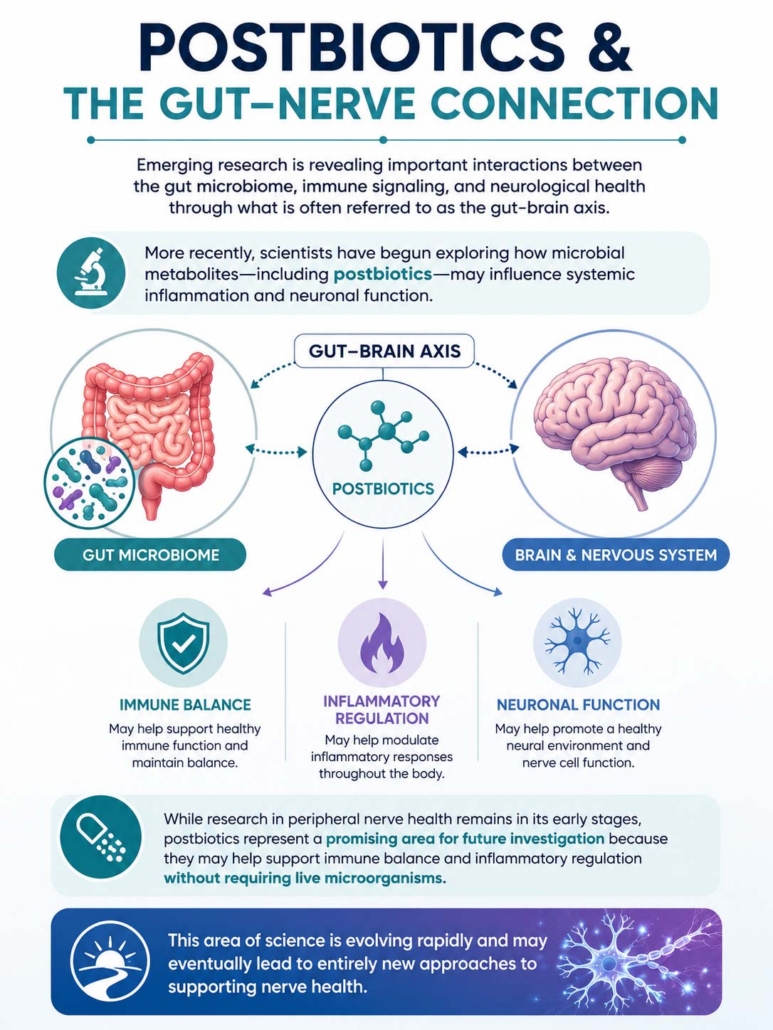
Emerging research is revealing important interactions between the gut microbiome, immune signaling, and neurological health through what is often referred to as the gut-brain axis.
More recently, scientists have begun exploring how microbial metabolites—including postbiotics—may influence systemic inflammation and neuronal function.
While research in peripheral nerve health remains in its early stages, postbiotics represent a promising area for future investigation because they may help support immune balance and inflammatory regulation without requiring live microorganisms.
This area of science is evolving rapidly and may eventually lead to entirely new approaches to supporting nerve health.
Potential formulation role:
The next generation of nerve health supplements will likely extend beyond traditional antioxidant and vitamin-based formulations.
As our understanding of mitochondrial biology, cellular senescence, autophagy, neuroimmune signaling, and healthy aging continues to advance, formulators will have new opportunities to develop products that support nerve health through increasingly sophisticated mechanisms.
While these emerging ingredients are not yet replacements for clinically established compounds such as alpha-lipoic acid, benfotiamine, or methylcobalamin, they offer an exciting glimpse into the future of nerve health innovation.
Brands that monitor this evolving research — and thoughtfully incorporate new ingredients as the evidence matures — will be well positioned to develop differentiated formulations that meet the next generation of consumer expectations.
No single ingredient addresses every aspect of nerve health. The most effective formulations combine ingredients that target complementary biological pathways, including oxidative stress, mitochondrial function, healthy inflammatory responses, circulation, myelin integrity, and cellular energy production.
The comparison below highlights how commonly used and emerging ingredients contribute to these mechanisms.
| Ingredient | Primary Mechanism | Clinical Evidence | Typical Dose | Market Differentiation | Best Positioning |
|---|---|---|---|---|---|
| Alpha-Lipoic Acid | Oxidative stress | ★★★★★ | 600 mg | Moderate | Foundational |
| Benfotiamine | Glycation support | ★★★★★ | 300–600 mg | Moderate | Metabolic nerve support |
| Methylcobalamin | Myelin repair | ★★★★★ | 1,000–5,000 mcg | Moderate | Nerve regeneration |
| PEA | Neuroinflammation | ★★★★☆ | 600–1,200 mg | High | Premium |
| Acetyl-L-Carnitine | Mitochondria | ★★★★☆ | 500–1,500 mg | High | Healthy aging |
| Curcumin | Inflammation | ★★★★☆ | 500–1,000 mg | Moderate | Comfort |
| PQQ | Mitochondrial biogenesis | ★★★☆☆ | 10–20 mg | Very High | Innovation |
| Citicoline | Cell membranes | ★★★☆☆ | 250–500 mg | High | Brain + nerve |
| Astaxanthin | Antioxidant | ★★★☆☆ | 4–12 mg | Moderate | Healthy aging |
As the table illustrates, each ingredient offers distinct strengths. Brands seeking meaningful differentiation should consider formulations that combine complementary mechanisms of action rather than relying on a single “hero” ingredient.
By supporting multiple aspects of nerve health simultaneously, formulators can create more comprehensive products that align with current scientific understanding and evolving consumer expectations.
Delivery format influences both consumer acceptance and ingredient performance.
Capsules remain the preferred format for high-dose nerve support ingredients because they:
Powders offer opportunities for comprehensive formulations but require sophisticated flavor masking when using ingredients like ALA or NAC.
Convenient single-serving stick packs continue to gain popularity among active consumers and older adults seeking daily compliance.
Although gummies continue to grow across many supplement categories, they present significant formulation limitations for neuropathy products.
Many clinically effective nerve health ingredients require dosages that exceed practical gummy capacity or present stability and sensory challenges. Gummies may be better suited for lighter “daily nerve wellness” products than clinically positioned formulations.
The nerve health category is evolving alongside several broader trends in the dietary supplement industry.
Rather than seeking products that simply “support nerve health,” today’s consumers are looking for science-backed, clinically relevant formulations that address healthy aging, metabolic wellness, mobility, and long-term quality of life.
These shifts are creating new opportunities for supplement brands to develop differentiated products with stronger clinical positioning.
Early neuropathy supplements often relied on one or two ingredients, such as vitamin B12 or alpha-lipoic acid. Today’s consumers, however, are becoming more educated and increasingly recognize that nerve health depends on multiple physiological systems working together.
Modern formulations are shifting toward combinations that simultaneously support:
This systems-based approach aligns with current scientific understanding of peripheral nerve biology and creates stronger opportunities for product differentiation.
Rather than asking, “What ingredient helps nerves?” formulators are asking, “Which combination of ingredients supports the entire nerve health ecosystem?”
One of the most significant drivers of innovation is the world’s aging population. As life expectancy increases, consumers are becoming more proactive about maintaining mobility, independence, and neurological function rather than waiting for symptoms to develop.
Peripheral nerve function naturally declines with age due to cumulative oxidative stress, reduced mitochondrial efficiency, decreased circulation, and slower tissue regeneration. As a result, nerve health is increasingly being positioned alongside healthy aging, joint health, cognitive wellness, and mobility instead of as a standalone condition.
According to Grand View Research, the global anti-aging supplements market was valued at approximately $4.8 billion in 2025 and is projected to reach $9.0 billion by 2033, growing at a compound annual growth rate (CAGR) of 8.5%. The report attributes this growth to an aging global population, increasing consumer awareness of preventive health, advances in nutraceutical science, and growing demand for natural products that support long-term wellness.
Formulation opportunities include:
For supplement brands, this presents an opportunity to move beyond positioning nerve health products solely for individuals experiencing neuropathy.
One of the most exciting developments in nutritional science is the growing recognition of mitochondrial health as a common denominator across many chronic health conditions.
Because peripheral nerves have exceptionally high energy requirements, mitochondrial dysfunction is increasingly viewed as an important contributor to declining nerve function.
This has created new opportunities for ingredients such as:
Rather than positioning these nutrients solely as “energy ingredients,” brands can now build a broader story around cellular energy production, resilience, and healthy nerve function.
This systems-based positioning also opens the door to crossover products targeting healthy aging, cognition, and metabolic wellness.
Oxidative stress has long been recognized as an important contributor to nerve damage. More recently, however, researchers have placed increasing emphasis on neuroinflammation as another key driver of nerve discomfort and declining nerve function.
This growing understanding is expanding interest in ingredients that help regulate inflammatory signaling within the nervous system rather than simply providing general antioxidant support.
Emerging ingredients include:
Among these, PEA has attracted particular attention because of its unique role in supporting the body’s natural neuroinflammatory response, making it one of the most promising differentiators for premium nerve health products.
Consumers no longer view blood sugar management, cardiovascular health, weight management, and nerve health as separate wellness categories.
Instead, they increasingly understand that these physiological systems influence one another.
As interest in metabolic health continues to grow, formulators have an opportunity to position nerve support products around broader metabolic wellness by incorporating ingredients such as:
This integrated approach creates opportunities for more comprehensive products that support multiple aspects of long-term health while avoiding an overly narrow positioning.
Consumers are asking more sophisticated questions than ever before:
As a result, formulation quality has become a significant differentiator.
Brands that provide:
are increasingly positioned as trusted leaders within premium supplement categories.
This trend extends beyond marketing. It influences purchasing decisions and long-term brand loyalty.
The future of nerve health supplementation will likely be defined by precision formulation rather than ingredient proliferation. Brands that thoughtfully combine clinically supported ingredients, advanced delivery technologies, and transparent scientific substantiation will be better positioned to meet evolving consumer expectations.
Instead of competing on the number of ingredients listed on the label, the next generation of nerve health supplements will compete on mechanistic synergy, bioavailability, clinical relevance, and formulation quality. Those are the characteristics that will define category leaders over the coming decade.
Although the nerve health category has grown steadily over the past decade, much of the market remains saturated with formulas built around the same familiar ingredients — typically alpha-lipoic acid, vitamin B12, vitamin B6, and occasionally benfotiamine. While these ingredients remain clinically valuable, they no longer provide a meaningful competitive advantage on their own.
For brands looking to launch a new nerve support product, the greatest opportunities lie in rethinking formulation strategy rather than simply adding more ingredients. The following approaches represent some of the most promising areas for innovation.
Many products still market a single “hero ingredient.” However, peripheral nerve health depends on multiple interconnected physiological systems.
Instead of asking, “What is the best ingredient for nerve health?” formulate around the biological pathways that contribute to healthy nerve function.
A modern formulation should intentionally address:
This systems-based approach creates a stronger scientific rationale and a more compelling marketing story than simply combining popular ingredients.
Strategic recommendation: Develop formulations using three to five complementary mechanisms rather than five unrelated ingredients.
Consumers are increasingly questioning ingredient quality rather than ingredient quantity.
A formulation containing six highly bioavailable ingredients at clinically relevant doses often delivers more value than one containing fifteen underdosed ingredients.
Consider prioritizing:
Higher-quality ingredient forms also strengthen premium positioning and support more credible marketing claims.
Many existing products are perceived as upgraded B-complex supplements rather than advanced nerve health solutions.
Brands can differentiate by shifting the conversation from nutrient replacement to cellular resilience and nerve performance.
Instead of relying solely on:
consider building formulas that also incorporate:
These ingredients create opportunities to tell a more sophisticated story centered on mitochondrial health, neuroinflammation, and long-term nerve resilience.
Several ingredients are approaching broader market adoption but remain relatively uncommon in mainstream nerve health products.
Brands that establish expertise early may benefit from first-mover positioning.
Ingredients to monitor include:
Not every emerging ingredient belongs in today’s commercial formulation. However, monitoring clinical research and selectively incorporating promising compounds can keep a product portfolio aligned with future innovation.
The future of nerve health supplementation extends far beyond traditional vitamin formulas.
Scientific understanding of peripheral nerve biology continues to evolve, revealing new opportunities to support oxidative stress, mitochondrial function, neuroinflammation, circulation, and nerve regeneration through carefully designed multi-mechanism formulations.
For supplement brands, the greatest opportunity lies not in simply adding more ingredients, but in selecting complementary compounds with strong scientific rationale, clinically relevant dosages, and meaningful consumer benefits.
At Intermountain Nutrition, we work with brands to translate emerging science into scalable, market-ready formulations. By combining evidence-based ingredient selection with strategic formulation expertise, we help partners develop differentiated nerve health products that meet today’s consumer expectations while positioning them for tomorrow’s market opportunities.
Developing a successful nerve health supplement requires more than selecting trending ingredients. It requires balancing clinical evidence, formulation science, manufacturability, sensory performance, regulatory considerations, and commercial viability. That’s where Intermountain Nutrition adds value.
Our formulation team works with established supplement brands to transform emerging science into scalable, market-ready products. Whether you’re developing a practitioner-grade nerve support formula, a premium healthy aging product, or a differentiated metabolic wellness supplement, we help optimize every stage of product development — from concept through commercialization.
Ready to develop your next nerve health supplement? Contact Intermountain Nutrition to discuss custom formulation, ingredient selection, and manufacturing solutions designed to help your brand stand out in one of the industry’s fastest-evolving wellness categories.
Many evidence-based nerve health supplements combine ingredients that support multiple biological pathways involved in healthy nerve function. Common ingredients include alpha-lipoic acid, benfotiamine, methylcobalamin (vitamin B12), acetyl-L-carnitine, coenzyme Q10, N-acetyl-L-cysteine (NAC), curcumin, and palmitoylethanolamide (PEA). Each targets different mechanisms such as oxidative stress, mitochondrial function, myelin integrity, circulation, or neuroinflammation.
Earlier nerve health supplements often relied primarily on B vitamins. Today’s formulations take a more comprehensive approach by supporting multiple mechanisms involved in healthy nerve function, including oxidative stress, mitochondrial dysfunction, neuroinflammation, impaired microcirculation, glucose metabolism, and healthy aging. This systems-based strategy enables brands to develop more differentiated products supported by emerging scientific research.
Several emerging ingredients are generating interest among formulators, including palmitoylethanolamide (PEA), citicoline, pyrroloquinoline quinone (PQQ), ergothioneine, urolithin A, lion’s mane mushroom, nicotinamide riboside (NR), and postbiotics. While research specific to peripheral nerve health is still developing for many of these ingredients, they target biological pathways that are increasingly recognized as important for neurological wellness and healthy aging.
Peripheral nerves require substantial amounts of energy to transmit electrical signals and maintain cellular repair processes. Mitochondria produce this energy in the form of ATP. When mitochondrial function declines because of aging, oxidative stress, or metabolic dysfunction, nerve cells may become more susceptible to damage. Ingredients that support mitochondrial function are becoming increasingly important components of comprehensive nerve health formulations.
Oxidative stress occurs when the production of reactive oxygen species exceeds the body’s antioxidant defenses. Over time, oxidative stress can contribute to cellular damage, mitochondrial dysfunction, inflammation, and impaired nerve function. Many nerve health formulations include antioxidant ingredients to help support the body’s natural defense systems.
Peripheral nerves depend on a healthy blood supply to deliver oxygen and nutrients while removing metabolic waste products. Reduced microcirculation may limit nutrient delivery and cellular energy production. Ingredients that support healthy circulation can complement antioxidants, mitochondrial nutrients, and metabolic support ingredients within comprehensive nerve health formulas.
The ideal delivery format depends on the formulation goals and clinically effective dosages. Capsules remain the most common choice because they accommodate larger ingredient loads and a wide variety of active compounds. Powders may be appropriate for comprehensive metabolic or healthy aging formulations, while gummies generally work best for daily wellness products rather than formulations requiring higher therapeutic ingredient levels.
Many brands are expanding beyond condition-specific positioning and instead focusing on healthy nerve function, healthy aging, neurological wellness, and cellular resilience. This broader positioning appeals to consumers seeking proactive health solutions while providing greater flexibility for innovation and product differentiation.
Successful formulations typically address multiple biological mechanisms rather than relying on a single ingredient. Formulators should prioritize clinically meaningful dosages, ingredient quality, bioavailability, manufacturing compatibility, stability, and regulatory compliance. Selecting complementary ingredients that work across oxidative stress, mitochondrial function, circulation, inflammation, and metabolic health can create a more comprehensive product.
The nerve health category is increasingly influenced by trends in healthy aging, longevity, metabolic health, mitochondrial wellness, personalized nutrition, and clinically substantiated formulations. Consumers are seeking science-backed products that support long-term neurological wellness rather than short-term symptom management. As a result, brands are investing in premium ingredients, multifunctional formulations, and innovative delivery formats that deliver meaningful differentiation.
Pop-Busui R, et al. Diabetic Neuropathy: A Position Statement by the American Diabetes Association. Diabetes Care. 2017;40(1):136–154.
Callaghan BC, Price RS, Feldman EL. Distal Symmetric Polyneuropathy: A Review. JAMA. 2015;314(20):2172–2181.
National Institute of Neurological Disorders and Stroke (NINDS). Peripheral Neuropathy.
Cleveland Clinic. Peripheral Neuropathy.
Li S, et al. Acetyl-L-Carnitine in the Treatment of Peripheral Neuropathic Pain: A Systematic Review and Meta-analysis. PLOS ONE. 2015.
Hewlings SJ, Kalman DS. Curcumin: A Review of Its Effects on Human Health. Foods. 2017.
Hernández-Camacho JD, et al. Coenzyme Q10 Supplementation in Aging and Disease. Frontiers in Physiology. 2018.
O’Leary F, Samman S. Vitamin B12 in Health and Disease. Nutrients.
National Institutes of Health Office of Dietary Supplements. Vitamin B12 Fact Sheet for Health Professionals.
Hernández-Camacho JD, et al. Coenzyme Q10 Supplementation in Aging and Disease. Frontiers in Physiology.
Uttara B, et al. Oxidative Stress and Neurodegenerative Diseases. Current Neuropharmacology.
Glass CK, Saijo K, Winner B, Marchetto MC, Gage FH. Mechanisms Underlying Inflammation in Neurodegeneration. Cell. 2010.
Grand View Research. Anti-aging Supplements Market Size, Share & Trends Report.
World Health Organization. Ageing and Health.
National Institute on Aging. What Do We Know About Healthy Aging?
Cryan JF, et al. The Microbiota-Gut-Brain Axis. Physiological Reviews.
Salminen S, et al. The International Scientific Association of Probiotics and Prebiotics (ISAPP) Consensus Statement on Postbiotics. Nature Reviews Gastroenterology & Hepatology.
 https://intermountainnutrition.com/wp-content/uploads/2026/09/synbiotics-for-immune-supplements-11B.jpg 1200 1200 Larisa Graham https://intermountainnutrition.com/wp-content/uploads/2026/01/IMN-gradient-logo-NEW.png Larisa Graham2026-09-18 09:00:002026-09-20 00:38:33Synbiotics for Immunity Support https://intermountainnutrition.com/wp-content/uploads/2026/09/valorization-for-nutraceuticals-05.jpg 1200 1200 Larisa Graham https://intermountainnutrition.com/wp-content/uploads/2026/01/IMN-gradient-logo-NEW.png Larisa Graham2026-09-16 09:00:002026-09-14 04:22:37How Green Extraction Is Creating the Next Generation of Upcycled Nutraceutical Ingredients https://intermountainnutrition.com/wp-content/uploads/2026/09/andrographis.jpg 1200 1200 Larisa Graham https://intermountainnutrition.com/wp-content/uploads/2026/01/IMN-gradient-logo-NEW.png Larisa Graham2026-09-14 09:00:002026-09-14 12:53:59Andrographis for Immune Support
 Understanding Inflammation