From Byproduct to Bioactive: How Green Extraction Is Creating the Next Generation of Upcycled Nutraceutical Ingredients

September 16, 2026 |

Food-processing side streams are emerging as valuable sources of polyphenols, carotenoids, peptides, fibers, and other nutraceutical compounds, but successful upcycling requires much more than finding bioactivity in a discarded material.

At a Glance

  • Fruit pomace, peels, seeds, cereal bran, oilseed meals, coffee byproducts, and other processing streams can contain concentrated sources of nutritionally relevant compounds.
  • New extraction and bioprocessing technologies are making it possible to recover these compounds more selectively and efficiently.
  • Valorization is broader than upcycling: it describes converting an underused material into something with greater functional or economic value.
  • A promising laboratory extract is not automatically a commercially viable nutraceutical ingredient. Standardization, safety, stability, bioavailability, regulatory status, scalability, and human evidence still matter.
  • “Green extraction” does not automatically mean a lower-impact ingredient. Energy, purification, solvent recovery, drying, transportation, and other processing steps affect the full environmental footprint.
  • Supplement brands should view circular sourcing as an ingredient-development strategy, not simply a sustainability claim.

Upcycled Nutraceutical Ingredients Are Moving Beyond the Sustainability Story

The nutraceutical industry has traditionally looked to fruits, botanicals, grains, seeds, fungi, and other biological materials for functional compounds. Increasingly, researchers are asking a different question:

What valuable compounds are being left behind after those materials are processed?

Common Processing Byproducts

Wine production leaves grape skins and seeds. Juice processing generates citrus peel and berry pomace. Coffee production creates pulp, husks, and silverskin. Grain milling separates bran and germ. Olive processing produces pomace and other phenolic-rich streams.

These materials may be secondary to the original manufacturing process, but biologically, they are not necessarily secondary in value.

Where Valuable Compounds Accumulate

Plant compounds are distributed unevenly. Protective tissues such as skins, peels, seeds, and outer layers can contain substantial concentrations of polyphenols, pigments, structural carbohydrates, oils, and other compounds of interest.

The Rise of Byproduct Valorization

That has created a growing field of research around agri-food byproduct valorization: recovering useful compounds from existing processing streams and converting them into higher-value ingredients.

From Bioactive Potential to Commercial Viability

For nutraceutical companies, however, the important question is not whether a byproduct contains bioactives.

It is whether those bioactives can become safe, standardized, stable, scalable, evidence-supported ingredients that perform in a commercial supplement.

That distinction separates an interesting sustainability story from a viable nutraceutical opportunity.

Upcycling, Valorization, and Circular Sourcing: What Do These Terms Mean?

The terminology around circular ingredients is often used interchangeably, but the terms describe different parts of the value chain.

Term What It Means Examples
Side stream A material stream generated alongside the primary output of a production process. The term describes its origin without necessarily classifying it as waste. Grape pomace from winemaking; citrus peel from juice processing; coffee silverskin from roasting; spent grain from brewing
Byproduct A secondary material or product generated while producing a primary product. It may already have economic value or another use. Grape pomace, citrus peel, wheat bran, cheese whey
Byproduct-derived An ingredient made from or recovered from a processing byproduct. The term describes origin without automatically implying an environmental advantage. Grape-seed polyphenol extract; citrus-peel flavonoids; hydroxytyrosol recovered from olive-processing streams
Valorization Converting an underused or lower-value material into something with greater functional or economic value. Extracting polyphenols from grape pomace; recovering carotenoids from tomato pomace; generating peptides from protein-rich side streams
Upcycling Moving an underused or lower-value material into a higher-value application, generally with a circular-economy or sustainability dimension. Converting berry pomace into a standardized nutraceutical extract
Co-product A secondary output with enough intentional production and economic value to function as a commercially meaningful product alongside the primary product. Whey from cheese manufacturing; some cereal brans and oilseed meals
Circular sourcing A broader procurement strategy that seeks to keep resources in productive use and obtain greater value from existing biological material streams. Evaluating qualified side-stream-derived ingredients, supplier resource utilization, traceability, and upcycled ingredient opportunities

The distinction matters because not every byproduct-derived ingredient should automatically be called upcycled.

If a secondary stream already has substantial commercial demand, moving it into a supplement does not necessarily create an additional environmental benefit. Likewise, a material’s origin does not prove that the process used to recover it is sustainable.

For supplement brands, circular sourcing may therefore be the more useful long-term concept. It allows sustainability and resource efficiency to become part of ingredient procurement without making “upcycled” a requirement for every formulation.

Why Food-Processing Side Streams Can Be Valuable Nutraceutical Sources

The biological value of a plant does not disappear when its primary food product has been removed.

In fact, some processing streams contain precisely the fractions nutraceutical developers find interesting.

Fruit skins can be rich in anthocyanins, flavonoids, and other polyphenols. Seeds may provide oils, proteins, or proanthocyanidins.

Citrus peel contains flavanones such as hesperidin and naringin. Cereal bran contains fiber and bound phenolic compounds.

Olive-processing streams can contain hydroxytyrosol and related phenolics.

This creates the potential to extract multiple valuable fractions from the same starting material.

From Single Extraction to Biorefinery

A more sophisticated model is emerging in which a side stream is treated as a biorefinery feedstock rather than a source of one ingredient.

For example, a fruit-processing stream might potentially yield:

polyphenols → seed oils → fiber fractions → proteins or peptides → remaining biomass for another productive use

This cascading approach can create more value from the original biomass and potentially improve process economics.

However, discovering a useful compound is only the beginning.

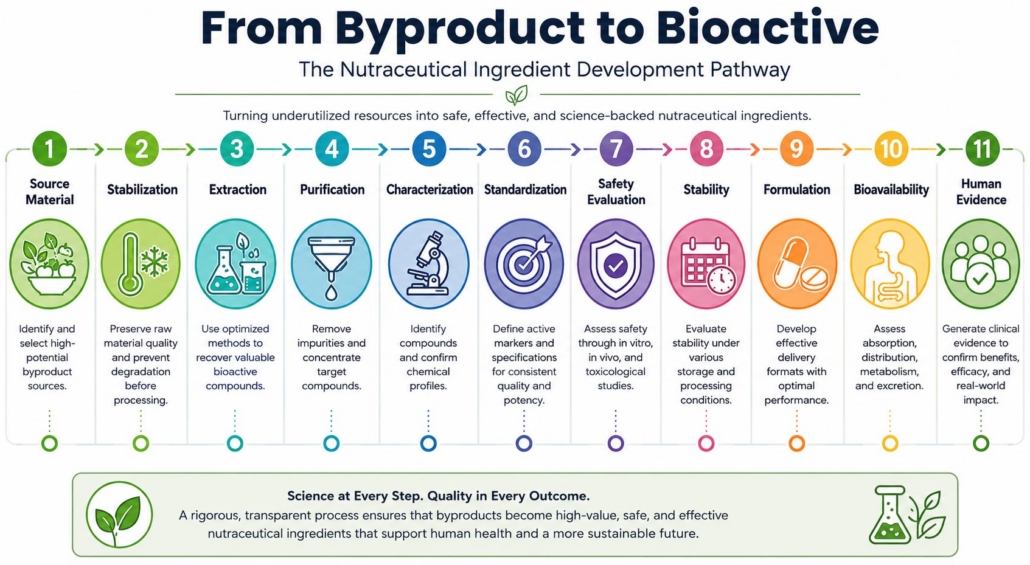
For nutraceutical development, the pathway looks more like:

Source Material → Stabilization → Extraction → Purification → Characterization → Standardization → Safety → Stability → Formulation → Bioavailability → Human Evidence

Each step can determine whether an ingredient progresses beyond the research stage.

The Most Promising Byproduct Sources for Nutraceutical Development

Not every processing stream deserves equal attention. For supplement developers, the strongest candidates combine bioactive density, available supply, feasible processing, safety, and a plausible health application.

Source Bioactives of Interest Potential Nutraceutical Applications Commercial Considerations
Grape pomace, skins, and seeds Proanthocyanidins, anthocyanins, catechins, flavonols, phenolic acids, stilbenes Cardiovascular wellness, healthy aging, antioxidant formulations, microbiome-focused products Strong research base; cultivar and processing variability remain important
Citrus peels and residues Hesperidin, naringin, other flavanones, carotenoids, pectin, essential oils Cardiovascular, metabolic, digestive, and antioxidant formulations Abundant supply; bitterness, pesticide residues, and purification require attention
Berry pomace Anthocyanins, proanthocyanidins, flavonols, phenolic acids, fiber, seed lipids Healthy aging, cardiovascular, cognitive, antioxidant, and microbiome applications Attractive phytochemical profile; oxidation and pigment stability can be challenging
Olive-processing streams Hydroxytyrosol, tyrosol, oleuropein-related phenolics Cardiovascular, oxidative-stress, and healthy-aging formulations High-value phenolics; source variability and purification matter
Coffee byproducts Chlorogenic acids, fiber, proteins, potential bioactive peptides Metabolic, antioxidant, cognitive, energy, and microbiome applications Emerging opportunity; caffeine, contaminants, safety, and source consistency require control
Pomegranate peel and seeds Punicalagins, ellagitannins, ellagic-acid precursors, flavonoids, seed lipids Cardiovascular, metabolic, antioxidant, healthy-aging, and microbiome products Concentrated phenolics; tannins, standardization, and bioavailability are important
Cereal bran and germ Ferulic acid and other phenolics, arabinoxylans, beta-glucans, fiber, proteins, lipids Gut health, metabolic wellness, prebiotic formulations, healthy aging Large supply streams; some valuable compounds remain bound within the plant matrix
Oilseed cakes and meals Proteins, peptides, residual oils, phenolics, phytosterols, fiber Protein, peptide, metabolic, and antioxidant formulations Antinutritional compounds, allergens, residual solvents, and fractionation require evaluation
Tomato pomace Lycopene and other carotenoids, phenolics, seed oils, fiber Healthy aging, antioxidant, cardiovascular, and skin-health formulations Oxidation, light sensitivity, and stabilization are key
Brewing and fermentation streams Proteins, peptides, fiber, phenolics, polysaccharides Gut health, protein, metabolic, and functional-nutrition concepts High-volume streams, but moisture, spoilage, logistics, flavor, and drying affect feasibility

The commercial opportunity is not simply finding the source with the highest antioxidant assay.

The better question is which source can consistently produce a defined ingredient at the required potency, safety, cost, and scale.

What Whey Can Teach Us About Successful Valorization

Whey offers a useful historical example of what mature byproduct valorization can become.

Cheese and casein manufacturing generate liquid whey after milk proteins are separated. Historically, whey represented a lower-value secondary stream and could create a significant disposal burden.

Today, sophisticated separation and processing technologies produce whey protein concentrates, whey protein isolates, hydrolysates, and specialized protein fractions for sports nutrition, healthy aging, protein supplementation, and specialized nutrition.

The important lesson is not that modern whey protein should automatically be marketed as “upcycled.”

It is that successful valorization can become so commercially established that a former low-value secondary stream develops its own sophisticated supply chain and functions increasingly like a valuable co-product.

Some of today’s emerging plant-processing streams may follow a similar trajectory.

How Green Extraction Is Expanding What Can Be Recovered

Traditional extraction can require substantial quantities of solvents, long processing times, or conditions that are poorly suited to sensitive bioactives.

Newer extraction technologies give developers more control over selectivity, temperature, solvent use, processing time, and recovery efficiency.

Technology Particularly Relevant For Potential Advantage Commercial Limitation
Ultrasound-assisted extraction (UAE) Polyphenols and plant extracts Enhanced mass transfer with potentially shorter extraction times Industrial performance depends heavily on equipment and process optimization
Microwave-assisted extraction (MAE) Polyphenols, pigments, and other phytochemicals Rapid heating and shorter extraction cycles Temperature control and scale-up can become more complex
Pressurized liquid extraction (PLE) Phenolics and other solvent-extractable compounds Tunable extraction conditions and accelerated recovery Pressure, temperature, equipment, and downstream processing affect economics
Supercritical CO₂ extraction (SFE) Oils, carotenoids, and lipophilic compounds Selective recovery with limited conventional solvent residue High-pressure equipment and capital requirements
Enzyme-assisted extraction (EAE) Bound phenolics, proteins, peptides, polysaccharides Can release compounds trapped within plant structures under relatively mild conditions Enzyme selection, time, cost, and downstream processing matter
Pulsed electric fields (PEF) Pretreatment of plant matrices Increases cellular permeability with limited thermal exposure Equipment requirements and scale-up must be justified
Natural deep eutectic solvents (NADES) Selected polyphenols and phytochemicals Highly tunable solvent systems with promising selectivity Viscosity, purification, recovery, toxicological characterization, and scale remain considerations

Recent research increasingly combines technologies rather than treating them as mutually exclusive. Ultrasound or enzymes may serve as pretreatments, for example, while membrane separation, purification, fermentation, or encapsulation may follow extraction.

This points toward an important development:

The future may belong less to a single “best” extraction technology and more to integrated processing systems designed around a specific feedstock and target compound.

Green Extraction Does Not Automatically Mean a Greener Ingredient

“Green extraction” is useful terminology, but supplement brands should avoid assuming that an emerging extraction method automatically produces a lower-impact ingredient.

Extraction yield is only one part of the equation.

Commercial processing may also require:

  • transporting wet biomass
  • rapid stabilization to prevent microbial or oxidative degradation
  • drying and milling
  • heating or pressurization
  • solvent production and recovery
  • filtration and purification
  • concentration
  • encapsulation or other stabilization
  • final drying
  • storage and transportation

A process that uses less conventional solvent could still consume substantial energy elsewhere.

Likewise, recovering a small amount of a highly purified compound from a dilute side stream may require intensive downstream processing.

The relevant question is therefore not:

Is the extraction technology green?

It is:

Does the complete process use resources more efficiently than the realistic alternative?

Life-cycle assessment, energy consumption, water use, solvent recovery, yield, transportation, and utilization of remaining biomass can all contribute to that answer.

For brands making environmental claims, measurable process evidence is considerably stronger than relying on the ingredient’s byproduct origin alone.

Where Emerging Nutraceutical Research Looks Most Promising

Research into side-stream valorization spans hundreds of potential compounds. For supplement developers, several areas deserve particularly close attention.

1. Polyphenols From Fruit & Olive Processing

Polyphenols are currently among the most developed opportunities.

Grape pomace, berry residues, pomegranate peel, citrus peel, and olive-processing streams can contain substantial phenolic fractions. Researchers have investigated these compounds in relation to antioxidant activity, inflammatory signaling, cardiovascular markers, metabolic health, and microbiome interactions.

The category also benefits from familiarity. Many of the compounds being recovered—such as proanthocyanidins, anthocyanins, hesperidin, and hydroxytyrosol—already have relevance within nutraceutical formulation.

What brands should watch: not simply higher extraction yield, but standardized extracts with reproducible composition and ingredient-specific human evidence.

2. Carotenoids From Color-Rich Side Streams

Tomato pomace and other pigment-rich processing streams offer potential sources of lycopene and related carotenoids.

Supercritical fluid extraction is particularly interesting here because carotenoids are lipophilic and sensitive to oxidation.

The challenge shifts quickly from extraction to stability, delivery, and bioavailability. A high recovery rate is of limited value if the resulting carotenoid fraction degrades during processing or performs poorly in the finished dosage form.

3. Bioactive Peptides From Protein-Rich Streams

Protein-containing side streams create a different opportunity.

Rather than merely isolating protein, enzymatic hydrolysis and fermentation can generate peptide fractions with potentially useful biological activity.

Oilseed meals, cereal-processing streams, dairy side streams, and other protein-rich materials are being explored for this purpose.

This remains an especially interesting research frontier because processing can help create the functional ingredient, rather than simply recover a compound already present in the original material.

For brands, however, peptide identity, reproducibility, mechanism, safety, sensory performance, and human evidence will determine whether these materials progress beyond promising research.

4. Prebiotic Fibers & Functional Polysaccharides

Many processing streams contain substantial fiber fractions that remain after juice, oil, starch, or other primary components have been removed.

Cereal bran, fruit pomace, citrus residues, and other side streams may provide fibers and polysaccharides relevant to digestive health and microbiome-focused products.

This opportunity could become particularly important as supplement development moves beyond simply adding grams of generic fiber toward better-characterized substrates with specific physicochemical and microbiome properties.

5. Fermentation & Biotransformation

One of the most interesting directions may involve using microorganisms or enzymes to transform side-stream materials rather than simply extracting them.

Fermentation can potentially release bound compounds, alter phytochemical profiles, improve digestibility, generate metabolites, or create new functional fractions.

This expands the concept of valorization from:

“What can we extract?”

to:

“What can this biological material become?”

For nutraceutical development, that could ultimately create ingredient classes that do not exist in the original feedstock in the same form.

The Commercial-Readiness Gap

One of the biggest mistakes in evaluating emerging nutraceutical ingredients is treating a successful extraction study as evidence of commercial readiness.

These are very different milestones.

A more useful development continuum is:

Promising Biomass → Characterized Extract → Standardized Ingredient → Safety-Supported Ingredient → Formulation-Ready Ingredient → Clinically Evaluated Ingredient

Promising Biomass

Researchers identify a side stream containing compounds of potential value.

Characterized Extract

The recovered material is chemically characterized so developers understand what is actually present.

Standardized Ingredient

Manufacturing controls and specifications produce reproducible composition and potency across batches.

Safety-Supported Ingredient

Contaminants, toxicology, processing effects, intended dose, and regulatory status have been appropriately evaluated.

Formulation-Ready Ingredient

The ingredient has sufficient stability, sensory performance, flow, solubility, compatibility, and supply reliability for commercial product development.

Clinically Evaluated Ingredient

Human research evaluates the relevant ingredient or a sufficiently comparable material at an appropriate dose.

Do not confuse scientific novelty with commercial readiness.

An interesting extraction study identifies an opportunity. It does not establish a supplement ingredient.

Why Promising Upcycled Ingredients Still Fail to Reach Market

Recent reviews continue to identify a significant gap between laboratory-scale success and industrial adoption.

Feedstock Variability

Cultivar, growing conditions, harvest timing, geography, storage, and the original food-processing method can all alter side-stream composition.

For a supplement manufacturer, that variability must eventually be converted into a reproducible ingredient specification.

Stabilization & Logistics

Many side streams are wet and biologically unstable.

If pomace or other biomass begins degrading before extraction, the value of the starting material can change rapidly. Collection, transportation, refrigeration, drying, and stabilization can therefore become major parts of the economics.

Scale-Up & Purification

An extraction method that performs well with grams of material does not automatically perform the same way with industrial volumes.

Purification can become an additional hidden constraint. Increasing the concentration of a desired compound may require filtration, chromatography, membrane processing, solvent recovery, or other operations that affect cost and sustainability.

Safety & Regulatory Requirements

Circularity does not reduce the standard for safety.

Agricultural and processing side streams may concentrate pesticide residues, metals, mycotoxins, microorganisms, process contaminants, or naturally occurring undesirable compounds.

The regulatory status of the resulting ingredient must also be evaluated based on the actual ingredient, manufacturing process, intended use, and market—not simply the source material.

Limited Human Evidence

Perhaps the biggest scientific gap is the transition from chemical characterization and preclinical research to ingredient-specific human studies.

A side stream can contain a familiar compound without automatically inheriting all the evidence associated with that compound from other sources.

Extraction method, chemical profile, matrix, dose, bioavailability, and accompanying constituents may differ.

For supplement brands, evidence should follow the ingredient—not merely the ingredient category.

INFOGRAPHIC: Consumer Acceptance Will Likely Depend on Trust

What Supplement Brands Should Be Doing Now

The science is advancing quickly, but that does not mean brands should rush to reformulate around every new side-stream ingredient.

A selective strategy makes more sense.

1. Screen for Circular Sourcing Opportunities

When evaluating polyphenols, carotenoids, fibers, proteins, peptides, oils, and other appropriate ingredient classes, ask suppliers whether qualified side-stream-derived options exist.

Circular sourcing can become one criterion in ingredient discovery without overriding efficacy, quality, or economics.

2. Require Ingredient Parity

An upcycled ingredient should meet the same expectations as a conventionally sourced alternative.

Identity, potency, purity, safety, stability, regulatory support, sensory characteristics, and supply continuity still apply.

Sustainability should add value — not excuse weaker ingredient performance.

3. Verify the Environmental Advantage

Do not assume that byproduct origin equals lower environmental impact.

When sustainability will become part of the brand story, ask suppliers for meaningful evidence regarding energy, water, solvents, transportation, waste utilization, carbon impact, or life-cycle performance where available.

4. Pilot Before Scaling

Circular ingredients can introduce unexpected formulation challenges.

Evaluate color, flavor, bitterness, astringency, hygroscopicity, bulk density, flow, solubility, dispersibility, stability, and processing behavior before making a large commercial commitment.

5. Let Science Lead the Consumer Story

The strongest circular ingredient should still make sense if the sustainability story disappears.

Ask:

If this ingredient were not upcycled, would we still want it in the formula?

If the answer is no, the product may be relying too heavily on the sourcing narrative.

Formulation Considerations for Upcycled Nutraceutical Ingredients

Byproduct origin does not determine how an ingredient will behave during manufacturing. The final extract or fraction must be evaluated like any other nutraceutical raw material.

Formulators should consider:

  • Potency and dose: Determine whether the standardized bioactive level supports a practical serving size.
  • Standardization: Define appropriate marker compounds and acceptable lot-to-lot variability.
  • Extract ratio and carriers: Understand how much of the ingredient is active extract versus processing aids or carrier material.
  • Bulk density and flow: Confirm compatibility with encapsulation, powder filling, stick packs, or other manufacturing equipment.
  • Hygroscopicity: Evaluate moisture sensitivity and its impact on processing and shelf life.
  • Color: Anthocyanins, carotenoids, chlorophyll-related compounds, and concentrated phenolics can strongly influence finished-product appearance.
  • Flavor: Bitterness, astringency, roasted notes, acidity, and other source-specific sensory characteristics may require masking.
  • Solubility and dispersibility: Particularly important for powders and drink mixes.
  • Oxidative stability: Lipids, pigments, and many phytochemicals may require protection from oxygen, light, or heat.
  • pH sensitivity: Some pigments and polyphenols can change stability or appearance depending on the formulation environment.
  • Ingredient interactions: Minerals, proteins, fibers, acids, and other compounds may alter solubility, color, flavor, or stability.
  • Bioavailability: Higher analytical potency does not necessarily mean greater physiological exposure.
  • Dosage-form fit: Capsules may accommodate ingredients that are difficult to use in gummies or exposed powder systems.
  • Shelf-life specifications: Finished-product stability should support label claims through the intended shelf life.
  • Supply continuity: Confirm that the side stream can support projected commercial volumes consistently.

Origin does not determine performance. The finished ingredient does.

The Future: From Upcycling to Circular Nutraceutical Sourcing

The next stage of this field will likely be defined by precision rather than novelty.

Researchers already know that agricultural and food-processing streams contain valuable compounds. The harder task is determining which streams can support reliable, safe, scalable, and economically competitive nutraceutical ingredients.

Extraction will increasingly become a process-engineering problem rather than simply a recovery problem.

Biorefineries may recover multiple fractions from the same feedstock. Fermentation and enzymatic biotransformation may generate new functional ingredients. Encapsulation and delivery technologies may improve the stability and bioavailability of recovered bioactives.

At the same time, stronger safety evaluation, life-cycle analysis, standardization, and clinical research should make it easier to distinguish durable commercial opportunities from compelling sustainability stories that never progress beyond the laboratory.

Eventually, circular sourcing may become less of a product category and more of a routine attribute of sophisticated ingredient procurement.

That may be the real sign of success.

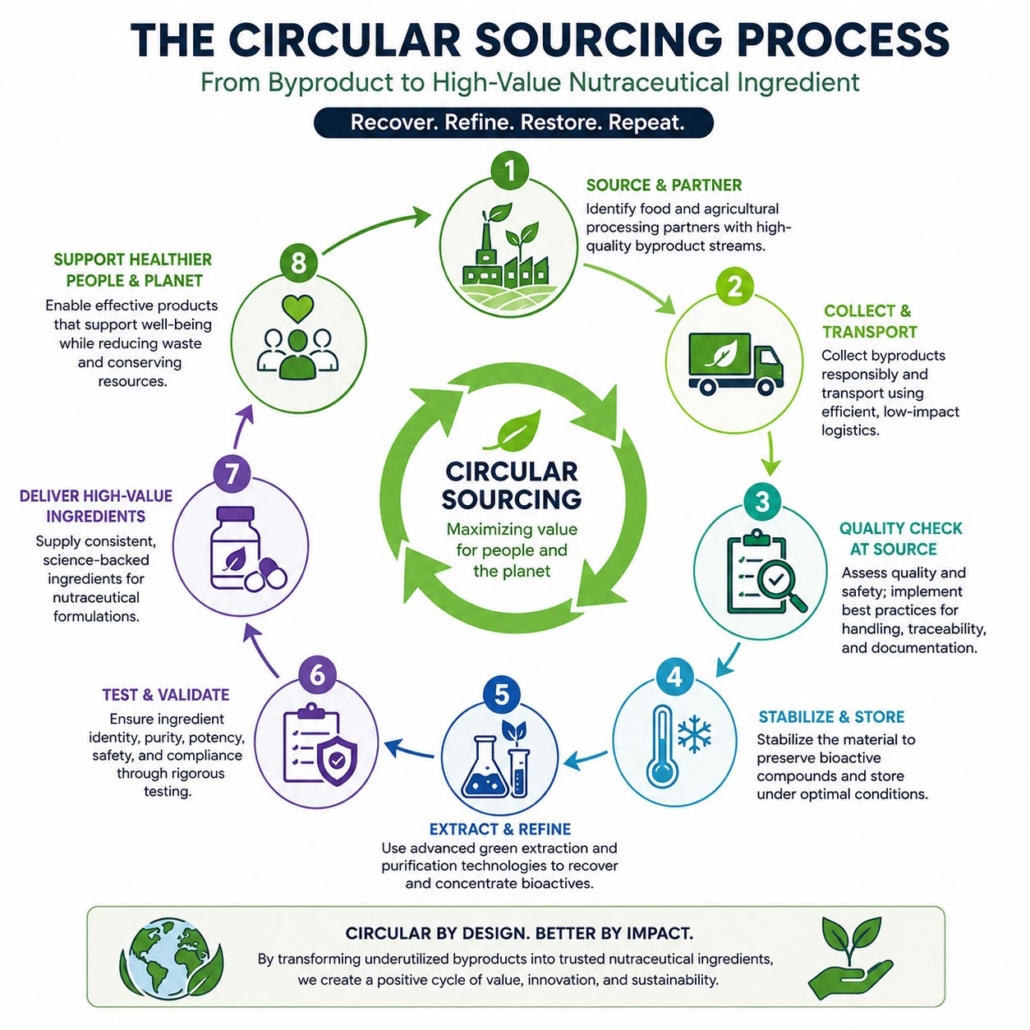
INFOGRAPHIC: The Circular Sourcing Process

Why Manufacturing Readiness Matters

For a supplement brand, discovering an interesting ingredient is only one part of commercialization.

A formulation still has to run through manufacturing equipment, maintain potency, meet specifications, survive its intended shelf life, fit the target dosage form, deliver an acceptable sensory experience, and support the economics of the finished product.

This is particularly important for emerging byproduct-derived ingredients because laboratory research may not address the manufacturing variables that become critical at commercial scale.

Working with an experienced contract manufacturer early in development can help brands evaluate:

  • formulation feasibility
  • dosage-form compatibility
  • ingredient sourcing and specifications
  • flavor and masking requirements
  • stability considerations
  • quality and regulatory requirements
  • pilot-scale performance
  • packaging compatibility
  • commercial scale-up

At Intermountain Nutrition, product development brings formulation, sourcing, quality, regulatory, manufacturing, packaging, and scale-up considerations together before a concept reaches full commercial production.

For emerging circular ingredients, that integration can help determine whether a promising bioactive is ready to become a scalable supplement.

From Byproduct to Bioactive — and From Bioactive to Viable Product

Upcycled nutraceutical ingredients represent a genuine opportunity, but sustainability alone is not enough.

The strongest candidates will combine responsible sourcing with meaningful bioactivity, rigorous characterization, scalable processing, appropriate safety support, formulation performance, and credible evidence.

That creates a higher standard than simply recovering something useful from a side stream.

It also creates a more valuable opportunity.

For supplement brands, the goal should not be to use upcycled ingredients simply because they are upcycled. It should be to identify cases where circular sourcing can deliver an ingredient that makes scientific, commercial, and formulation sense.

As green extraction, biorefinery processing, fermentation, and bioactive characterization continue to advance, more of those opportunities are likely to emerge.

Have a circular ingredient concept you want to evaluate? Intermountain Nutrition can help assess formulation feasibility, sourcing, quality requirements, dosage-form fit, pilot production, and commercial scale-up.

INFOGRAPHIC: From Byproduct to Bioactive

Frequently Asked Questions

Upcycled nutraceutical ingredients are higher-value functional ingredients produced from biological materials that were previously underused or directed toward lower-value applications. Examples can include polyphenol extracts recovered from fruit pomace, carotenoids from processing residues, or functional fractions derived from grain and seed side streams.

Valorization broadly describes increasing the functional or economic value of a material. Upcycling generally describes moving an underused or lower-value material into a higher-value application and often carries a stronger circular-economy or sustainability meaning.

Circular sourcing is a procurement strategy that seeks to keep resources in productive use and obtain greater value from existing material streams. For supplement brands, it can include qualified byproduct-derived or upcycled ingredients while also considering traceability, resource efficiency, supply reliability, and environmental performance.

Grape pomace, citrus peel, berry pomace, olive-processing streams, coffee byproducts, pomegranate peel, cereal bran, oilseed meals, tomato pomace, and selected fermentation or brewing streams are among the sources receiving significant research attention.

Green extraction refers to extraction strategies designed to improve factors such as solvent use, processing efficiency, energy consumption, selectivity, or bioactive preservation compared with less efficient conventional approaches. Examples include ultrasound-assisted extraction, microwave-assisted extraction, supercritical CO₂ extraction, enzyme-assisted extraction, pressurized liquid extraction, and emerging solvent systems.

Not automatically. A byproduct-derived source may improve resource utilization, but the total environmental impact also depends on stabilization, transportation, energy, water, extraction, purification, solvent recovery, drying, and waste management. Whole-process data provide stronger evidence than source origin alone.

They can be, but safety must be established for the specific ingredient and process. Side streams may carry pesticide residues, metals, mycotoxins, microorganisms, naturally occurring compounds, or processing contaminants. Appropriate specifications, testing, supplier qualification, and regulatory evaluation remain essential.

Evidence varies considerably. Some source materials and compounds have substantial scientific histories, while many specific side-stream-derived extracts remain supported primarily by analytical, in vitro, animal, or early human research. Brands should evaluate evidence for the actual ingredient, composition, and dose whenever possible.

Selectively. Brands should prioritize ingredients that already demonstrate credible sourcing, characterization, standardization, safety, supply continuity, manufacturing compatibility, and appropriate evidence. Upcycling should strengthen a good ingredient—not compensate for an underdeveloped one.

References

Annunziata, G., Maisto, M., Schisano, C., Ciampaglia, R., Narciso, V., Tenore, G. C., & Novellino, E. (2019). Effects of grape pomace polyphenolic extract (Taurisolo®) in reducing TMAO serum levels in humans: Preliminary results from a randomized, placebo-controlled, cross-over study. Nutrients, 11(1), 139.

Brazinha, C., Cadima, M., & Crespo, J. G. (2014). Optimization of extraction of bioactive compounds from different types of grape pomace produced at wineries and distilleries. Journal of Food Science, 79(6), E1142–E1149.

Carvalho, F., Prazeres, A. R., & Rivas, J. (2013). Cheese whey wastewater: Characterization and treatment. Science of the Total Environment, 445–446, 385–396.

Dimou, C., Karantonis, H. C., Skalkos, D., & Koutelidakis, A. E. (2019). Valorization of fruits by-products to unconventional sources of additives, oil, biomolecules and innovative functional foods. Current Pharmaceutical Biotechnology, 20(10), 776–786.

He, J., Li, T., Hai, G., & Zhang, C. (2026). Recovery of hydroxytyrosol from olive pomace: Extraction, purification, bioactivity, and bioavailability. Foods, 15(15), 2672.

Jirarat, W., Kaewsalud, T., Yakul, K., Rachtanapun, P., & Chaiyaso, T. (2024). Sustainable valorization of coffee silverskin: Extraction of phenolic compounds and proteins for enzymatic production of bioactive peptides. Foods, 13(8), 1230.

Kagueyam, S. S., dos Santos Filho, J. R., Contato, A. G., de Souza, C. G. M., Castoldi, R., Corrêa, R. C. G., Conte Junior, C. A., Yamaguchi, N. U., Bracht, A., & Peralta, R. M. (2025). Green extraction of bioactive compounds from plant-based agri-food residues: Advances toward sustainable valorization. Plants, 14(23), 3597.

Lu, P., Parrella, J. A., Xu, Z., & Kogut, A. (2024). A scoping review of the literature examining consumer acceptance of upcycled foods. Food Quality and Preference, 114, 105098.

Mohanakumara, A., Rinaldi, M., Hadj Saadoun, J., Lazzi, C., Tedeschi, T., & Ganino, T. (2026). Valorisation of agri-food by-products into bioactive compounds: Green extraction, microbial biotransformation and circular biorefinery strategies. Applied Food Research, 102511. Advance online publication.

Premi, M., Sharma, V., Dash, K. K., & Dar, A. H. (2026). Valorization of agri-food waste for applications in nutricosmetics, nutraceuticals, and cosmeceuticals. Food Wellness, 2(1), 100063.

Prazeres, A. R., Carvalho, F., & Rivas, J. (2012). Cheese whey management: A review. Journal of Environmental Management, 110, 48–68.

Singh, I. P. (2026). Natural deep eutectic solvents as green extraction media for nutritional and functional bioactives. Journal of Agricultural and Food Chemistry, 74(19), 14758–14793.

Ververis, E., Favata, A., Koffas, N., & Zakidou, P. (2026). Agri-food by-product valorisation and safety in sustainable food systems: Hidden hazards, risk–benefit trade-offs, challenges and opportunities. Food Chemistry Advances, 11, 101299.

Villacís-Chiriboga, J., Elst, K., Van Camp, J., Vera, E., & Ruales, J. (2020). Valorization of byproducts from tropical fruits: Extraction methodologies, applications, environmental, and economic assessment: A review (Part 1: General overview of the byproducts, traditional biorefinery practices, and possible applications). Comprehensive Reviews in Food Science and Food Safety, 19(2), 405–447.

Villacís-Chiriboga, J., Voorspoels, S., Uyttebroek, M., Ruales, J., Van Camp, J., Vera, E., & Elst, K. (2021). Supercritical CO₂ extraction of bioactive compounds from mango (Mangifera indica L.) peel and pulp. Foods, 10(9), 2201.

Won, H. J., & Choi, A. (2026). Sustainable processing of agri-food by-products into food ingredients: An integrated review from pre-treatment to formulation. Frontiers in Sustainable Food Systems, 10, 1841645.

Regulatory & Marketing References

Federal Trade Commission. (n.d.). Environmental marketing.

U.S. Food and Drug Administration. (2010). Small entity compliance guide: Current good manufacturing practice in manufacturing, packaging, labeling, or holding operations for dietary supplements.

U.S. Food and Drug Administration. (2024). Dietary supplements: New dietary ingredient notification procedures and timeframes: Guidance for industry.

Related Postings

Andrographis for Immunity Support Supplements
STOCK FORMULA: Elderberry Gummies for Immune Support
Bees Using Propolis As a to Build the Honeycomb Structure of Their Hive