Berberine for Weight Loss: Market Trends and Formulation Opportunities

November 9, 2026 |

Berberine is inspiring new product ideas in the weight-management supplement market. Explore how brands are using it, which ingredients commonly appear alongside it, and what to consider when developing a custom formula.

Prefer to listen to the audio summary?

At a Glance

  • Berberine is a botanical ingredient used in supplements positioned around metabolic wellness and weight management.
  • Product developers often pair it with cinnamon, chromium, bitter melon, banaba, gymnema, or alpha-lipoic acid.
  • Grand View Research estimates that berberine’s segment of the weight-loss supplement ingredients market could grow from $143 million in 2025 to $266.5 million by 2033.
  • Across the wider supplement market, berberine products appear in several formats. For manufacturing with Intermountain Nutrition, capsules, powders, and gummies may be evaluated based on serving size, taste, ingredient compatibility, and manufacturing feasibility.
  • A strong concept connects a defined audience with a purposeful formula, practical format, and clear brand story.

Why Berberine Is Getting Attention

Berberine is showing up in more conversations about metabolic wellness and weight-management supplements. For supplement brands, that visibility creates room to explore fresh concepts: a focused berberine capsule, a multi-ingredient botanical blend, or a product that fits into a broader metabolic wellness portfolio.

The opportunity is in translating interest into a well-considered product. Brands can start by asking who the formula is for, what role berberine will play, which companion ingredients make sense, and what format best supports the idea. Those choices help shape a product consumers can understand and the formulation team can develop for consistent, scalable manufacturing.

What Is Berberine?

Berberine is a naturally occurring compound found in several plants, including barberry, goldenseal, and Oregon grape. Supplement brands use it in products positioned around areas such as metabolic wellness, glucose metabolism, and weight management.

A Versatile Botanical Ingredient

Berberine can serve as the anchor ingredient in a focused metabolic-wellness supplement or as part of a broader botanical formula. However, berberine-containing extracts often have a pronounced bitter taste.

Capsules offer a practical option for avoiding flavor challenges, while gummies and flavored powders require careful consideration of taste masking, serving size, ingredient compatibility, and consumer experience.

Rather than relying on a single trending ingredient, brands can create a more distinctive concept by connecting berberine to a clear audience and product experience. That might mean emphasizing botanical simplicity, pairing it with complementary ingredients, or selecting a format that fits the consumer’s routine.

How Berberine Is Thought to Work in the Body

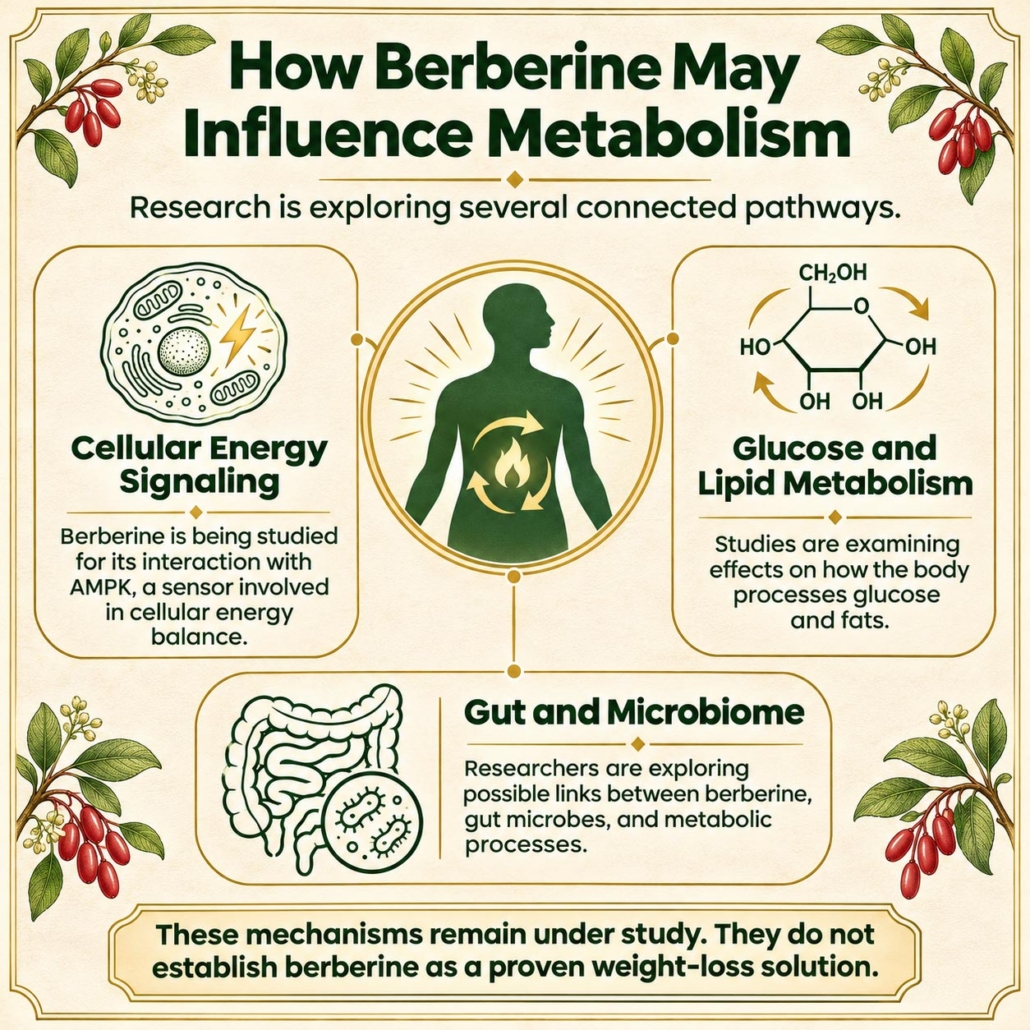
Berberine is studied for its interaction with metabolic processes, including cellular energy signaling and the way the body processes glucose and fats. These areas help explain why the ingredient appears in products designed around metabolic wellness.

Cellular Energy Signaling

One area of interest is berberine’s potential interaction with AMPK, an enzyme involved in cellular energy balance. This connection gives product developers a way to discuss berberine within a broader metabolic wellness story.

Glucose & Lipid Metabolism

Berberine is also studied in relation to glucose and lipid metabolism. For brands, these themes can inform the intended positioning and selection of companion ingredients, while the finished product story should stay clear, appropriately supported, and within applicable claims requirements.

A Broader Metabolic Wellness Concept

Weight management connects with multiple consumer interests, including daily routines, nutrition, activity, and metabolic wellness. Berberine can be considered as one element in a thoughtfully designed product concept rather than the entire story.

INFOGRAPHIC: How Berberine May Influence Metabolic Pathways

Popular Ingredients Paired With Berberine

Many berberine products combine it with other botanicals or nutrients. Current product labels commonly feature pairings such as cinnamon, chromium, bitter melon, banaba, gymnema, and alpha-lipoic acid. These combinations offer brands starting points for exploring different formula directions.

Ingredient How it appears in berberine products
Cinnamon Often included in botanical blends, sometimes specified as Ceylon cinnamon.
Chromium Commonly paired with berberine in formulas positioned around metabolic wellness.
Bitter melon Frequently included in multi-botanical formulas.
Banaba Often appears alongside other botanicals and chromium.
Gymnema Used in some broader botanical blends.
Alpha-lipoic acid Included in some formulas with berberine, botanicals, and minerals.
Inositol Appears in selected multi-ingredient metabolic wellness formulas.
Cinnamon Sticks for Supplement Formulation

Cinnamon

Cinnamon is a familiar botanical in metabolic wellness formulas and pairs naturally with berberine in a multi-ingredient concept. It gives brands an ingredient consumers recognize, with a warm flavor profile that can also work well in select powders or drink mixes. In capsules, it can be part of a broader botanical blend.

When developing a cinnamon–berberine formula, consider which cinnamon species and extract specification you want to use. Cinnamon appears in products positioned around glucose and metabolic wellness, but brands should avoid presenting the combination as a proven weight-loss solution.

Sweet Melon for Supplement Formulation

Bitter Melon

Bitter melon, also called bitter gourd, brings a distinctive botanical profile to metabolic wellness formulas. It is often combined with berberine, cinnamon, or other botanicals, helping brands build a more comprehensive plant-based concept.

Bitter melon can be considered when a product brief calls for a botanical blend with a broader ingredient story. Extract identity, plant part, standardization, and supplier documentation are important formulation details, especially when comparing materials from different sources.

Banaba Leaf for Supplement Formulation

Banaba

Banaba leaf is used in supplements designed around metabolic wellness and is commonly formulated as an extract. Its compounds, including corosolic acid and ellagitannins, are of interest in research on glucose and metabolic pathways. In a berberine formula, banaba can add another botanical dimension and help distinguish a blend from a single-ingredient product.

For brand owners, banaba may fit a capsule or tablet blend with berberine, chromium, and other botanicals. As with any extract, confirm the plant part, extract ratio or standardization, supplier specifications, and serving-size feasibility before finalizing the formula.

Gymnema Sylvestre for Supplement Formulation

Gymnema

Gymnema sylvestre is a traditional botanical used in products focused on metabolic wellness. It is often paired with berberine in multi-ingredient formulas, sometimes alongside cinnamon, bitter melon, or chromium. Its established place in botanical supplement traditions can support a product story centered on plant-based ingredients.

Gymnema may be a fit when the concept calls for a layered botanical blend rather than a minimalist berberine formula. Formulators should review the extract specification and assess how it contributes to the full blend’s serving size, positioning, and manufacturing requirements.

Chromium

Chromium is an essential trace mineral involved in the metabolism of carbohydrates, fats, and proteins. In supplements, it often appears as chromium picolinate, chromium nicotinate, or chromium yeast. Its role in nutrient metabolism makes it a common companion to berberine in products designed around metabolic wellness.

For formulators, chromium offers a mineral component alongside berberine and botanicals. The specific form and amount should be selected with the intended serving size, formula design, and label strategy in mind. Keep the product story centered on metabolic wellness rather than promising weight loss or blood sugar outcomes.

Alpha-Lipoic Acid

Alpha-lipoic acid (ALA) is a compound involved in energy metabolism and is also used in supplements for its antioxidant role. It appears in some berberine combinations, giving formulators an ingredient that complements a metabolic wellness concept from a different angle than the botanical components.

Because ALA is a distinct active with its own serving considerations, brands should evaluate its dose, compatibility, capsule capacity, and place in the product story. It may work well in a targeted capsule formula or a broader metabolic wellness blend where each ingredient has a clear purpose.

Inositol

Inositol is a naturally occurring compound involved in cell signaling. It appears in different supplement formats and is often used in products developed for women’s wellness and metabolic health. Paired with berberine, it can help shape a more specific concept for a defined audience rather than a general-purpose formula.

Brands can explore inositol when the product brief calls for a targeted metabolic wellness or women’s wellness angle. The chosen inositol form, serving size, format, and intended audience should guide the formula design and consumer-facing story.

These ingredients offer several directions for berberine product development, from a focused berberine-and-cinnamon capsule to a more layered blend with chromium and botanicals. A custom formula should be built around a clear audience and product purpose, with ingredient forms, serving size, quality specifications, and manufacturing fit considered together.

Berberine Weight-Loss Supplement Market Trends

Grand View Research estimates that the global berberine segment within weight-loss supplement ingredients generated $143 million in 2025 and could reach $266.5 million by 2033. The page reports an estimated 8.2% compound annual growth rate. It also identifies North America as the largest revenue-generating region in 2025. These figures offer a market signal for brands evaluating the category.

INFOGRAPHIC: Berberine Weight Loss Supplement Market Growth Trends

Multiple Formats Create Room for Product Concepts

Each format provides a different consumer experience and brings its own formulation and manufacturing considerations. Capsules can provide a straightforward way to deliver berberine and companion ingredients.

Powder and gummy concepts may also be considered, depending on serving size, ingredient compatibility, bitterness, and consumer experience. Format selection should account for the product brief and manufacturing feasibility.

The report organizes the wider category around applications such as fat burners, appetite suppressants, metabolism boosters, and meal replacements.

For berberine product developers, these categories show the range of market positioning brands may explore. They can use this landscape to identify an audience, clarify the product’s role, and differentiate the concept within their portfolio.

Market growth can help a brand decide whether to explore a category. The next step is building a product brief: define the consumer, select an ingredient strategy, choose a suitable format, and establish quality and scale-up requirements.

Safety, Tolerability, & Consumer Considerations

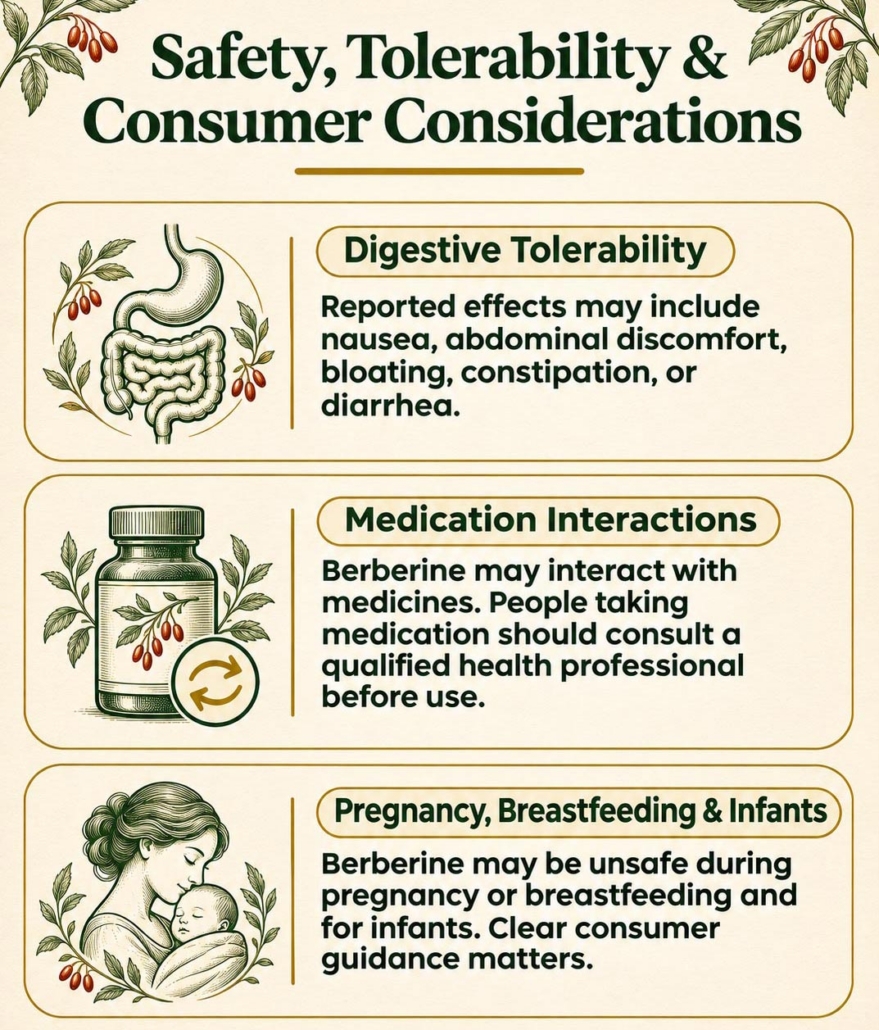
Berberine product development should account for tolerability, medication considerations, and clear consumer communication.

Digestive Tolerability

Reported effects may include nausea, abdominal discomfort, bloating, constipation, or diarrhea. These considerations can inform serving directions and the overall product experience.

Medication Considerations

Berberine may interact with medicines. Consumers taking medication should consult a qualified health professional before use.

Pregnancy, Breastfeeding, & Infants

Berberine may be unsafe during pregnancy or breastfeeding and for infants. Clear consumer guidance is an important part of product planning.

INFOGRAPHIC: Berberine Safety, Tolerability, and Consumer Considerations

Formulation Considerations for Berberine Supplements

A berberine formula should bring together a clear audience, a purposeful ingredient combination, a practical format, and quality requirements that support manufacturing at scale.

Match the Format to the Formula

Across the supplement market, berberine appears in several delivery formats. For brands exploring manufacturing with Intermountain Nutrition, capsules provide a practical starting point.

Powder and gummy concepts may also be evaluated, depending on serving requirements, bitterness, ingredient compatibility, and manufacturing feasibility. Our formulation team can help brands assess the most appropriate approach for their intended product.

Give Each Ingredient a Clear Role

Popular pairings can inspire new concepts, but every ingredient should contribute to the product’s purpose. Consider serving size, formula clarity, sourcing, and whether the full combination suits the brand’s audience and positioning.

Plan for Quality & Scale

Review ingredient identity, supplier specifications, documentation, and testing needs early in development. The formulation team can also assess compatibility, manufacturing feasibility, and whether the product can scale consistently.

Positioning Berberine Responsibly

Berberine gives brands a timely ingredient around which to build a product story. Clear positioning helps consumers understand what the product is designed to complement in their routine.

A product brief might focus on a botanical metabolic wellness formula, a convenient capsule for daily routines, or a broader blend with carefully selected companion ingredients. A defined purpose makes it easier to develop a coherent formula and communicate its place in a portfolio.

Claims should be truthful, appropriately substantiated, and reviewed for regulatory fit. FDA requirements for certain dietary supplement structure/function claims include substantiation, a disclaimer, and notification to FDA within 30 days after first marketing the product with the claim.

Questions to Ask Before Developing a Berberine Product

  • Who is the intended audience, and what role should this product play in their routine?
  • Will berberine be the lead ingredient or part of a multi-ingredient formula?
  • Which companion ingredients best support the concept?
  • What format supports the serving size and consumer experience?
  • Are ingredient specifications, sourcing, and testing requirements clear?
  • Can the formula be manufactured consistently at the intended scale?
  • Does the brand story explain the product clearly and responsibly?

Turn Berberine Interest Into a Custom Product Concept

Berberine’s growing visibility and expanding market segment give brands a reason to explore new product concepts in metabolic wellness and weight management. The most compelling opportunities begin with a clear audience, a purposeful ingredient strategy, and a format that fits the consumer’s routine.

Intermountain Nutrition’s R&D team can help you evaluate ingredient options, formats, serving sizes, and manufacturing considerations for a custom berberine formula. Contact our team to start developing a product concept around your goals.

Frequently Asked Questions

Berberine is used as a botanical ingredient in supplements positioned around metabolic wellness, glucose metabolism, and weight management. Brands may formulate it as a standalone product or combine it with botanicals and nutrients such as cinnamon, chromium, bitter melon, banaba, gymnema, or alpha-lipoic acid.

Berberine is studied for potential interactions with cellular energy signaling, glucose and lipid metabolism, and other metabolic processes. These areas help explain the ingredient’s place in metabolic wellness product development.

Current product formulations commonly pair berberine with cinnamon, chromium, bitter melon, banaba, gymnema, and alpha-lipoic acid. Some products also include inositol and other botanicals. Brands can use these examples as concept inspiration, then assess each ingredient’s role, serving size, sourcing, and format fit.

Capsules are common options, while powders and gummies offer additional possibilities. Format selection depends on serving size, ingredient compatibility, taste, consumer preference, and manufacturing requirements.

Brands should define the intended audience, product purpose, ingredient combination, serving size, and format. They should also review ingredient identity, specifications, supplier documentation, testing needs, manufacturing feasibility, and claims before moving into production.

Berberine may cause digestive effects and interact with medicines. Consumer guidance should also address pregnancy, breastfeeding, and infant use. Brands should review safety communication as part of the full product development and label review process.

References

Evidence on Berberine and Weight Loss

National Center for Complementary and Integrative Health. (2023, November). Berberine and weight loss: What you need to know.

Asbaghi, O., Ghanbari, N., Shekari, M., Reiner, Ž., Amirani, E., Hallajzadeh, J., Mirsafaei, L., & Asemi, Z. (2020). The effect of berberine supplementation on obesity parameters, inflammation and liver function enzymes: A systematic review and meta-analysis of randomized controlled trials. Clinical Nutrition ESPEN, 38, 43–49.

Market information

Grand View Research. (n.d.). Berberine—Weight loss supplement ingredients market statistics. Retrieved November 16, 2026.

Product Examples for Ingredient Pairings

National Institutes of Health, Office of Dietary Supplements. (n.d.). Enhanced Slin (Label ID 321440). Dietary Supplement Label Database. Retrieved November 16, 2026.

National Institutes of Health, Office of Dietary Supplements. (n.d.). Doctor Recommended Supplements Berberine with Ceylon Cinnamon (Label ID 266149). Dietary Supplement Label Database. Retrieved November 16, 2026.

Regulatory Information

U.S. Food and Drug Administration. (n.d.). Notifications for structure/function and related claims in dietary supplement labeling. Retrieved November 16, 2026.

Related Postings

two women jogging in the park as part of body composition goals during weight loss
woman making a face at the tart flavoring of the nutritional gummy she's eating
Thermogenic Activation Tea Powder Stock Formula Supplement