Urolithin A and Mitophagy: Turning Mitochondrial Science Into a Healthy-Aging Product Story

October 19, 2026 |

Urolithin A brings a compelling cellular mechanism into the healthy-aging conversation. For supplement brands, the opportunity is to translate mitophagy into a clear, relevant story about the everyday goals consumers care about.

At a Glance

  • Mitophagy is the cell’s process for identifying and recycling worn-out mitochondria, which help cells produce energy.
  • Urolithin A is studied for its potential to influence mitochondrial quality control.
  • Its story sits at the intersection of emerging longevity science and familiar consumer interests, such as staying active and maintaining vitality with age.
  • Consumer awareness of urolithin A may still be limited, so brands may need to explain why the ingredient matters.
  • A strong product concept connects the science to a specific consumer goal instead of relying on technical language alone.

Connecting Mitophagy to Healthy Aging

Healthy-aging products often begin with a familiar goal: helping people stay active, maintain strength, or keep up with the routines they enjoy. Yet behind those everyday goals is a more complex story about how the body changes over time — including how cells maintain the systems that produce energy.

One process drawing attention in this area is mitophagy. It is the cell’s way of identifying and recycling worn-out mitochondria, the structures that help cells produce energy. Urolithin A has become part of this conversation because researchers are studying how it may influence this mitochondrial quality-control process.

For brand owners, however, the opportunity is bigger than introducing a new scientific term. Consumers may be curious about longevity and cellular health, but they may not know what mitophagy means — or why they should care. That makes the product story essential: explain the science in plain language, then connect it to a relevant consumer interest, such as staying active with age.

This article explores how urolithin A and mitophagy could inform healthy-aging product strategy. It also looks at emerging market signals, potential consumer-facing concepts, and ways to make the science understandable without asking the mechanism to carry the whole story.

Why Mitophagy Matters to Healthy-Aging Formulation

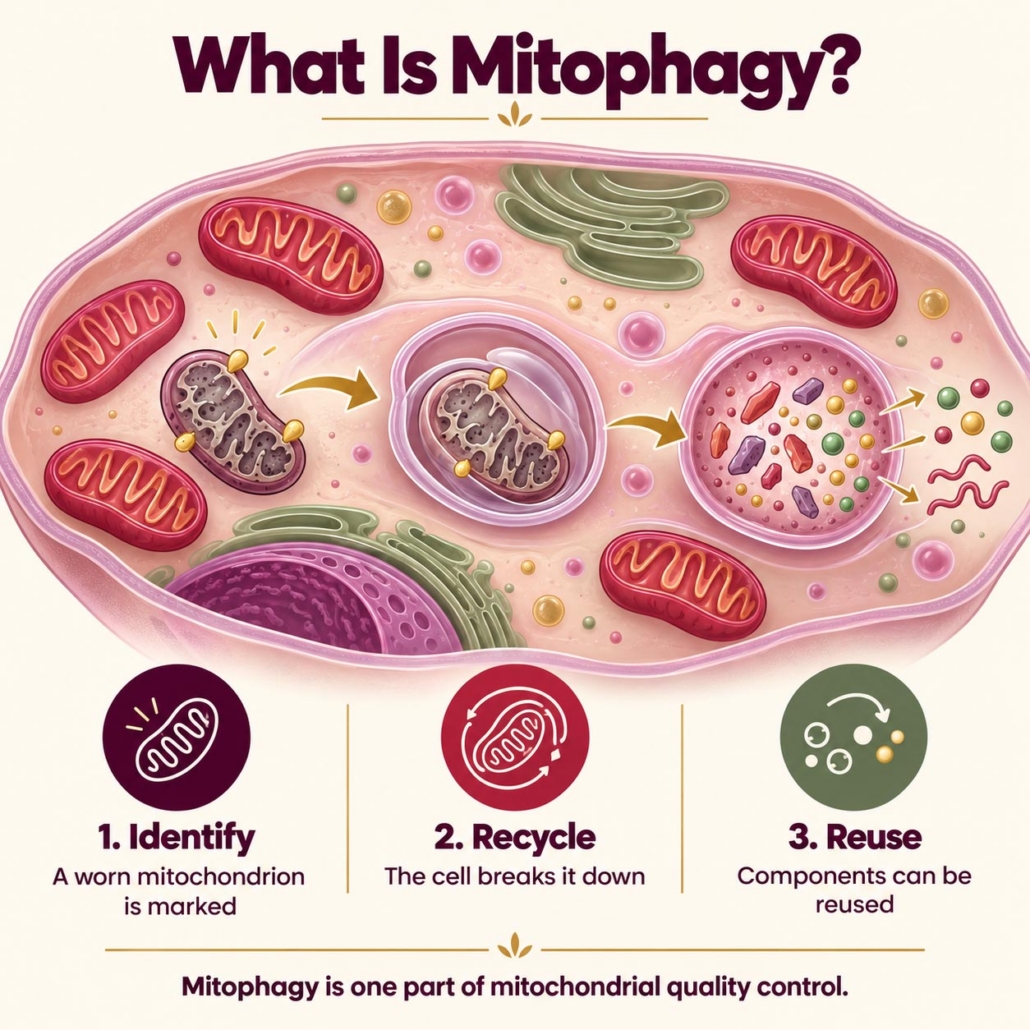
INFOGRAPHIC: Mitophagy: How Cells Recycle Mitochondria

Mitochondria Do More than Make Energy

Mitochondria are often called the cell’s powerhouses because they help convert nutrients into usable energy. They also take part in signaling and other processes that help cells respond to changing demands. Since mitochondria can become worn or damaged, cells need ways to maintain and renew them over time.

Mitophagy is Part of that Maintenance

Mitophagy is a selective form of autophagy: the cell identifies certain mitochondria and breaks them down so their components can be recycled. This process works alongside other parts of mitochondrial quality control, including repair, changes in mitochondrial shape, and the creation of new mitochondria.

In other words, mitophagy is not a simple “more is better” switch. Cells need a balance between removing mitochondria that are no longer working well and maintaining enough healthy mitochondria to meet their needs.

What this Means for Product Strategy

For brands, mitophagy offers a way to explain the science behind mitochondrial health. Still, the mechanism itself may be unfamiliar to many shoppers. A consumer-facing story can start with the practical interest, such as staying active with age, and introduce mitophagy as the cellular process researchers are exploring.

What Urolithin A Is — And How It Relates to Mitophagy

From food compounds to a gut-derived metabolite

Urolithin A is a compound that can be produced when gut microbes break down ellagitannins, natural compounds found in foods such as pomegranates and some nuts. However, people differ in their ability to produce urolithins from these dietary precursors.

That distinction helps explain why researchers study urolithin A itself as well as foods and extracts that contain precursor compounds. They represent different approaches: one supplies the compound directly, while the other provides materials that the body may convert.

A mechanism that gives brands a distinctive story

Researchers are investigating urolithin A for its potential to influence mitochondrial quality-control pathways, including mitophagy. This gives the ingredient a distinctive place in conversations about cellular and mitochondrial health.

For brand owners, the opportunity is to make that science accessible. Rather than opening with a technical explanation, a brand might first identify the consumer interest — such as maintaining an active lifestyle with age — then explain how mitochondrial maintenance relates to the broader concept.

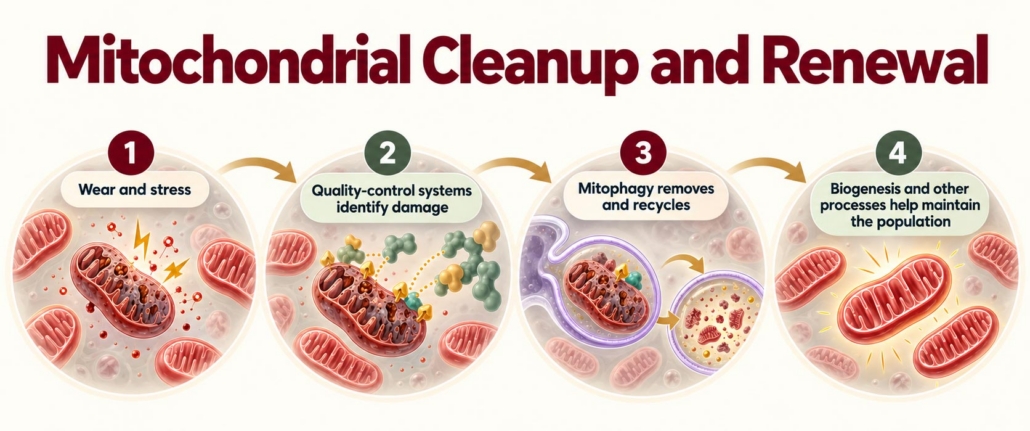
INFOGRAPHIC: Mitochondrial Maintenance Four Step Renewal Cycle

Keep the mechanism in perspective

Mitophagy is one part of a larger system that maintains mitochondria. It does not, by itself, explain every aspect of energy, strength, or healthy aging. So, a clear product story should treat urolithin A’s mechanism as the scientific context for the concept, while keeping the consumer’s goal and the formula’s overall purpose in view.

What Are Ellagitannins?

Ellagitannins are a group of polyphenols—naturally occurring compounds found in some plants. They occur in foods such as pomegranates, raspberries, strawberries, walnuts, and other nuts. In plants, these compounds are part of the food’s broader chemical makeup; in nutrition research, they are often discussed as dietary polyphenols.

INFOGRAPHIC: From Ellagitannins To Urolithin A

How Ellagitannins Relate to Urolithin A

After a person consumes ellagitannin-containing foods, gut microbes can break some of these compounds down into smaller molecules, including ellagic acid. Certain microbes can then convert ellagic acid into urolithins, including urolithin A.

That conversion does not happen the same way for everyone. People’s gut microbial communities differ, so their ability to produce urolithins from ellagitannin sources can vary. This is why an ellagitannin-rich food or extract should not be described as equivalent to taking urolithin A directly.

Why the Distinction Matters for Brands

The difference between a precursor and a metabolite can shape a product’s concept and consumer education. An ellagitannin-based product can tell a food-source or botanical story. A product containing urolithin A can focus on the compound itself and its connection to mitochondrial quality-control research.

Either way, the clearest message explains what the ingredient is, how it fits the product concept, and what consumers should — and should not — infer from the connection.

Comparison: Urolithin A and Ellagitannin

Topic Urolithin A Ellagitannin-rich foods and extracts
What it is A gut-derived compound formed when certain microbes metabolize ellagitannins; it can also be supplied directly as an ingredient. Foods or extracts that contain ellagitannins, such as pomegranate and some nuts.
Connection to mitophagy Studied for its potential to influence mitochondrial quality-control pathways, including mitophagy. May supply compounds that gut microbes can convert into urolithins, depending partly on an individual’s microbiome.
How it reaches the consumer Delivered directly as urolithin A in a finished product. Delivered as a precursor source; the body’s conversion varies among individuals.
Potential product-story angle A focused, science-forward story about urolithin A and mitochondrial quality control. A food-derived botanical story centered on ellagitannins and their relationship to gut microbial metabolism.
Consumer education need Explain what mitophagy means and why mitochondrial maintenance is relevant to the product concept. Explain that precursor intake is not the same as direct urolithin A delivery, and that conversion can vary.
Possible positioning territories Cellular health, mitochondrial health, healthy aging, or active aging, depending on the product concept. Pomegranate or botanical wellness, antioxidant-related product concepts, or a broader food-and-microbiome story.
Key strategic question Can the brand make the mechanism meaningful to its target consumer without relying on jargon? Does the brand want to focus on the source ingredient and food story, while clearly explaining the precursor-to-metabolite distinction?

Market Trends: A Growing Category for Healthy Aging

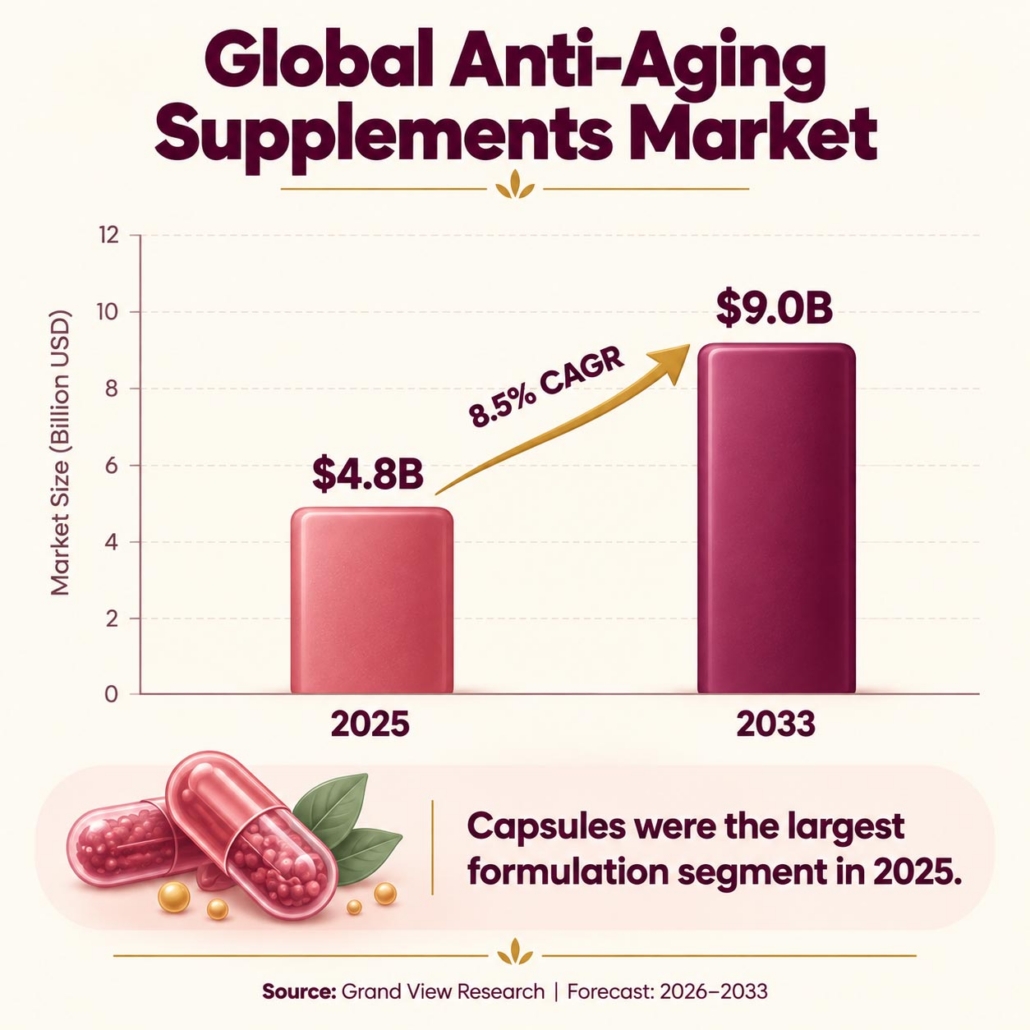
Grand View Research estimates the global anti-aging supplements market reached $4.8 billion in 2025 and projects it will grow to $9.0 billion by 2033, representing an 8.5% CAGR from 2026 to 2033. Capsules were the largest formulation segment in 2025, with a reported 35.8% market share.

For brands considering Urolithin A, this points to a broader opportunity to connect science-led ingredients with consumer interest in healthy aging. Capsule leadership may make the format a familiar starting point, while other formats can help a product fit different routines and brand identities.

These figures describe the anti-aging supplements category overall; they do not establish Urolithin A’s individual market size or consumer demand. Brands can use them as context for category planning, then validate ingredient-specific interest through their own customer research and channel data.

INFOGRAPHIC: Global Anti-Aging Supplements Market

Where Urolithin A Fits in the Healthy-Aging Market

Healthy aging and “healthspan,” the years a person lives in good health, are becoming more visible in supplement marketing. One industry report found that, since July 2024, half of new supplement product launches included at least one healthspan claim.

Yet awareness of specific ingredients may be lower: the report said roughly one-third of surveyed consumers recognized ingredients such as urolithin A, while about one in five reported buying an anti-aging or longevity supplement annually.

That gap creates both an opportunity and a challenge. Consumers may be interested in staying healthy and active as they age, but brands may need to explain what urolithin A is and why it belongs in the product.

Strategic takeaway: Urolithin A sits within a growing healthy-aging conversation, but many consumers may need the concept translated. A familiar goal — such as staying active as the years add up — can provide an accessible starting point. Then the brand can introduce mitochondrial health and mitophagy as the science behind the story.

INFOGRAPHIC: Creating Urolithin A Product Concepts That Make Sense

Urolithin A Product Concepts That Make Sense

1. Start With the Person & the Goal

A useful product concept begins with a defined audience and something meaningful they want to maintain or improve. “People interested in longevity” may be too broad to guide a clear message. Instead, consider the routines and priorities that matter to a particular consumer.

For example, a brand might explore adults who want to remain active, people building a healthy-aging routine, or science-engaged consumers interested in cellular processes. These are starting points for customer research — not assumptions about what every consumer wants.

2. Choose a Clear Positioning Strategy

Urolithin A could fit several related product territories, but each suggests a different story:

  • Healthy aging: Support a broader conversation about maintaining well-being over time.
  • Active aging: Connect mitochondrial health to consumers’ interest in staying engaged in everyday movement and recreation.
  • Muscle and mobility: Use a more tangible product territory centered on maintaining physical capability.
  • Cellular energy: Lead with a science-forward concept that may require more explanation.

The best fit depends on the target audience and the role the ingredient plays in the formula.

Because these territories overlap, a product will be easier to understand when it leads with one primary idea and uses the others as supporting context.

INFOGRAPHIC: Choose A Clear Positioning Strategy

3. Make the Benefit Relevant to Daily Life

“Mitophagy support” may appeal to shoppers who already follow longevity science. For a broader audience, the term needs a plain-language explanation and a clear reason to care.

A brand could introduce the idea as part of how cells maintain their energy-producing systems, then connect that science to the product’s intended place in a healthy-aging routine.

That framing keeps the mechanism interesting without making it the entire promise. It also gives the product a more human entry point: what the consumer hopes to keep doing, and why the science behind the formula may be relevant to that goal.

Turning the Science Into a Clear Product Story

Lead with the Consumer’s Goal

Start with what the target consumer hopes to maintain or do. For example, a product for adults who want to stay active as they age may have a more immediate point of connection than one introduced solely as a “mitophagy formula.”

Next, explain the science in a few clear steps: mitochondria help cells produce energy; cells have processes that maintain mitochondria; mitophagy is one part of that maintenance; and researchers are studying urolithin A in this context.

This gives consumers a path from the ingredient to the concept without requiring a biology lesson.

Give the Science a Supporting Role

Mitophagy can make a product story distinctive, especially for shoppers who follow longevity research. Still, the term may be unfamiliar to many people. Introduce it after establishing why mitochondrial health is relevant, and define it in everyday language.

For instance, you might describe mitophagy as “the cell’s process for identifying and recycling worn-out mitochondria.” That explanation is more concrete than relying on technical terms alone. From there, brands can decide whether to use “mitophagy” prominently or keep it as a deeper educational detail.

Keep One Central Idea in Focus

A product may connect with healthy aging, cellular energy, muscle health, and longevity. However, trying to lead with all four can make the message feel scattered. Choose one main territory, then use the mechanism and related benefits as supporting context.

A simple message sequence can help:

  1. Identify the consumer and what they want to maintain.
  2. Explain why mitochondrial health relates to that interest.
  3. Introduce urolithin A and its connection to mitophagy.
  4. Show how the product fits into the consumer’s routine.
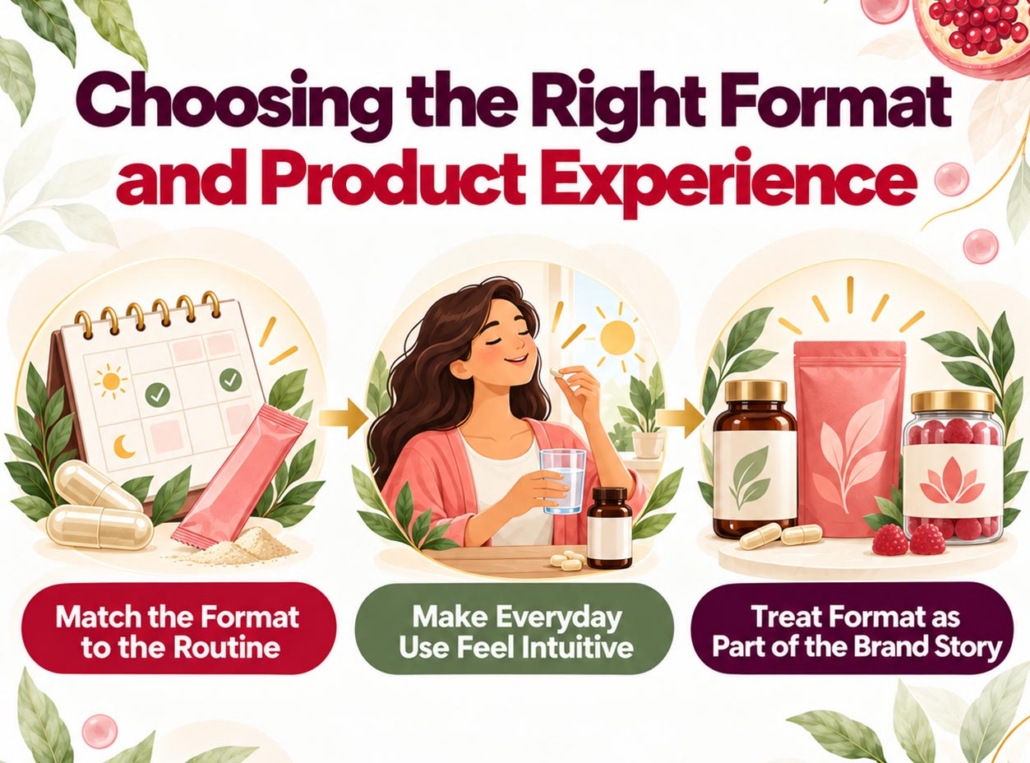
INFOGRAPHIC: Choosing The Right Format Experience

Choosing the Right Format & Product Experience

Match the Format to the Routine

Format shapes how a product fits into someone’s day.

Capsules may suit consumers who prefer a simple, focused supplement routine. Powders may work for people who already mix supplements into a drink. Other formats could appeal to different habits, but the best choice depends on the audience and product concept.

Rather than selecting a format just because it is trending, consider how the target consumer prefers to take supplements and what experience the product is meant to offer.

Make Everyday Use Feel Intuitive

A clear serving routine, convenient packaging, and straightforward directions can help make a science-forward product easier to understand and use. The product name, label hierarchy, and educational content can work together: the front of the package signals the consumer goal, while supporting copy explains the ingredient’s role.

Treat Format as Part of the Brand Story

The delivery format can reinforce the product’s positioning. A compact capsule may signal a focused daily routine; a drink mix may feel more integrated into an existing wellness ritual. These are possibilities to explore with consumers, not universal preferences.

Ultimately, a strong product experience makes the science feel approachable. Consumers should be able to understand what the product is for, how it fits into their day, and why urolithin A is part of the concept.

Build a Product Story, Not an Ingredient Pile

Give Every Ingredient a Clear Role

When a formula includes several active ingredients, each one should support the product’s central idea. Ask what role it plays in the story and whether it adds something distinct. If the reason for including an ingredient is hard to explain, the formula may be harder for consumers to understand, too.

For a urolithin A concept, start by deciding whether the product centers on healthy aging, active aging, cellular energy, or another defined territory. Then consider whether each additional ingredient strengthens that direction or distracts from it.

Make the Formula & Message Work Together

A coherent formula helps brands tell a clearer story. The ingredients, product name, format, and educational content should point toward the same consumer goal. For example, a product positioned around active aging should feel relevant to the routines and priorities of that audience — not like a collection of unrelated ingredients assembled around the word “longevity.”

Build a More Meaningful Healthy-Aging Concept with Urolithin A

Urolithin A gives brands an opportunity to connect emerging cellular science with a consumer interest that continues to evolve: supporting vitality over time.

The strongest concepts will make that connection feel relevant and understandable, with a clear audience, a distinct product role, and an experience people can see themselves using every day.

If you’re exploring where Urolithin A could fit in your portfolio, start with the consumer need you want to serve. Then bring your concept, target format, and priorities to a product development conversation with Intermountain Nutrition. Together, we can explore a practical path from ingredient idea to manufacturable product.

Frequently Asked Questions

Mitophagy is the process by which a cell identifies and recycles certain mitochondria. Mitochondria help cells produce usable energy, and, like other parts of a cell, they need ongoing maintenance. Mitophagy is one part of that quality-control system: it helps remove mitochondria that the cell has marked for recycling so their components can be broken down and reused.

The process is selective and regulated. It does not mean that cells indiscriminately clear out all their mitochondria, or that increasing mitophagy is automatically beneficial in every situation. It works alongside other processes that maintain mitochondrial function and renew the mitochondrial population.

Researchers are studying urolithin A because it may influence cellular pathways involved in mitochondrial quality control, including mitophagy. That mechanism gives the ingredient a connection to research on mitochondrial and cellular health.

For brands, it can provide a science-based explanation for why urolithin A is being explored in healthy-aging products. However, the mechanism should be presented as context, not as a guarantee of a specific result. A clear product story can explain the cellular process in plain language, then connect it to the product’s intended consumer and role.

No. Pomegranate contains ellagitannins, which gut microbes can convert into urolithins, including urolithin A. Some other foods also contain ellagitannins. However, people differ in their ability to produce urolithin A from these dietary compounds.

A pomegranate ingredient provides the food compounds that may act as precursors; it is not the same ingredient as urolithin A itself. This distinction can help brands explain whether a product is built around a direct urolithin A ingredient or a source of precursor compounds. It also helps prevent consumers from assuming that all pomegranate products deliver urolithin A.

Potential audiences include people interested in healthy aging, staying active as they get older, or learning about cellular health. Some consumers may be drawn to emerging longevity science, while others may connect more with a familiar goal—such as maintaining an active lifestyle or building a consistent wellness routine.

These are starting points for market research, not assumptions about consumer demand. Brands can use interviews, surveys, retail feedback, and concept testing to learn which audience sees the clearest value in the product. That research can also help determine whether the product should lead with active aging, muscle health, cellular health, or another focused territory.

It depends on the audience and how much explanation the brand can provide. Consumers who follow longevity research may recognize the term or appreciate its scientific specificity. For a broader audience, “mitophagy” may be unfamiliar and difficult to connect to a personal goal.

If the term is used, define it clearly—for example, as “the cell’s process for identifying and recycling worn-out mitochondria.” Then explain why the process matters to the product concept. Brands can also keep the word in educational content, such as a blog or product detail page, while using more familiar language in the primary product message.

Ellagitannins are plant compounds found in certain foods such as pomegranates, raspberries, strawberries, walnuts, and other nuts. In plants, these compounds are part of the food’s broader chemical makeup; in nutrition research, they are often discussed as dietary polyphenols.

References

Urolithin A Mechanisms and Mitophagy

Andreux, P. A., Blanco-Bose, W., Ryu, D., Burdet, F., Ibberson, M., Aebischer, P., Auwerx, J., Singh, A., & Rinsch, C. (2019). The mitophagy activator urolithin A is safe and induces a molecular signature of improved mitochondrial and cellular health in humans. Nature Metabolism, 1, 595–603.

D’Amico, D., Andreux, P. A., Valdés, P., Singh, A., Rinsch, C., & Auwerx, J. (2021). Impact of the natural compound urolithin A on health, disease, and aging. Trends in Molecular Medicine, 27(7), 687–699.

Faitg, J., D’Amico, D., Rinsch, C., & Singh, A. (2024). Mitophagy activation by urolithin A to target muscle aging. Calcified Tissue International, 114, 3–17.

Ryu, D., Mouchiroud, L., Andreux, P. A., Katsyuba, E., Moullan, N., Nicolet-Dit-Félix, A. A., Williams, E. G., Jha, P., Lo Sasso, G., Huzard, D., Aebischer, P., Sandi, C., Rinsch, C., & Auwerx, J. (2016). Urolithin A induces mitophagy and prolongs lifespan in C. elegans and increases muscle function in rodents. Nature Medicine, 22(8), 879–888.

Ellagitannins, Gut Metabolism, and Urolithin A

García-Villalba, R., Giménez-Bastida, J. A., Cortés-Martín, A., Ávila-Gálvez, M. Á., Tomás-Barberán, F. A., Selma, M. V., Espín, J. C., & González-Sarrías, A. (2022). Urolithins: A comprehensive update on their metabolism, bioactivity, and associated gut microbiota. Molecular Nutrition & Food Research, 66(21), Article e2101019.

Romo-Vaquero, M., Cortés-Martín, A., Loria-Kohen, V., Ramírez-de-Molina, A., García-Mantrana, I., Collado, M. C., Espín, J. C., & Selma, M. V. (2019). Urolithin metabotypes can determine the modulation of gut microbiota in healthy individuals by tracking walnuts consumption over three days. Nutrients, 11(10), Article 2483.

Market Context

Grand View Research. (2026). Anti-aging supplements market size, share & trends analysis report by ingredient, formulation, application, distribution channel, region, and segment forecasts, 2026–2033.

Related Postings

older man lifting weights for resistance training in addition to taking a creatine supplement drink
STOCK FORMULA: Mushroom Memory Cocoa Powder
an app scanning supplements for health and formulation information