Ritual-Ready Powders for Energy Support Are Reshaping the Supplement Market
July 24, 2026 | Trends
From quick caffeine boosts to all-day performance support, today’s energy products are helping active consumers fuel every part of their lifestyle.

July 24, 2026 | Trends
From quick caffeine boosts to all-day performance support, today’s energy products are helping active consumers fuel every part of their lifestyle.
Energy supplements have evolved far beyond traditional stimulants and canned energy drinks.
Today’s consumers want products that fit naturally into their daily routines while supporting sustained energy, focus, hydration, and productivity. As a result, ritual-ready formats, including powders, stick packs, and latte-style blends, have become one of the fastest-growing categories in the supplement industry.
Importantly, these formats align with broader consumer behavior trends. Many consumers now view wellness as a daily ritual rather than an occasional purchase. Consequently, supplement brands have an opportunity to create products that integrate seamlessly into morning routines, afternoon resets, pre-workout habits, and productivity-focused lifestyles.
At the same time, powdered formats offer major formulation and manufacturing advantages. Compared to ready-to-drink beverages, powders typically provide better ingredient stability, easier customization, lower shipping costs, and fewer production complexities. Therefore, many brands now prioritize powdered energy systems as part of their long-term product strategies.
Modern consumers increasingly build supplement use into established routines. For example, many people now consume energy-support products:
Because of this behavioral shift, powders and stick packs fit naturally into everyday life. Consumers can easily mix them into water, coffee, smoothies, or milk alternatives without changing their existing routines.
Furthermore, ritual-oriented products often generate stronger brand loyalty. When consumers associate a product with a daily habit, repeat purchases tend to increase.
Another major advantage involves formulation flexibility. Powdered energy supplements allow brands to combine multiple wellness categories into one convenient product.
For example, modern energy formulas may include:
As a result, brands can create products positioned around:
This multi-benefit approach resonates strongly with today’s consumers, who increasingly prefer streamlined wellness routines.
Unlike traditional energy products that rely primarily on high doses of stimulants, today’s ritual-ready energy powders are designed to support multiple physiological pathways involved in energy production, cognitive performance, hydration, and stress resilience.
Rather than creating a temporary surge in alertness, these formulations aim to help the body produce, utilize, and sustain energy more efficiently throughout the day.
Most modern energy systems combine ingredients that influence cellular energy metabolism, neurotransmitter activity, electrolyte balance, and the body’s response to physical and mental stress.
By supporting several complementary mechanisms, these formulations can deliver a smoother, longer-lasting energy experience while minimizing the sharp peaks and crashes associated with stimulant-heavy products.
Every cell depends on adenosine triphosphate (ATP) as its primary energy currency. ATP is continuously generated within the mitochondria through metabolic pathways that convert carbohydrates, fats, and proteins into usable cellular energy. Several nutrients commonly used in ritual-ready powders help support these processes.
B-complex vitamins function as essential cofactors for enzymes involved in glycolysis, the citric acid cycle, and oxidative phosphorylation. Magnesium also plays a central role because it activates hundreds of enzyme systems, including those responsible for ATP synthesis and utilization. Without adequate magnesium, ATP cannot function effectively within cells.
Some formulations also include ingredients such as coenzyme Q10, acetyl-L-carnitine, or nicotinamide riboside to support mitochondrial function and efficient energy metabolism. While these ingredients do not stimulate the nervous system directly, they help optimize the cellular processes responsible for producing energy throughout the day.
Key Takeaway: Supporting mitochondrial function helps improve the body’s ability to generate energy at the cellular level rather than relying solely on external stimulants.


Mental energy depends not only on physical ATP production but also on efficient communication between neurons. Ritual-ready energy powders often include ingredients that support neurotransmitter synthesis and healthy cognitive function.
L-theanine promotes a relaxed but attentive mental state by influencing glutamate, GABA, and alpha brain wave activity. When combined with moderate amounts of caffeine, L-theanine can help produce smoother alertness and improve sustained attention without excessive nervousness.
Other cognitive ingredients, such as citicoline and alpha-GPC, provide precursors for acetylcholine, a neurotransmitter involved in memory, learning, and concentration. Amino acids like L-tyrosine support the production of dopamine and norepinephrine, neurotransmitters that play important roles in motivation, focus, and mental performance during periods of stress.
Rather than simply increasing stimulation, these ingredients help maintain efficient neural communication and cognitive performance throughout prolonged periods of work or concentration.
Key Takeaway: Modern energy formulations increasingly support neurotransmitter function to enhance mental performance alongside physical energy.
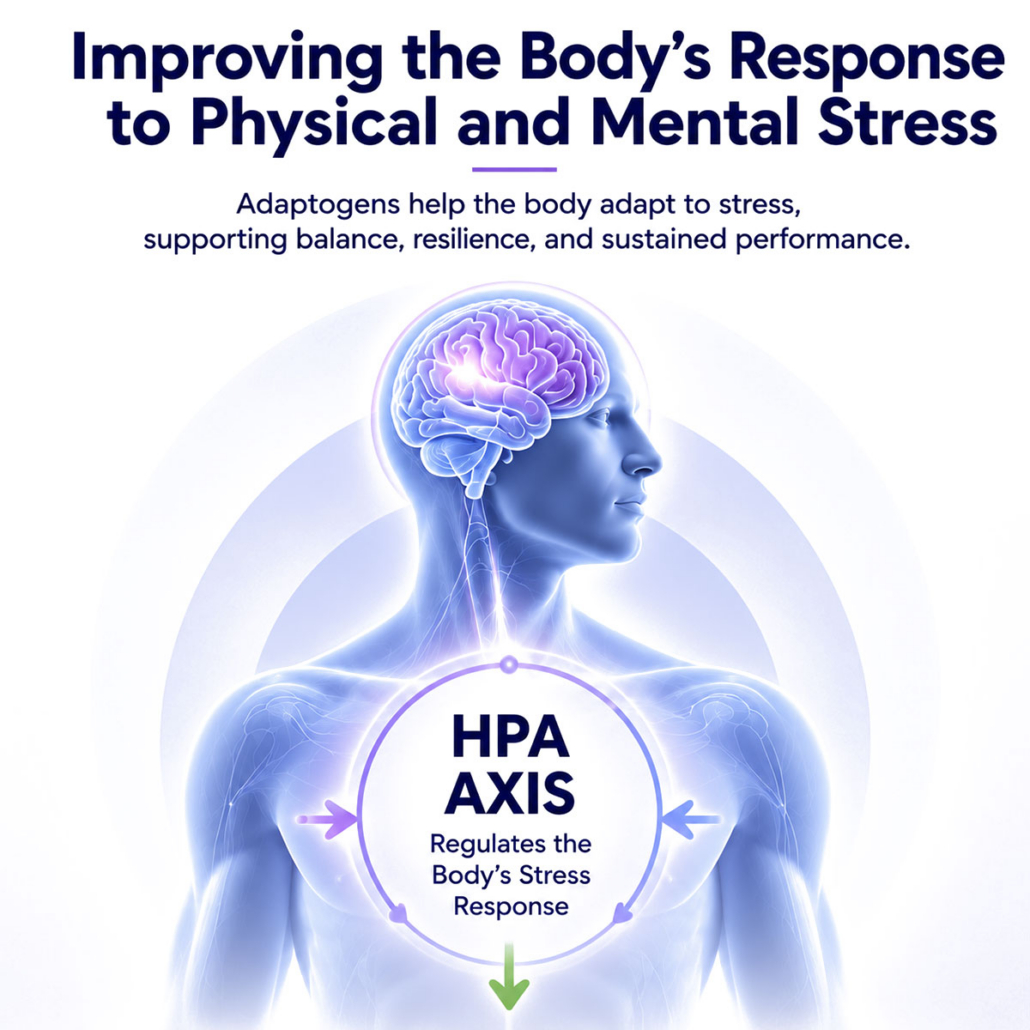
Mental fatigue often develops alongside physiological stress. As cortisol levels fluctuate throughout the day, concentration, motivation, and perceived energy may decline. Adaptogenic botanicals help support the body’s ability to respond to these stressors while promoting physiological balance.
Ingredients such as ashwagandha, rhodiola rosea, and eleuthero interact with the hypothalamic-pituitary-adrenal (HPA) axis, which regulates the body’s stress response.
Although each botanical works through different mechanisms, adaptogens generally help promote resilience to physical and mental stress while supporting sustained performance during demanding conditions.
Instead of functioning as stimulants, adaptogens help the body adapt to changing stress loads, making them valuable additions to daily wellness rituals that emphasize consistent energy rather than temporary stimulation.
Key Takeaway: Adaptogens support sustained energy by improving resilience to stress rather than artificially increasing nervous system activity.
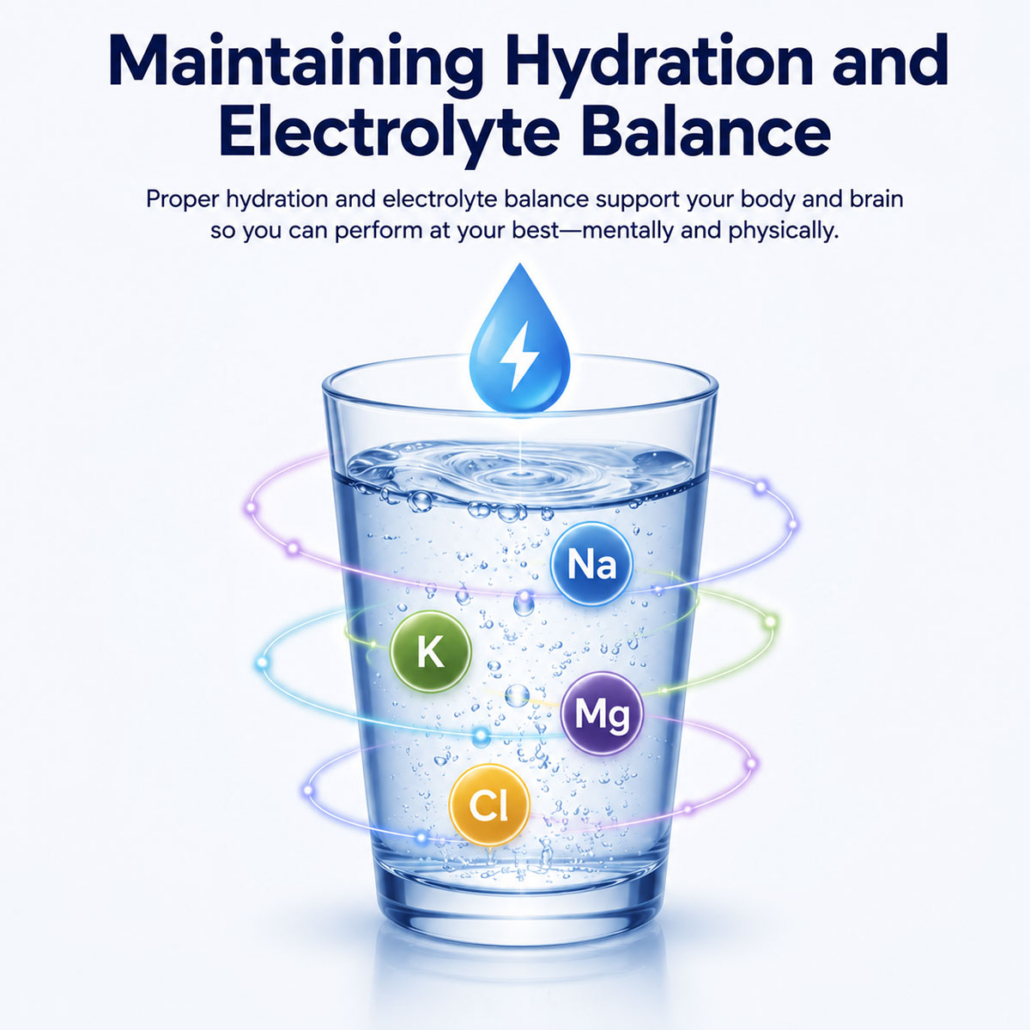
Even mild dehydration can negatively affect concentration, reaction time, physical performance, and perceived energy.
Because nerve signaling and muscle contraction depend on proper electrolyte balance, hydration has become an increasingly important component of modern energy formulations.
Electrolytes such as sodium, potassium, magnesium, and chloride help regulate fluid balance, maintain nerve impulse transmission, and support normal muscle function. Including these minerals in energy powders can help consumers maintain hydration while supporting both cognitive and physical performance throughout the day.
This combination is particularly attractive for active consumers, travelers, professionals, and anyone experiencing prolonged periods of physical or mental exertion.
Key Takeaway: Supporting hydration helps maintain the physiological processes required for sustained physical and cognitive performance.
Emerging research suggests that digestive health may influence energy, mood, and cognitive function through the gut-brain axis. For this reason, some ritual-ready powders now incorporate prebiotic fibers, probiotics, or postbiotics alongside traditional energy ingredients.
Prebiotics selectively nourish beneficial gut microorganisms, which produce short-chain fatty acids and other metabolites involved in immune function and metabolic health. A healthier gut microbiome may support nutrient absorption and contribute to overall wellness, creating another layer of support for daily energy.
Although gut-support ingredients are not direct energy stimulants, they complement broader wellness formulations by helping maintain the physiological systems that influence how consumers feel over time.
Key Takeaway: Gut health has become an important component of holistic energy formulations because metabolic health and digestive function influence overall vitality.

The most successful ritual-ready powders no longer depend on a single ingredient or pathway. Instead, they combine complementary functional systems that support cellular energy production, neurotransmitter activity, stress resilience, hydration, and metabolic health.
This systems-based approach aligns with growing consumer demand for sustained, balanced energy that fits naturally into daily wellness routines rather than delivering a short-lived stimulant effect.
Caffeine remains one of the most widely used ingredients in energy supplements. However, today’s most innovative formulations rarely rely on caffeine alone.
Instead, brands increasingly combine ingredients that support cellular energy production, cognitive performance, stress resilience, hydration, and metabolic health.
This systems-based approach reflects changing consumer expectations. Rather than seeking a quick burst of stimulation, many consumers now prefer products that deliver steady energy, improved focus, and better overall wellness throughout the day.
Magnesium serves as a cofactor for more than 300 enzymatic reactions, many of which are involved in ATP production and energy metabolism. Because ATP functions biologically as magnesium-ATP, adequate magnesium is essential for efficient cellular energy production.
Naturally found in green tea, L-theanine promotes a calm but alert mental state by influencing glutamate, GABA, and alpha brain wave activity. When combined with moderate caffeine levels, it helps create smoother, longer-lasting focus with fewer jitters.
Citicoline provides a precursor for phosphatidylcholine and acetylcholine, supporting healthy brain cell membranes and neurotransmitter production. It has become a popular ingredient in productivity, gaming, and professional-performance formulations.
Coenzyme Q10 participates directly in the mitochondrial electron transport chain, where cells generate ATP. Although CoQ10 does not provide immediate stimulation, it supports efficient energy production at the cellular level.
Alpha-GPC delivers bioavailable choline that contributes to acetylcholine synthesis. Because acetylcholine plays a central role in memory, learning, and attention, Alpha-GPC frequently appears in nootropic energy products.
Acetyl-L-carnitine transports long-chain fatty acids into the mitochondria, where they are converted into usable energy. Because it also crosses the blood-brain barrier, it is commonly used in products positioned around both physical energy and cognitive performance.
L-tyrosine serves as a precursor for dopamine and norepinephrine, neurotransmitters involved in motivation, alertness, and mental resilience during stressful conditions.
Although traditionally associated with sports nutrition, creatine is increasingly appearing in everyday wellness powders. By helping regenerate ATP during periods of increased energy demand, creatine supports muscular performance while also attracting growing interest for healthy cognitive aging and mental performance.
Lion’s mane has gained considerable attention for its potential role in supporting nerve growth factor (NGF) synthesis and healthy cognitive function. Although research continues to evolve, consumers increasingly associate lion’s mane with focus, productivity, and long-term brain health.
Rhodiola has traditionally been used to support endurance during periods of physical and mental stress. Modern formulations often include standardized extracts to support alertness, stamina, and resilience without excessive stimulation.
Ashwagandha is one of the most extensively studied adaptogens. It supports a healthy response to everyday stress and has become a cornerstone ingredient in formulations designed for calm, sustained energy.
B vitamins function as enzyme cofactors throughout carbohydrate, protein, and fat metabolism. Vitamins B1, B2, B3, B5, B6, B7, B9, and B12 all contribute to pathways involved in converting food into usable cellular energy.
Common electrolyte systems include:
These minerals support fluid balance, nerve transmission, and normal muscle function while helping consumers maintain hydration throughout the day.
| Ingredient | Scientific Name | Common Names | Primary Benefits |
|---|---|---|---|
| Caffeine | Caffeine | Natural Caffeine, Coffee Extract | Alertness, endurance, reaction time |
| L-Theanine | L-Theanine | Suntheanine® | Smooth focus, reduced jitters |
| Rhodiola | Rhodiola rosea | Golden Root | Stress resilience, fatigue support |
| Panax Ginseng | Panax ginseng | Korean Ginseng | Mental performance, stamina |
| Coenzyme Q10 | Ubiquinone | CoQ10 | Cellular energy production |
| Acetyl-L-Carnitine | Acetyl-L-Carnitine | ALCAR | Mitochondrial support |
| Creatine Monohydrate | Creatine | Creatine | ATP regeneration, muscle performance |
| Citicoline | CDP-Choline | Cognizin® | Focus, attention |
| Alpha-GPC | Alpha-GPC | Choline Alfoscerate | Cognitive performance |
| Electrolytes | Various Minerals | Hydration Blend | Hydration and endurance |
Although many consumers still seek caffeine, they increasingly prefer recognizable botanical sources over synthetic caffeine alone.
Popular options include:
These ingredients often contribute naturally occurring caffeine alongside polyphenols and other plant compounds, supporting more premium, plant-forward positioning.
Several ingredients are beginning to appear in next-generation ritual-ready energy powders as brands seek new ways to differentiate their formulations.
These include:
As research continues to evolve, these ingredients may help brands create more comprehensive energy systems that extend beyond stimulation to support overall vitality, cognitive performance, and healthy aging.
The most successful ritual-ready powders don’t depend on a single “hero ingredient.” Instead, they combine complementary ingredient systems that support multiple biological pathways involved in energy production.
By integrating ingredients that promote mitochondrial function, neurotransmitter activity, stress resilience, hydration, and metabolic health, brands can develop differentiated products that align with today’s consumer preference for sustained, balanced energy rather than short-term stimulation.
Taste has become one of the biggest differentiators in the energy supplement category.
Consumers no longer tolerate excessively bitter, medicinal, or artificially aggressive flavor profiles. Instead, they increasingly prefer smoother, more approachable sensory experiences.
Therefore, successful formulations often emphasize:
Trending Flavor Directions Include:
Additionally, latte-style energy powders continue to gain traction because they combine indulgence with functionality.
Several market forces are making ritual-ready energy powders more attractive for supplement brands. The opportunity is no longer just about delivering energy. It is about creating a daily product experience that fits how consumers already live, work, train, travel, and manage wellness.
Wellness has become part of everyday decision-making. McKinsey has reported that 82% of U.S. consumers now consider wellness a top or important priority in daily life, and the broader wellness market continues to expand across nutrition, sleep, fitness, appearance, mindfulness, and healthspan.
For energy supplement brands, this matters because consumers increasingly want products that feel proactive, repeatable, and routine-based. Powders, stick packs, and latte-style blends fit this behavior well because they can become part of a morning ritual, afternoon reset, or pre-workout routine.
The energy category continues to move beyond “more caffeine.” Consumers now look for products that support energy alongside focus, hydration, mood, stress resilience, gut health, and metabolic wellness.
NIQ has highlighted growth in wellness-focused supplements and reported consumer demand for clearer labeling and stronger trust signals, which reinforces the need for transparent formulas and specific functional positioning.
This creates strong opportunities for formulas built around functional systems such as:
Many consumers now want alternatives to traditional coffee that still support energy and productivity.
Consequently, brands continue to innovate with:
These products help brands reach consumers seeking wellness-oriented energy experiences rather than purely stimulant-focused products.
Personalization continues to shape wellness purchasing. Consumers increasingly want products they can adjust based on lifestyle, goals, timing, and tolerance.
Powder formats support this better than many fixed-dose formats because consumers can choose how they mix the product, when they use it, and, in some cases, how much they consume.
This matters for ritual-ready energy products because one consumer may want a creamy morning latte, while another may want a light citrus stick pack for the office, gym bag, or travel.
That flexibility helps brands build line extensions around use occasion instead of only around ingredients.
In addition, powders often give supplement brands more room to build complex formulas with botanicals, amino acids, minerals, mushrooms, fibers, and other dry functional ingredients.
For brands that want to test energy concepts before investing in beverage infrastructure, powders and stick packs can offer a more flexible path to market.
Ingredients such as creatine, fiber, magnesium, mushrooms, electrolytes, and adaptogens have moved into mainstream wellness conversations.
For example, creatine and “fibermaxxing” gained visibility in 2025 as consumers connected performance, gut health, and daily vitality with accessible supplement formats.
For brands, this means ingredient education matters. Consumers want to understand why a formula includes magnesium, lion’s mane, cordyceps, beetroot, tart cherry, blackcurrant, or prebiotic fiber.
Therefore, energy powders should not rely only on front-label claims. They also need clear ingredient storytelling.
The next phase of energy supplement growth will likely come from products that combine functional credibility with daily habit formation. The strongest products will not simply promise energy. They will help consumers create a repeatable ritual around focus, hydration, stress resilience, productivity, or active living.
For supplement brands, that means the winning question is not only, “What ingredients should we include?” It is also, “When will the consumer use this, how will it taste, where will they keep it, and why will they want it again tomorrow?”
Ritual-ready energy powders offer strong opportunities across multiple consumer segments.
Importantly, brands that create emotionally resonant daily rituals often outperform products positioned solely around stimulation.
Ritual-ready powders represent one of the most important shifts in the energy supplement market. Consumers increasingly want energy products that integrate naturally into their lifestyles while supporting focus, hydration, productivity, and overall wellness.
As a result, powders, stick packs, and latte-style systems continue to gain momentum across multiple supplement categories. These formats not only improve consumer convenience and repeat use, but they also provide substantial formulation and manufacturing advantages.
For supplement brands, the opportunity extends far beyond caffeine delivery. The future of energy supplementation centers on smarter formulations, enjoyable sensory experiences, and sustainable daily rituals.
Intermountain Nutrition helps brands develop custom energy-support powders, stick packs, and functional beverage systems designed for today’s wellness-focused consumers.
Powdered energy supplements align closely with modern wellness routines. Consumers increasingly want products they can use at home, at work, in the gym, or while traveling.
Powders and stick packs provide convenience, portability, and flexible dosing without requiring refrigeration or bulky packaging. Additionally, many consumers prefer customizable beverage experiences rather than pre-formulated canned drinks.
From a formulation perspective, powders also offer major advantages. Many functional ingredients maintain better stability in dry systems compared to liquid beverages. As a result, brands can include more complex ingredient combinations while improving shelf life and reducing manufacturing complexity.
Modern energy powders increasingly combine moderate caffeine with ingredients that support focus, hydration, mood, and stress resilience. Popular ingredients include L-theanine, taurine, electrolytes, adaptogens, functional mushrooms, B vitamins, citicoline, and amino acids.
Importantly, consumers now look for “balanced energy” instead of excessive stimulation. Therefore, many formulations prioritize sustained energy and smoother sensory experiences rather than extreme caffeine levels. This trend continues to influence both mainstream and premium supplement categories.
Latte-style powders appeal to consumers because they combine functionality with comfort and ritual. Many consumers already associate warm beverages with relaxation, focus, and productivity. Therefore, latte-inspired supplement systems integrate naturally into existing routines.
Additionally, these products help brands differentiate themselves from traditional sports nutrition and high-stimulant energy products. Matcha lattes, mushroom coffees, chai blends, and mocha systems support more premium, wellness-oriented positioning while offering broader consumer appeal.
Energy powders often contain ingredients with challenging sensory characteristics. Caffeine, minerals, botanicals, amino acids, and mushrooms may contribute bitterness, astringency, or unpleasant aftertaste. Therefore, taste masking and flavor balancing remain critical formulation priorities.
Manufacturers must also address solubility, moisture sensitivity, serving consistency, and shelf stability. Furthermore, brands increasingly demand clean-label systems that avoid excessive sugars, artificial sweeteners, or synthetic additives. Balancing efficacy, flavor, and consumer expectations requires careful formulation development.
Stick packs simplify supplement use by providing convenient single-serving formats. Consumers can easily carry them to work, the gym, airports, or hotels without measuring powders or transporting large containers. This convenience often improves daily compliance and repeat use.
Additionally, stick packs support premium branding and trial-size marketing strategies. Many consumers appreciate portion-controlled servings because they reduce preparation time and create more predictable product experiences.
National Institutes of Health, Office of Dietary Supplements. (2024). Magnesium: Fact sheet for health professionals.
National Institutes of Health, Office of Dietary Supplements. (2024). Vitamin B12: Fact sheet for health professionals.
National Center for Complementary and Integrative Health. (2024). Ashwagandha: Usefulness and safety.
National Center for Complementary and Integrative Health. (2024). Probiotics: Usefulness and safety.
Axios. (2025). Iowa’s functional mushroom craze doubles in sales.
 https://intermountainnutrition.com/wp-content/uploads/2026/08/Akkermansia-muciniphila-for-metabolic-health-26.jpg
1200
1200
Larisa Graham
https://intermountainnutrition.com/wp-content/uploads/2026/01/IMN-gradient-logo-NEW.png
Larisa Graham2026-08-24 09:00:002026-08-17 16:10:31Akkermansia Muciniphila in Supplement Formulation
https://intermountainnutrition.com/wp-content/uploads/2026/08/Akkermansia-muciniphila-for-metabolic-health-26.jpg
1200
1200
Larisa Graham
https://intermountainnutrition.com/wp-content/uploads/2026/01/IMN-gradient-logo-NEW.png
Larisa Graham2026-08-24 09:00:002026-08-17 16:10:31Akkermansia Muciniphila in Supplement Formulation https://intermountainnutrition.com/wp-content/uploads/2026/08/nerve-support-supplements-06.jpg
1200
1200
Larisa Graham
https://intermountainnutrition.com/wp-content/uploads/2026/01/IMN-gradient-logo-NEW.png
Larisa Graham2026-08-21 09:00:002026-08-24 17:19:18STOCK FORMULA: Nerve Support Capsules for Healthy Aging Supplement Brands
https://intermountainnutrition.com/wp-content/uploads/2026/08/nerve-support-supplements-06.jpg
1200
1200
Larisa Graham
https://intermountainnutrition.com/wp-content/uploads/2026/01/IMN-gradient-logo-NEW.png
Larisa Graham2026-08-21 09:00:002026-08-24 17:19:18STOCK FORMULA: Nerve Support Capsules for Healthy Aging Supplement Brands https://intermountainnutrition.com/wp-content/uploads/2026/08/FDA-proposed-GRAS-update-02.jpg
1200
1200
Larisa Graham
https://intermountainnutrition.com/wp-content/uploads/2026/01/IMN-gradient-logo-NEW.png
Larisa Graham2026-08-19 20:04:072026-08-20 03:09:12FDA’s Proposed GRAS Rule: What Supplement Brands Need to Know
https://intermountainnutrition.com/wp-content/uploads/2026/08/FDA-proposed-GRAS-update-02.jpg
1200
1200
Larisa Graham
https://intermountainnutrition.com/wp-content/uploads/2026/01/IMN-gradient-logo-NEW.png
Larisa Graham2026-08-19 20:04:072026-08-20 03:09:12FDA’s Proposed GRAS Rule: What Supplement Brands Need to Know

 Creatine and Cellular Energy