Building Better Prostate Health Supplements: Ingredients That Matter

June 16, 2026 |

Discover the most researched ingredients for prostate health supplements, emerging formulation trends, and strategic opportunities in the growing men’s health market.

Supporting Men’s Health Through Prostate Wellness

As men age, prostate health becomes an increasingly important aspect of overall wellness. In fact, concerns around urinary comfort, nighttime bathroom visits, healthy aging, and quality of life have helped make prostate support one of the largest categories within men’s health supplements.

At the same time, today’s consumers are becoming more proactive. Rather than waiting until symptoms become disruptive, many men are seeking nutritional solutions that support healthy aging and long-term wellness.

Consequently, brands have an opportunity to develop evidence-based formulations that combine traditional prostate-support ingredients with modern healthy-aging compounds.

For supplement companies, understanding which ingredients consumers recognize, which ingredients have meaningful scientific support, and how to formulate them effectively is essential for success.

Key Takeaway

Prostate health is evolving from a niche category into a broader healthy-aging and men’s wellness opportunity.

At a Glance

  • Prostate health remains one of the largest and most established categories within men’s health supplements.
  • Saw palmetto continues to be the most recognized botanical ingredient for prostate support.
  • Beta-sitosterol, pygeum, stinging nettle root, and pumpkin seed extract are frequently combined with saw palmetto in comprehensive formulas.
  • Antioxidants such as lycopene, selenium, green tea extract, and pomegranate extract support healthy aging positioning.
  • Emerging ingredients including sulforaphane, quercetin, and astaxanthin are creating opportunities for premium formulations.
  • Consumers increasingly prefer multi-functional products that support prostate health, healthy aging, urinary wellness, and overall vitality.
  • Capsule and gummy formats continue to dominate the category, while powder and stick-pack innovations are gaining traction.

What Is the Prostate and What Does It Do?

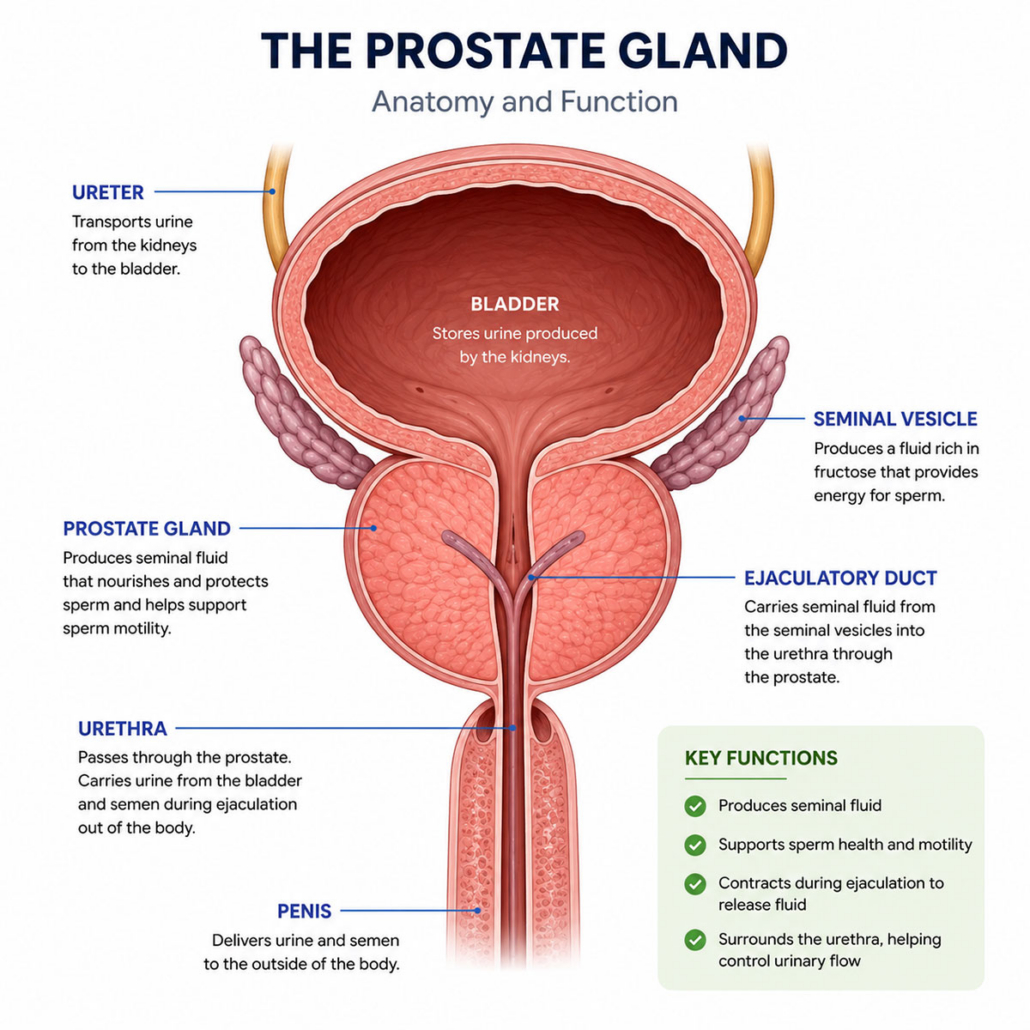
The prostate is a small gland that is part of the male reproductive system. In younger men, it is approximately the size of a walnut and sits just below the bladder, surrounding the upper portion of the urethra—the tube that carries urine from the bladder out of the body. Although relatively small, the prostate plays an important role in reproductive health and urinary function.

Reproductive Health

The primary function of the prostate is to produce and secrete a fluid that becomes part of semen. This fluid contains enzymes, proteins, and minerals that help nourish and protect sperm while supporting sperm motility.

During ejaculation, the prostate contracts and releases this fluid into the urethra, where it combines with sperm and other seminal fluids.

Urinary Function

Because the prostate surrounds the urethra, changes in prostate size can directly affect urinary function. As men age, the prostate commonly undergoes natural changes, including gradual enlargement.

These changes may contribute to increased urinary frequency, nighttime urination, reduced urinary flow, or difficulty completely emptying the bladder.

As a result, maintaining prostate health becomes an increasingly important component of overall men’s wellness.

Illustration Of The Prostate

How the Prostate Changes with Age

Hormonal shifts, oxidative stress, and normal cellular aging can influence prostate health over time. Research suggests that many men begin experiencing age-related prostate changes beginning in their 40s and 50s, with prevalence increasing significantly after age 60. Consequently, interest in nutritional strategies that support healthy hormone metabolism, urinary comfort, antioxidant protection, and cellular health has grown substantially.

Functional Ingredients to Support Healthy Aging

Many modern prostate health supplements are designed to address these key pathways through ingredients such as saw palmetto, beta-sitosterol, pygeum, pumpkin seed extract, lycopene, zinc, selenium, and other science-backed compounds. While these ingredients do not replace medical care, they are commonly used to support healthy aging and maintain normal prostate function as part of a proactive wellness routine.

Key Takeaway

The prostate is a small but essential gland that supports reproductive and urinary health. Because it surrounds the urethra and naturally changes with age, maintaining prostate health is an important aspect of long-term men’s wellness and healthy aging.

Why Prostate Health Supplements Continue to Grow

The prostate health category sits at the intersection of several powerful consumer trends, including healthy aging, preventative wellness, men’s health awareness, and longevity.

According to the U.S. Census Bureau, the population of men over age 50 continues to grow, creating a larger consumer base interested in maintaining quality of life as they age. At the same time, consumer awareness of men’s wellness issues has expanded significantly through digital health resources, healthcare providers, and wellness media.

Furthermore, many consumers prefer nutritional solutions that support wellness before significant concerns arise. This proactive mindset has increased demand for supplements that support urinary comfort, healthy aging, antioxidant protection, and overall vitality.

More than Traditional Prostate Health Support

Today’s consumers also expect more than traditional prostate support. Increasingly, they are looking for products that address multiple wellness goals simultaneously. As a result, brands that combine prostate-support ingredients with healthy-aging compounds may be better positioned to capture market share.

How Prostate Health Ingredients Work

Many prostate-support ingredients work through complementary mechanisms that support healthy aging and normal physiological function.

Some ingredients provide antioxidant support that helps protect cells from oxidative stress associated with aging. Others support healthy inflammatory responses, which may become increasingly important as men age.

Additionally, certain botanicals are believed to support normal hormone metabolism and healthy urinary function.

Because prostate health is multifactorial, successful formulations often include ingredients that support several biological pathways simultaneously.

Common Mechanisms of Action

Hormone Metabolism Support

Ingredients such as saw palmetto and stinging nettle root are frequently included in formulations designed to support normal hormone metabolism associated with healthy aging.

Healthy Urinary Function

Beta-sitosterol, pygeum, pumpkin seed extract, and saw palmetto are commonly used to support urinary comfort and normal urinary flow.

Antioxidant Protection

Lycopene, selenium, green tea extract, pomegranate extract, and astaxanthin help support the body’s antioxidant defense systems.

Healthy Inflammatory Response

Quercetin, curcumin, stinging nettle root, and green tea extract are frequently incorporated into formulations that support healthy inflammatory balance.

Cellular Health and Healthy Aging

Emerging ingredients such as sulforaphane and polyphenol-rich extracts are increasingly used in longevity-focused men’s health products.

Key Takeaway

Multi-ingredient formulas often provide broader support because they target multiple aspects of prostate and healthy-aging physiology.

Market Trends Driving Prostate Health Innovation

The men’s health market continues to evolve beyond traditional prostate-support positioning.

According to Grand View Research, the global men’s health supplements market is expected to experience significant growth throughout the coming decade, driven by increasing consumer awareness and healthy-aging trends.

Why This Category Is Growing

  • Aging demographics continue expanding globally.
  • Men are taking a more proactive approach to wellness.
  • Consumers increasingly seek natural solutions.
  • Longevity-focused products are gaining popularity.
  • Preventative health remains a major wellness trend.

Additionally, younger consumers are entering the category earlier than previous generations. As a result, formulations that combine prostate support with healthy aging, vitality, cognitive wellness, or cardiovascular support may attract broader audiences.

Key Takeaway

The future of prostate health supplementation likely lies in comprehensive men’s wellness and healthy-aging solutions.

Top 15 Ingredients for Prostate Health Supplements

Sources of Astaxanthin Ingredients for Prostate Supplement Formulations

Astaxanthin

Haematococcus pluvialis

red algae extract  |  keto-carotenoid  |  xanthophyll carotenoid

Why Brands Use It

  • Supports antioxidant defense systems
  • Helps protect cells from oxidative stress
  • Aligns with healthy aging and longevity positioning

Synergistic Pairings

  • Lycopene
  • Selenium
  • Green tea extract
Sources of Beta-Sitosterol Ingredients for Prostate Supplement Formulations

Beta-Sitosterol

Plant Sterol  |  Phytosterol

Why Brands Use It

  • Supports urinary comfort
  • Supports healthy urinary flow
  • Frequently included in clinical-style formulations

Synergistic Pairings

  • Saw palmetto
  • Pygeum
  • Pumpkin seed extract
Curcumin for Prostate Supplement Formulations

Curcumin

Curcuma longa

turmeric curcuminoids  |  turmeric root extract  |  diferuloylmethane

Why Brands Use It

  • Supports a healthy inflammatory response
  • Provides antioxidant activity
  • Strong consumer awareness and market demand

Synergistic Pairings

  • Quercetin
  • Green tea extract
  • Astaxanthin
Green Tea Leaves for Prostate Supplement Formulations

Green Tea Extract

Camellia sinensis

Green Tea Polyphenols  |  EGCG Extract

Why Brands Use It

  • Supports antioxidant defenses
  • Supports healthy aging positioning
  • Appeals to longevity-focused consumers

Synergistic Pairings

  • Quercetin
  • Pomegranate
  • Sulforaphane
Tomatoes - Source of Lycopene for Prostate Supplement Formulations

Lycopene

Tomato Lycopene  |  Tomato Extract

Why Brands Use It

  • Antioxidant support
  • Supports healthy aging
  • Highly recognizable ingredient

Synergistic Pairings

  • Selenium
  • Vitamin E
  • Astaxanthin
Pomegranate Extract for Prostate Supplement Formulations

Pomegranate Extract

Punica granatum

Pomegranate Polyphenols  |  Punicalagin Extract

Why Brands Use It

  • Rich source of polyphenols
  • Supports healthy aging
  • Strong consumer recognition

Synergistic Pairings

  • Green tea extract
  • Lycopene
  • Astaxanthin
Pumpkin Seeds for Prostate Supplement Formulations

Pumpkin Seed Extract

Cucurbita pepo

Pumpkin Seed Oil

Why Brands Use It

  • Consumer-friendly ingredient
  • Supports bladder and urinary wellness
  • Strong natural-positioning appeal

Synergistic Pairings

  • Beta-sitosterol
  • Zinc
Pygeum Bark for Prostrate Health Supplement Formulation

Pygeum

Pygeum africanum

African Cherry Bark Extract

Why Brands Use It

  • Supports urinary wellness
  • Frequently used in premium men’s health formulas
  • Long history of use in European formulations

Synergistic Pairings

  • Saw palmetto
  • Beta-sitosterol
Onion - Source of Quercetin for Prostate Supplement Formulations

Quercetin

Quercetin Dihydrate

Why Brands Use It

  • Supports healthy inflammatory responses
  • Popular among health-conscious consumers
  • Frequently included in advanced men’s health formulas

Synergistic Pairings

  • Bromelain
  • Green tea extract
  • Curcumin
Rye Grass Pollen Extract for Prostate Supplement Formulations

Rye Grass Pollen Extract

Secale cereale pollen extract

grass pollen extract  |  pollen extract complex

Why Brands Use It

  • Supports healthy urinary function
  • Frequently used in European prostate health products
  • Supports comprehensive urinary wellness positioning

Synergistic Pairings

  • Beta-sitosterol
  • Pygeum
  • Pumpkin seed extract
Saw Palmetto for Prostate Supplement Formulations

Saw Palmetto

Serenoa repens

American Dwarf Palm  |  Cabbage Palm

Why Brands Use It

  • Most recognized prostate health ingredient
  • Supports healthy urinary function
  • Supports healthy aging in men
  • Often serves as the foundation of prostate formulas

Synergistic Pairings

  • Beta-sitosterol
  • Stinging nettle root
  • Pygeum
Brazil Nuts - Source of Selenium for Prostate Supplement Formulations

Selenium

Selenomethionine  |  Selenium Yeast

Why Brands Use It

  • Antioxidant support
  • Supports cellular health
  • Commonly paired with lycopene

Synergistic Pairings

  • Lycopene
  • Vitamin E
Stinging Nettle for Prostate Supplement Formulations

Stinging Nettle Root

Urtica dioica

Nettle Root  |  Common Nettle

Why Brands Use It

  • Supports healthy aging
  • Supports urinary wellness
  • Common companion ingredient in prostate blends

Synergistic Pairings

  • Saw palmetto
  • Pygeum
Broccoli - Source of Sulforaphane for Prostate Supplement Formulations

Sulforaphane

From Broccoli Sprout Extract

Broccoli Seed Extract  |  Broccoli Sprout Extract

Why Brands Use It

  • One of the fastest-growing healthy-aging ingredients
  • Supports cellular defense pathways
  • Strong science-forward positioning

Synergistic Pairings

  • Green tea extract
  • Quercetin
  • Curcumin
Oysters - Source of Zinc for Prostate Supplement Formulations

Zinc

Bisglycinate  |  Picolinate  |  Citrate

Why Brands Use It

  • Essential men’s health nutrient
  • Supports normal reproductive function
  • Naturally concentrated in prostate tissue

Synergistic Pairings

  • Pumpkin seed extract
  • Selenium

Comparison of Ingredients for Prostate Health Supplements

Ingredient Primary Mechanism Key Prostate Health Focus Common Daily Dose
Astaxanthin Potent carotenoid antioxidant Oxidative stress and cellular protection 4–12 mg
Beta-Sitosterol Plant sterol that supports urinary function Urinary symptoms and flow 60–130 mg
Curcumin Polyphenol that supports healthy inflammatory balance Healthy inflammatory response 500–1,500 mg
Green Tea Extract (Camellia sinensis) Rich source of catechins and EGCG Antioxidant support and healthy aging 250–500 mg
Lycopene Antioxidant carotenoid Cellular and prostate antioxidant support 10–30 mg
Pomegranate Extract (Punica granatum) Polyphenol-rich antioxidant Oxidative stress support 250–1,000 mg
Pumpkin Seed Extract (Cucurbita pepo) Provides phytosterols and fatty acids Bladder and urinary support 500–2,000 mg
Pygeum (Pygeum africanum) Supports healthy inflammatory response Urinary comfort and frequency 100–200 mg
Quercetin Flavonoid antioxidant Healthy inflammatory response support 500–1,000 mg
Rye Grass Pollen Extract Supports urinary comfort and healthy prostate function Urinary health and quality of life 126–500 mg
Saw Palmetto (Serenoa repens) Supports healthy DHT metabolism Urinary flow and prostate comfort 320 mg
Selenium Antioxidant trace mineral Cellular protection 55–200 mcg
Stinging Nettle Root (Urtica dioica) Supports hormone metabolism and urinary health Hormone balance and urinary support 300–600 mg
Sulforaphane (from Broccoli Sprout Extract) Activates cellular antioxidant pathways Cellular health and healthy aging support 10–40 mg
Zinc Essential mineral involved in prostate function Nutritional support for prostate health 15–30 mg

Key Takeaway

Most comprehensive prostate health formulas combine multiple mechanisms, including hormone metabolism support, urinary comfort support, and antioxidant protection. Multi-ingredient formulations often provide broader support than single-ingredient products because prostate health involves several physiological pathways.

Flavoring & Sensory Experience

Although prostate-support supplements are traditionally sold as capsules, gummies and powders are becoming increasingly common.

When developing consumer-friendly products, flavor selection can significantly impact compliance and repeat purchases.

Common flavor systems include:

  • Mixed berry
  • Citrus blends
  • Cherry
  • Pomegranate
  • Cranberry
  • Lemon-lime

However, formulators should pay special attention to botanical bitterness from saw palmetto, pygeum, green tea extract, and stinging nettle. Consequently, natural masking systems, sweetener optimization, and flavor layering may be required.

Key Takeaway

Sensory performance can be a meaningful differentiator, particularly in gummy and powder delivery formats.

Formulation Considerations for Prostate Health Supplements

Developing effective prostate-support products requires balancing efficacy, consumer expectations, manufacturability, and sensory performance.

Solubility

Solubility

  • Botanical extracts vary significantly in solubility and dispersibility.
  • Water-dispersible versions of lycopene and certain botanical extracts may improve formulation flexibility.
  • Powder and stick-pack formats often require additional processing considerations.
Taste Masking

Taste Masking

  • Saw palmetto and pygeum can contribute bitterness.
  • Green tea extracts may introduce astringency.
  • Flavor systems should be evaluated early in development.
Consistency

Consistency

  • Standardized extracts help improve batch-to-batch consistency.
  • Active marker compounds should be verified through supplier documentation and testing.
Shelf Stability

Shelf Stability

  • Lycopene and other carotenoids may require protection from heat, oxygen, and light.
  • Antioxidant systems may improve long-term product stability.
  • Moisture management is particularly important in gummy applications.

Strategic Opportunities for Supplement Brands

The prostate-support market offers several opportunities for product differentiation.

Traditional formulations built around saw palmetto and beta-sitosterol continue to perform well. However, brands can create premium offerings by incorporating ingredients associated with antioxidant protection, healthy aging, and cellular wellness.

Three promising positioning strategies include:

Traditional Prostate Support

  • Saw palmetto
  • Beta-sitosterol
  • Pygeum
  • Zinc

Healthy Aging Men’s Formula

  • Lycopene
  • Selenium
  • Green tea extract
  • Pumpkin seed extract

Advanced Longevity & Prostate Support

  • Saw palmetto
  • Sulforaphane
  • Quercetin
  • Astaxanthin
  • Lycopene

For brands seeking long-term growth, combining evidence-based prostate support with broader healthy-aging benefits may create stronger consumer appeal and higher differentiation.

At Intermountain Nutrition, we help supplement brands develop custom men’s health products across capsules, gummies, powders, and stick packs while supporting quality, scalability, and market readiness.

Ready to develop a prostate health supplement? Contact Intermountain Nutrition to discuss custom formulation and manufacturing solutions.

Frequently Asked Questions

Saw palmetto is generally considered the most recognized botanical ingredient used in prostate-support supplements. Because consumers frequently search for saw palmetto specifically, it remains a cornerstone ingredient in many formulations.

However, many premium products combine saw palmetto with additional ingredients such as beta-sitosterol, pygeum, and stinging nettle root to provide broader support.

Beta-sitosterol is a plant sterol frequently included in men’s health supplements because it is commonly associated with urinary wellness and healthy aging. Additionally, it pairs well with other prostate-support ingredients and has become a standard component in many comprehensive formulations.

Lycopene is a carotenoid antioxidant most commonly sourced from tomatoes. In prostate-support products, it is frequently used to provide antioxidant protection and healthy-aging positioning. Furthermore, consumers recognize lycopene as a food-derived ingredient, which may enhance product appeal.

Yes. Many prostate-support ingredients can be incorporated into gummy formulations. However, formulators must carefully manage taste, active loading capacity, and stability. Botanical extracts with strong flavors may require specialized masking systems and optimized flavor profiles.

Emerging ingredients include sulforaphane, astaxanthin, quercetin, pomegranate extract, and advanced polyphenol complexes. These ingredients allow brands to position products around broader themes such as healthy aging, antioxidant protection, and longevity while maintaining prostate-support relevance.

References

National Institute on Aging. (2024). Enlarged prostate: Benign prostatic hyperplasia (BPH).

National Cancer Institute. (2024). Prostate cancer prevention (PDQ®)–Health professional version.

National Institute of Diabetes and Digestive and Kidney Diseases. (2024). Prostate enlargement (benign prostatic hyperplasia).

National Center for Complementary and Integrative Health. (2024). Saw palmetto: What you need to know.

Memorial Sloan Kettering Cancer Center. (2024). Beta-sitosterol.

Memorial Sloan Kettering Cancer Center. (2024). Pygeum.

Memorial Sloan Kettering Cancer Center. (2024). Nettle.

Memorial Sloan Kettering Cancer Center. (2024). Pumpkin Seed.

National Institutes of Health Office of Dietary Supplements. (2024). Dietary supplements and health: Carotenoids.

National Institutes of Health Office of Dietary Supplements. (2024). Zinc Fact Sheet for Health Professionals.

National Institutes of Health Office of Dietary Supplements. (2024). Selenium Fact Sheet for Health Professionals.

National Center for Complementary and Integrative Health. (2024). Green tea.

Oregon State University Linus Pauling Institute. (2024). Sulforaphane.

Memorial Sloan Kettering Cancer Center. (2024). Quercetin.

Memorial Sloan Kettering Cancer Center. (2024). Pomegranate.

National Institutes of Health. (2023). Astaxanthin: Sources, applications, and health benefits.

National Center for Complementary and Integrative Health. (2024). Turmeric.

National Library of Medicine. (2023). Rye grass pollen extract in lower urinary tract symptoms and prostate health research.

National Library of Medicine. (2024). Complementary and alternative medicines for benign prostatic hyperplasia.

National Library of Medicine. (2023). Nutritional interventions and prostate health: A review of evidence.

European Association of Urology. (2024). Guidelines on management of non-neurogenic male lower urinary tract symptoms.

Related Postings

mug of functional coffee supplement for energy
cocoa flavanol powder and cocoa beans
Stock Formula Morning Matcha Latte