The Rise of Fermented Botanicals
March 30, 2026 | Trends
Enhancing Bioavailability and Product Performance
How fermentation technologies are unlocking next-generation efficacy, absorption, and differentiation in nutraceutical formulations.

March 30, 2026 | Trends
How fermentation technologies are unlocking next-generation efficacy, absorption, and differentiation in nutraceutical formulations.
Fermentation is no longer just a legacy process. It’s becoming a precision tool for next-generation nutraceutical development. While traditional systems like botanical ferments have existed for centuries, modern fermentation technologies now enable targeted enhancement of bioavailability, stability, and functional activity.
At the same time, the definition of recovery is shifting. No longer limited to post-workout muscle repair, recovery now encompasses inflammation balance, stress response, sleep quality, gut health, and energy restoration.
As a result, fermented botanicals are emerging as a high-impact category for supplement brands, enabling the development of multi-dimensional formulations that align with both performance and lifestyle health demands.
Fermented botanicals are plant-derived ingredients that undergo controlled microbial fermentation, typically using strains such as Lactobacillus or Saccharomyces.
This transformation elevates traditional plant extracts into higher-performing, functionally enhanced ingredients.

Fermentation functions as a biological pre-processing step that improves how the body interacts with plant compounds.
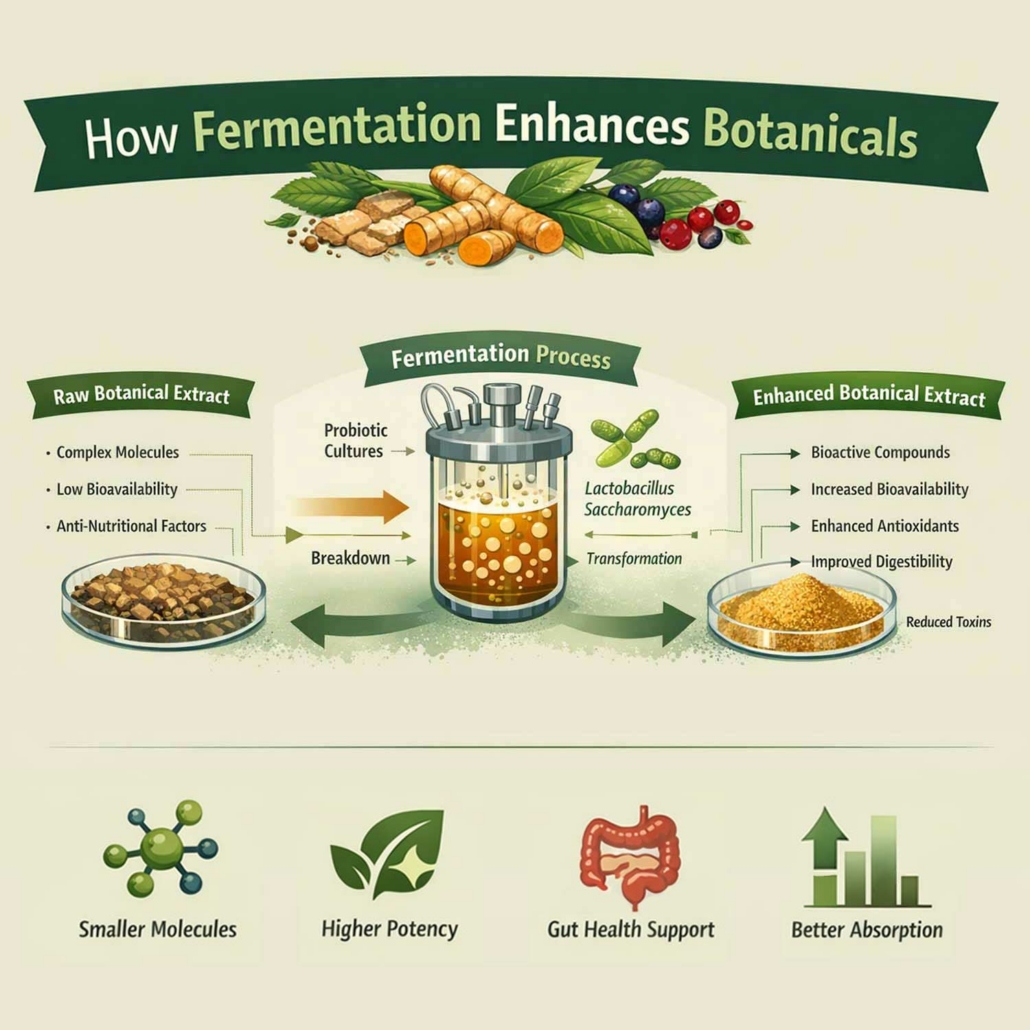
Increased Bioavailability
Fermentation converts phytochemicals into more absorbable forms, improving uptake and functional outcomes.
Enhanced Bioactive Profile
Fermented botanicals contain higher concentrations of:
Microbiome Alignment
Fermentation supports gut health positioning, which is increasingly linked to broader recovery and performance outcomes.
Improved Stability
Fermentation can enhance ingredient stability and reduce degradation of sensitive compounds.
Recovery supplements are traditionally formulated to address exercise-induced muscle damage, soreness, inflammation, oxidative stress, and fatigue.
While the category has historically been dominated by ingredients such as protein, creatine, and caffeine, innovation is shifting toward more targeted, functional, and plant-based solutions.
Fermented botanicals are emerging within this evolution as high-potential, next-generation ingredients.
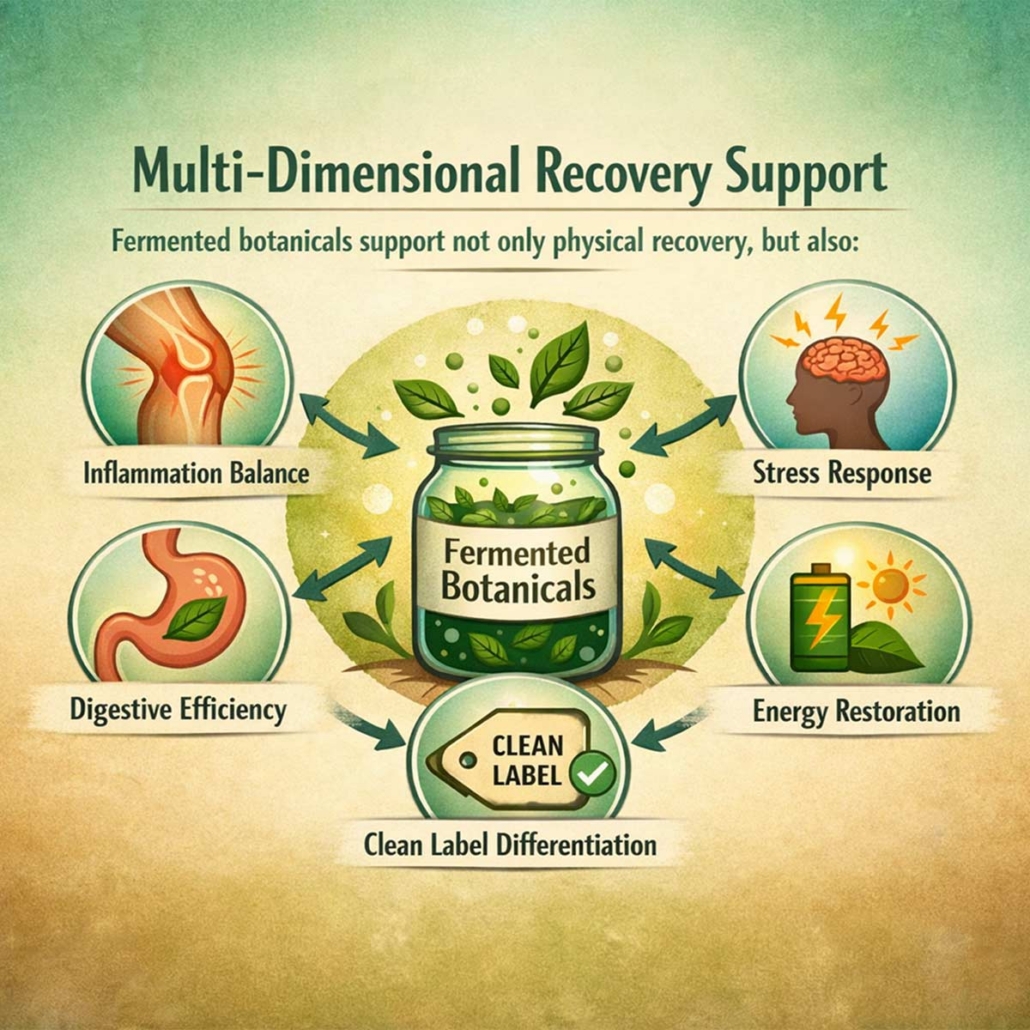
Fermentation enhances the functional profile of botanicals by improving both bioavailability and bioactivity. Through microbial transformation, plant compounds are converted into more absorbable forms while also generating additional bioactives such as polyphenols, flavonoids, peptides, and vitamins.
This is particularly relevant for recovery, where speed and efficiency of nutrient utilization can influence outcomes such as:
As a result, fermentation enables botanicals to perform more effectively within recovery-focused formulations.

For brands targeting premium positioning, fermented botanicals deliver advantages across both efficacy and positioning:
Enhanced absorption and bioactivity can improve functional performance at lower doses.
Fermented botanicals support not only physical recovery, but also:
Fermentation creates unique flavor profiles that can differentiate powder-based products.
As recovery evolves, fermented botanicals enable brands to address a broader spectrum of physical, metabolic, and lifestyle-driven recovery needs.

Fermented botanicals are emerging in sports nutrition and recovery formulations, particularly in products targeting post-exercise inflammation, oxidative stress, and fatigue.
Because fermentation enhances the bioavailability of plant compounds, ingredients such as fermented turmeric, ginseng, and polyphenol-rich botanicals may support more efficient absorption and improved functional outcomes.
As a result, brands are incorporating fermented botanicals into:
This represents a high-growth opportunity as consumers seek plant-based, clean-label alternatives to traditional recovery products.
Recovery is no longer limited to athletes. Many consumers now seek daily support for movement, physical stress, and long-term resilience.
Fermented botanicals fit well in these formulations due to their improved absorption and gentler digestive profile, making them suitable for consistent, everyday use.
Joint health represents a natural extension of recovery, particularly for consumers managing inflammation and wear-and-tear from regular activity.
Fermented turmeric and polyphenol-rich botanicals can support inflammation balance and mobility, making them valuable in “movement recovery” or “joint resilience” formulations.
Recovery increasingly overlaps with healthy aging, especially as consumers focus on maintaining muscle mass and performance over time.
Fermented botanicals may support oxidative stress reduction and nutrient utilization, contributing to improved recovery between activity and long-term muscle maintenance strategies.
Recovery also includes restoring energy systems after physical or mental exertion.
Fermented botanicals such as ginseng and polyphenol-rich extracts can support fatigue reduction and energy replenishment, expanding recovery beyond muscle-focused benefits.
Physical recovery is closely tied to the body’s stress response.
Fermented adaptogens, such as ashwagandha, can be incorporated into formulations targeting stress regulation, fatigue, and recovery balance, creating a more holistic recovery solution.
Sleep is a critical but often underleveraged recovery window.
Fermented botanicals can be positioned in nighttime formulations designed to support overnight recovery, relaxation, and restoration, especially when paired with complementary ingredients like magnesium or amino acids.
The connection between gut health and recovery is gaining attention.
Fermented botanicals naturally align with microbiome support and digestive efficiency, helping improve nutrient absorption while reducing gastrointestinal discomfort often associated with performance products.
Strategic Takeaway: Fermented botanicals enable brands to move beyond traditional recovery formulas and develop next-generation performance products that deliver on both efficacy and consumer expectations for clean, functional nutrition.
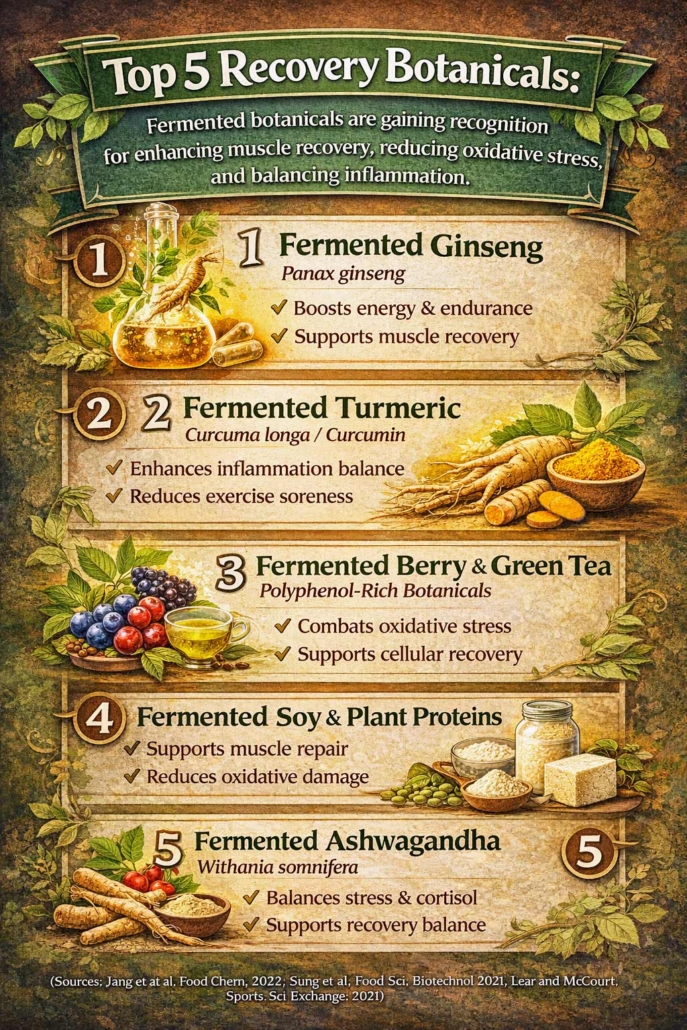
While research is still evolving, the strongest opportunities center on botanicals already associated with anti-inflammatory, antioxidant, and adaptogenic activity, further enhanced through fermentation.
Fermented ginseng is one of the most compelling ingredients in this category.
Fermentation increases the conversion of ginsenosides into more bioactive forms, which may improve absorption and physiological activity.
Emerging research suggests benefits related to fatigue reduction, endurance, and post-exercise recovery, making it well-suited for performance and recovery blends.
Curcumin is widely recognized for its role in supporting inflammation balance and recovery from exercise-induced muscle damage. However, its natural bioavailability is limited.
Fermentation may enhance curcumin’s absorption and functional performance, offering an additional pathway alongside established delivery systems.
This makes fermented turmeric a strong candidate for muscle recovery and soreness support formulations.
Additionally, improved bioavailability may allow for more efficient dosing strategies, supporting formulation flexibility while maintaining efficacy.
Polyphenol-rich ingredients, such as berries, green tea, and other plant extracts, are closely linked to oxidative stress reduction and recovery outcomes.
Fermentation can increase the availability and activity of these compounds, supporting cellular recovery and endurance-related applications.
Although still emerging, fermented plant systems (including soy-based ingredients) have demonstrated potential in preclinical research for reducing oxidative stress and improving recovery markers.
These systems may play a role in future hybrid formulations that combine plant protein with functional recovery benefits.
Adaptogens are increasingly used in recovery formulations to support stress response and overall recovery balance.
Fermentation may enhance their bioavailability, making them more effective in addressing fatigue, cortisol regulation, and nervous system recovery.
Fermented botanicals are not yet category-defining ingredients in sports nutrition, but they are rapidly gaining traction as functional enhancers within advanced formulations.
Today, they are most effectively positioned in products targeting:
Fermented botanicals are beginning to gain traction in recovery supplements, particularly in formulations targeting post-exercise inflammation, oxidative stress, and fatigue.
While they are not yet a dominant sports nutrition category, fermentation may enhance the absorption and functional performance of botanicals such as ginseng and turmeric.
As a result, they are becoming increasingly relevant for next-generation recovery products — especially those designed around clean-label, plant-based, and multi-dimensional performance systems.
Formulating with fermented botanicals requires a strategic approach to preserve bioactivity while delivering a consistent product experience.
Fermentation can improve the solubility of certain phytochemicals by breaking them into smaller, more water-dispersible compounds.
However, variability between fermentation batches can impact dissolution rates, especially in powdered or stick-pack formats. Therefore, formulators should validate solubility across pH ranges and delivery systems to ensure consistent performance.
Optimizing particle size and using compatible carriers can further enhance dispersion and bioavailability in finished formulations.
Fermented botanicals often introduce acidic, earthy, or umami-forward flavor notes due to organic acids and microbial metabolites. As a result, sensory optimization becomes critical, particularly for powders and drink mixes.
Effective strategies include natural flavor systems, sweetener balancing, and complementary botanical pairings (e.g., citrus or berry profiles). Additionally, microencapsulation can help reduce off-notes while preserving the integrity of sensitive bioactive compounds.
Batch-to-batch consistency is a key challenge, as fermentation is a biologically driven process influenced by strain selection, substrate variability, and environmental conditions.
Standardizing active compounds—such as polyphenols or specific metabolites—is essential for delivering reliable efficacy.
Implementing strict process controls, validated fermentation protocols, and robust quality testing ensures uniformity in potency and functional outcomes across production runs.
Fermented ingredients can be sensitive to moisture, oxygen, and temperature fluctuations, which may impact both microbial stability and active compound integrity. Therefore, stability testing should evaluate degradation pathways, water activity, and packaging compatibility.
Using protective packaging systems, desiccants, and oxygen barriers can extend shelf life while maintaining potency. Additionally, selecting appropriate formats, such as capsules or dry powders, can help mitigate stability risks compared to liquid systems.
The rise of fermented botanicals aligns with several macro trends reshaping the supplement industry:

Regionally, North America is seeing accelerated adoption driven by nutraceutical demand, while Asia-Pacific continues to lead in fermentation innovation.
Fermented botanicals represent a convergence of biotechnology, tradition, and evolving consumer expectations.
More importantly, they support a shift from single-function products to integrated, systems-level formulations — where recovery includes not just muscles, but mobility, stress, sleep, digestion, and energy.
Brands that adopt fermented botanicals early will be positioned to lead in:
Intermountain Nutrition partners with brands to develop advanced, science-forward formulations — helping you bring next-generation fermented botanical products to market with confidence.
Fermented botanicals are often more effective because fermentation transforms complex plant compounds into smaller, more bioavailable molecules that are easier for the body to absorb. This process acts as a form of “pre-digestion,” allowing nutrients and bioactive compounds to be utilized more efficiently.
In addition, fermentation can generate new compounds—such as peptides, enzymes, and vitamins—that are not present in the raw material, enhancing the ingredient’s overall functional profile. It may also reduce anti-nutritional factors that can inhibit absorption.
As a result, fermented botanicals can deliver stronger functional outcomes, sometimes at lower doses, making them particularly attractive for premium supplement formulations.
Yes, fermented botanicals are increasingly being incorporated into recovery supplements, especially those targeting inflammation, oxidative stress, and fatigue. Fermentation enhances the bioavailability of compounds like polyphenols and adaptogens, which are often associated with recovery support.
This allows for more efficient absorption and potentially faster functional effects. In addition, fermented botanicals align well with the growing demand for plant-based and clean-label recovery solutions.
While they are not yet the dominant category in sports nutrition, they are gaining traction as brands look to differentiate with more holistic and multi-functional recovery formulations.
Common fermented botanicals include turmeric, ginseng, ashwagandha, green tea, and various polyphenol-rich plants. These ingredients are often selected because they contain bioactive compounds that benefit from enhanced absorption or transformation during fermentation.
For example, ginseng fermentation can increase the availability of certain ginsenosides, while turmeric fermentation may improve curcumin’s usability. In addition, emerging categories include fermented mushrooms and lesser-known botanicals, which provide opportunities for differentiation.
This diversity allows brands to create unique formulations with targeted functional benefits and strong marketing narratives.
Fermented botanicals introduce several formulation and manufacturing considerations. First, fermentation is a biologically driven process, which can lead to variability if not tightly controlled. This makes standardization and quality testing essential.
Second, fermented ingredients often have distinct taste profiles that may require masking, particularly in powders or drinkable formats.
Third, stability must be carefully managed, as moisture, oxygen, and temperature can impact both microbial integrity and active compounds.
Despite these challenges, working with an experienced manufacturing partner can help brands successfully navigate formulation complexity and deliver consistent, high-quality products.
Fermented botanicals align closely with several major consumer trends, including clean-label products, plant-based nutrition, and gut health. In addition, they support the growing shift toward multi-functional supplements that address broader wellness goals such as stress, sleep, and recovery.
Consumers are increasingly looking for products that deliver both performance and transparency, and fermentation is widely perceived as a natural and beneficial process. As a result, fermented botanicals provide a strong platform for brands to meet evolving expectations while differentiating in a competitive market.
Market Research Future. (2026, February). Fermented Plant Extract Market.
Precedence Research. (2025). Fermented ingredients market size and forecast.
National Institutes of Health, Office of Dietary Supplements. (2023). Dietary supplements for exercise and athletic performance.
Hur, S. J., Lee, S. Y., Kim, Y. C., Choi, I., & Kim, G. B. (2014). Effect of fermentation on the antioxidant activity in plant-based foods. Food Chemistry, 160, 346-356.
Tamang, J. P., Shin, D. H., Jung, S. J., & Chae, S. W. (2016). Functional properties of microorganisms in fermented foods. Frontiers in Microbiology, 7, 578.
Sanlier, N., Gokcen, B. B., & Sezgin, A. C. (2019). Health benefits of fermented foods. Critical Reviews in Food Science and Nutrition, 59(3), 506-527.
Zhao, D., Shah, N. P., & Wang, J. (2024). Advances in fermented plant-based bioactive compounds and their health benefits. Current Research in Food Science, 9, 100742.
Fernández-Lázaro, D., Mielgo-Ayuso, J., Seco-Calvo, J., Córdova Martínez, A., Caballero García, A., & Fernandez-Lazaro, C. I. (2020). Modulation of exercise-induced muscle damage, inflammation, and oxidative markers by curcumin supplementation in a physically active population: A systematic review. Nutrients, 12(2), 501.
McFarlin, B. K., Venable, A. S., Henning, A. L., Sampson, J. N., Pennel, K., Vingren, J. L., & Hill, D. W. (2019). Eight weeks of a high dose of curcumin supplementation may attenuate performance decrements following muscle-damaging exercise. Nutrients, 11(7), 1692.
Kim, J., Park, J., Lim, K., & colleagues. (2020). The effects of wild ginseng extract on psychomotor and neuromuscular performance recovery following acute eccentric exercise. Applied Sciences, 10(17), 5839.
Lee, S., Kim, J., & colleagues. (2025). Acute effects of wild ginseng extract on exercise performance, cognitive function, and fatigue recovery. International Journal of Translational Medicine, 5(1), 5.
Wang, X., Zhang, Y., & colleagues. (2022). American ginseng attenuates eccentric exercise-induced muscle damage. Nutrients, 14(1), 78.
de Souza, D. B., Del Coso, J., & colleagues. (2021). Effect of polyphenol-rich foods, juices, and concentrates on recovery from exercise-induced muscle damage: A systematic review and meta-analysis. Nutrients, 13(9), 2988.
Valder, S., Habersatter, E., Kostov, T., Quenzer, S., Herzig, L., von Bernuth, J., Matits, L., Herdegen, V., Diel, P., & Isenmann, E. (2024). The influence of a polyphenol-rich red berry fruit juice on recovery process and leg strength capacity after six days of intensive endurance exercise in recreational endurance athletes. Nutrients, 16(10), 1428.
Agha-Alinejad, H., & colleagues. (2025). The effects of pomegranate supplementation on markers of exercise-induced muscle damage: A systematic review and meta-analysis. Current Research in Food Science, 11, article details online.
 https://intermountainnutrition.com/wp-content/uploads/2026/10/uolithin-a-for-healthy-aging-supplements-04.jpg 1200 1200 Larisa Graham https://intermountainnutrition.com/wp-content/uploads/2026/01/IMN-gradient-logo-NEW.png Larisa Graham2026-10-19 08:00:002026-10-15 22:23:52Urolithin A and Mitophagy https://intermountainnutrition.com/wp-content/uploads/2026/10/creatine-for-healthy-aging-04.jpg 1200 1200 Larisa Graham https://intermountainnutrition.com/wp-content/uploads/2026/01/IMN-gradient-logo-NEW.png Larisa Graham2026-10-16 08:00:002026-10-15 08:32:40Creatine for Healthy Aging https://intermountainnutrition.com/wp-content/uploads/2026/10/mushroom-memory-powder-cocoa-23.jpg 1200 1200 Larisa Graham https://intermountainnutrition.com/wp-content/uploads/2026/01/IMN-gradient-logo-NEW.png Larisa Graham2026-10-15 09:00:002026-10-08 16:17:36STOCK FORMULA: Mushroom Memory Powder for Cognitive Health & Healthy Aging
 The Clean Label Movement 2.0